
It’s an uncomfortable truth that over half of us will deal with swollen veins in the rectum or anus before we hit age 50. It’s itchy, painful, and frankly, embarrassing. Most of us reach for a box at the pharmacy shelf first, hoping for a quick fix. But here is the reality check: OTC hemorrhoid treatments are not cures. They are temporary shields against pain and swelling. Knowing exactly which ingredient works for your specific type of hemorrhoid-and knowing when those creams stop working-is the difference between a few days of annoyance and weeks of suffering.
How OTC Treatments Actually Work
You might think all hemorrhoid creams are the same, but they use completely different mechanisms to help you feel better. The American Society of Colon and Rectal Surgeons notes that about 75% of cases can be managed initially with conservative measures, but only if you pick the right tool for the job. There are four main categories of active ingredients you’ll find on store shelves, each doing something distinct.
- Vasoconstrictors: Ingredients like phenylephrine (found in Preparation H) shrink swollen blood vessels. They work fast-often within 15 minutes-but the effect is short-lived, lasting only 2 to 4 hours.
- Astringents: Witch hazel (like in Tucks pads) dries out the skin and reduces inflammation. It provides a cooling sensation that lasts 30 to 60 minutes.
- Local Anesthetics: Benzocaine or pramoxine numb the area. These are your best bet for immediate pain relief, offering 2 to 4 hours of comfort.
- Corticosteroids: Hydrocortisone reduces inflammation. This isn’t instant; it takes 3 to 4 days of consistent use to see real results.
The key takeaway? If you need instant pain relief, go for the numbing agent. If you have massive swelling, look for a vasoconstrictor. If you have chronic irritation, the steroid is your long-game player. Mixing them up randomly usually leads to disappointment.
Picking the Right Product for Your Symptoms
Not all hemorrhoids are created equal. Where the swelling sits changes how you should treat it. External hemorrhoids sit under the skin around the anus, while internal ones are inside the rectum. Using a cream on an internal issue won’t reach the problem, just as a suppository might be overkill for a small external itch.
| Hemorrhoid Type | Best Active Ingredient | Formulation | Expected Relief Time |
|---|---|---|---|
| External (Painful) | Benzocaine or Pramoxine | Cream/Ointment | 2-4 hours |
| External (Itchy/Swollen) | Witch Hazel | Wet Wipes/Pads | 30-60 minutes |
| Internal (Bleeding/Discomfort) | Hydrocortisone | Suppository | 3-4 days for full effect |
| Mixed (Internal & External) | Combination (e.g., Anusol HC) | Cream + Suppository Kit | Variable |
For external issues, topical creams with witch hazel provide immediate but short-term relief. If the pain is sharp, benzocaine-based products are more effective. For internal hemorrhoids, suppositories are non-negotiable. Clinical reviews show that 87% of patients report symptom improvement within 48 hours when using hydrocortisone suppositories correctly. Combination products, which mix a numbing agent with a steroid, often outperform single-ingredient options by 40% in head-to-head trials.
Application Mistakes That Kill Effectiveness
You can buy the most expensive cream on the market, but if you apply it wrong, it’s useless. Dr. Robert Greenberg from Tampa Colorectal Specialists points out that improper use reduces effectiveness by 65%. Here is how to actually get the medicine to work:
- Clean First: Never apply medication to dirty skin. Wash the area gently with warm water. Avoid harsh soaps that strip natural oils.
- Timing Matters for Suppositories: Insert suppositories after a bowel movement when the rectum is empty. Doing this incorrectly can reduce efficacy by 35% because the medication gets pushed out immediately.
- Consistency is Key: Don’t skip doses. Hydrocortisone needs 3-4 days to build up anti-inflammatory effects. Stopping after one day because you “feel okay” often leads to a rebound flare-up.
- Don’t Overdo It: Applying more than recommended doesn’t speed up healing. In fact, 42% of users apply too frequently, which can irritate the sensitive skin further.
Storage matters too. Some formulations, particularly certain witch hazel pads, last longer and stay fresher if refrigerated. Keeping them in a hot bathroom cabinet can degrade the active ingredients. A simple trick many users swear by? Apply cold witch hazel pads for an enhanced cooling effect that doubles the soothing sensation.
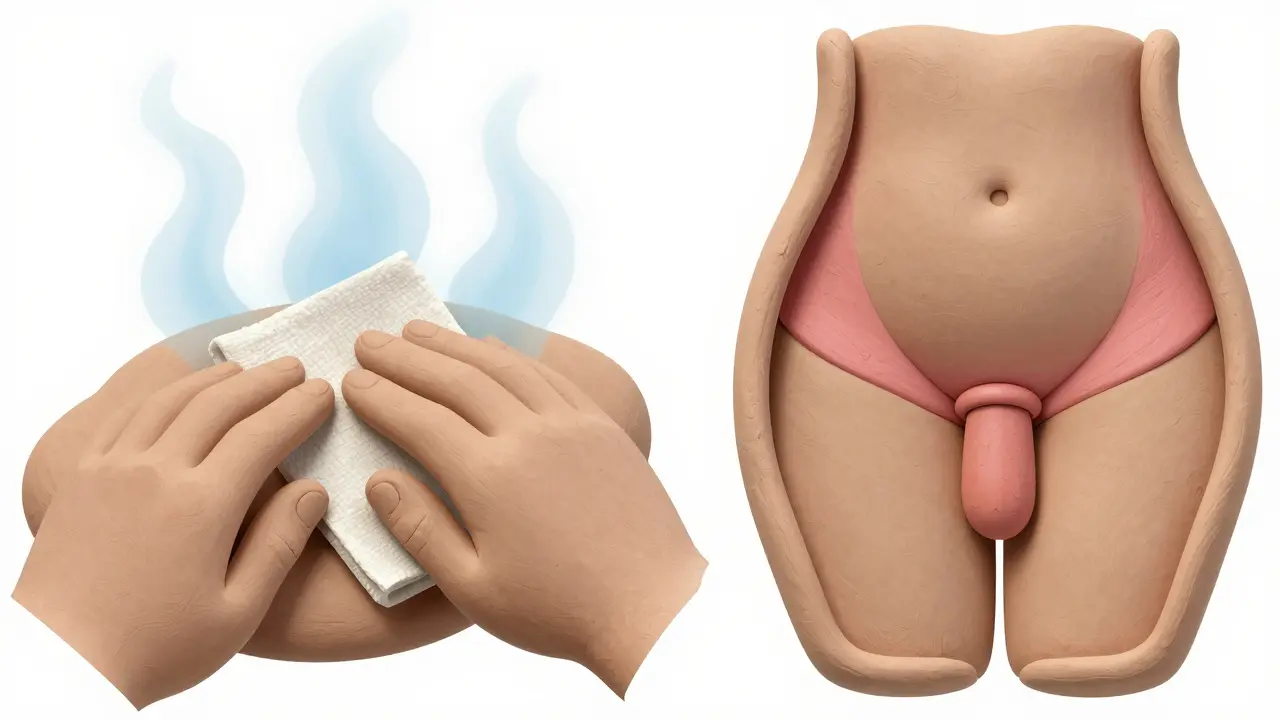
The Hard Truth: When OTC Isn't Enough
This is the part most people ignore until it’s too late. OTC treatments are symptomatic relief. They do not remove the hemorrhoid. They just make it less annoying while your body tries to heal itself. According to Premier Hemorrhoid Treatment Center, creams don’t treat the source. They mask the symptoms.
If you have Grade III or IV hemorrhoids-which means the tissue has prolapsed (fallen out) and cannot be pushed back in-creams will fail you. Research shows only 15% symptom improvement with OTC meds for these severe cases, compared to 85% with medical procedures like rubber band ligation. You are wasting money and time trying to cream away a structural problem.
Also, watch the clock. The American Society of Colon and Rectal Surgeons recommends seeking care if symptoms persist beyond 7 days of proper OTC treatment. Data shows that 82% of patients who eventually need medical intervention waited too long to ask for help. Don’t be part of that statistic.
Red Flags: When to Stop Self-Treating Immediately
Some symptoms signal that this is more than just a standard hemorrhoid flare-up. You need to see a doctor right away if you experience any of the following:
- Rectal Bleeding: While minor spotting is common, significant bleeding occurs in 28% of cases and can indicate other serious conditions like colorectal cancer or anal fissures. Never assume blood is just from hemorrhoids without a professional check.
- Severe Pain: Mild discomfort is normal. Sharp, throbbing pain that prevents sitting or sleeping suggests a thrombosed hemorrhoid (a blood clot), which may require surgical drainage.
- Prolapse That Won't Reduce: If tissue protrudes and you cannot gently push it back in, seek care. This can lead to strangulation, cutting off blood supply.
- No Improvement After 7 Days: If you’ve followed the instructions perfectly for a week and still feel no change, the diagnosis might be wrong, or the condition requires prescription-strength medication (like 2.5% hydrocortisone) or procedural intervention.
Dr. Andrew Ullman from Temple Health warns that prescription options often work better for persistent symptoms. Waiting months to see a specialist because you’re embarrassed only makes the eventual treatment more invasive.

Cost vs. Benefit: Is It Worth Buying Brand Names?
The hemorrhoid treatment market generated $1.2 billion in US sales in 2022, driven largely by brand loyalty. Preparation H dominates with 37% market share, followed by Tucks at 22%. But do you need to pay the premium?
Generic hydrocortisone products hold 19% of the market and contain the exact same active ingredient as the name brands. A tube of generic 1% hydrocortisone costs roughly $4-$6, while branded versions can run $12-$20. For vasoconstrictors and anesthetics, generics are equally effective. The only place where brand names sometimes win is in formulation quality-some generic creams have thicker bases that feel greasier or take longer to absorb. However, for pure symptom relief, the active ingredient is what matters, not the logo on the box. Save your money on the brand and spend it on high-fiber foods instead.
Supporting Your Body: Beyond the Cream
Medication alone rarely solves the root cause. Hemorrhoids are often caused by straining due to constipation or prolonged sitting. To make the OTC treatment work, you must support your body’s ability to heal:
- Sitz Baths: Soak in warm water for 15-20 minutes, 2-3 times daily. NIH research shows this provides a 25% additional symptom reduction when combined with topical treatments.
- Fiber Intake: Aim for 25-35 grams of fiber daily. Soft stools mean less straining, which reduces pressure on the veins.
- Hydration: Drink plenty of water. Fiber without water creates hard stools, worsening the problem.
- Move Around: If you have a desk job, stand up every hour. Prolonged sitting increases pelvic pressure.
Think of the OTC cream as a bandage. If you keep ripping the wound open by straining on the toilet, the bandage won’t help. Combine the medication with lifestyle tweaks for the fastest recovery.
How long does it take for OTC hemorrhoid treatments to work?
It depends on the ingredient. Vasoconstrictors like phenylephrine work within 15 minutes but last only 2-4 hours. Numbing agents like benzocaine take effect quickly and last 2-4 hours. Anti-inflammatory steroids like hydrocortisone take 3-4 days of consistent use to show noticeable results. Do not expect instant cure-all effects from steroids.
Is Preparation H better than generic brands?
Preparation H contains phenylephrine, a vasoconstrictor. Generic brands often contain the same active ingredient at the same concentration (0.25%). The main difference is often the base of the cream or ointment. For cost savings, generic hydrocortisone or phenylephrine products are clinically equivalent for most users.
Can I use hydrocortisone cream for more than a week?
No. Using hydrocortisone for more than 7 days can thin the skin in the anal area, making it more susceptible to damage and infection. If symptoms persist after a week, stop the medication and consult a doctor for alternative treatments.
What is the best treatment for internal hemorrhoids?
Suppositories are generally more effective for internal hemorrhoids because they deliver medication directly to the affected area inside the rectum. Hydrocortisone suppositories (25mg) are commonly recommended. Insert them after a bowel movement for optimal absorption.
When should I see a doctor for hemorrhoids?
Seek medical care if you experience rectal bleeding, severe pain, prolapsed hemorrhoids that cannot be pushed back in, or if OTC treatments fail to improve symptoms after 7 days of proper use. Early intervention can prevent more invasive procedures later.
