
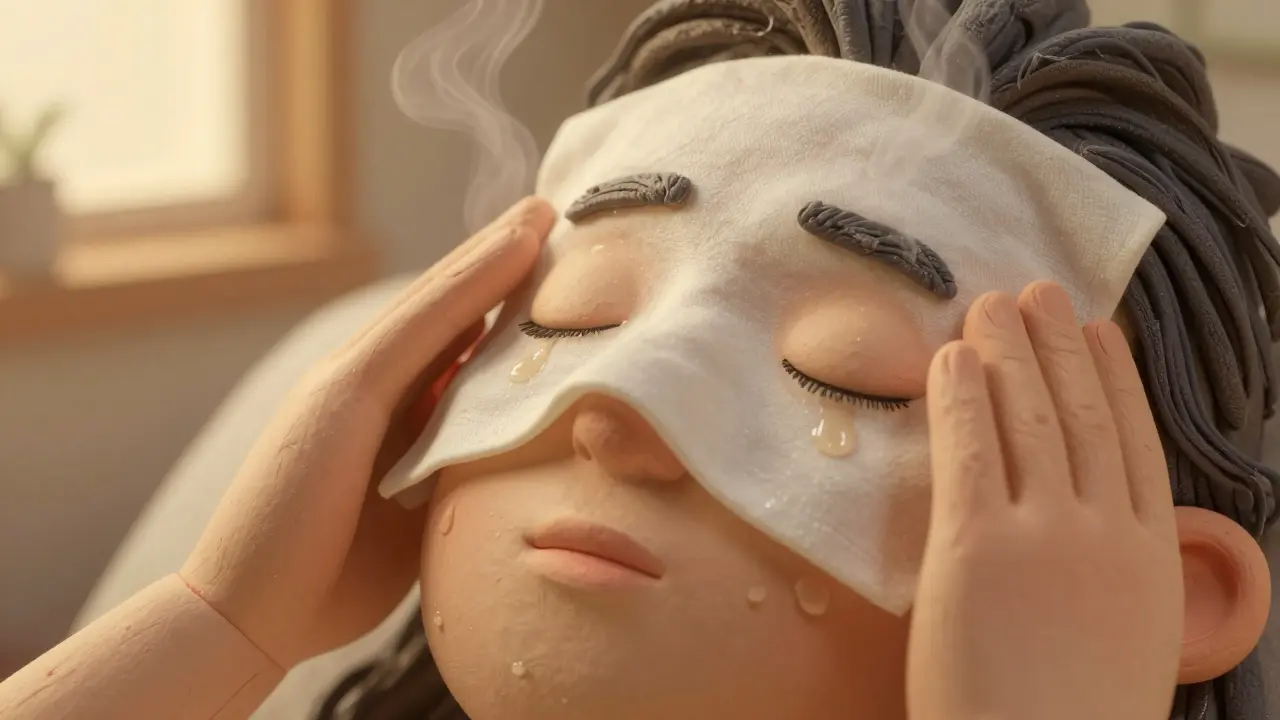
If your eyelids feel gritty, crusty in the morning, or constantly irritated like there’s sand in your eyes, you’re not alone. About 47% of people who visit an eye doctor have blepharitis - a chronic inflammation of the eyelid margins that doesn’t go away on its own but can be managed effectively with the right routine. It’s not contagious. It won’t blind you. But if ignored, it can make daily life frustrating: blurry vision, redness, burning, and that annoying feeling that your eyelids are glued shut when you wake up.
What Exactly Is Blepharitis?
Blepharitis isn’t one single problem - it’s two, often happening together. The front edge of your eyelid, where your eyelashes grow, can get inflamed. That’s called anterior blepharitis. It’s usually linked to skin conditions like dandruff or bacterial buildup around the hair follicles. Then there’s posterior blepharitis, which affects the inner edge of the lid, right where the meibomian glands sit. These glands produce the oily layer of your tear film. When they get clogged, your eyes dry out faster, and your lids become inflamed. About meibomian gland dysfunction is the most common underlying cause of posterior blepharitis, affecting 63% of cases.Doctors see it every day. Symptoms are specific: red, swollen eyelids; flakes clinging to your lashes like dandruff; foamy tears; and crusting that sticks your lids together when you wake up. In fact, 93% of patients report their eyelids feel stuck shut in the morning. The inflammation isn’t random - it’s localized. Studies show the affected eyelid margins are 2-3°C warmer than healthy ones, confirming active inflammation.
Why Warm Compresses Are the First Step
Every major eye health group - the National Eye Institute, Mayo Clinic, American Academy of Ophthalmology - agrees on one thing: warm compresses are the first and most important treatment. Not antibiotics. Not drops. Not fancy creams. Just heat.Why? Because the problem in posterior blepharitis is thick, hardened oil. Your meibomian glands normally secrete a clear, fluid oil. But when they’re inflamed, that oil turns into a waxy paste. It clogs the glands, leading to dry eyes and more inflammation. Heat melts that paste. Simple as that.
Studies show that applying heat at 40-45°C for 10-15 minutes twice a day reduces symptoms by 73% in the first few weeks. The Cleveland Clinic found that after 21 days of consistent use, gland secretion quality improved by 68%. But here’s the catch: if the compress is too cool - under 38°C - it does almost nothing. Too hot - over 48°C - and you risk burning your eyelid skin. Precision matters.
How to Do Warm Compresses Right
It’s not just about heating something up and putting it on your eye. Technique determines success. Here’s the exact protocol backed by clinical trials:- Heat for 10 minutes - Use a clean washcloth soaked in warm (not hot) water, or a microwavable gel pack. Microwave the pack for 20-30 seconds, then test it on your wrist. It should feel comfortably warm, like a warm bath. Don’t rush. Ten minutes is the minimum. Most people give up after 5 or 6 because it feels long - but that’s when the oil starts to melt.
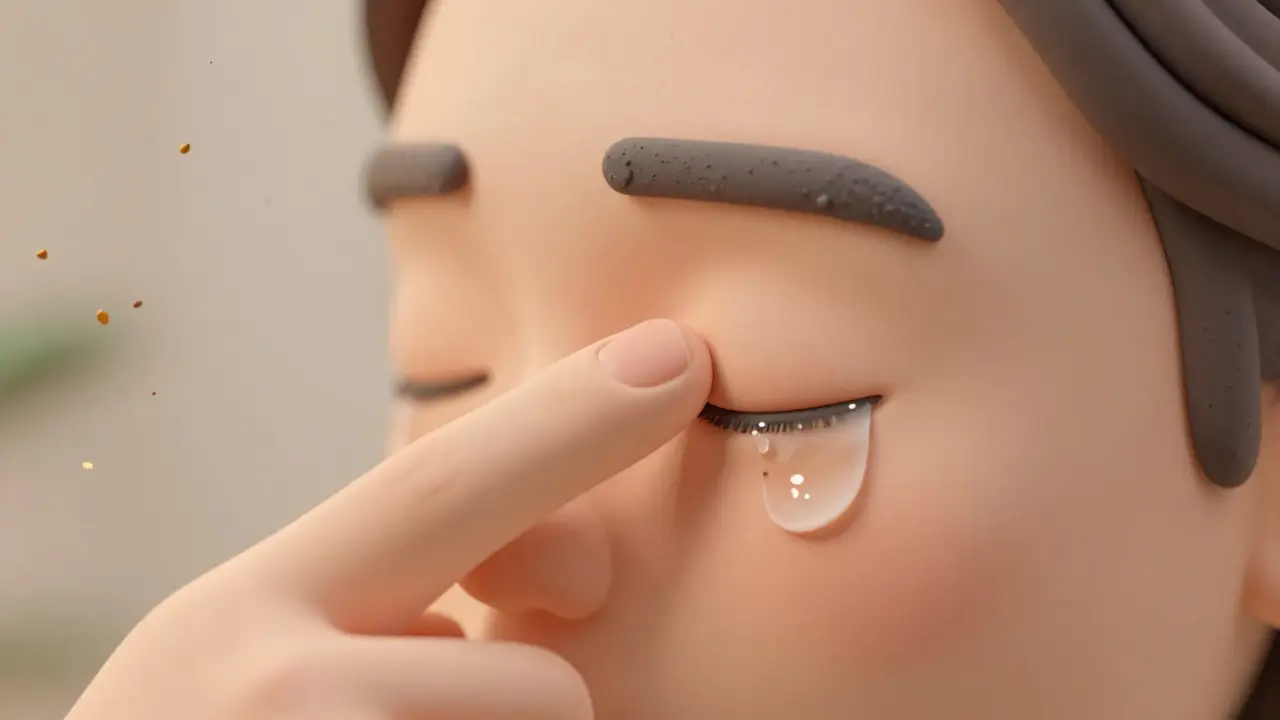
- Massage immediately after - While your eyelids are still warm, use your clean index finger. Gently press along the upper lid, moving downward toward your lashes. Then do the same on the lower lid, moving upward. Do this for 30 seconds. This is called the “windshield wiper” motion. It squeezes out the melted oil from the glands. A 2023 University of Michigan study showed this step boosts gland function by 81%.
- Cleanse next - After heat and massage, wipe your eyelid margins with a preservative-free lid scrub or diluted baby shampoo on a cotton swab. This removes debris and bacteria. Don’t skip this. The flakes and gunk feed the inflammation.
- Use artificial tears if needed - Your eyes may feel dry after the routine. A simple, preservative-free artificial tear can help. Avoid ones with redness relievers - they make things worse long-term.
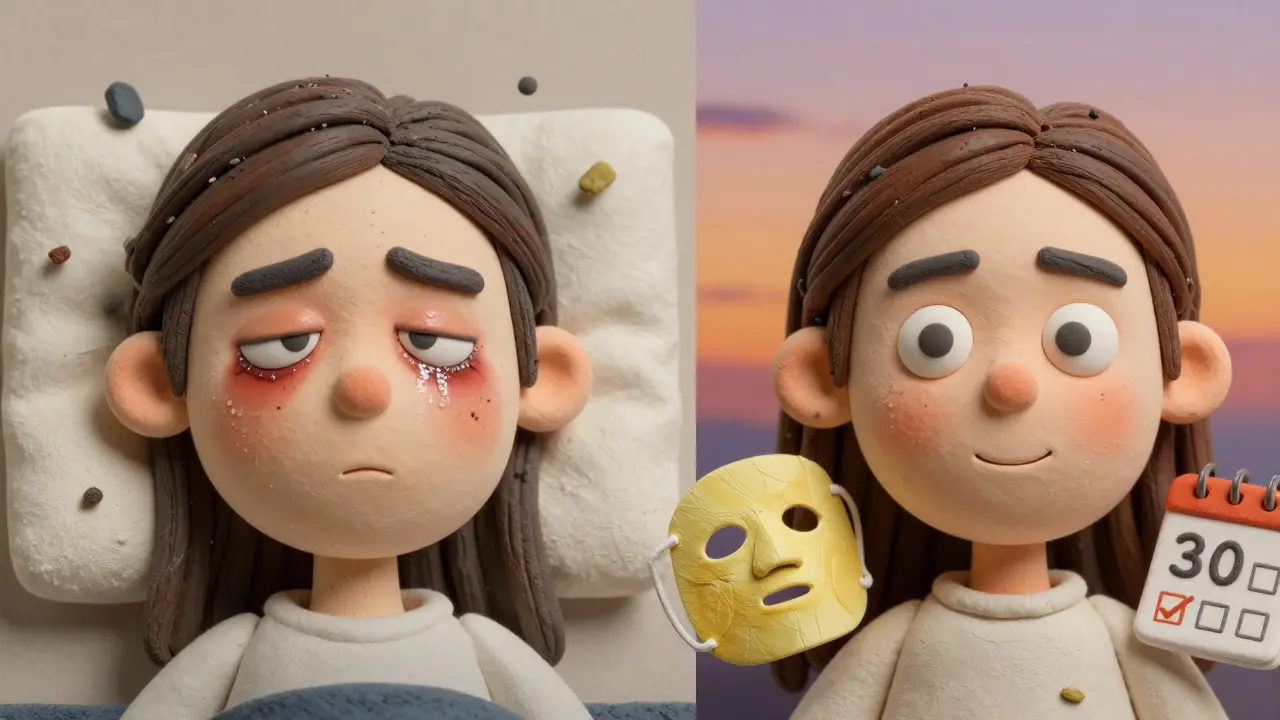
Do this twice a day - morning and night - for at least 30 days. The first week feels tedious. By day 14, you’ll notice less crusting. By day 30, most compliant patients see 67% symptom improvement. Those who skip days? Only 22% improvement.
Washcloth vs. Commercial Masks
You don’t need to spend money. A clean washcloth works fine. But here’s the reality: most people don’t stick with it. Why? Because washcloths cool down too fast. A 2022 Mayo Clinic study found they stay at therapeutic temperature for only 8.7 minutes on average. Gel packs last longer - about 12.3 minutes - making them more effective.Commercial warming masks - like the Bruder Moist Heat Eye Compress - are designed to hold 43°C for 10-15 minutes. They’re reusable, easy to use, and more comfortable. A Cleveland Clinic survey found users of these masks had 27% higher adherence than washcloth users. And 73% kept using them past 90 days. That’s huge. Compliance is the biggest barrier to success.
One patient on HealthUnlocked wrote: “After three weeks of doing it right - heat, massage, clean - my morning crust went from ‘glued shut’ to just a few flakes. I wish I’d done this six months ago.”
What Doesn’t Work
Many people try remedies that don’t help - or make things worse. Avoid these:- Hot tea bags - Too variable in temperature. Often too hot or too cool. Can burn or do nothing.
- Eye drops with decongestants - They mask redness but worsen dryness over time.
- Scrubbing too hard - You’re not trying to remove every flake. Gentle cleaning is enough. Aggressive scrubbing damages skin and increases inflammation.
- Waiting for symptoms to disappear - Blepharitis is chronic. You don’t “cure” it. You manage it. Stop the routine, and symptoms return.
Also, don’t assume antibiotics will fix it. Only about 10-15% of cases need them. Most respond to hygiene alone. The American Academy of Ophthalmology’s 2023 guidelines now say: “Warm compresses and lid hygiene should be the first step - always - before considering medication.”
When to See a Doctor
If you’ve done warm compresses correctly for 30 days and see no improvement, it’s time to see an eye doctor. You might need a slit-lamp exam to check for collarettes (cylindrical debris around lashes) or telangiectasia (visible blood vessels), which confirm the diagnosis. You might also need testing for underlying conditions like rosacea or seborrheic dermatitis.And if you notice sudden vision changes, severe pain, or swelling that spreads beyond the eyelid - get help immediately. That’s not typical blepharitis.
The Bigger Picture
Blepharitis affects more than just your eyes. It’s tied to aging, skin health, and even diet. Prevalence jumps from 12% in people under 40 to 38% over 60. It’s also linked to omega-3 deficiency. Recent research presented at the 2023 ARVO conference showed that taking 2,000 mg of EPA/DHA daily alongside warm compresses improved results by 34%. That’s not a miracle cure - but it’s a helpful boost.The market for blepharitis treatments is growing fast - expected to hit $2 billion by 2030. Why? Because more people are being diagnosed, and more are learning that simple, consistent care works. The TearCare System, a new FDA-approved device that delivers precise heat for 15 minutes, is just one example of how technology is making compliance easier.
But the most powerful tool is still the washcloth. Or the gel pack. Or the warming mask. Whatever you use, do it consistently. Do it right. And don’t stop.
Can blepharitis go away on its own?
No. Blepharitis is a chronic condition. Symptoms may improve with treatment, but they’ll return if you stop your eyelid hygiene routine. Think of it like brushing your teeth - you don’t stop once your gums feel better.
Is blepharitis contagious?
No. You can’t catch it from someone else. It’s caused by your own skin bacteria, oil gland dysfunction, or skin conditions like dandruff. But sharing towels or makeup can spread bacteria that worsen it, so avoid that.
Why do my eyes feel worse in the morning?
While you sleep, your eyelids don’t blink, so debris and thickened oil build up along the lash line. This causes crusting and irritation. Morning symptoms are a hallmark of blepharitis - and why the first warm compress of the day is so important.
Can I use a heating pad for warm compresses?
Not recommended. Heating pads often get too hot and don’t conform well to the eyelid shape. They can burn delicate skin. Use a washcloth, microwavable gel pack, or FDA-cleared medical device instead.
How long until I see results from warm compresses?
Most people notice less crusting and grittiness within 14-21 days. Significant improvement - like fewer red eyes and better comfort - usually happens by day 30 if you’re doing the routine twice daily and including the massage step.
Do I need to use special products?
No. A clean washcloth, warm water, and gentle cleansing are enough. Special lid scrubs or wipes help, but they’re optional. The key is consistency, not cost. Don’t be fooled by expensive marketing - the science says heat and hygiene work.


