
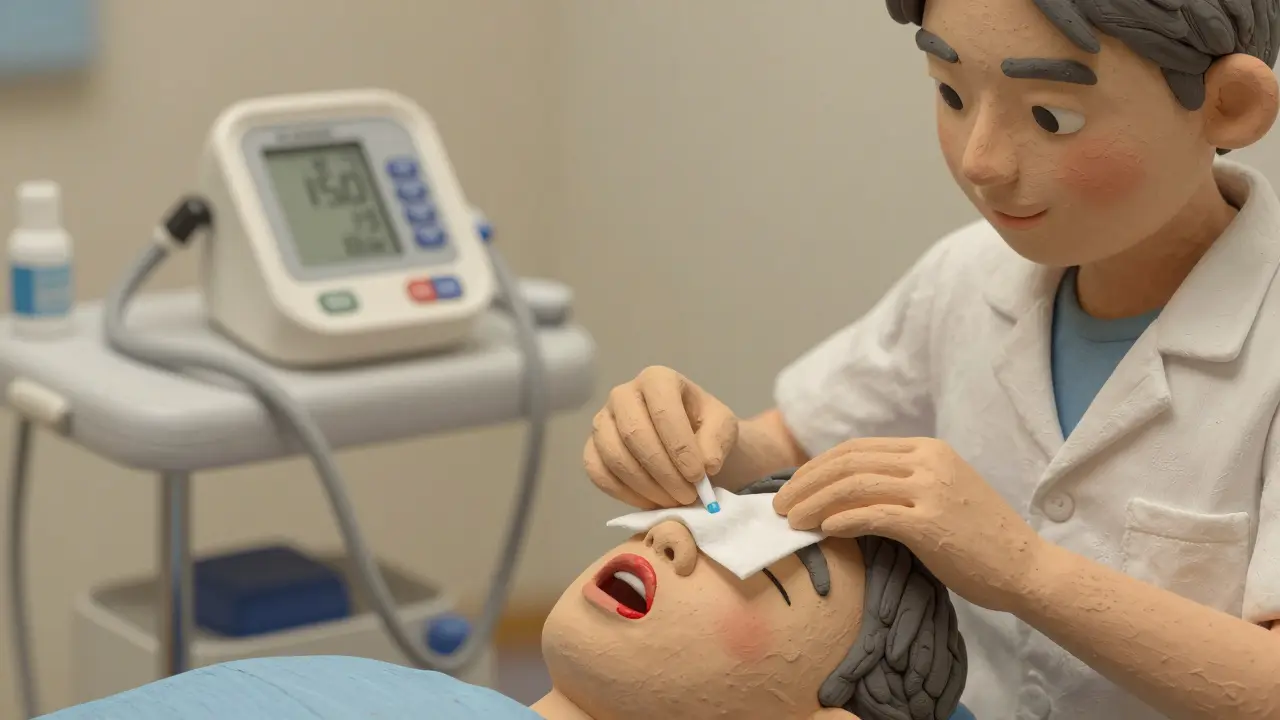
Getting a tooth pulled or a deep cleaning while on blood thinners can feel scary. You’ve probably heard stories about people bleeding for hours after dental work. But here’s the truth: blood thinners don’t mean you can’t get dental care - they just mean you need the right plan.
For years, dentists used to tell patients to stop their blood thinners before any procedure. That’s not the case anymore. In fact, stopping them can be more dangerous than keeping them. The real risk isn’t bleeding - it’s a clot. A clot in your heart, brain, or lungs can kill you. Bleeding from a simple tooth extraction? Almost always manageable.
Why Stopping Blood Thinners Is Riskier Than You Think
Let’s say you’re on warfarin (Coumadin) or one of the newer drugs like apixaban (Eliquis) or rivaroxaban (Xarelto). You’re taking it because you had a stroke, a clot in your leg, or an irregular heartbeat. Stopping it for even a few days? That’s like turning off a fire alarm while your house is burning.
Studies show that stopping single anticoagulants for minor dental work doesn’t reduce bleeding much - but it spikes your chance of a life-threatening clot. The American Dental Association updated its guidelines in 2022 to say clearly: Don’t stop your blood thinner for most dental procedures. The same goes for the Scottish Dental Clinical Effectiveness Programme, Stanford, UCSD, and other top medical groups.
Think about it: a simple filling or cleaning causes maybe a teaspoon of blood. A stroke caused by a clot? That’s brain damage. The math isn’t even close.
How Dental Procedures Are Classified by Bleeding Risk
Not all dental work is the same. Your dentist doesn’t need to treat every patient the same way. Procedures are grouped by how much bleeding they cause:
- Low-risk: Exams, X-rays, cleanings, impressions. No change needed.
- Low-moderate risk: Fillings, root canals, scaling and root planing (deep cleaning). No change needed.
- Moderate risk: Removing one to three teeth, gum surgery, crown prep. Usually no change - but extra care is used.
- High risk: Removing four or more teeth, jaw surgery, complex biopsies. May need a short hold - but only after talking to your doctor.
Here’s the kicker: even for moderate procedures like pulling a molar, most guidelines say keep taking your medicine. You don’t need to stop. You just need your dentist to know you’re on it - and to use the right tools to stop bleeding.
What If Your INR Is High?
If you’re on warfarin, your doctor checks your INR - a number that tells how long your blood takes to clot. Normal is around 1.0. If you’re on warfarin, it’s usually kept between 2.0 and 3.0.
For low-risk procedures, an INR under 3.5 is fine. For moderate procedures, under 3.5 is still okay. If your INR is over 4.0, your dentist might pause things until your doctor adjusts your dose. But here’s what most people don’t know: INR above 4.0 doesn’t mean you can’t have the procedure - it means you need better control of bleeding.
Many dentists now use special mouthwashes to help. One common one is tranexamic acid - a 5% solution you swish for a minute, then spit. It’s not magic, but it’s proven to cut bleeding in half. You can use it every two hours for the first day. It lasts five days if refrigerated.

DOACs vs. Warfarin: Different Rules, Same Goal
More than 60% of new prescriptions today are for DOACs - direct oral anticoagulants like Eliquis, Xarelto, Pradaxa, and Savaysa. These drugs are easier to manage than warfarin. No weekly blood tests. Fewer food interactions.
For DOACs, the rule is simple: skip the morning dose on the day of a moderate procedure. That’s it. No holding for days. No bridge therapy. Just skip one dose. If you take it twice a day, skip the one before your appointment. If you take it once a day, skip that one.
Why? Because DOACs leave your system in 12 to 24 hours. Waiting 4 hours after your last dose gives your body time to clear most of it. You still have protection against clots, and bleeding risk drops enough to make the procedure safer.
Warfarin? It sticks around for days. That’s why you might need a short hold - but only for big surgeries, not a simple extraction.
What You Should Never Do
There are a few things that can turn a routine visit into a problem:
- Don’t take NSAIDs. Ibuprofen, naproxen, even aspirin (unless you’re on it for heart reasons) can make bleeding worse. Use acetaminophen (Tylenol) for pain.
- Don’t get multiple teeth pulled at once. Pulling three or more back teeth together? That’s a high risk. Spread them out over two visits. Less bleeding. Less stress.
- Don’t assume your dentist knows. Tell them - clearly - what you’re on, how much, and when you last took it. Write it down. Bring a list.
- Don’t panic if you see a little blood. A pinkish tint in your saliva for 12-24 hours? Normal. Bright red, steady flow that won’t stop? Call your dentist.
What Your Dentist Should Do
A good dentist won’t just ask if you’re on blood thinners. They’ll ask which one, why, and what your last INR was. They’ll use local anesthetics without epinephrine if needed. They’ll place sutures carefully. They’ll pack the socket with gauze soaked in tranexamic acid. They’ll give you written instructions.
They won’t rush. They’ll take extra time to control bleeding. They’ll avoid drilling near major blood vessels. They’ll know not to extract two adjacent molars in one sitting. They’ll know that a single extraction on a patient taking Eliquis is perfectly safe - and that holding the drug does nothing but add risk.

Special Cases: Younger Patients, Pregnancy, and Other Medications
More young people are on blood thinners now. A 28-year-old athlete with atrial fibrillation. A 25-year-old with a blood clot after a long flight. A postpartum mom recovering from a pulmonary embolism. These aren’t rare anymore.
Pregnancy adds another layer. Some blood thinners are safe during pregnancy; others aren’t. If you’re pregnant and need dental work, your OB and dentist need to talk. Don’t assume your dentist knows your pregnancy status - tell them.
Also, watch out for drug interactions. Antibiotics like azithromycin or antifungals like fluconazole can raise your INR if you’re on warfarin. Even some cold medicines with pseudoephedrine can interfere. Always give your dentist your full med list - including vitamins and supplements.
What to Do After Your Appointment
Follow these steps to keep bleeding under control:
- Keep gauze on the extraction site for 30-45 minutes. Bite down firmly - don’t chew on it.
- Don’t rinse, spit, or suck through a straw for 24 hours. That creates suction and pulls the clot loose.
- Use the tranexamic acid mouthwash if your dentist gave it to you. Swish, hold, spit. Repeat every 2 hours if needed.
- Eat soft foods. No hot, spicy, or crunchy stuff.
- Sleep with your head elevated. Gravity helps reduce swelling and bleeding.
- Call your dentist if bleeding doesn’t slow after 2 hours, or if you’re swallowing blood constantly.
Most people have zero issues. A little pink spit? Fine. A small clot in your saliva? Normal. A gush of blood? That’s rare - and your dentist should have planned for it.
The Bottom Line
You don’t need to fear dental work because you’re on blood thinners. You need to be informed. The risk of stopping your medication is far greater than the risk of bleeding. Most procedures - even extractions - can be done safely with your meds on.
The key is communication. Tell your dentist what you’re taking. Ask if they’ve treated patients on blood thinners before. Make sure they know the latest guidelines. And don’t let old myths scare you. Stopping your pill isn’t the solution - smart planning is.
78% of U.S. dental offices now follow the ADA’s updated guidelines. You’re not alone. You’re not at risk. You just need the right team.


