
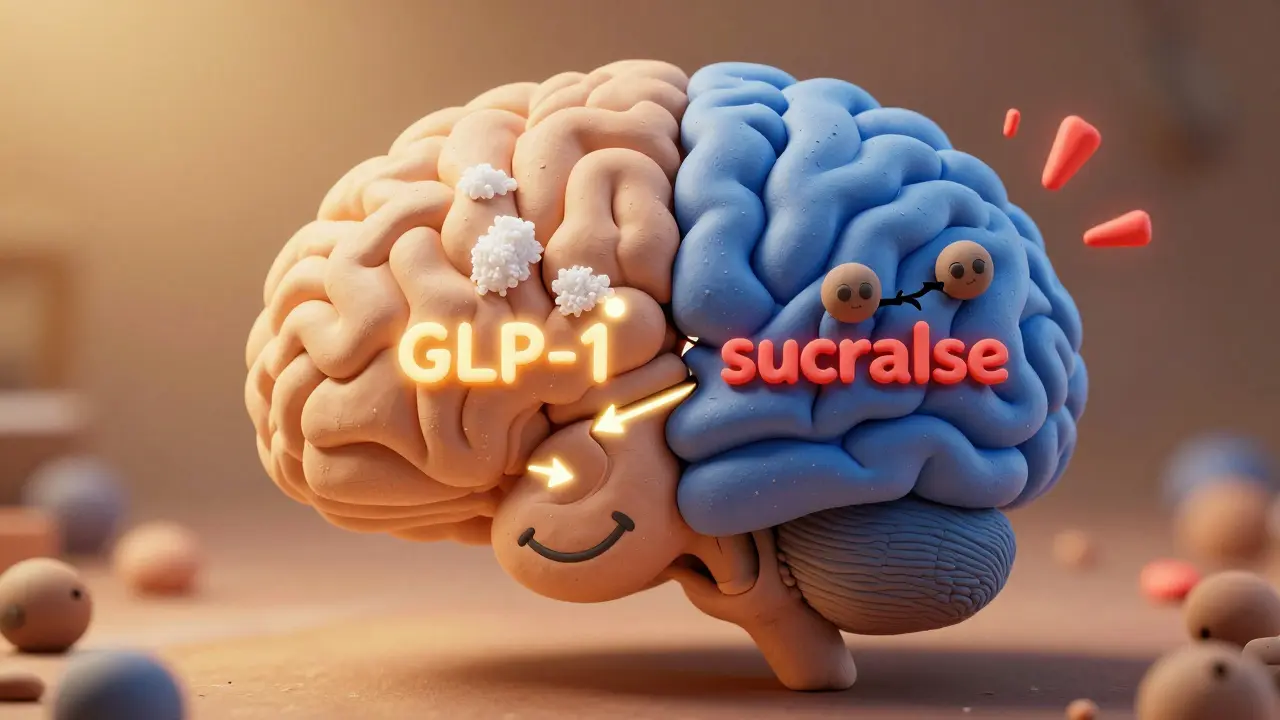
When you reach for a diet soda or sugar-free gum, you’re probably trying to cut calories and avoid the sugar crash. But what if your brain is tricking you? What if the sweet taste without the calories is actually making you hungrier? This isn’t just a theory - it’s backed by real science, and the answer isn’t as simple as “sugar is bad, sweeteners are good.”
How Sugar Tricks Your Body (and Why That Matters)
Sugar doesn’t just give you energy - it triggers a whole chain reaction in your body. When you eat sucrose, your blood sugar rises, your pancreas releases insulin, and your gut sends signals to your brain: “We’ve got fuel.” That’s when hormones like GLP-1 kick in, telling you you’re full. It’s a natural feedback loop.
But here’s the catch: sugar also lights up the brain’s reward center. That’s why a cookie doesn’t just satisfy hunger - it makes you want another. And if you’re used to high-sugar foods, your brain starts needing more to feel the same pleasure. That’s how cravings become habits.
What Artificial Sweeteners Do to Your Brain
Artificial sweeteners like sucralose, aspartame, and acesulfame potassium are 200 to 600 times sweeter than sugar - but they don’t trigger the same biological response. They activate the taste buds, but not the gut-brain connection. That’s where things get messy.
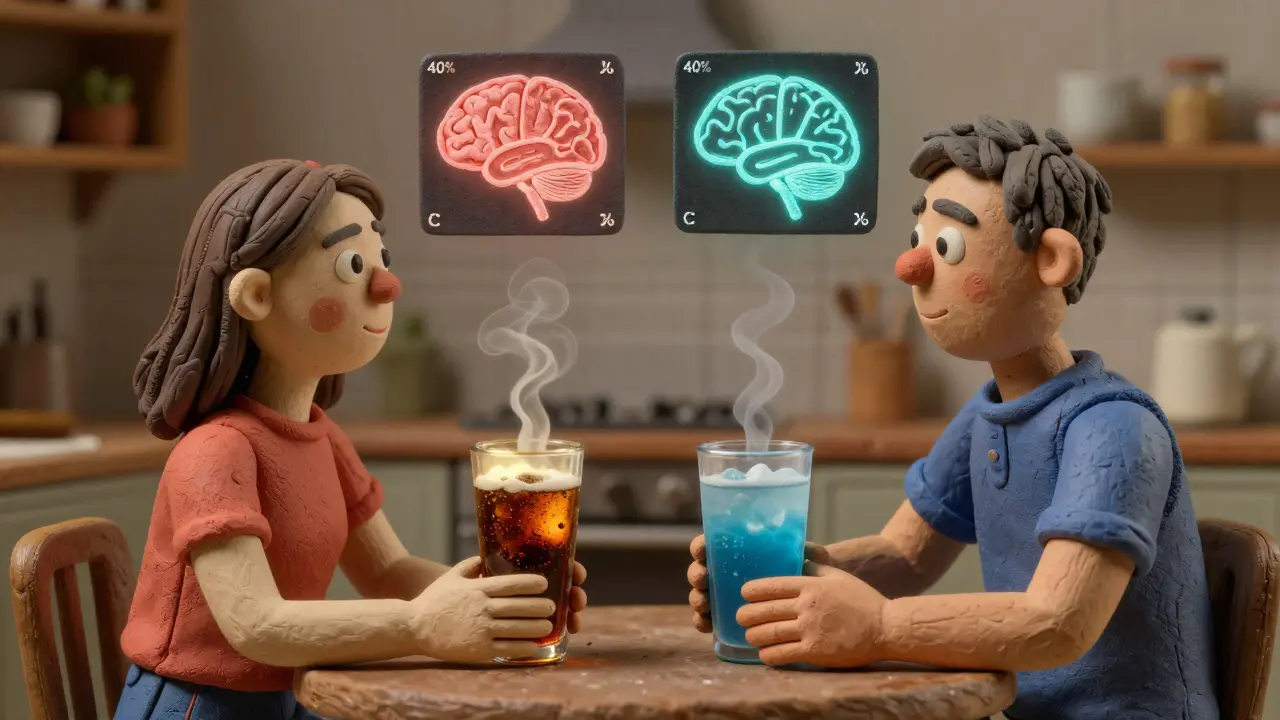
A 2023 study from the University of Southern California used fMRI scans to show that sucralose doesn’t stimulate GLP-1 release. Without that signal, your brain doesn’t get the message that you’ve eaten. Participants reported 17% higher hunger levels after drinking a sucralose-sweetened beverage compared to one with sugar. The effect was even stronger in women - their brain’s hunger centers showed 40% more activity than men’s.
That’s not just about hormones. It’s about expectation. Your brain learns that sweetness means calories. When that link breaks - like when you drink a diet soda with zero calories - your brain gets confused. It starts searching for the energy it was promised. That’s why some people feel hungrier after a “sugar-free” snack.
It’s Not All Bad - But Timing Matters
Not all studies agree. A 2022 trial from the University of Leeds found that people who swapped sugar for artificial sweeteners actually ate fewer calories overall. Their blood sugar stayed lower, insulin dropped by 18%, and appetite didn’t spike. The key? They switched cold turkey - no gradual reduction.
But here’s the twist: short-term wins don’t always mean long-term success. Studies lasting under four weeks often show sweeteners help cut calories. But when people use them for more than three months, the picture changes. A 2024 study from the German Center for Diabetes Research found that regular sucralose users had 34% higher activation in their hypothalamus - the brain’s hunger control center.
It’s like a thermostat that keeps turning up the heat because it never feels warm enough. Your brain keeps craving sweetness because it never gets the energy it expects.
Sex, Sweeteners, and Why Women Might Be More Affected
Gender matters. The USC study didn’t just find differences - it found a gap. Women showed more brain activity changes than men after consuming sucralose. Why? Researchers think it might be tied to estrogen’s role in how the brain processes reward and hunger signals. Women also tend to have higher sensitivity to sweet tastes, which could make the disconnect between sweetness and calories more disruptive.
That’s not to say men are immune - but if you’re a woman using diet sodas daily, you might notice cravings creeping up faster than your male friends. It’s not in your head - it’s in your biology.
What the Data Says About Real People
Real-world data paints a mixed picture. A 2023 survey of 4,500 people with type 2 diabetes found that 74% felt better blood sugar control with artificial sweeteners - but 41% said they felt hungrier. On Reddit’s r/loseit, 68% of 1,247 users said sweeteners helped curb cravings. But 32% said they felt worse - especially after switching to sucralose-heavy products like Splenda.
Amazon reviews tell a similar story. Splenda (sucralose) has 3.8 stars, but 28% of negative reviews mention “increased cravings after a few weeks.” Stevia-based sweeteners like Truvia? 4.2 stars. Only 15% of complaints are about hunger. Why? Stevia is less intense. It doesn’t flood your system the way sucralose does.
What Experts Are Saying - And Why They Disagree
Dr. Kirsten Berding, lead author of the USC fMRI study, says: “The brain doesn’t know the difference between sugar and sweetener. It just knows when sweetness doesn’t deliver energy.” She warns that long-term use may rewire how we respond to food.
On the other side, Professor Anne Raben from the University of Copenhagen says: “Sweeteners help people reduce sugar without triggering hunger. That’s a win for weight management.” Her team’s study showed no compensatory eating - but they only looked at 12 weeks.
The real difference? Methodology. Short-term studies show benefits. Long-term studies show risk. And most people don’t use sweeteners for 12 weeks - they use them for years.
How to Use Sweeteners Without Triggering Cravings
If you’re using sweeteners to cut sugar, here’s what actually works - based on clinical data:
- Start low. Avoid high-intensity sweeteners like sucralose (600x sweeter than sugar). Try monk fruit or stevia - they’re 150x sweeter, and less likely to confuse your brain.
- Pair with protein. A 2021 study found that adding protein (like Greek yogurt or cottage cheese) to a sweetened snack reduced hunger by 22%. Your body needs more than sweetness to feel full.
- Give your brain a break. If you’ve been drinking diet soda daily for six months and feel hungrier, try going 2-3 weeks without any artificial sweeteners. Most people report cravings easing after that reset.
- Avoid blending sweeteners. Most diet sodas use sucralose + acesulfame K. That combo is harder for your brain to process than one sweetener alone. Look for products with a single ingredient.
The Bigger Picture: Sweeteners Aren’t the Enemy - Habit Is
Artificial sweeteners aren’t magic. They’re tools. And like any tool, they can help or hurt depending on how you use them.
If you’re using them to replace sugary soda with water, that’s a win. If you’re using them to justify eating three sugar-free cookies and a candy bar, you’re not solving anything.
The real issue isn’t sugar vs. sweeteners - it’s the cycle of craving. Every time you reach for something intensely sweet, your brain learns to expect a big reward. Over time, plain foods - even healthy ones - start to feel bland. That’s when you start chasing more sweetness, more often.
There’s no perfect substitute. But there is a better approach: reduce sweetness gradually. Let your taste buds recalibrate. You’ll find that a piece of fruit tastes sweeter. Your coffee doesn’t need sugar. And you won’t feel the 3 p.m. crash - because your body finally learned how to regulate itself.
Do artificial sweeteners make you gain weight?
They don’t directly cause weight gain - but they can indirectly lead to it. If your brain starts craving more food because it doesn’t get the energy it expects from sweetness, you might end up eating more calories overall. Studies show this happens more often with long-term use, especially with sucralose.
Is stevia better than aspartame or sucralose?
Yes, for most people. Stevia and monk fruit are less intense than sucralose or aspartame, so they’re less likely to disrupt your brain’s hunger signals. They also have fewer reported side effects like increased cravings. A 2023 survey found only 15% of stevia users reported appetite issues, compared to 28% for sucralose.
Why do I feel hungrier after drinking diet soda?
Diet soda often contains sucralose or acesulfame K - both of which don’t trigger fullness hormones like GLP-1. Your brain expects calories when you taste sweetness. When they don’t come, your brain signals hunger to make up for the missing energy. This is especially true if you drink diet soda daily.
Can artificial sweeteners cause sugar cravings?
Yes. Repeated exposure to intense artificial sweetness can make your brain want even sweeter foods. This is called “sweetness recalibration.” It’s why some people who switch to diet products end up craving candy, cookies, or fruit juice more than before.
How long does it take to reset your taste buds after stopping artificial sweeteners?
Most people notice cravings easing within 2 to 4 weeks. A 2023 survey of dietitians found that 78% of clients who stopped artificial sweeteners for six weeks reported a reduced desire for intensely sweet foods. The key is consistency - no sweeteners, no sugar, no flavored syrups. Just plain water, tea, and whole foods.


