
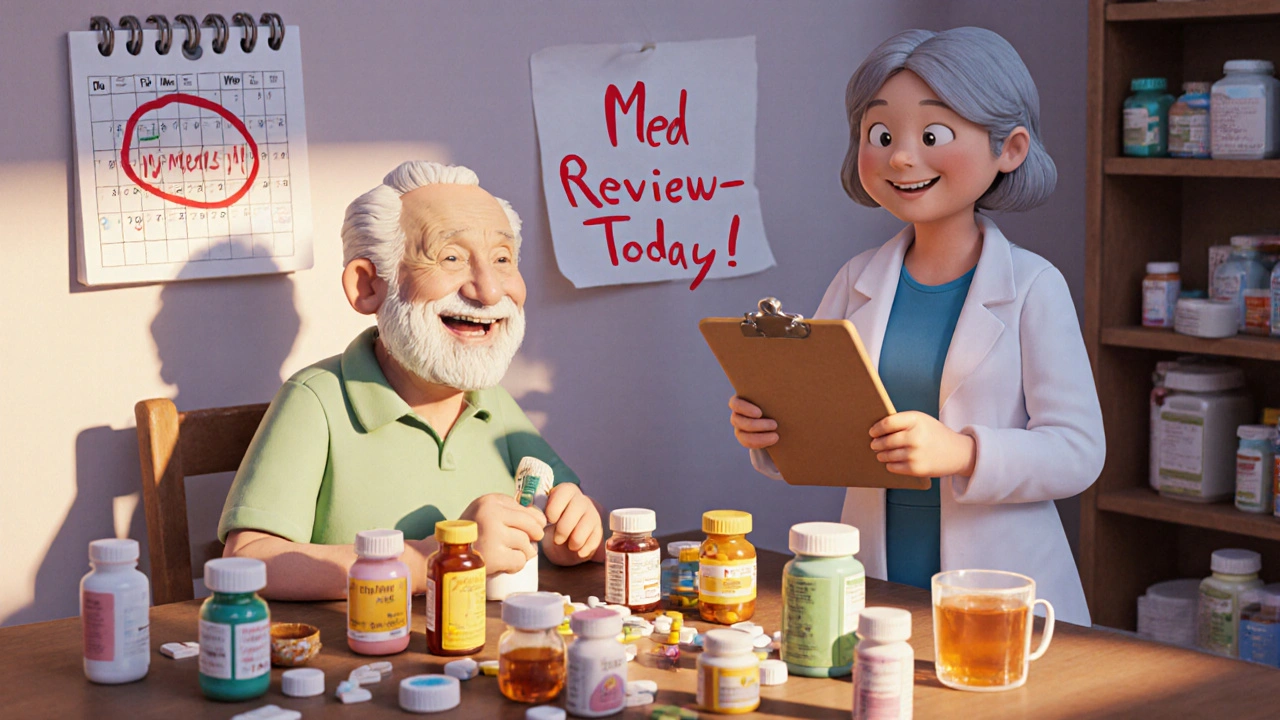
Every year, millions of seniors on Medicare get a free, in-depth review of all their medications - but many skip it because they don’t know what to expect. If you’re taking multiple prescriptions, over-the-counter drugs, vitamins, or herbal supplements, this review isn’t just a formality. It’s your best chance to catch dangerous drug interactions, cut unnecessary costs, and make sure every pill you take is actually helping you.
What Exactly Is a Medicare Annual Medication Review?
This isn’t a quick chat at the pharmacy counter. It’s called a Comprehensive Medication Review (CMR), and it’s required by law for all Medicare Part D plans. A licensed pharmacist sits down with you - in person or over video - to go through every single thing you take. That includes prescription drugs, pain relievers like ibuprofen, sleep aids, fish oil, turmeric supplements, and even herbal teas you think are harmless.
The goal? To find problems you might not even know you have. Maybe two different doctors prescribed you medications that clash. Maybe you’re taking two pills that do the same thing, doubling your risk of side effects. Or maybe a cheaper generic version exists that your doctor hasn’t considered.
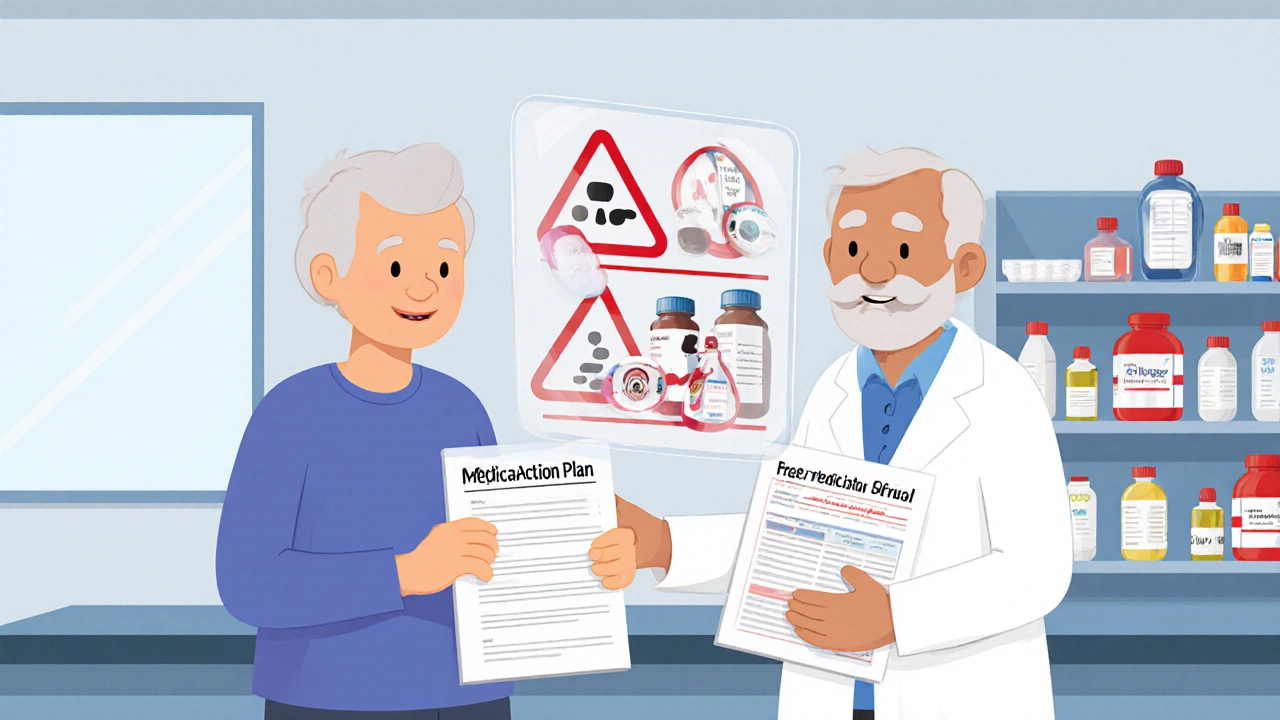
Medicare doesn’t just hand you a report and call it a day. After the review, you get three documents: a Consultation Letter explaining what was discussed, a Medication Action Plan with clear next steps, and a Personal Medication List you can keep and share with any doctor. These aren’t optional - they’re required by CMS regulations.
Who Qualifies for This Review?
You don’t need to request it. If you meet the criteria, your plan will contact you. In 2025, you’re eligible if you:
- Have at least three chronic health conditions (like diabetes, heart disease, or COPD)
- Take at least two to eight Part D-covered medications (including maintenance drugs like blood pressure or cholesterol pills)
- Spent at least $1,623 out-of-pocket on covered prescriptions in the past year
That cost threshold dropped from $2,000+ in previous years, so more people qualify now. Even if you don’t think you’re eligible, check your plan’s website. Some plans offer the review to people with fewer conditions if they’re at high risk.
According to CMS data, only 57% of eligible seniors actually completed a CMR in 2022. That means nearly half are missing out on a free, life-saving service.
Why Most People Skip It - And Why That’s a Mistake
Many seniors think, “I know what I’m taking. I don’t need someone telling me how to take my pills.” But here’s what happens when people don’t prepare:
- They forget about the daily aspirin they’ve been taking for years.
- They don’t mention the melatonin they use for sleep because they call it “natural.”
- They can’t recall the exact dose of their thyroid medication because the bottle was thrown away.
Studies show patients leave out 2 to 3 medications from their self-reported lists - even when they think they’re being thorough. One Reddit user, SeniorHealth101, found out their blood thinner interacted dangerously with fish oil - a combination their cardiologist never caught because the pharmacist was the first to see the full picture.
And it’s not just safety. In 2024, a Medicare Rights Center analysis found that seniors who came prepared had a 78% satisfaction rate with their CMR. Those who didn’t bring their meds? Only 42% were happy with the outcome. One woman, RetiredTeacher2022, had to reschedule because she couldn’t show the pharmacist what pills she was actually taking. She learned the hard way: if you didn’t bring it, they can’t check it.
How to Prepare: A Realistic 60-Minute Checklist
You don’t need to be a medical expert. You just need to be organized. Here’s exactly what to do, broken down by time:
Step 1: Gather Everything You Take (20-30 minutes)
Collect every pill, capsule, liquid, patch, or inhaler - in their original containers. This includes:
- Prescription medications (even if you don’t take them every day)
- Over-the-counter drugs (ibuprofen, antacids, cough syrup)
- Vitamins and minerals (vitamin D, calcium, B12)
- Herbal supplements (ginkgo, garlic pills, St. John’s wort)
- Home remedies (essential oils, teas, probiotics)
Don’t rely on memory. Don’t use the pill organizer. Bring the bottles. The pharmacist needs to see the label - strength, dosage, and prescribing doctor. If you’ve lost a bottle, write down the name, dose, and how often you take it.
Step 2: Write Down Your Concerns (15-20 minutes)
Think about your daily life. What’s bothering you?
- Do you feel dizzy after taking your blood pressure pill?
- Do you forget to take your diabetes meds on weekends?
- Has your stomach been upset since you started the new cholesterol drug?
- Are any of these pills too expensive to refill every month?
Write these down. Don’t worry about sounding smart or technical. Just say it like you would to your grandkid: “I feel weird after I take the blue pill.” That’s exactly what the pharmacist wants to hear.
Step 3: Track Recent Health Changes (10-15 minutes)
Have you been hospitalized? Had a fall? Started a new treatment? Had lab work done? Bring any recent reports - especially blood tests for kidney or liver function. These directly affect how your body processes medications.
If you’ve changed doctors, had a new diagnosis, or started physical therapy, mention it. A change in mobility might mean you can’t open childproof caps anymore - and that’s something the pharmacist can help fix with easier packaging.
Step 4: Create a Simple Medication Timeline (Optional, but powerful - 30-45 minutes)
On a sheet of paper, list each medication and write:
- When you started taking it
- Why your doctor prescribed it
- Any changes in dose or frequency
Example: Metformin - started Jan 2023, 500mg twice daily after diabetes diagnosis. Dose increased to 1000mg in July 2023.
This helps the pharmacist spot patterns. Maybe you started a new blood pressure drug right before your dizziness began. That connection might have been missed without context.
What Happens During the Review?
The pharmacist will:
- Compare your list to your claims history (what Medicare says you’ve picked up)
- Check for duplicate drugs (e.g., two different brands of the same blood pressure pill)
- Look for dangerous interactions (e.g., blood thinners + NSAIDs + fish oil)
- Ask if you’re taking your meds as prescribed
- Suggest cheaper alternatives or generic switches
- Recommend if any medications can be stopped safely
They won’t change your prescriptions. But they’ll send a written recommendation to your doctor - and you’ll get a copy. You can then decide whether to bring it up with your provider.
Most reviews last 30 to 60 minutes. You can bring a family member. In fact, experts recommend it. Two sets of ears remember more than one.
What You’ll Get After the Review
Within a week, you’ll receive three documents by mail or email:
- Consultation Letter (CL) - A summary of what was discussed and any recommendations made.
- Medication Action Plan (MAP) - Clear steps you can take: “Call your doctor about reducing the dose of X,” or “Switch to the generic version of Y.”
- Personal Medication List (PML) - Your updated, accurate list of everything you take. Keep this in your wallet or phone. Bring it to every doctor visit.
These aren’t just paperwork. They’re your personal medication safety net.

Common Mistakes to Avoid
Don’t make these simple errors:
- Not bringing your meds. This is the #1 reason reviews get rescheduled or fail.
- Assuming your doctor knows everything. Doctors see you for 10 minutes. Pharmacists see your full list.
- Thinking natural means safe. St. John’s wort can cancel out antidepressants. Garlic pills can thin your blood too much.
- Waiting until you feel sick. The best CMRs catch problems before they cause hospital visits.
What If You’re Not Eligible?
Even if you don’t qualify for the official CMR, you can still ask your pharmacist for a free medication review. Most community pharmacies offer it - they just don’t call it a “CMR” or send the CMS forms. Bring your list, ask: “Can you check if these meds work well together?”
And if you’re helping an aging parent, don’t wait for them to be contacted. Call their Part D plan and ask if they’re eligible. If not, help them prepare anyway - it’s worth the time.
Final Thought: This Is Your Health, Not a Bureaucratic Task
Medicare’s Annual Medication Review isn’t about paperwork. It’s about making sure you’re not taking more pills than you need - or worse, taking ones that could hurt you. It’s about saving money. It’s about sleeping better, feeling steadier on your feet, and knowing you’re not alone in managing your health.
It takes less than an hour to prepare. But it could save you months of side effects, ER visits, or even a hospital stay. Don’t skip it. Show up ready. Bring your bottles. Write down your questions. Let the pharmacist help you - because your health deserves nothing less.
Do I have to pay for the Medicare Annual Medication Review?
No, it’s completely free. It’s a required benefit under Medicare Part D, paid for by your prescription drug plan. There are no copays, deductibles, or hidden fees.
Can I do the review over the phone or video call?
Yes. Medicare allows CMRs to be done in person, by phone, or via secure video. Many plans now offer telehealth options. Just make sure you have your medication list ready and a quiet space to talk.
What if I don’t have all my pill bottles?
Write down the name of each medication, the dose, how often you take it, and why you take it. If you have a pharmacy app or online account, take screenshots of your medication list. It’s not ideal, but better than nothing. The pharmacist can still help - but bringing bottles is always best.
Will the pharmacist change my prescriptions?
No. Only your doctor can change your prescriptions. But the pharmacist will send a written recommendation to your doctor with suggestions - like stopping a duplicate drug or switching to a cheaper option. You’ll get a copy, and you can bring it to your next appointment.
How often should I get a medication review?
If you’re eligible, you should get one every year. But if your medications change - say, after a hospital stay or a new diagnosis - call your pharmacist anytime. You don’t have to wait for the annual notice.
I take 5 prescriptions but only have one chronic condition. Can I still get a review?
Maybe. The standard requirement is three chronic conditions, but some plans offer reviews to people with fewer conditions if they’re at high risk - like if you’re over 75, have had a recent fall, or take high-risk medications. Call your Part D plan and ask.


