
More than 1 in 10 people say they’re allergic to a medication. But here’s the truth: most of them aren’t. If you’ve ever been told you’re allergic to penicillin because you got a rash as a kid, or stopped taking statins because your muscles hurt, you might be mislabeling a side effect as an allergy. And that mistake isn’t just inconvenient-it can put your health at risk.
What’s Really Happening When You React to a Drug?
Not all bad reactions to medicine are the same. There’s a big difference between a drug allergy and a side effect-and doctors need to know which is which to treat you properly.
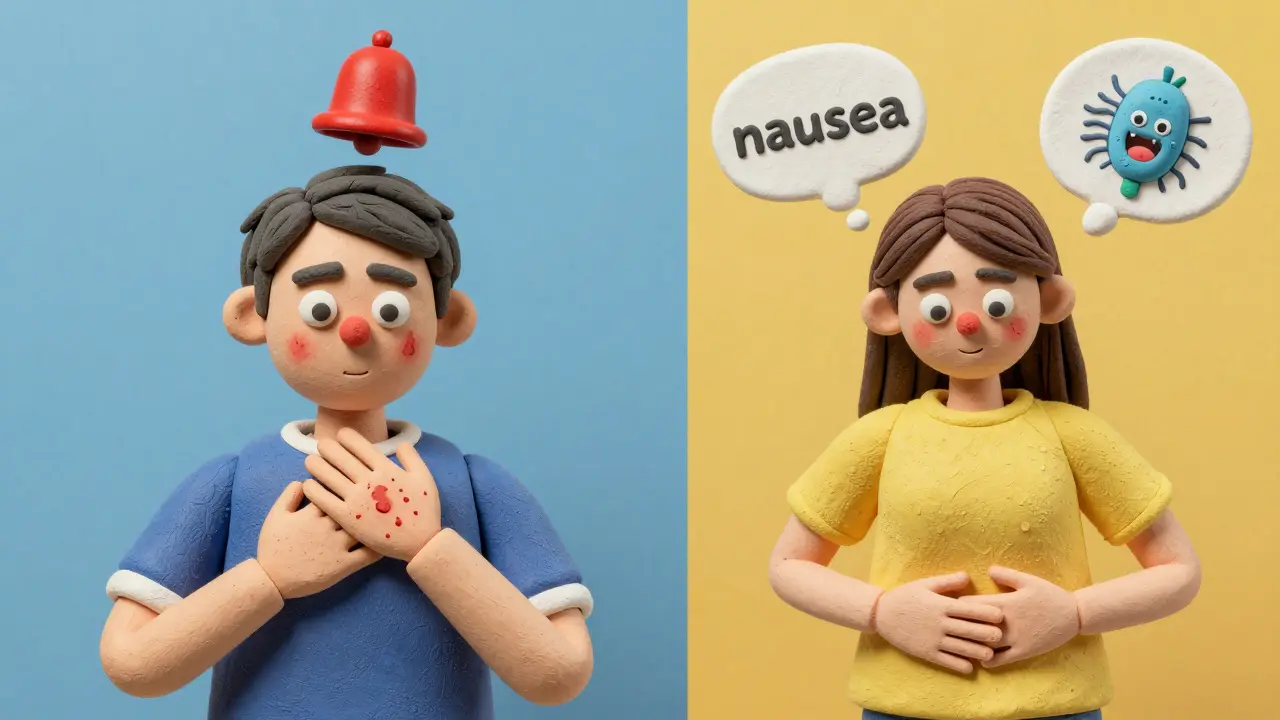
A drug allergy means your immune system sees the medication as an invader. It’s like your body’s alarm system going off for no reason. You make antibodies against the drug, and when you take it again, your body releases histamine and other chemicals. That’s what causes hives, swelling, trouble breathing, or even anaphylaxis-a life-threatening reaction.
A side effect is different. It’s not your immune system. It’s just how the drug works in your body. For example, antibiotics can upset your stomach because they kill good bacteria along with bad ones. Statins can cause muscle aches because they interfere with how your muscles make energy. These aren’t surprises-they’re expected, documented outcomes.
Timing Tells the Story
One of the clearest ways to tell the difference is when the reaction happens.
If you get hives, swelling, or feel dizzy within minutes to an hour after taking a pill-especially with penicillin or sulfa drugs-that’s a red flag for a true allergy. These are IgE-mediated reactions, and they can get worse every time you’re exposed.
But if you feel nauseous, have diarrhea, or get a mild rash a few days after starting a new medicine, that’s more likely a side effect. For example, metformin causes diarrhea in 20-30% of people. That doesn’t mean you’re allergic. It means your gut is sensitive to it. Often, the nausea fades after a week or two as your body adjusts.
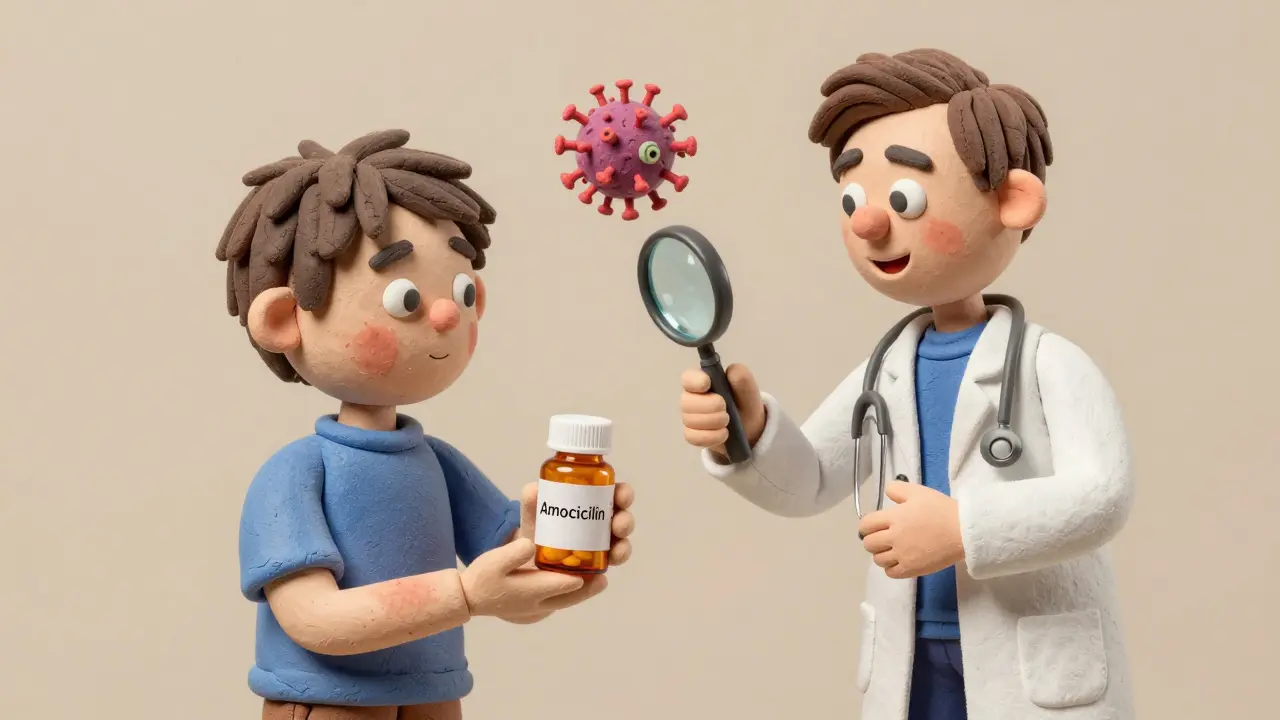
Delayed rashes are tricky. A rash that shows up 1-3 weeks after starting amoxicillin? In kids, it’s often not an allergy at all. It’s usually a virus they had at the same time. Yet, 90% of the time, doctors and parents call it a penicillin allergy. That’s why so many people are wrongly labeled.
Penicillin: The Most Common Mislabel
Penicillin is the number one drug people think they’re allergic to. But here’s the shocking part: up to 95% of people who say they’re allergic to penicillin can take it safely.
Why? Because most of them had a rash as a child, or got sick with the flu while taking it. Or maybe they had a headache and blamed the pill. Decades later, they still carry that label-even if they’ve never been tested.
That’s dangerous. When you’re labeled penicillin-allergic, doctors avoid the best, safest, cheapest antibiotics. Instead, they give you vancomycin or clindamycin-broader-spectrum drugs that kill more good bacteria. That raises your risk of C. diff infection by 2.5 times. It also costs hospitals over $1,000 more per patient.
And it’s not just penicillin. Sulfa drugs, NSAIDs like ibuprofen, and even aspirin get mislabeled too. People think they’re allergic because they got a stomach ache or a headache. But those are side effects. Not allergies.
How to Know If It’s Really an Allergy
True drug allergies have three things in common:
- They involve your immune system
- They happen again when you take the drug
- The symptoms can’t be explained by the drug’s normal effects
For example: if you take an opioid and get itchy skin, that’s not an allergy. It’s a common side effect caused by histamine release from the drug itself-not your immune system. You can treat it with an antihistamine like diphenhydramine and keep taking the painkiller.
But if you take penicillin and your throat closes up, your blood pressure drops, and you break out in hives? That’s an allergy. You need to avoid it forever-and carry an epinephrine auto-injector.
What to Do If You Think You Have a Drug Allergy
Don’t just assume. Don’t tell your doctor, “I’m allergic to penicillin.” Tell them exactly what happened.
Be specific:
- What drug did you take?
- When did the reaction start? (Hours? Days?)
- What symptoms did you get? (Rash? Swelling? Vomiting? Trouble breathing?)
- How was it treated?
- Did you ever take it again?
That’s the info your doctor needs. Vague labels like “I react to antibiotics” don’t help. Detailed descriptions do.
If you’re unsure, ask for a referral to an allergist. Skin tests for penicillin are highly accurate-97-99% reliable when done right. A supervised oral challenge, where you take a tiny dose under watch, can confirm whether you’re truly allergic.
And here’s the good news: if you’ve been labeled allergic for years, you can get that label removed. Many hospitals now have pharmacist-led allergy assessment programs. In the Veterans Health Administration, these programs cut inappropriate penicillin avoidance by 80%.
The Cost of Getting It Wrong
Mislabeling isn’t just a medical error. It’s a financial and public health crisis.
In the U.S., mislabeled penicillin allergies cost over $1 billion a year in extra antibiotics, longer hospital stays, and infections. Patients with fake penicillin allergies are 69% more likely to get broad-spectrum antibiotics. That fuels antibiotic resistance-a growing global threat.
And for you? It means you might be denied the best treatment for an infection. Maybe you’ve had UTIs that didn’t clear up because your doctor avoided the right antibiotic. Maybe you’ve been stuck with painkillers that made you drowsy, when a better option was right there-all because of a childhood rash.
What’s Changing Now
Things are improving. More hospitals are testing patients for penicillin allergy. The FDA now requires drug labels to clearly separate allergy warnings from side effects. In 2024, they started requiring decision trees in patient medication guides to help people understand the difference.
Electronic health records are getting smarter too. Systems like Epic now use coded allergy entries (SNOMED CT) that force doctors to pick specific symptoms-not just “allergic.” That’s raised accurate documentation from 35% to 78%.
And patient education works. A tool from the American College of Physicians helped patients understand the difference between allergy and side effect-and improved their understanding by 65% in just one visit.
Bottom Line: Don’t Guess. Get Tested.
If you’ve been told you’re allergic to a drug, ask yourself: Did I really have a life-threatening reaction? Or was it a common, expected side effect?
Don’t carry a label you don’t need. It could cost you more than money-it could cost you better care.
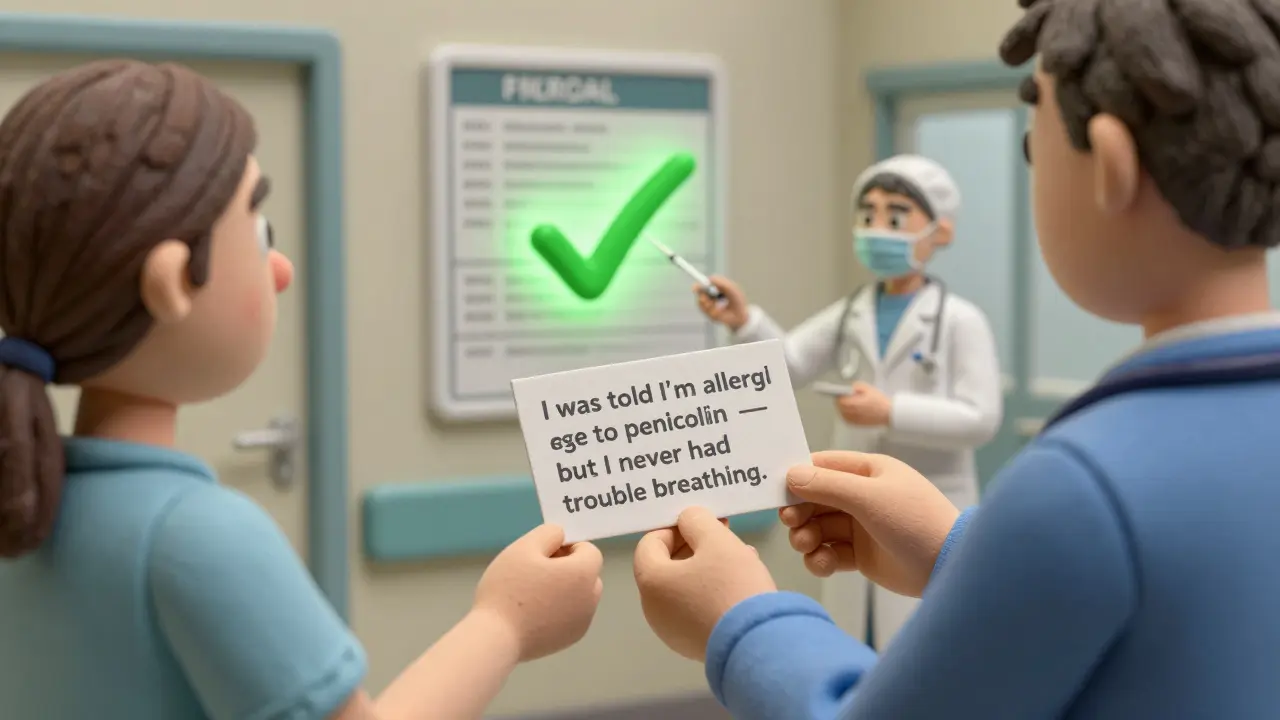
Next time you see your doctor, bring up your history. Say: ‘I was told I’m allergic to penicillin, but I never had trouble breathing. Can we check if it’s still true?’
It’s a simple question. But it could change your treatment-and maybe even save your life.
Can you outgrow a drug allergy?
Yes, especially with penicillin. Studies show that 80% of people who had a penicillin allergy as a child lose their sensitivity within 10 years. But without testing, you’ll never know. Many people keep avoiding the drug for decades, even though they’re no longer allergic. Skin testing or a supervised dose challenge is the only way to confirm.
If I had a rash with amoxicillin, does that mean I’m allergic?
Not necessarily. In children, a rash that appears 5-10 days after starting amoxicillin is often caused by a viral infection like Epstein-Barr or roseola-not the drug. But because the timing overlaps, it’s wrongly labeled as an allergy in 90% of cases. Only about 5% of these rashes are true allergic reactions. If you’re unsure, see an allergist.
Can side effects turn into allergies?
No. Side effects and allergies are different biological processes. A side effect is a direct pharmacological reaction-like nausea from antibiotics or dizziness from blood pressure meds. An allergy is an immune response. You can’t develop an allergy just because you had a side effect. But repeated exposure to a drug can sometimes trigger a true immune response over time, even if you never had one before.
Are there tests to confirm a drug allergy?
Yes-for some drugs. Penicillin has the most reliable tests: skin testing with major and minor determinants, followed by an oral challenge if skin tests are negative. These tests are 97-99% accurate at ruling out allergy. For other drugs like sulfa or NSAIDs, testing is less reliable and often requires a graded oral challenge under supervision. Blood tests are rarely useful except in rare cases like DRESS syndrome.
What should I do if I have a serious reaction to a drug?
If you experience trouble breathing, swelling of the face or throat, a rapid drop in blood pressure, or loss of consciousness, use an epinephrine auto-injector if you have one and call emergency services immediately. These are signs of anaphylaxis-a true medical emergency. Afterward, see an allergist to confirm if it was a true allergy. Don’t wait. Even if you feel fine later, the reaction could happen again-and worse.
Can I take other drugs if I’m allergic to one?
It depends. If you’re allergic to penicillin, you can usually take other classes of antibiotics like azithromycin or ciprofloxacin safely. But cross-reactivity can happen-especially between similar drugs. For example, if you’re allergic to one sulfa antibiotic, you might react to others in the same class. Always tell your doctor your full history. They’ll choose alternatives based on your specific reaction, not just the drug name.
Why do so many people think they have drug allergies?
Because side effects are common and poorly explained. Nausea, headaches, rashes, and fatigue happen often with medications-and many patients and even some doctors don’t know how to distinguish them from true allergies. A 2023 FDA review found that only 14.9% of reported ‘drug allergies’ met true allergy criteria. Most were side effects, viral rashes, or unrelated symptoms blamed on the medicine.


