
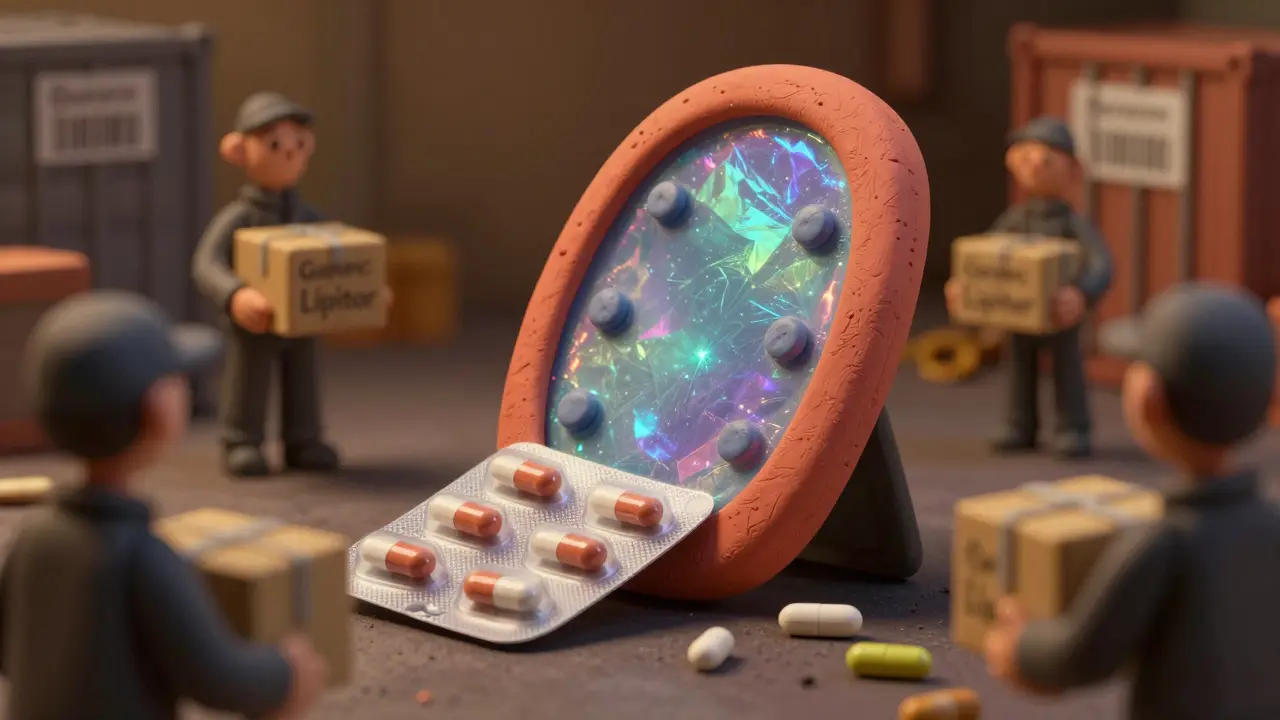
Every year, millions of people around the world take generic drugs because they’re affordable and just as effective as brand-name versions-if they’re real. But what happens when the pill in your bottle isn’t what it claims to be? Fake generic drugs are no longer a distant threat. They’re in circulation, slipping past checkpoints, and ending up in pharmacies, online stores, and even hospital supply rooms. And the way they get there is more sophisticated than most people realize.
How Fake Drugs Are Made
Counterfeit generic drugs aren’t made in some underground lab with bubbling beakers and hooded figures. They’re made in factories-sometimes with legitimate-looking licenses-that use cheap, unreliable ingredients. The active pharmaceutical ingredient (API) might be missing entirely, diluted, or replaced with something harmful. In some cases, counterfeiters use chemically similar compounds that look like the real thing under a microscope but do nothing to treat the condition. One 2021 study found that nearly 80% of fake medicines detected in legitimate supply chains were oral tablets, especially common in drugs for heart disease, antibiotics, and malaria. Packaging is where the deception gets scary good. Using off-the-shelf printing equipment, counterfeiters replicate labels, blister packs, and even holograms with 95% visual accuracy. A fake Lipitor pill might have the exact same color, size, and scoring as the real one. The only way to tell the difference is through lab testing. Some fakes even include fake batch numbers and expiration dates that match real production cycles. In 2023, Europol seized cancer drugs with AI-generated holograms that fooled even experienced inspectors.Where Fake Drugs Come From
Most counterfeit drugs originate in countries with weak regulatory oversight. Southeast Asia, Eastern Europe, and parts of Africa are hotspots. China has been linked to contaminated raw materials, like the 2008 heparin scandal that killed 149 people in the U.S. after a Chinese supplier mixed in a toxic substance. But it’s not just about where they’re made-it’s how they get into the system. The global generic drug market hit $438.7 billion in 2022. That’s a huge target. Counterfeiters don’t need to fool everyone-they just need to slip a few batches past the cracks. And there are plenty of cracks.The Three Main Entry Points
Counterfeit drugs don’t just show up on your doorstep. They work their way into the legal supply chain through three main routes. First, parallel importation. This is legal in some countries, where drugs bought cheaply in one region are resold in another. But it’s easy to mix in fake products. A shipment of genuine blood pressure pills from Germany might get blended with fake ones from a smuggler in Bulgaria. No one checks the batch numbers. No one questions the source. Second, grey market distributors. These are unauthorized wholesalers who buy legitimate drugs in bulk, then resell them without the manufacturer’s permission. They’re not always crooked-but they often don’t know what they’re handling. A warehouse in Poland might receive a pallet of diabetes meds from a supplier who doesn’t ask where they came from. Later, that pallet includes 20% counterfeit pills. The distributor never notices. The pharmacy never knows. The patient pays the price. Third, online pharmacies. This is the biggest problem. The National Association of Boards of Pharmacy found that 95% of online pharmacies operate illegally. You search for “cheap generic Viagra” and click the first result. You pay with Bitcoin. A week later, a package arrives from an unknown country. The pills look right. They taste right. But they contain no active ingredient-or worse, rat poison. Reddit users have posted about receiving Lipitor with mismatched tablet scoring. Pharmacists in Nigeria report patients coming in with fake antimalarials that contain only 10% of the needed artemisinin.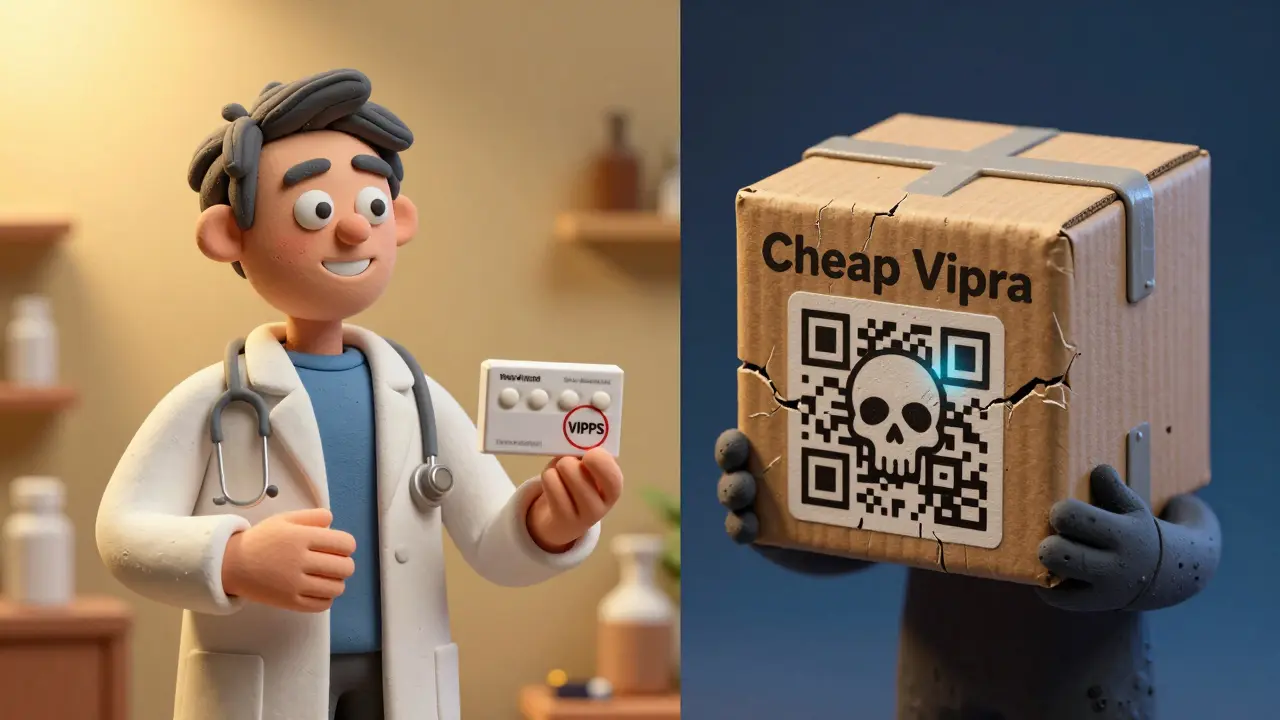
Why the System Fails
You’d think there’d be safeguards. There are-but they’re patchy. Only 40% of countries have any kind of track-and-trace system for drugs. That means no one can follow a pill from factory to pharmacy. The U.S. has the Drug Supply Chain Security Act (DSCSA), which requires full serialization by 2023. But in many low-income countries, there’s no law, no scanner, no database. A fake drug can move from a factory in India to a clinic in Ghana without leaving a digital trail. Even where systems exist, they’re not foolproof. The World Health Organization reports that only 22 of 194 member states have fully working track-and-trace systems. That’s less than 12%. And counterfeiters are adapting. They’re learning to fake QR codes, barcodes, and even blockchain verification tags. The problem is compounded by the fact that generic drugs are made to be cheap. Manufacturers cut corners to stay competitive. That pressure trickles down. Raw material suppliers get squeezed. Quality control gets skipped. A single contaminated batch can spread across continents before anyone notices.Who’s Affected
It’s not just patients in developing countries. In 2022, a survey of 1,200 pharmacists across 45 countries found that 68% had encountered suspected counterfeit drugs. One in three said they couldn’t tell the difference just by looking. In the U.S., the U.S. Pharmacopeia’s Medicine Quality Database logged over 1,200 incidents of fake or substandard drugs between 2013 and 2023. The most common? Cardiovascular drugs (28.7%), antibiotics (22.4%), and antimalarials (18.9%). And it’s not just about ineffective treatment. Fake drugs can kill. In 2023, the International Federation of Pharmaceutical Manufacturers & Associations reported that over half of all counterfeit medicines detected in legal supply chains were life-saving treatments. A fake antibiotic doesn’t just fail to cure an infection-it lets it spread. A fake heart medication can trigger a heart attack. A fake insulin? That’s a death sentence.
What’s Being Done
Some progress is being made. The European Union’s Falsified Medicines Directive, rolled out in 2019, required all prescription drugs to have unique identifiers and anti-tamper devices. Since then, counterfeit penetration in Europe has dropped by an estimated 18%. Companies like Pfizer have spent nearly two decades fighting counterfeits. Their program, working with customs, pharmacies, and law enforcement, has blocked over 302 million fake doses since 2004. Blockchain trials by MediLedger have shown 97.3% accuracy in spotting supply chain anomalies. But these solutions are expensive. Adding a DNA tag or a color-shifting ink to each pill costs between $0.02 and $0.05. For a company selling 10 million pills a month, that’s $200,000 to $500,000 extra per year. Many generic manufacturers can’t afford it. So they don’t do it.What You Can Do
You can’t stop counterfeit drugs alone. But you can protect yourself.- Buy from licensed pharmacies only. If it’s not a physical store or a verified online pharmacy (look for the VIPPS seal in the U.S. or the EU common logo), walk away.
- Check your pills. Compare the color, shape, size, and markings to what you’ve taken before. If it looks different, ask your pharmacist.
- Don’t buy drugs from social media ads or websites offering “90% off.” If it sounds too good to be true, it is.
- Report suspicious products. Most countries have a national drug regulatory agency. Report it. Someone needs to know.


