
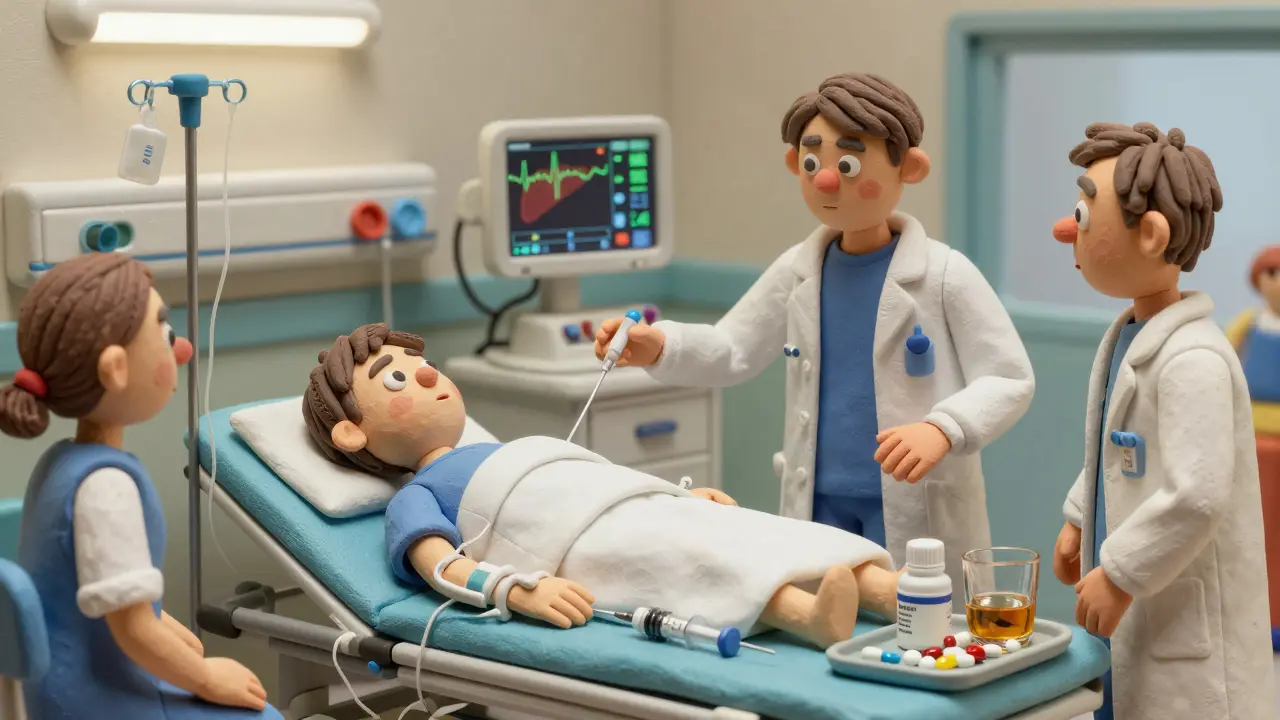
What Happens When Someone Overdoses on Multiple Drugs?
When a person takes too many drugs at once-whether by accident, mistake, or intent-it’s not just a bigger overdose. It’s a different kind of emergency entirely. Mixing opioids like oxycodone or fentanyl with acetaminophen (found in painkillers like Vicodin or Percocet), benzodiazepines like Xanax, or even alcohol creates a dangerous cocktail where each drug can make the others more deadly. The body doesn’t process them one at a time. They fight, interfere, and overload systems that were never meant to handle this kind of stress.
Take acetaminophen, for example. It’s safe at normal doses. But when taken in large amounts-especially with alcohol or other liver-stressing drugs-it can cause sudden, irreversible liver failure. In the U.S. alone, over 56,000 people end up in emergency rooms every year because of acetaminophen overdose. Now add opioids to the mix. Naloxone can reverse the breathing slowdown caused by opioids, but it does nothing for the liver damage building underneath. And if naloxone wears off after 30 to 90 minutes, while the opioids are still in the system, the person can stop breathing again. That’s why simply giving one antidote isn’t enough.
Why Standard Overdose Protocols Often Fail
Many people think if you give naloxone and the person wakes up, you’re done. That’s a dangerous myth. Naloxone’s effects don’t last as long as most opioids, especially synthetic ones like fentanyl. Fentanyl is up to 100 times stronger than heroin. A single dose of naloxone might bring someone back-but it won’t keep them safe. The 2023 SAMHSA guidelines say you may need to give naloxone two, three, or even four times in a single case. And every time you give it, you’re fighting a ticking clock.
Now imagine the person also took a lot of acetaminophen. You’ve revived their breathing, but their liver is still being destroyed. Acetylcysteine, the antidote for acetaminophen, needs to be given within 8 hours for best results-but it takes hours to infuse. If you don’t start it right away, even after the person seems fine, they could develop liver failure hours later. This is why hospitals now treat multiple drug overdoses as a coordinated operation, not a series of separate problems.
The Critical Role of Naloxone and When to Use It
If you suspect opioids are involved-slowed breathing, pinpoint pupils, unresponsiveness-give naloxone immediately. Don’t wait. Don’t worry about whether it’s the right drug. The risk of giving naloxone when it’s not needed is far lower than the risk of not giving it when it is. The SAMHSA Five Essential Steps for First Responders are clear: assess, call 999, give naloxone, support breathing, and monitor.
And here’s the part most people miss: support breathing. Naloxone doesn’t fix oxygen levels. If someone isn’t breathing well, you need to give rescue breaths while you wait for it to work. In many cases, just keeping oxygen flowing is what saves lives before the antidote even kicks in. For fentanyl overdoses, you may need to give naloxone every 2 to 3 minutes until emergency help arrives. The WHO recommends that naloxone kits be available to anyone who might witness an overdose-family members, friends, community workers. Training is simple: inject or spray, call for help, keep breathing for them.

Managing Acetaminophen Toxicity: The Silent Killer
Acetaminophen doesn’t cause obvious symptoms at first. No vomiting, no seizures, no dramatic collapse. Just fatigue, nausea, maybe a little pain under the ribs. By the time the person feels really sick, the liver is already damaged. That’s why timing matters more than anything.
For a single large overdose, doctors use the Rumack-Matthew nomogram to decide if acetylcysteine is needed. But for people who took too much over several days-maybe taking extra painkillers for back pain-it’s trickier. If liver enzymes are high or acetaminophen levels are above 20 μg/mL, start acetylcysteine right away, even if the exact time of ingestion is unknown. The 2023 JAMA Network Open guidelines say: when in doubt, treat. For people over 100 kg, dosing is capped at 100 kg to avoid giving too much. And if the overdose is so severe that the person is acidotic or confused, hemodialysis may be needed. Even then, acetylcysteine must continue during dialysis.
What About Benzodiazepines and Other Mixes?
Benzodiazepines like diazepam or alprazolam slow breathing too. When mixed with opioids, the risk of death goes up dramatically. But here’s the catch: giving flumazenil-the antidote for benzodiazepines-can trigger seizures in people who are dependent on them. That’s why most hospitals avoid it unless the overdose is purely benzodiazepine-related. Instead, they focus on breathing support and monitoring.
Tramadol is another curveball. It’s not a classic opioid, but it acts like one. It also lowers the seizure threshold. Overdosing on tramadol can cause both respiratory depression and seizures. Naloxone helps, but often needs to be given continuously via IV because tramadol lasts 5 to 6 hours. You can’t just give one shot and walk away.
What Hospitals Do Differently
In the ER, it’s not just about antidotes. It’s about the full picture. Blood tests check liver enzymes, kidney function, blood pH, and drug levels. An ECG looks for heart rhythm problems. The patient is monitored for at least 4 to 6 hours-even if they seem fine-because some effects are delayed. Activated charcoal might be given if the overdose happened within the last 2 hours, but only if the person is awake and breathing well. It’s not a magic pill-it binds drugs in the gut but doesn’t help if they’ve already been absorbed.
Patients who get activated charcoal need to drink plenty of water. Charcoal can cause severe constipation. It can also block other medications, including birth control pills. If someone is on oral contraceptives, they need backup protection for the next month.

Long-Term Recovery Starts in the ER
Surviving a multiple drug overdose is only the first step. The real challenge is what comes next. Studies show people released from prison are at highest risk of overdose in the first four weeks. Their tolerance drops, but they often go back to using the same dose they used before incarceration. That’s deadly.
Every overdose case should trigger a conversation about treatment. Methadone or buprenorphine can help with opioid dependence. Counseling, support groups, and social services are just as important as the medical care. The American Addiction Centers stress that follow-up with a primary care doctor is critical. Liver damage, kidney strain, or nerve injury from lack of oxygen can show up weeks later. And untreated addiction? It leads to another overdose.
What You Can Do Right Now
If you or someone you know takes multiple medications, keep a list of everything-prescriptions, over-the-counter pills, supplements. Bring it to every doctor visit. Don’t assume a new painkiller is safe just because it’s sold without a prescription. Many contain acetaminophen.
Keep naloxone in your home if you or a loved one uses opioids, even occasionally. It’s available without a prescription in the UK and many parts of the U.S. Learn how to use it. Practice with a training kit. Teach your family.
If you witness an overdose: call 999, give naloxone if available, start rescue breathing, and stay with the person until help arrives. Don’t leave them alone. Don’t assume they’re fine after waking up. The next hour is the most dangerous.
Can you overdose on two prescription drugs that are safe on their own?
Yes. Many people think if a drug is prescribed, it’s safe to combine. But mixing opioids like oxycodone with acetaminophen-containing painkillers, or benzodiazepines with sleep aids, can push the body past its limits. Even drugs that are safe alone can become dangerous together. Always check with a pharmacist or doctor before combining medications.
How long does naloxone last, and why does that matter?
Naloxone typically lasts 30 to 90 minutes. But many opioids, especially fentanyl, stay in the body for several hours. If naloxone wears off and the opioid is still active, breathing can stop again. That’s why anyone who gets naloxone must be monitored for at least 4 hours-even if they seem fine. Never assume one dose is enough.
Is activated charcoal always used in overdose cases?
No. Activated charcoal works best if given within 1 to 2 hours of ingestion. After that, most drugs have already been absorbed. It’s also not used if the person is unconscious, having seizures, or at risk of vomiting. In multiple drug cases, doctors weigh risks: does the benefit outweigh the chance of choking or interfering with other treatments? It’s not routine-it’s case-by-case.
Can you reverse an acetaminophen overdose after 24 hours?
Acetylcysteine is most effective if given within 8 hours, but it can still help up to 24 hours after ingestion-especially if liver damage hasn’t fully set in. Even after 24 hours, if liver enzymes are rising or the person is showing signs of toxicity, treatment should continue. The goal is to prevent or slow liver failure, not just reverse the overdose.
What should you do if someone wakes up after naloxone but still seems off?
Call emergency services anyway. Naloxone may have revived breathing, but other drugs could still be causing harm. They might be confused, shaky, or nauseous because of liver or kidney stress. Only a hospital can run the tests needed to see what’s really going on. Never send someone home after an overdose, even if they seem fine.
Final Thoughts: It’s Not Just About the Antidote
Managing multiple drug overdoses isn’t about having the right drug on hand. It’s about having the right system: quick recognition, coordinated care, and long-term support. The tools exist-naloxone, acetylcysteine, activated charcoal, monitoring protocols. But they only work if people know when and how to use them. And they only matter if we don’t stop at saving a life, but keep going to help people rebuild it.


