
Many people think they’re allergic to a drug-maybe penicillin, sulfa, or ibuprofen-because they had a rash or felt sick after taking it. But here’s the truth: 9 out of 10 people who say they’re allergic to penicillin aren’t actually allergic at all. Skin testing can prove it. And if you’ve been told you can’t take certain medicines because of a past reaction, you might be missing out on safer, cheaper, or more effective treatments. Drug allergy skin testing isn’t just a lab trick-it’s a real, safe, and accurate way to find out what’s really going on with your body.
How Skin Testing Works for Drug Allergies
There are three main types of skin tests used for drug allergies: skin prick, intradermal, and patch tests. Each one looks for a different kind of reaction, and your doctor picks the right one based on your history.
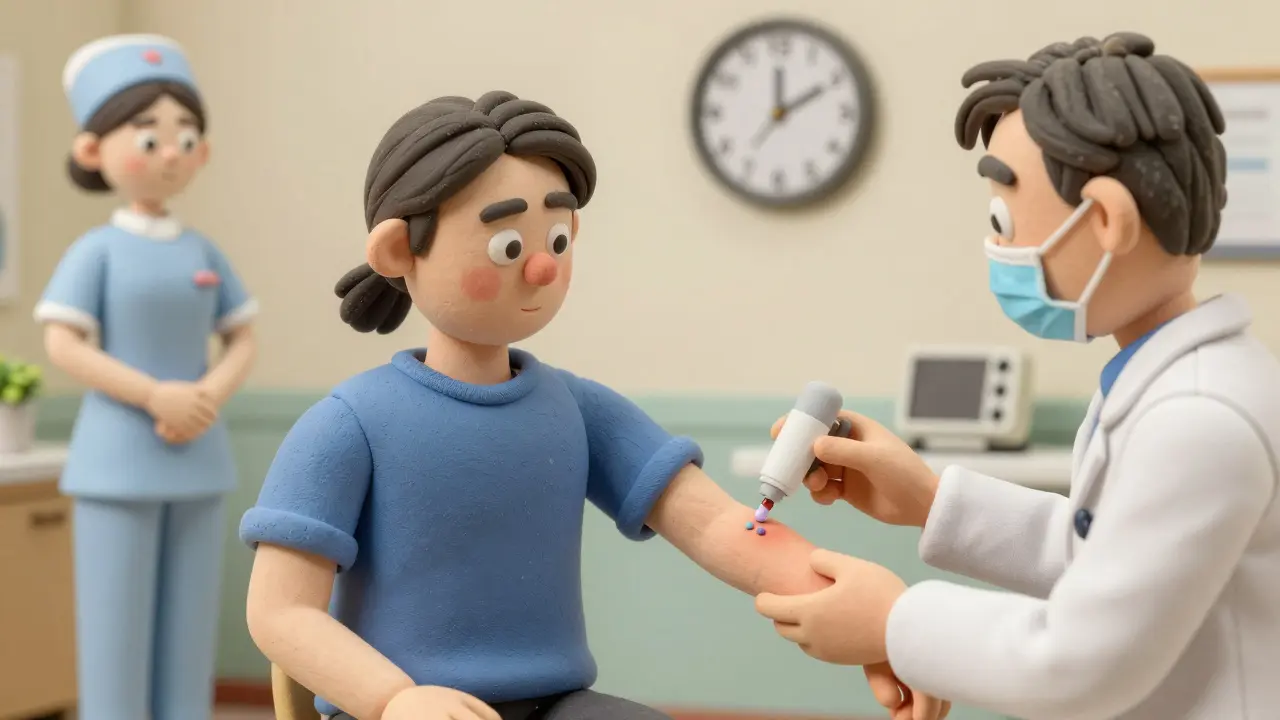
The skin prick test is the first step. A drop of a diluted drug solution is placed on your forearm or back. Then, a tiny plastic device gently pricks the skin through the drop-just enough to let a little of the drug get under the surface. It doesn’t hurt much. Most people describe it as a light mosquito bite. You’ll wait 15 to 20 minutes. If your skin gets red, swollen, or itchy at that spot, it’s a sign your immune system reacted. But if nothing happens, that’s good news.
If the skin prick test is negative but your doctor still suspects an allergy, they might do an intradermal test. This involves a tiny needle injecting a small amount (0.02 to 0.05 ml) of the drug just under the skin. It makes a small bump, like a mosquito bite you can feel. Again, you wait 15 to 20 minutes. A positive result means the bump grew by at least 3 mm compared to the original. This test is more sensitive than the prick test, meaning it’s better at catching true allergies-but it also has a higher chance of giving a false positive. That’s why both tests are often used together.
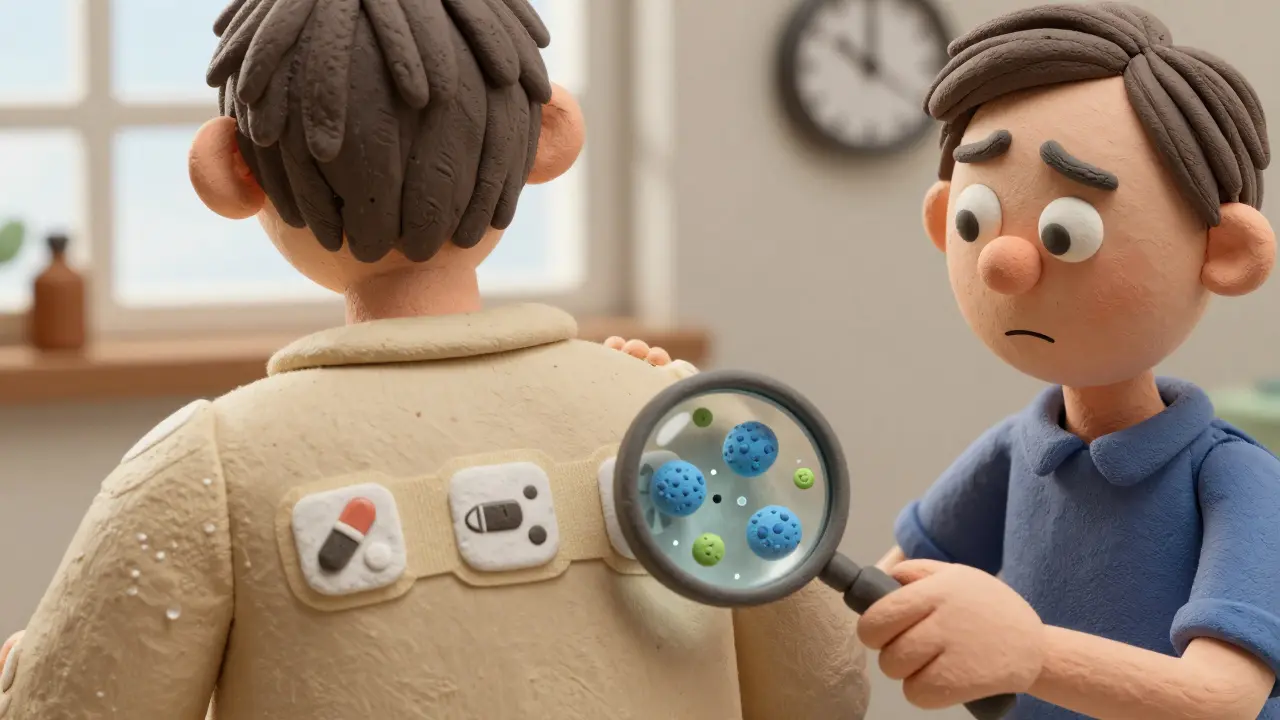
For reactions that show up hours or days later-like a slow-rising rash or blistering skin-the patch test is used. A small amount of the drug is taped to your back for 48 hours. You come back to have it checked. This isn’t for immediate reactions like hives or trouble breathing. It’s for delayed ones.
Every test includes two controls: one with histamine (to make sure your skin reacts normally) and one with saline (to make sure nothing happens when there’s no drug). If the histamine doesn’t cause a bump, the test is invalid. If the saline causes a reaction, something’s wrong with your skin. These controls keep the results trustworthy.
What Drugs Can Be Tested
Not every drug can be tested. The most reliable results are for beta-lactam antibiotics-penicillin, amoxicillin, ampicillin, and some cephalosporins. For penicillin, if both skin prick and intradermal tests are negative, there’s a 95% chance you’re not allergic. That’s huge. It means you can safely take a simple, cheap antibiotic instead of being stuck with stronger, more expensive ones that can cause side effects or lead to resistant infections.
For other drugs, the accuracy drops. Cephalosporins (another class of antibiotics) have a sensitivity rate of only 30-50%. That means skin tests miss a lot of true allergies here. NSAIDs like ibuprofen or aspirin? Skin tests aren’t reliable at all. Opioids like morphine or codeine? Testing is still being refined, but new guidelines from the NIAID in early 2023 now support cautious testing under supervision. Even vancomycin and ciprofloxacin are being studied for standardized test solutions-right now, they’re not routinely testable in most clinics.
That’s why your doctor doesn’t just test for everything. They focus on the drugs you’ve reacted to and the ones you might need in the future. If you had a bad reaction to amoxicillin, they’ll test for penicillin and amoxicillin specifically-not every antibiotic on the shelf.
What Happens Before the Test
Preparation is key. If you’re taking antihistamines-even over-the-counter ones like cetirizine or loratadine-you must stop them for at least 5 to 7 days before testing. These drugs block your body’s allergic response, so they can make a positive test look negative. That’s why some people get rescheduled: they didn’t know they had to stop their allergy pills.
You also shouldn’t have an active rash, hives, or an ongoing allergic reaction when you come in. If you’re wheezing or having trouble breathing, the test gets postponed. Testing during a flare-up is dangerous. You also shouldn’t be on beta-blockers if you’re getting intradermal testing-they can make it harder to treat a reaction if one happens.
Wear a short-sleeve shirt. You’ll need access to your arms or back. Don’t apply lotion or cream to the test area. Your skin needs to be clean and dry.
What to Expect During and After
The whole process takes about 45 to 60 minutes. You’ll sit or lie down while the tests are done. The skin prick test is quick-no needles, just light pressure. The intradermal test feels like a tiny pinch and might sting a little. Some people say it feels like a bee sting that lasts a few minutes. It’s uncomfortable, but not unbearable.
After the test, you’ll wait in the clinic. Nurses will check your skin every few minutes. If you get a strong reaction, they’re ready with epinephrine and other meds. But serious reactions during skin testing are rare. The drug doesn’t go into your bloodstream-it stays right where it’s placed. That’s why skin testing is considered very safe when done correctly.
If your skin reacts, you’ll feel itching at the site. That’s normal. The nurse might give you an antihistamine cream or oral pill to help. The redness and swelling usually fade within a few hours. You might have a small bruise or mark, but it won’t last.
Some people report anxiety before the test. That’s common. But knowing what to expect helps. Many patients say, “I was scared it would make me sick-but it didn’t. It was way easier than I thought.”
What the Results Mean
A positive result means your immune system recognized the drug as a threat. It doesn’t always mean you’ll have a bad reaction if you take it again-but it does mean you need to be careful. You’ll likely be advised to avoid that drug and carry an allergy alert card.
A negative result is more powerful than most people realize. For penicillin, a negative skin test means you can probably take it safely. Many doctors will follow up with a drug challenge-giving you a small, supervised dose of the drug-to confirm. This is especially important if you’ve been avoiding penicillin for years and now need it for an infection.
But here’s the catch: a negative test doesn’t guarantee you’re safe for every drug. For some antibiotics like cephalosporins, skin tests miss up to half of true allergies. That’s why doctors still use caution. They might still recommend a challenge if the drug is essential.
False negatives happen. One case reported in Medscape in 2022 involved a patient with negative skin tests to a cephalosporin who later had anaphylaxis during treatment. That’s why testing is just one tool. Your doctor combines it with your history, symptoms, and sometimes blood tests.
Why This Matters for Your Health
Being labeled “allergic to penicillin” changes your care. You’re more likely to get broad-spectrum antibiotics like vancomycin or clindamycin. These are more expensive, harder on your gut, and increase your risk of deadly infections like C. diff. A 2023 study in JAMA Internal Medicine showed hospitals with formal allergy testing programs had 22% fewer C. diff infections.
At Johns Hopkins, after they started routinely testing patients for penicillin allergy, they cut broad-spectrum antibiotic use by 30%. That’s not just good for you-it’s good for everyone. Less overuse means fewer superbugs.
If you’ve been told you’re allergic to a drug, ask: “Can I be tested?” If you’ve avoided a medicine for years because of a childhood rash, you might be living with unnecessary restrictions. Skin testing can free you from that label.
Who Should Get Tested
You should consider skin testing if:
- You were told you’re allergic to penicillin or another antibiotic
- You had a rash, hives, or swelling after taking a drug
- You’re facing surgery or an infection and need a specific antibiotic
- You’re on multiple medications and want to avoid unnecessary ones
- You’re pregnant or planning to be-some antibiotics are safer than others
It’s not for everyone. If you’ve had anaphylaxis, severe blistering, or organ damage after a drug, skin testing might not be safe. Your doctor will decide based on your history.
Where to Get Tested
Not every clinic offers this. You need an allergist or immunologist trained in drug allergy testing. In the UK, many NHS hospitals have allergy services. In the US, it’s more common in academic medical centers. Ask your GP or pharmacist to refer you. If they say, “We don’t do that here,” ask for a referral to an allergy specialist.
Testing is covered by most insurance plans when medically necessary. In the UK, it’s available through the NHS. In the US, Medicare and private insurers typically cover it if you have a documented history of reaction.
What’s New in 2026
Standardized penicillin test kits were approved in Europe in 2022, fixing a big problem: before, every hospital made their own reagents, so results varied. Now, tests are more reliable.
Researchers are working on test solutions for ciprofloxacin and vancomycin. Phase 2 trials are underway. In the future, we might be able to test for more drug allergies accurately.
Component-resolved diagnostics-looking at specific parts of the drug molecule-are also improving accuracy. This helps tell the difference between a true allergy and a harmless reaction.
Hospitals are now running “allergy delabeling” programs. They identify patients with old allergy labels, test them, and update their records. It’s changing how medicine is given.
Can I do a drug allergy skin test at home?
No. Drug allergy skin testing must be done in a medical setting with trained staff and emergency equipment. Even though reactions are rare, they can happen quickly. You need immediate access to epinephrine, oxygen, and monitoring. Never try to test yourself or use home kits.
How long do the results last?
Once you’ve been tested and cleared, the results usually last for life. Your immune system doesn’t suddenly develop a new allergy to a drug you’ve been safely taking. But if you have a new reaction later, you should be re-evaluated. Some allergies can develop over time, though it’s uncommon.
Are there side effects from skin testing?
Most people have no side effects beyond mild itching or redness at the test site. In rare cases, a larger local reaction occurs. Systemic reactions like anaphylaxis are extremely rare during skin testing-less than 1 in 1,000 tests. That’s why tests are done in clinics with staff trained to handle emergencies. The benefits far outweigh the risks.
What if I’m allergic to the control solution?
If your skin reacts to histamine (the positive control), that’s normal-it’s supposed to. If it reacts to saline (the negative control), something’s wrong. It could mean your skin is overly sensitive, or you have a condition like dermatographism. Your doctor will note this and interpret your results carefully. It doesn’t mean you’re allergic to saline.
Can children get skin tested for drug allergies?
Yes. Children as young as 2 can be tested safely, especially if they’ve had a reaction to antibiotics like amoxicillin. Pediatric allergists use smaller doses and adjust techniques. Skin testing is often more reliable in kids than in adults because their immune systems haven’t been exposed to as many drugs. It’s a great way to avoid unnecessary restrictions early in life.
Will my doctor automatically test me if I say I’m allergic?
Not usually. Most doctors assume the allergy is real unless you ask for testing. If you want to be tested, say so clearly: “I think I might not be allergic anymore. Can I be evaluated?” Many patients don’t know testing exists. Taking the initiative can change your future care.


