
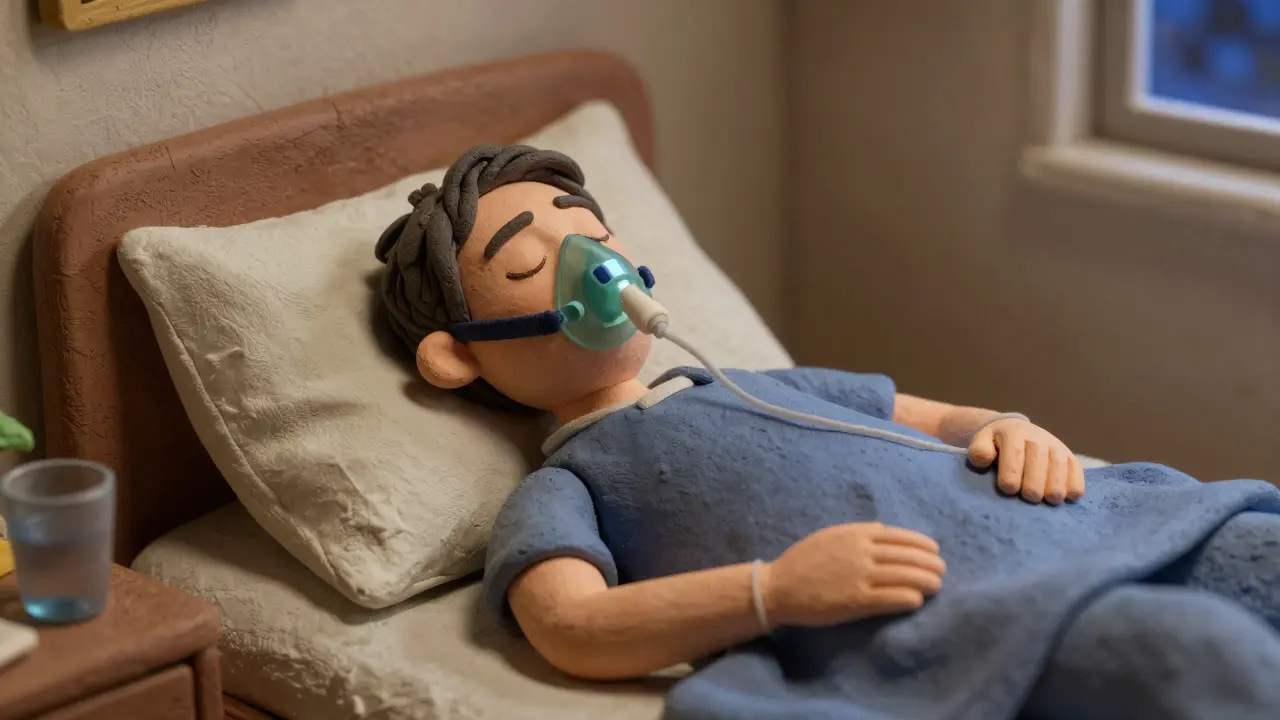
When someone is diagnosed with ALS, the focus quickly shifts from treatment to care. There’s no cure, but two interventions stand out as life-changing: noninvasive ventilation and nutrition strategies. These aren’t optional extras-they’re the backbone of survival and comfort for most people living with the disease. If used properly, they can add months, even years, to life while keeping daily moments more meaningful.
Why Noninvasive Ventilation Matters More Than You Think
ALS doesn’t just weaken your arms or legs. It slowly steals your ability to breathe. The diaphragm, the main muscle that pulls air into your lungs, gets weaker. At first, it shows up as trouble sleeping-waking up gasping, morning headaches, or feeling exhausted even after a full night’s rest. Many people dismiss this as aging or stress. But in ALS, it’s a red flag.
Noninvasive ventilation (NIV), usually delivered through a nasal or facial mask with a BiPAP machine, steps in where your body can’t. It doesn’t replace your lungs-it supports them. By giving you a gentle push of air during inhalation and holding pressure during exhalation, it helps you breathe deeper and more efficiently. This isn’t science fiction. Studies show that people who start NIV early live about 7 months longer on average than those who don’t. One 2006 study found median survival jumped from 215 days without NIV to 453 days with it.
There’s a myth that NIV only works if you don’t have trouble swallowing or speaking. That’s outdated. Research from 2013 showed that even people with bulbar ALS-where speech and swallowing are affected-get the same survival benefit. The key isn’t how strong your voice is; it’s whether your breathing is failing. If your forced vital capacity (FVC) drops below 80%, or if you’re waking up tired, snoring loudly, or feeling foggy during the day, it’s time to talk to your care team about NIV.
How NIV Is Set Up and What to Expect
Most people start with a standard BiPAP device. Settings usually begin with an inspiratory pressure (IPAP) of 12-14 cm H₂O and an expiratory pressure (EPAP) of 4-6 cm H₂O. The machine also has a backup rate-typically 12 breaths per minute-to make sure you don’t go too long without a breath. These aren’t set in stone. They’re adjusted over time based on how you feel and your blood oxygen levels.
Adherence is the real challenge. In the first month, many users only wear the mask 5-10 days out of 30. It’s uncomfortable. The straps dig in. The air feels too forceful. Your skin gets red or raw. But here’s the truth: 80% of people who stick with it for a year are using it 27+ days a month. The discomfort fades. Masks improve. Support gets better. The payoff? 87% of users report fewer morning headaches. 79% say their sleep quality improves. 72% feel more awake during the day.
Some patients move to a Trilogy ventilator, like the Philips Respironics model. It’s pricier-$6,000 to $10,000-but it’s designed for ALS. It can switch from nighttime use to daytime use as the disease progresses. It has a built-in battery that lasts 8-12 hours, so you can move around. It tracks your breathing data, so your care team can adjust settings remotely. Patients rate it 4.2 out of 5 on ALS forums-higher than standard BiPAP devices.
When to Start NIV: The Timing Debate
Guidelines in Europe and Canada say: start NIV as soon as you have symptoms or FVC drops below 80%. In the U.S., insurance companies often demand proof of severe decline-FVC under 50%, or sniff nasal inspiratory pressure (SNIP) under 40 cm H₂O. This creates a dangerous gap. By the time insurance approves NIV, many patients have already lost weeks or months of potential benefit.
That’s why care teams at top ALS centers now recommend starting NIV proactively. If you’re struggling to sleep, feeling fatigued, or your oxygen levels dip below 92% at night, don’t wait for a lab test. Ask for a sleep study and a trial of NIV. The goal isn’t just to live longer-it’s to live better. Using NIV for at least 4 hours a night is linked to survival benefit. More than that? Even better.
Nutrition: Why Weight Matters More Than You Realize
Swallowing becomes harder as ALS progresses. Chewing takes longer. Food feels sticky. You cough after eating. It’s not just inconvenient-it’s dangerous. Poor nutrition speeds up muscle loss, weakens your immune system, and makes breathing even harder.
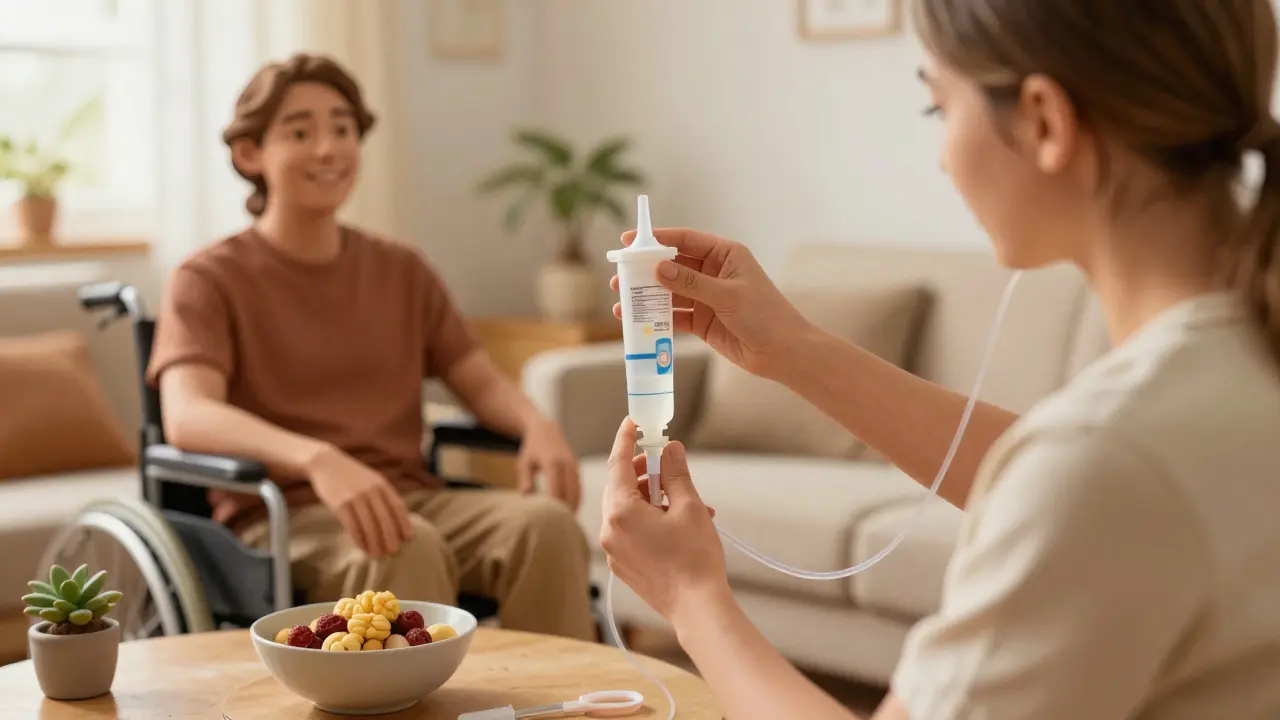
The standard solution is a PEG tube-percutaneous endoscopic gastrostomy. It’s a small tube placed directly into your stomach through your belly wall. You don’t have to stop eating by mouth. But now, if you’re not getting enough calories, you can use the tube to deliver high-calorie shakes, liquids, or blended meals. It’s simple. It’s safe. And it works.
One study found that without a PEG tube, ALS patients lost an average of 12.6% of their body weight in six months. With a PEG tube, that number dropped to 0.5%. That’s not a small difference. It’s the difference between staying strong enough to breathe and slipping into decline. Research shows PEG placement before FVC falls below 50% or BMI drops under 18.5 kg/m² can add about 120 days to life.
Some families delay PEG because they fear surgery. But it’s done as an outpatient procedure under light sedation. Recovery takes a few days. Most people go home the same day. The real risk isn’t the tube-it’s waiting too long. Once swallowing is severely impaired, the window for safe placement closes.

Combining NIV and Nutrition: The 12.3-Month Advantage
Neither NIV nor PEG alone is the full picture. Together, they’re a game-changer. A 2021 analysis of ALS registries across 12 countries found that patients who received both interventions lived 12.3 months longer than those who got neither. That’s more than a year of time-time to celebrate birthdays, take trips, hold hands, or just sit quietly with loved ones.
This isn’t about prolonging life at all costs. It’s about preserving dignity and quality. People who use NIV and PEG report less anxiety about choking. They sleep better. They have more energy. They can focus on what matters, not on whether they’ll make it through the night.
What to Do Next
If you or someone you care about has ALS, here’s what to ask for:
- Ask for a sleep study if you have morning headaches, daytime fatigue, or snoring.
- Request a trial of NIV as soon as FVC drops below 80%-don’t wait for insurance approval.
- Discuss PEG tube placement when weight starts to drop, even if you’re still eating.
- Work with a respiratory therapist and dietitian who specialize in ALS. They know the tricks: mask fitting, pressure adjustments, high-calorie recipes.
- Track your NIV usage. Most machines show daily hours. Aim for 4+ hours, ideally more.
There’s no magic pill for ALS. But these two tools-breathing support and nutrition-are the closest thing we have to one. They don’t stop the disease. But they give you time. And time is everything.
Can you use noninvasive ventilation if you have trouble swallowing?
Yes. Earlier concerns that bulbar dysfunction made NIV less effective have been disproven. Studies show people with trouble swallowing get the same survival benefit from NIV as those without it. The key is managing secretions and ensuring the mask fits well to prevent air from entering the stomach. A speech therapist can help with techniques to reduce aspiration risk.
How long does a BiPAP machine last, and what needs replacing?
Most BiPAP machines last 5-7 years with proper care. Masks, headgear, and filters need replacing every 3-6 months. Masks can become stiff or leak, and filters clog with dust. Replacement costs are $100-$300 per set. Some insurance plans cover these, but check your policy. Trilogy ventilators have longer-lasting parts and built-in diagnostics that alert you when maintenance is needed.
Is a PEG tube painful to use?
The tube itself isn’t painful once healed. The insertion site may be tender for a few days, but after that, most people forget it’s there. Feeding through the tube is simple-just connect a syringe or gravity bag. You can still eat by mouth if you want. The tube is a backup, not a replacement. Many say it gives them peace of mind.
Can you travel with a Trilogy ventilator?
Yes. The Trilogy is designed for mobility. It weighs under 12 pounds, has a built-in battery lasting 8-12 hours, and works on AC or DC power. Airlines allow it as a medical device. Always carry a doctor’s note and spare batteries. Some models even have integrated pulse oximetry, so you can monitor oxygen levels on the go.
What if insurance denies NIV or PEG?
Many insurance companies require strict criteria like FVC under 50%, which delays care. Appeal the decision with your doctor’s letter, referencing guidelines from the American Academy of Neurology and Canadian Thoracic Society. ALS advocacy groups like the ALS Association can help with appeals. In the U.S., Medicare typically covers both NIV and PEG under durable medical equipment rules. Don’t give up-many approvals come after a formal appeal.


