
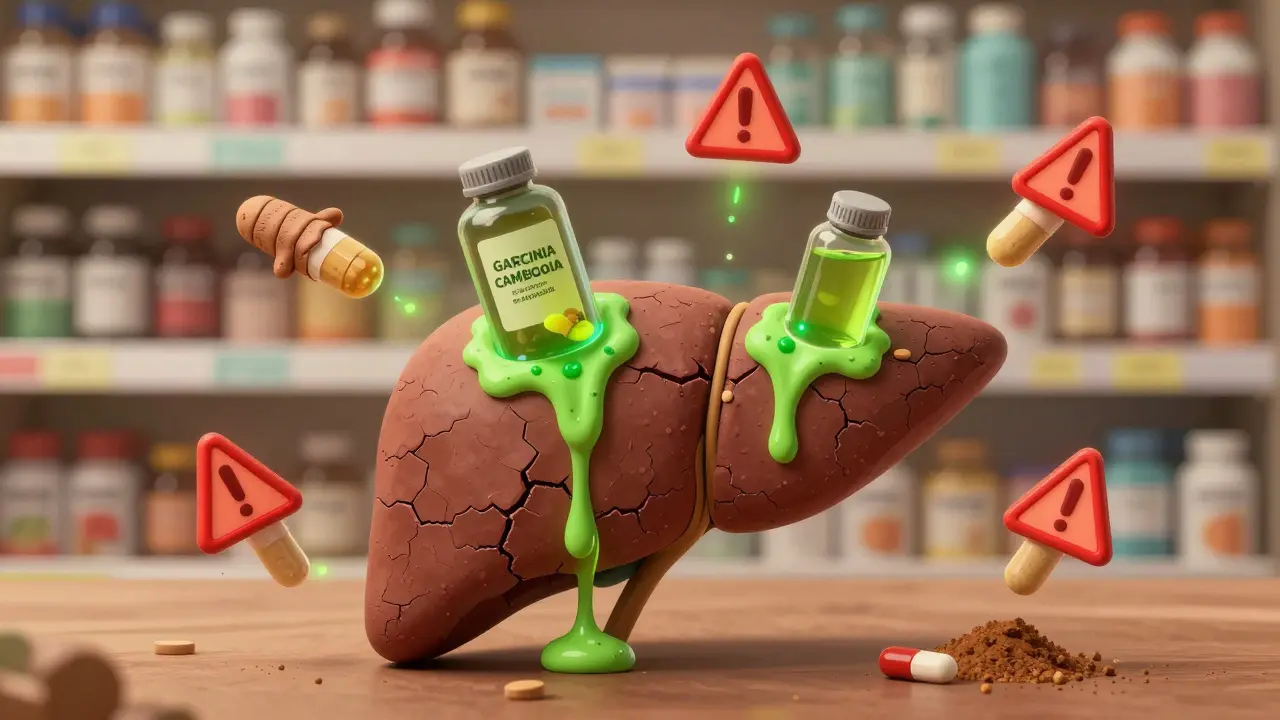
Every year, more people turn to herbal supplements hoping for better health-more energy, less stress, faster weight loss. But behind the glowing reviews and TikTok trends, a quiet crisis is growing: herbal and supplement liver toxicity. Your liver doesn’t care if something is labeled ‘natural.’ It still has to process it. And when it can’t, damage follows.
What’s Really in Your Supplement?
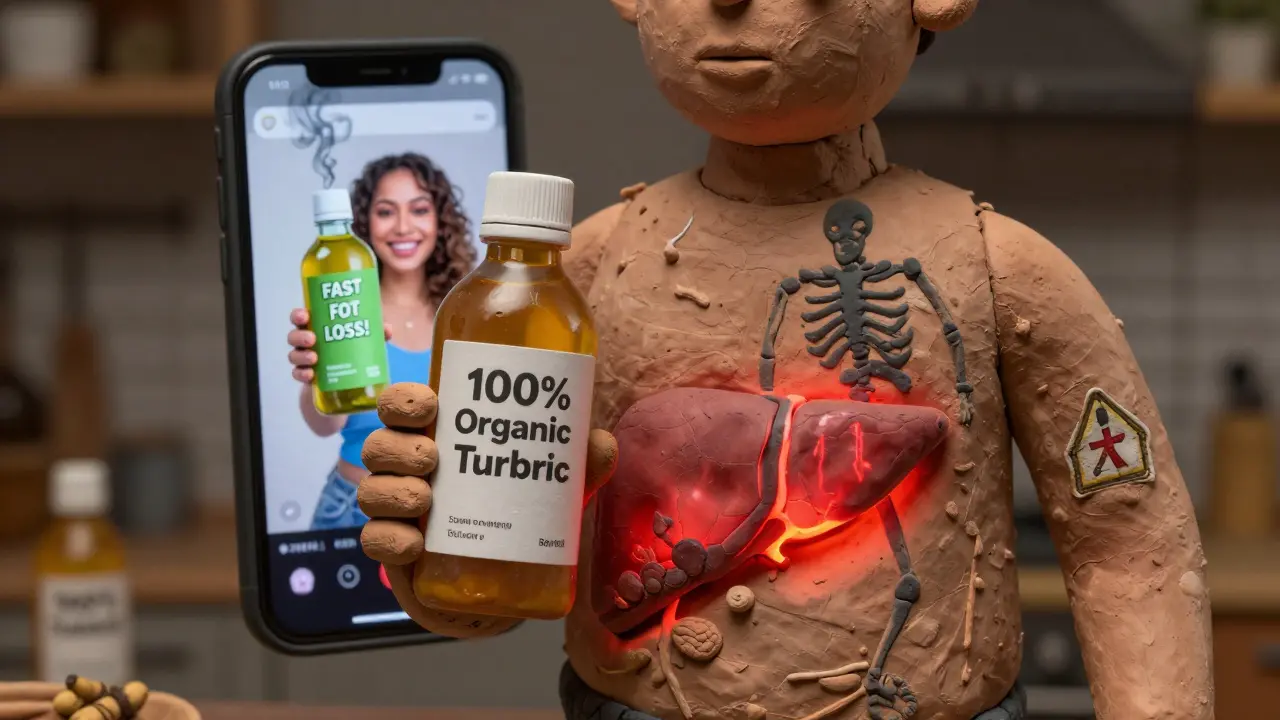
You open a bottle of turmeric capsules. The label says ‘100% organic turmeric root.’ But a 2023 Consumer Reports test found that 30% of turmeric supplements contained lead levels above California’s safety limit. Another 25% of green tea extract products had more epigallocatechin gallate (EGCG) than safety guidelines recommend. That’s not a mistake-it’s common.
Studies show up to 60% of herbal supplements don’t match their labels. Some contain fillers. Others have hidden drugs-like sildenafil (the active ingredient in Viagra) in ‘male enhancement’ pills, or corticosteroids in ‘natural’ anti-inflammatories. In one case, a popular weight-loss product called OxyELITE Pro® was found to contain aegeline, a compound from the bael fruit, which triggered liver failure in dozens of users.
Even the plant itself can be unpredictable. The same herb harvested in spring versus fall can have wildly different potency. Soil quality, part of the plant used (root vs. leaf), and pesticide residue all change the risk. A supplement made from one batch of green tea leaves might be safe. The next batch? Could be toxic.
The Six Most Dangerous Supplements for Your Liver
Based on data from the NIH LiverTox database and a 2024 JAMA Network Open study, six supplements stand out as top culprits in liver injury cases:
- Turmeric or curcumin - Often praised for anti-inflammatory benefits, but high doses (especially over 1,000 mg daily) have caused acute hepatitis. Hospitalizations have spiked, especially among people taking it long-term.
- Green tea extract - The antioxidant EGCG can be toxic at concentrated levels. Cases of liver damage from green tea extract far outnumber those from drinking tea.
- Garcinia cambogia - Marketed for weight loss, this supplement has been linked to liver failure in multiple case reports. The exact mechanism? Still unclear.
- Black cohosh - Used for menopause symptoms, this herb has been tied to autoimmune-like liver injury. Some patients needed transplants.
- Red yeast rice - Contains monacolin K, a compound chemically identical to the statin drug lovastatin. But without dosage control, it can cause muscle and liver damage.
- Ashwagandha - A popular adaptogen for stress and sleep. But recent data shows it’s increasingly linked to elevated liver enzymes and cholestatic injury.
These aren’t outliers. They’re the most common. And they’re everywhere-sold online, in gyms, even in pharmacies.
How Do These Supplements Damage the Liver?
Your liver is your body’s main detox station. It breaks down everything you swallow-medications, alcohol, food, supplements. But some compounds don’t break down cleanly. They create toxic byproducts that build up, trigger inflammation, and kill liver cells.
Dr. Alisa Likhitsup, a hepatologist at the University of Michigan, says: ‘How these products cause liver damage is not yet known, but it is likely due to metabolism that occurs in the liver after the products were consumed.’ In simpler terms: your liver tries to process them, but ends up poisoning itself.
Some people are more at risk. Genetics play a role. A 2022 study in Hepatology found that people with the HLA-B*35:01 gene variant are more likely to develop liver injury from certain herbs. It’s like a food allergy-but for your liver. One person might take ashwagandha for years with no issues. Another takes it once and ends up in the hospital.
Signs Your Liver Might Be in Trouble
Most people don’t feel liver damage until it’s advanced. But early warning signs are there-if you know what to look for:
- Fatigue - Over 87% of cases report extreme tiredness that doesn’t improve with rest.
- Abdominal pain - Especially in the upper right side, under your ribs.
- Nausea or vomiting - Not just morning sickness. This comes with no other illness.
- Dark urine - Like cola or tea. This means bilirubin is building up.
- Yellow eyes or skin - Jaundice. A late sign, but unmistakable.
These symptoms show up weeks or months after starting a supplement. Many patients think they’re just ‘getting older’ or ‘stressed.’ But if you’ve started a new herbal product and feel off, your liver might be screaming for help.
Why Isn’t This Regulated?
Here’s the brutal truth: the FDA doesn’t require herbal supplements to prove safety before they hit the market. Unlike prescription drugs, which go through years of clinical trials, supplements can be sold without any human testing. The Dietary Supplement Health and Education Act of 1994 made this legal. Since then, the number of liver injury cases tied to supplements has tripled.
Dr. Robert S. Brown of Weill Cornell Medicine says: ‘The liver damage caused by supplements is identical to the damage caused by pharmaceuticals.’ The difference? Pharmaceuticals come with dosage limits, warning labels, and safety data. Supplements? No limits. No warnings. No oversight.
Even the ‘natural’ label is misleading. Aloe vera, valerian, ginseng, and mountain germander (Teucrium polium) have all caused liver failure. Just because it comes from a plant doesn’t mean it’s safe.
What Should You Do?
Don’t stop all supplements. But be smart.
- Stop high-dose extracts. Turmeric powder in food? Fine. 1,500 mg capsules daily? Risky.
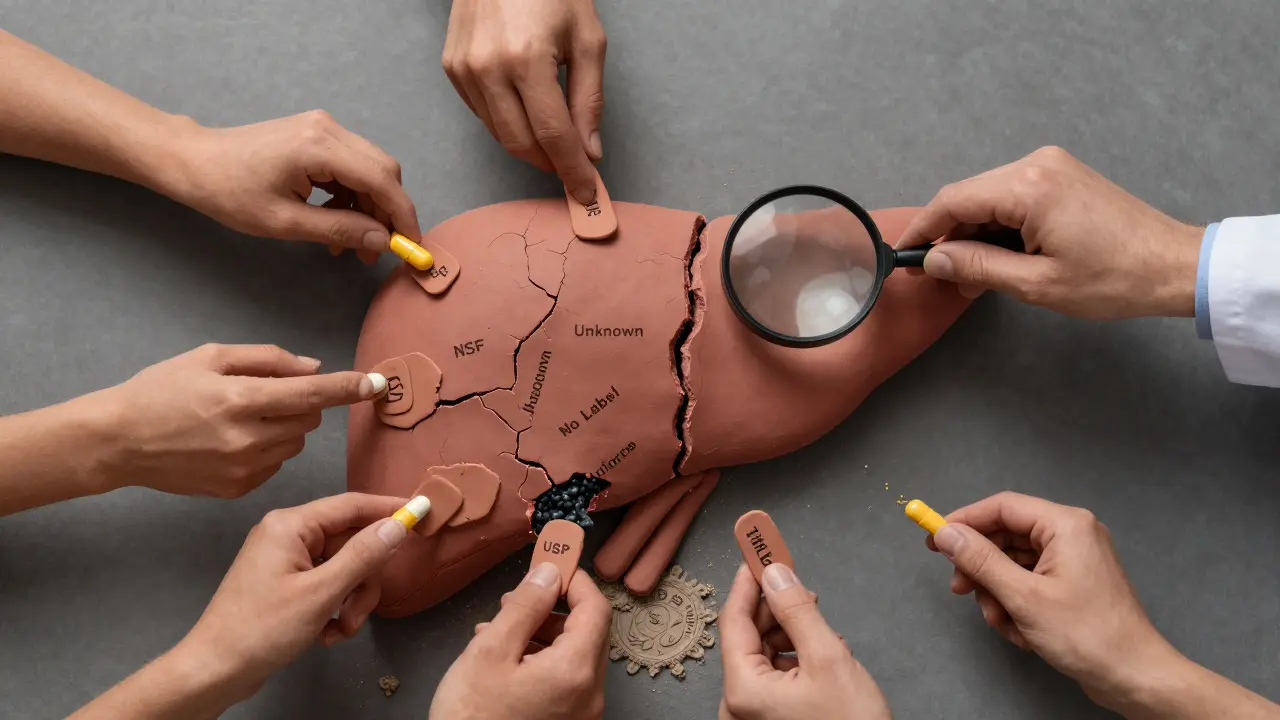
- Check for third-party testing. Look for labels from USP, NSF, or ConsumerLab. These organizations test for purity and potency.
- Don’t stack supplements. Taking 5 different herbs at once? That’s a recipe for overload. Your liver can’t handle the combination.
- Get blood tests. If you’ve been taking supplements for more than 3 months, ask your doctor for a liver panel (ALT, AST, bilirubin). It’s a simple blood draw.
- Talk to your doctor. The American College of Gastroenterology recommends that doctors routinely ask patients about supplement use-especially if liver enzymes are elevated. Don’t be embarrassed. Bring your bottle.
And if you’re using supplements because of social media trends? Pause. TikTok influencers aren’t hepatologists. A video showing someone drinking green tea extract for ‘fast fat loss’ doesn’t mean it’s safe.
What’s the Bottom Line?
Herbal supplements aren’t inherently bad. But they’re not harmless, either. The idea that ‘natural equals safe’ is dangerous fiction. Your liver doesn’t distinguish between a pill from a pharmacy and one from a health food store. It just works to detoxify it.
Right now, we’re seeing a surge in preventable liver injury. People are getting sick-not from drugs, but from things they thought were helping them. The data is clear. The six most common offenders are avoidable. The risks are real. And the regulation? Still broken.
Know what you’re taking. Test your liver if you’re unsure. And if something feels off? Stop it. Your liver can’t talk. But it can fail. And once it does, recovery isn’t guaranteed.
Can herbal supplements cause permanent liver damage?
Yes. In severe cases, herbal supplements can cause acute liver failure that requires a transplant. Even if the liver recovers, some patients are left with lasting scarring (fibrosis) or reduced function. The damage isn’t always reversible, especially if the supplement was taken for months or years without knowing.
Are organic or ‘clean-label’ supplements safer?
Not necessarily. Organic certification only means the plant was grown without synthetic pesticides-it says nothing about heavy metal contamination, adulteration, or dosage. A 2023 study found that organic turmeric supplements had just as much lead as non-organic ones. Labels like ‘clean’ or ‘natural’ aren’t regulated terms.
Is it safe to take supplements with prescription drugs?
No. Supplements can interfere with how your liver processes medications. For example, green tea extract can slow down the breakdown of statins, leading to dangerous buildup. Black cohosh can increase the risk of bleeding when taken with blood thinners. Always tell your doctor what you’re taking-even if you think it’s ‘just a herb.’
Why do some people get liver damage and others don’t?
It’s personal. Genetics, liver health before taking the supplement, age, alcohol use, and even gut bacteria all play a role. Some people have a genetic variant (HLA-B*35:01) that makes them far more sensitive to certain herbal toxins. It’s like a food allergy-you might be fine, but someone else isn’t. There’s no way to predict who’s at risk.
Should I stop taking turmeric or green tea extract?
If you’re taking high-dose extracts (capsules, powders, or concentrated liquids), yes-stop. Eating turmeric in food or drinking green tea (not extract) is generally safe. But concentrated forms have been linked to liver injury in hundreds of cases. The risk isn’t worth it unless a doctor specifically recommends it for a diagnosed condition.
How do I know if my supplement is contaminated?
You can’t tell just by looking. Independent testing labs like USP, NSF, or ConsumerLab are your best bet-they test for heavy metals, pesticides, and hidden drugs. If a product doesn’t have a seal from one of these, assume it’s untested. And if it’s sold online with exaggerated claims (‘miracle weight loss’ or ‘cures arthritis’), it’s likely unsafe.
If you’ve been taking supplements for liver support, weight loss, or stress relief, reconsider. Your liver doesn’t need more ‘help.’ It needs protection. And the best way to protect it? Avoid the ones with the highest risk-and ask questions before you swallow.


