
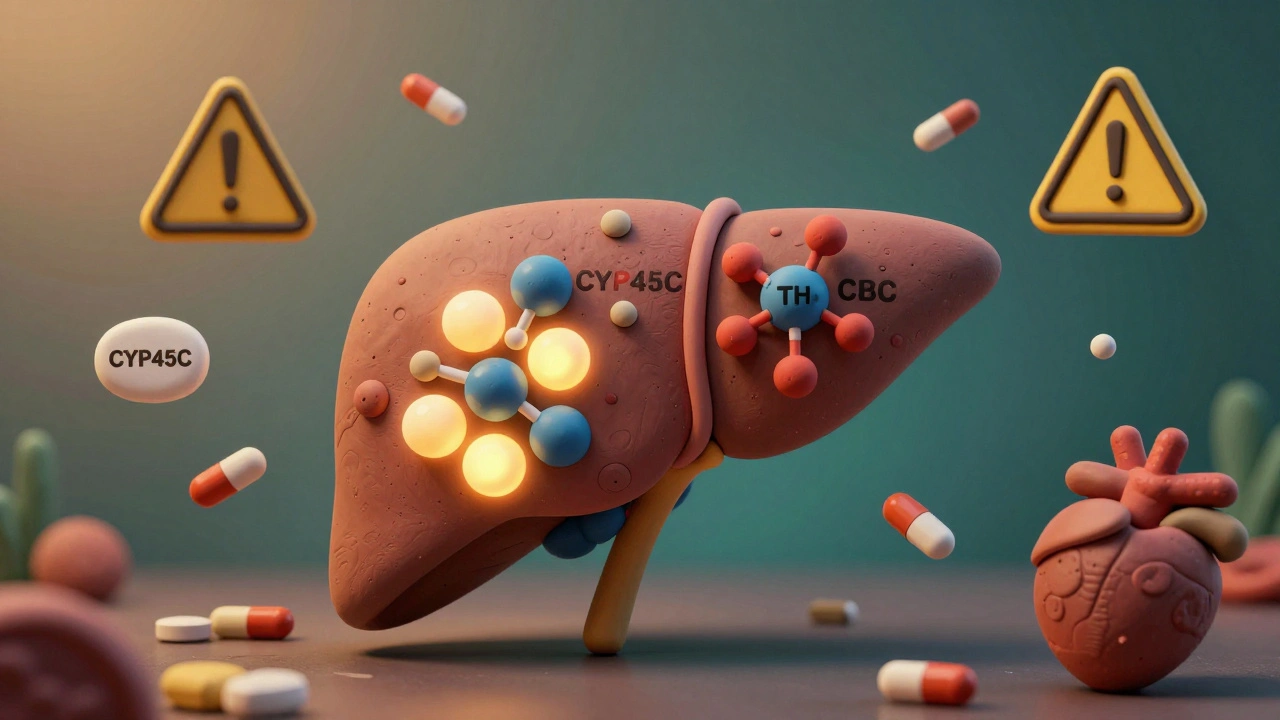
More people are using cannabis - whether it’s CBD oil for anxiety, THC for pain, or full-spectrum products for sleep - and many are also taking prescription medications. But mixing the two isn’t as simple as taking them at different times of day. Cannabis drug interactions can be serious, even life-threatening, and most people have no idea they’re at risk.
How Cannabis Changes How Your Medications Work
Cannabis doesn’t just sit there. It actively interferes with how your body processes medications. The main culprit? Enzymes in your liver called cytochrome P450, or CYP450. These enzymes break down about 60% of all prescription drugs - including blood thinners, seizure meds, antidepressants, and heart medications. CBD and THC both block these enzymes, but in different ways. CBD is a strong inhibitor of CYP3A4 and CYP2C19. THC hits CYP1A2, CYP2C9, and CYP3A4. When these enzymes are slowed down, your medications don’t get broken down as fast. That means they build up in your system. You might think you’re taking the right dose, but your body is holding onto more than it should. For example, if you’re on warfarin (a blood thinner), adding CBD can spike your INR levels by nearly 50% in just 72 hours. That’s not a small bump - it’s the difference between safe and dangerous bleeding. One study tracked 17 cases where people on warfarin started using CBD and ended up in the ER with internal bleeding. That’s not rare. It’s predictable.High-Risk Medications: What to Avoid
Some medications are extremely dangerous to mix with cannabis. These aren’t theoretical risks - they’re documented, real, and often deadly.- Warfarin: CBD increases warfarin levels by 29-48%. INR can jump from 2.5 to 4.5 in under two days. The American College of Clinical Pharmacy says this combination should be avoided unless under strict supervision.
- Tacrolimus: Used by transplant patients to prevent organ rejection. Cannabis can cause tacrolimus levels to triple or even quadruple. One case report showed a kidney transplant patient’s levels jumped 500% after starting CBD - they nearly lost the graft.
- Clobazam: An anti-seizure drug. CBD can increase clobazam levels by 60-500%. In epilepsy patients, this often means extreme drowsiness, loss of coordination, or even inability to walk. Many neurologists now reduce clobazam doses by 25-50% when patients start CBD.
Moderate-Risk Interactions: Watch for Warning Signs
Other combinations won’t kill you outright, but they can seriously mess with your daily life.- Benzodiazepines (alprazolam, diazepam): Both cannabis and these drugs depress the central nervous system. Together, they can make you feel like you’re moving through molasses. One study found elderly patients using both had a 47% higher risk of falling.
- Opioids (oxycodone, morphine): Cannabis can slow how fast your body clears these drugs. That means more sedation, more dizziness, and a higher chance of breathing problems - especially if you’re already on high doses.
- Calcium channel blockers (amlodipine): CBD can raise blood levels of these blood pressure meds by 30-40%. That can lead to dizziness, fainting, or dangerously low blood pressure.

Low-Risk, But Not Risk-Free
Some interactions are mild - but that doesn’t mean you can ignore them.- SSRIs (sertraline, fluoxetine): CBD may raise SSRI levels by 10-15%. For most people, that’s not noticeable. But if you’re sensitive to side effects like nausea, insomnia, or agitation, even a small increase can make things worse.
- Statins (atorvastatin): Levels go up about 20-25%. No documented cases of muscle damage (rhabdomyolysis), but if you’re already experiencing muscle pain from statins, adding CBD could make it worse.
Formulation Matters: Full-Spectrum vs. Isolate
Not all CBD products are created equal. Full-spectrum CBD contains trace amounts of THC (up to 0.3%) and other cannabinoids. That might sound harmless, but it changes how your body reacts. Research shows full-spectrum products inhibit CYP3A4 22-37% more than pure CBD isolate at the same dose. That’s because of the “entourage effect” - other compounds in the plant boost the overall impact. So if you’re on a high-risk medication and you think you’re safe because you’re using “CBD only,” you might be wrong. Also, how you take it matters. Smoking cannabis? THC hits your bloodstream in minutes. That means sudden, sharp interactions with alcohol or sedatives. Swallowing CBD oil? It takes 2-4 hours to peak, and effects last 6-8 hours. That’s a longer window for interactions with medications like warfarin or blood pressure pills.
What You Should Do
If you’re using cannabis and taking any prescription meds, don’t guess. Don’t assume it’s safe. Here’s what to do:- Be honest with your doctor. Don’t say “I use hemp oil.” Say: “I take 25mg of full-spectrum CBD daily for sleep.” Give them the exact product, dose, and frequency.
- Check your meds. Use the University of Washington’s Cannabis Drug Interactions tool. It’s updated quarterly and free to use.
- Get baseline tests. If you’re on warfarin, tacrolimus, or clobazam, get blood levels checked before starting cannabis. Then check again 48-72 hours after you begin.
- Start low, go slow. If you’re adding CBD, begin with 5mg per day. Wait a week. Watch for drowsiness, dizziness, bruising, or confusion. Only increase if you feel fine.
- Space them out. The Mayo Clinic suggests taking CBD at least 2 hours apart from other meds. It’s not proven to fully prevent interactions, but it might help.
What’s Missing From the Conversation
We know a lot about interactions with older drugs - warfarin, clobazam, statins. But what about newer ones? GLP-1 agonists like Ozempic and Wegovy? No studies yet. Immune modulators? Almost none. Even though 28% of cannabis users have diabetes, there are only 12 published studies on how cannabis affects diabetes meds. And here’s another blind spot: over-the-counter drugs. Many people don’t realize that NSAIDs like ibuprofen, sleep aids like diphenhydramine, or even St. John’s Wort can interact with cannabis too. Pharmacists are often unprepared to answer these questions. A 2023 survey found 76% of community pharmacists feel undertrained on cannabis interactions.Bottom Line: It’s Not a Game of Luck
Cannabis isn’t inherently dangerous. But when you mix it with medications, you’re playing with your body’s chemistry. Some people get lucky. Others end up in the hospital. The science is clear: if you’re on blood thinners, transplant meds, or seizure drugs, avoid cannabis unless your doctor is actively managing it. For everything else - monitor closely, start low, and don’t assume it’s harmless. This isn’t about fear. It’s about control. You deserve to use cannabis for relief - but not at the cost of your other treatments failing or turning dangerous.Can I take CBD with my blood pressure medication?
It depends on the medication. CBD can increase levels of calcium channel blockers like amlodipine by 30-40%, which may cause dizziness or low blood pressure. If you’re on one of these, get your blood pressure checked 48 hours after starting CBD. If you’re on ACE inhibitors or beta-blockers, the risk is lower, but still monitor for unusual fatigue or lightheadedness.
Does smoking weed interact with medications differently than CBD oil?
Yes. Smoking delivers THC quickly - within minutes - which can cause sudden drowsiness or low blood pressure when mixed with sedatives or heart meds. CBD oil takes hours to peak and lasts longer, creating a slower, more prolonged interaction window. Smoking may also induce CYP1A2 enzymes, which can reduce levels of theophylline (used for asthma) by 25-30%. CBD oil doesn’t do that.
Is it safe to use CBD if I’m on antidepressants?
For most people on SSRIs like sertraline or escitalopram, CBD causes only a small increase in drug levels - 10-15%. That’s usually not enough to cause problems. But if you’ve ever had side effects like nausea, jitteriness, or sleep issues from your antidepressant, CBD might make them worse. Start with 5mg and watch for changes over a week.
Can I use cannabis while on warfarin?
It’s not recommended. Even small amounts of CBD can spike your INR, increasing bleeding risk by up to 300% within 48 hours. If you’re on warfarin, avoid CBD and THC unless your doctor is monitoring your INR every 3-5 days and adjusting your dose. Many patients who tried it ended up in the ER with internal bleeding.
How do I know if my CBD product is safe?
Look for a Certificate of Analysis (COA) from a third-party lab. Make sure it lists CBD and THC content, and check for contaminants like heavy metals or pesticides. Avoid products that don’t disclose their full ingredient list. Full-spectrum products carry higher interaction risks than isolates. If you’re on high-risk meds, choose CBD isolate and start with the lowest dose possible.


