
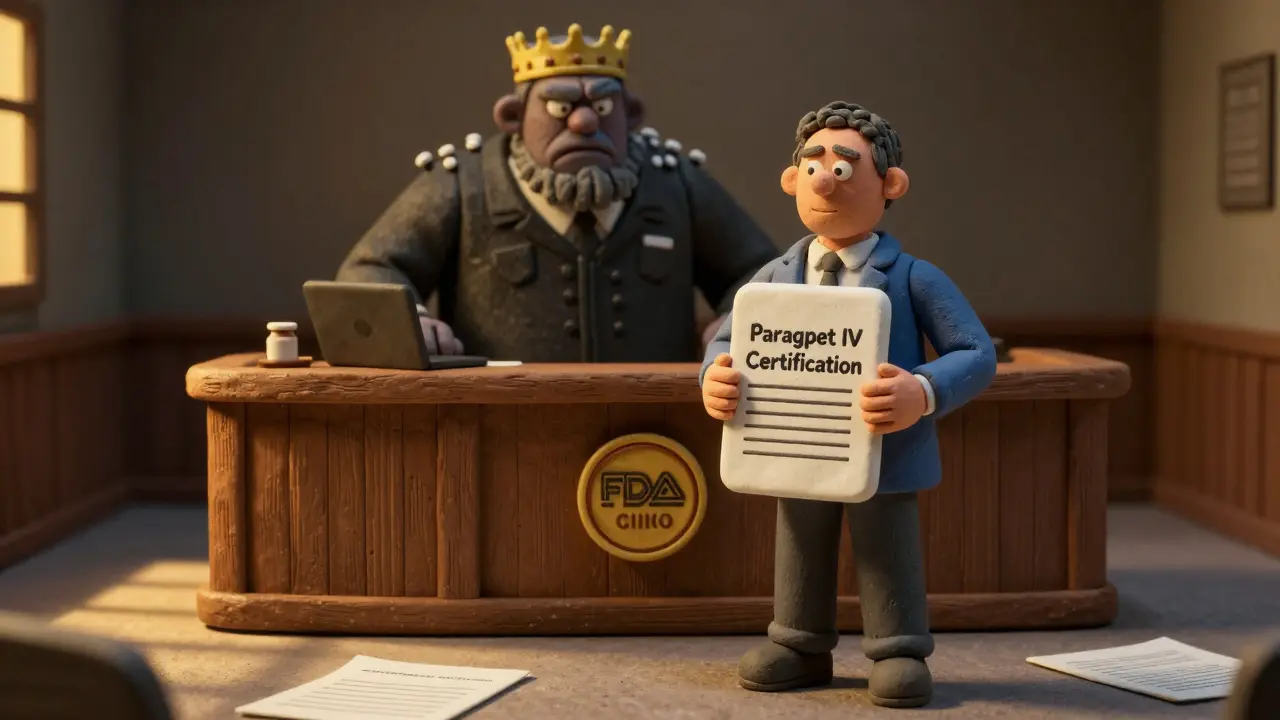
When a brand-name drug hits the market, its manufacturer gets a patent - usually 20 years of protection. But that doesn’t mean generics can’t come in sooner. In fact, they often do. And the tool they use to do it? A Paragraph IV patent challenge. This isn’t a loophole. It’s a legal mechanism built into U.S. drug law specifically to let generic companies challenge weak or fake patents and get life-saving medications to patients faster - and cheaper.
How the Hatch-Waxman Act Changed Everything
Before 1984, generic drugs made up just 19% of prescriptions in the U.S. Why? Because brand companies held onto patents tightly, and generic makers had no clear way to enter the market without getting sued. That changed when President Ronald Reagan signed the Hatch-Waxman Act. It created a balance: give brand companies extra patent time to make up for delays in FDA approval, but give generics a legal path to challenge those patents - and win big if they succeed.
The heart of this system is the Paragraph IV certification. When a generic company files an Abbreviated New Drug Application (ANDA) with the FDA, they must check a box: "This drug does not infringe your patent, or your patent is invalid." That’s Paragraph IV. It’s not just a statement. It’s a legal shot across the bow.
The 45-Day Countdown
Once that certification is filed, the brand company gets exactly 45 days to sue. If they don’t, the generic can launch right away. But if they do? The FDA can’t approve the generic for 30 months - that’s the automatic stay. Sounds like a delay? It is. But here’s the twist: the 30 months isn’t a hard stop. If the court rules the patent is invalid or not infringed before then, the stay ends. That’s how generics like Hetero Labs got their version of a brand drug to market in 22 months instead of 30.
The brand company has to prove infringement. The generic has to prove the patent doesn’t hold up. And because the burden of proof is on the brand, many patents don’t survive. A 2020 study found that only about 35% of Paragraph IV challenges succeed - down from 50% in the 1990s. Why? Because brand companies got smarter. They piled on patents - sometimes 40 or more - to create what experts call "patent thickets."
Why the 180-Day Exclusivity Matters
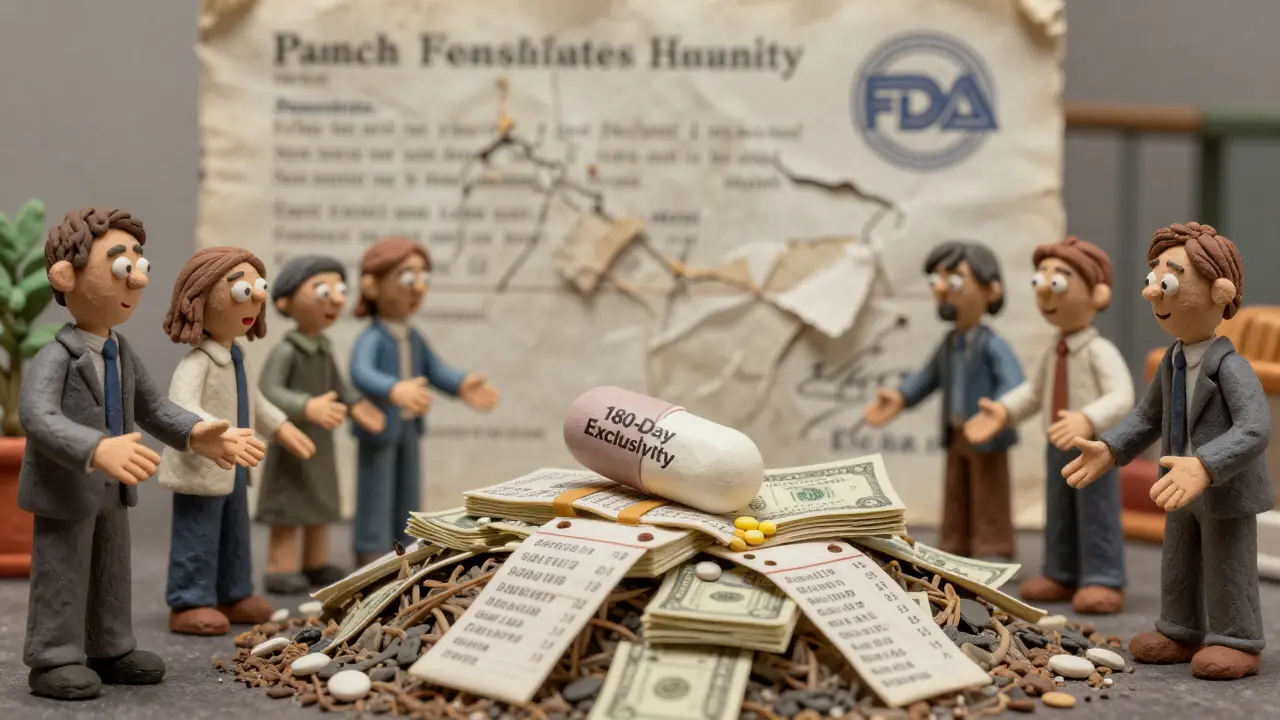
The real prize? The first generic company to file a Paragraph IV challenge gets 180 days of exclusive market access. No competition. Not even other generics. That’s worth hundreds of millions. Teva made $1.2 billion during its exclusivity period for generic Copaxone. Mylan captured 75% of the generic EpiPen market in its 180-day window.
That exclusivity isn’t just a reward - it’s a financial engine. It’s why companies spend millions on lawyers and bioequivalence studies. A single Paragraph IV challenge can cost $15 million today, up from $5 million in 2000. Smaller companies can’t afford it. That’s why the top 10 generic manufacturers now file 68% of all challenges - up from 52% in 2015.
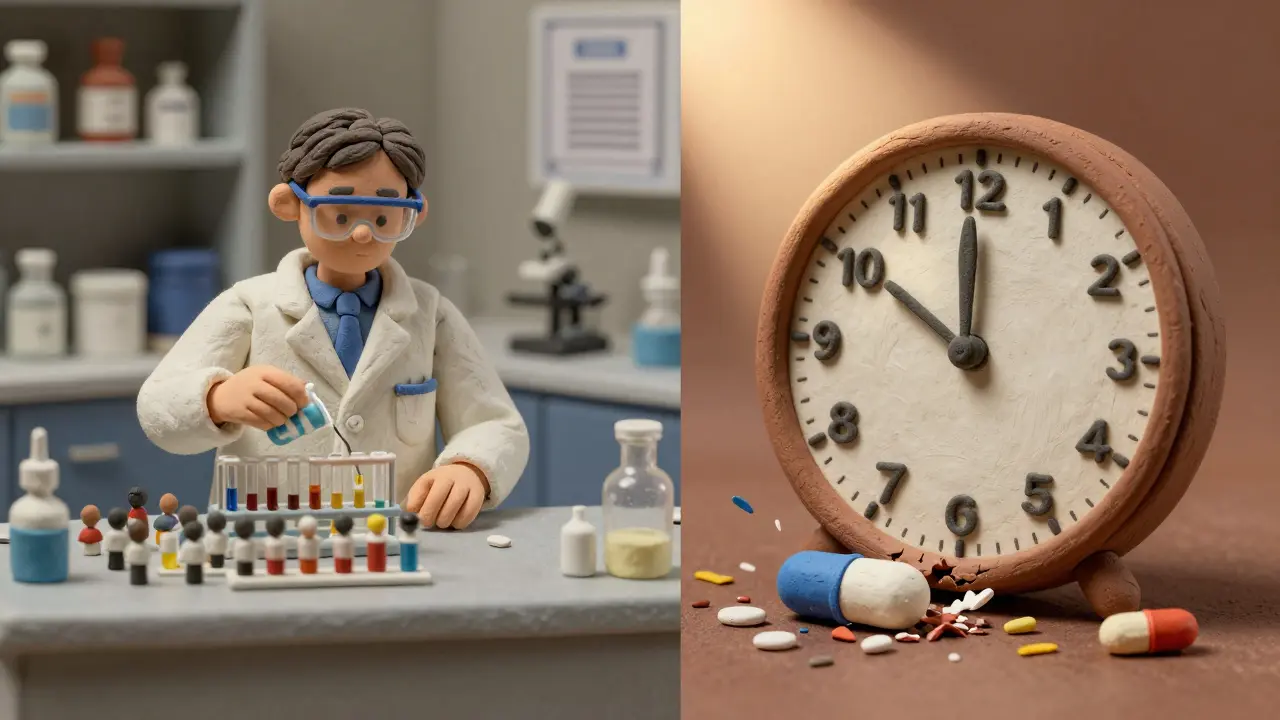
Bioequivalence: The Science Behind the Legal Fight
It’s not enough to say your drug is the same. You have to prove it. The FDA requires bioequivalence studies: usually 24 to 36 healthy volunteers, given both the brand and generic drug in a crossover design. The results? The generic’s absorption rate (AUC) and peak concentration (Cmax) must fall within 80-125% of the brand. That’s not a guess. That’s science. And if you miss it? Your ANDA gets rejected. No second chances.
That’s why companies like Teva invested $200 million in manufacturing before even winning their Provenge challenge. They had to be ready to produce millions of doses the moment the court ruled in their favor.
Settlements, Not Trials
Most Paragraph IV cases don’t go to trial. About 72% settle. But not all settlements are fair. In the past, brand companies would pay generics to delay entry - "pay-for-delay" deals. The FTC found these were common until 2013, when the Supreme Court ruled in Actavis that they could violate antitrust laws.
Today, settlements still happen - but they look different. Instead of cash payments, they often include agreements that the generic won’t launch until 75 days before the patent expires. That’s still legal. And it’s still effective. The FTC reports that 68% of settlements between 2015 and 2020 included these delay terms - down from 78% in the prior five years.
What’s Changing Now?
The FDA has tightened patent listing rules since 2020. Drugs approved after that date have 23% fewer patents on average. That’s cutting down on "evergreening" - when companies make tiny changes to a drug just to reset the patent clock. Take Restasis: Allergan added a new formulation, but the FTC called it a "product hop" and sued.
The Inflation Reduction Act of 2022 let Medicare negotiate prices for the top 10 most expensive drugs. That’s a game-changer. If a brand drug’s price drops because Medicare negotiates it, the financial incentive to delay generics shrinks. Experts predict a 15-20% increase in Paragraph IV challenges for these drugs by 2025.
And now? Generics are going after more complex drugs - like abuse-deterrent opioids and injectables. The number of challenges for these is expected to rise 30% by 2027. The FTC also saw a 27% jump in challenges for oncology drugs between 2018 and 2022. Why? Because they’re expensive. And when a drug costs $100,000 a year, even a 10% price drop saves lives.
The Real Impact
Since 1990, Paragraph IV challenges have saved U.S. consumers over $1.2 trillion. In 2022 alone, they saved $13.7 billion per drug challenged. Generic drugs now make up 90% of prescriptions but only 23% of drug spending. That’s the power of competition.
But the system is under pressure. The average litigation now lasts 32 months - longer than the 30-month stay. That’s a delay. And with patent thickets growing, smaller companies are getting squeezed out.
Still, 92% of generic manufacturers say Paragraph IV is "essential" to their business. Why? Because it works. It’s not perfect. But it’s the only legal tool that forces brand companies to defend their patents - not just sit on them.
What is a Paragraph IV certification?
A Paragraph IV certification is a legal statement made by a generic drug company when filing an Abbreviated New Drug Application (ANDA) with the FDA. It claims that a patent listed for the brand drug is either invalid, unenforceable, or won’t be infringed by the generic version. This triggers a 45-day window for the brand company to sue - and sets the stage for a legal battle over whether the generic can enter the market early.
How does a Paragraph IV challenge delay generic entry?
It doesn’t always delay entry - but it can. If the brand company sues within 45 days of the Paragraph IV filing, the FDA is legally blocked from approving the generic for 30 months. This is called an automatic stay. But if the court rules the patent is invalid or not infringed before those 30 months are up, the stay ends early, and the generic can launch immediately. Many challenges resolve before 30 months - especially if the patent is weak.
Why do brand companies file so many patents?
Brand companies often file multiple patents - sometimes 40 or more - to create what’s called a "patent thicket." This makes it harder and costlier for generics to challenge them all. Even if one patent is invalidated, others may still block entry. This tactic delays competition and protects profits. The FDA now limits how many patents can be listed for a drug, but older drugs still carry thickets from years past.
Can a generic company lose a Paragraph IV challenge?
Yes. About 65% of Paragraph IV challenges fail. That means the court finds the patent valid and enforceable. The generic can’t launch until the patent expires. But even losing can be strategic - if the challenge forces the brand to settle or limits their ability to sue other generics later. Some companies file challenges they know they’ll lose, just to wear down the brand’s legal defenses.
What’s the difference between Paragraph IV and IPR?
Paragraph IV challenges happen in federal district court and are tied to FDA approval. IPR (Inter Partes Review) is a patent office proceeding that can invalidate a patent, but it doesn’t automatically let a generic drug enter the market. A generic company might use IPR to knock out a patent, then still need to file a Paragraph IV certification to get FDA approval. The two tools are often used together - IPR to weaken the patent, Paragraph IV to trigger FDA action.


