
Statin Symptom Checker
This tool helps you distinguish between statin-associated myopathy (muscle problem) and peripheral neuropathy (nerve problem). Remember: Medical testing is required for proper diagnosis. This is not a substitute for professional medical advice.
Please answer these questions
Results will appear here after you click the button
When you start taking a statin to lower your cholesterol, you expect better heart health-not aching legs, cramping calves, or tingling feet. But for many people, these symptoms show up. And that’s where things get confusing. Is it your muscles breaking down? Or are your nerves acting up? The difference matters a lot. Stop the wrong thing, and you could lose heart protection. Keep the wrong thing, and you could make things worse.
What Statin Muscle Cramps Really Feel Like
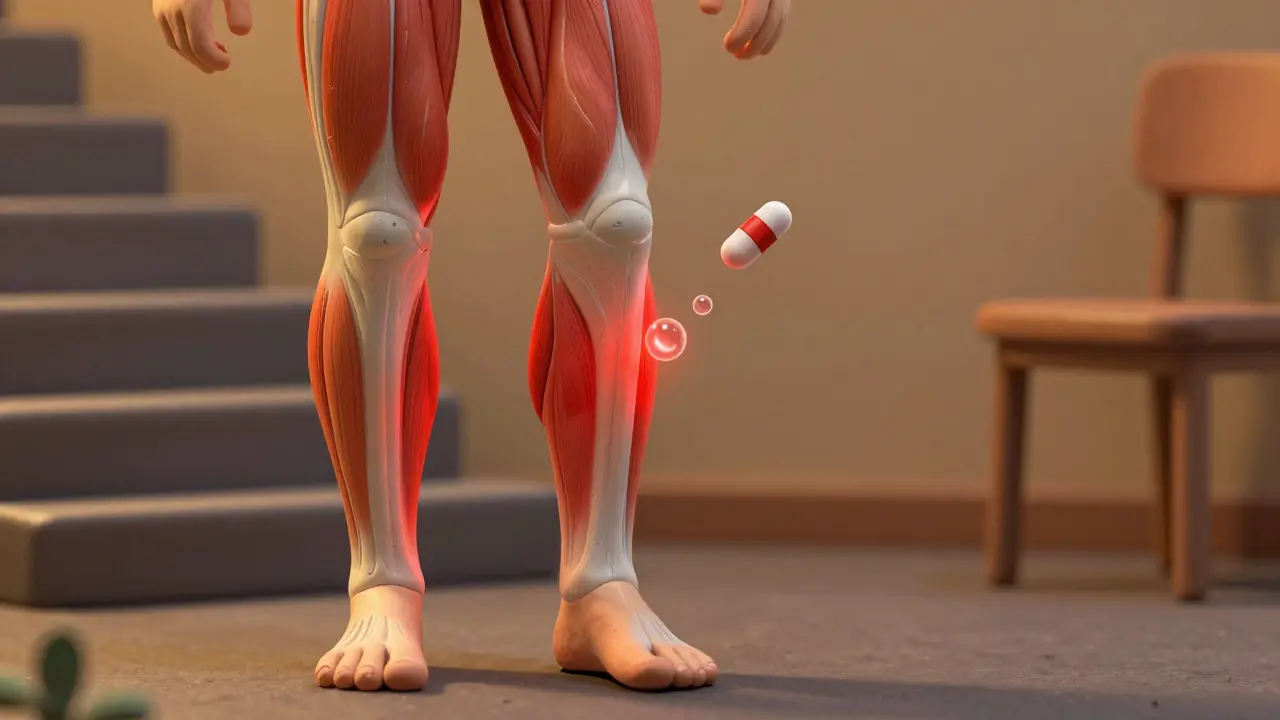
Statin-related muscle symptoms aren’t just soreness after a workout. They’re persistent. They come on slowly. You might notice it when climbing stairs, getting up from a chair, or walking farther than usual. The pain is usually deep, dull, and feels like it’s coming from inside the muscle-not on the skin. It often hits both legs at once. Some people describe it as a constant ache, others as sudden cramps that wake them up at night. But here’s the catch: not all muscle pain from statins is the same. Two very different problems can look almost identical at first glance. One is statin-associated myopathy-a muscle problem. The other is peripheral neuropathy-a nerve problem. And they need completely different answers.Statin Myopathy: When Your Muscles Are the Problem
Statin myopathy is the most common muscle-related side effect. It’s not rare. Studies show 7% to 29% of people on statins report muscle symptoms. But true muscle damage with high CK levels? That’s much rarer-about 1 in 1,000 to 1 in 10,000 people per year. The key signs of myopathy:- Weakness in the thighs, hips, shoulders, or upper arms
- Pain or aching that doesn’t go away, even after rest
- Cramps that feel like your muscles are seizing up
- Symptoms start within weeks or months of starting the statin
- Symptoms improve after stopping the drug
- CK levels are elevated (usually more than 4 times the normal upper limit)
Statin Neuropathy: When Your Nerves Are the Problem
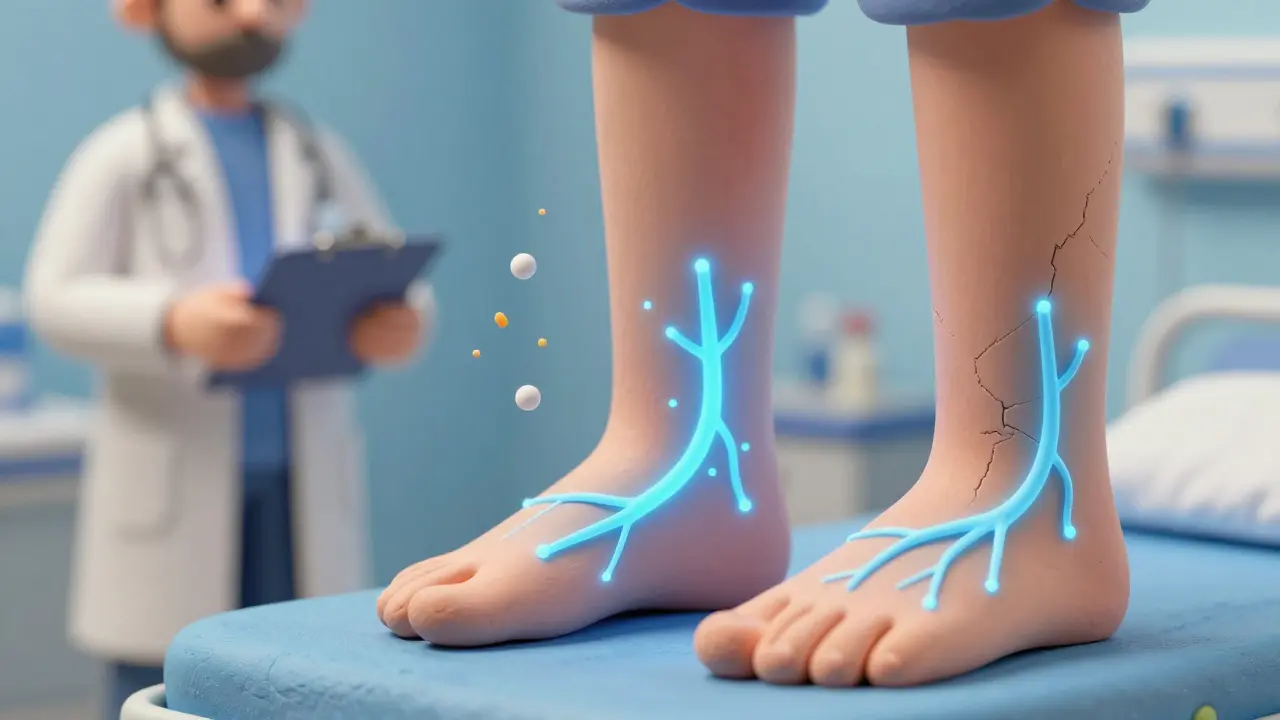
Now, here’s where it gets tricky. Some people on statins develop tingling, burning, or numbness in their feet or hands. It feels like pins and needles. It often starts in the toes and creeps upward like a stocking. This looks like peripheral neuropathy. But is it caused by the statin? The evidence is mixed. Some studies say yes. Others say no. One large study in 2019 looked at 616 people with unexplained nerve damage. Those taking statins were actually less likely to have neuropathy than those who weren’t. Another review found contradictory results across 13 studies. Still, there are plausible biological reasons why statins might affect nerves:- Cholesterol is part of the protective sheath around nerves. Lowering it too much might weaken that shield.
- Statins lower LDL, which carries vitamin E-a powerful antioxidant for nerves. Less vitamin E delivery could mean more nerve damage.
- Coenzyme Q10 depletion, which hurts muscles, might also affect nerve cells that need lots of energy.
- Symptoms are distal-starting in feet/hands, not thighs
- Sensory changes: tingling, burning, numbness, electric shocks
- No muscle weakness (or very little)
- CK levels are normal
- Electrodiagnostic tests (nerve conduction studies) show reduced sensory nerve signals
How to Tell the Difference: The Quick Checklist
You can’t rely on symptoms alone. You need a system. Here’s how doctors sort it out:| Feature | Statin Myopathy | Statin Neuropathy |
|---|---|---|
| Location of symptoms | Proximal muscles (hips, thighs, shoulders) | Distal limbs (feet, hands) |
| Primary sensation | Aching, cramping, weakness | Tingling, burning, numbness |
| CK levels | Usually elevated (≥4x ULN) | Normal |
| Nerve conduction study | Normal | Abnormal-reduced sensory response |
| Response to stopping statin | Improves within weeks | May not improve |
| Common triggers | Age, female sex, drug interactions, SLCO1B1 gene | Diabetes, B12 deficiency, alcohol, thyroid disease |
What to Do If You Have Symptoms
If you’re on a statin and start having muscle or nerve issues, don’t panic. But don’t ignore it either. Start with your doctor. They should check:- CK levels
- Thyroid function
- Vitamin B12 and D levels
- Blood sugar (to rule out diabetes)
- Alcohol use
Why This Matters More Than You Think
People often stop statins because they think the muscle pain is harmless. But that’s dangerous. For every 1,000 people who stop statins because of muscle symptoms, about 10 will have a heart attack or stroke within a year that could have been prevented. The American College of Cardiology says: if you’re statin-intolerant, don’t stop lipid-lowering therapy. Switch to something else. Statins reduce major heart events by 25% for every 1.0 mmol/L drop in LDL. That’s huge. And here’s something many doctors miss: slow muscle weakness can look like aging. A 70-year-old might say, “I’m just getting older.” But if they started a statin six months ago, and now they can’t get up from the couch without using their hands? That’s not normal aging. That’s myopathy.
What Doesn’t Work
Coenzyme Q10 supplements? A 2015 JAMA study gave them to 44 people with statin-related muscle pain. No difference compared to placebo. So don’t waste your money. Stretching, massage, or heat packs? They might ease discomfort, but they won’t fix the root cause. Trying a different statin without testing? That’s risky. If you have the SLCO1B1 gene variant, switching from simvastatin to atorvastatin might not help. You need to know your risk profile.When to See a Neurologist
If your symptoms don’t improve after stopping the statin for 2 to 3 months, see a neurologist. Something else might be going on-like early ALS, spinal stenosis, or another nerve disorder that was masked by the statin symptoms. One case in 2023 had a patient with statin myopathy that looked exactly like Guillain-Barré syndrome. The confusion almost led to wrong treatment. Only after muscle biopsy and nerve testing was the real cause found.Bottom Line
Muscle cramps on statins aren’t one thing. They’re two very different problems with different treatments. Myopathy means your muscles are starving for energy. Neuropathy means your nerves are misfiring. One responds to stopping the drug. The other doesn’t-and might not even be caused by it. Get the right test. Don’t guess. CK levels and nerve conduction studies aren’t optional. They’re essential. And if you’re told to just “tough it out,” get a second opinion. You don’t have to choose between heart health and quality of life. There’s a better way.Can statins cause muscle cramps?
Yes, statins can cause muscle cramps, but not always for the same reason. Most often, it’s due to statin-associated myopathy, where the drug reduces coenzyme Q10 in muscles, leading to energy shortages and cramping. Less commonly, nerve-related symptoms like tingling or burning may be mistaken for cramps. It’s important to check CK levels and rule out other causes like dehydration, electrolyte imbalances, or nerve disorders.
How do I know if my muscle pain is from statins or something else?
Look at the pattern. Statin myopathy usually causes deep, aching pain in the thighs or shoulders, worsens with activity, and improves after stopping the drug. If your pain is in your feet, feels like pins and needles, or doesn’t go away after stopping statins, it’s more likely a nerve issue or another condition like diabetes or vitamin deficiency. A blood test for CK and possibly nerve conduction studies can help confirm the cause.
Should I stop taking statins if I get muscle cramps?
Not immediately. First, get your CK levels checked. If they’re normal, your cramps may not be from statins. If they’re high and you have muscle weakness, stopping the statin is usually the right move. But don’t quit cholesterol treatment entirely. Talk to your doctor about switching to a different statin or adding ezetimibe or a PCSK9 inhibitor. These can keep your LDL low without the muscle side effects.
Is coenzyme Q10 supplementation helpful for statin muscle pain?
No, not based on current evidence. A well-designed 2015 JAMA study tested CoQ10 in 44 people with statin-related muscle pain and found no benefit over placebo. While the theory makes sense-statins lower CoQ10-the body may not absorb enough to make a difference, or the damage may already be done. Don’t spend money on supplements hoping they’ll fix it.
Can statins cause nerve damage?
The evidence is conflicting. Some studies suggest statins might contribute to peripheral neuropathy by lowering cholesterol needed for nerve membranes or reducing vitamin E delivery. But other large studies show statin users have a lower risk of neuropathy. It’s not a confirmed side effect. If you have numbness or tingling, your doctor should rule out diabetes, B12 deficiency, or alcohol use first-these are far more common causes.
What’s the safest statin for someone with muscle problems?
Hydrophilic statins like pravastatin and rosuvastatin are generally better tolerated because they don’t penetrate muscle tissue as easily as lipophilic ones like simvastatin or atorvastatin. Studies show about 60% of people who had muscle pain on one statin can tolerate a switch to pravastatin or rosuvastatin. Genetic testing for the SLCO1B1 variant can also guide choices-especially if you’re on high-dose simvastatin.
How long does it take for statin muscle pain to go away?
For true statin myopathy, symptoms usually start improving within 2 to 3 weeks after stopping the drug. Most people feel significantly better within 6 to 8 weeks. If pain or weakness persists beyond 3 months, it’s unlikely to be caused by statins-and you should see a neurologist to rule out other conditions like nerve compression or autoimmune muscle disease.


