

Vilazodone Diarrhea Risk Calculator
How to Use This Tool
This calculator estimates your risk of diarrhea based on your medication habits and dietary choices. It's designed to help you make informed decisions about how to minimize side effects.
Enter Your Medication Habits
Starting vilazodone (brand name Viibryd) for depression can feel like a step forward-until the diarrhea hits. About 28% of people taking it experience loose stools, often within the first week. It’s not rare. It’s not a sign you’re doing something wrong. It’s just how your body reacts to the way vilazodone works. The good news? For most people, it fades. The better news? You don’t have to just suffer through it. There are real, practical ways to make it manageable-and even avoid it altogether.
Why vilazodone causes diarrhea
Vilazodone isn’t a typical SSRI. It’s a SPARI-serotonin partial agonist and reuptake inhibitor. That means it does two things: it stops your brain from reabsorbing serotonin, and it gently stimulates certain serotonin receptors. This dual action helps lift mood without the same level of sexual side effects as other antidepressants. But that same mechanism also affects your gut. Serotonin plays a big role in how your intestines move. Too much of it, even from a medication meant to help your brain, can speed things up. Result? Diarrhea.Studies show about 26-29% of people on the full 40 mg daily dose get diarrhea. Compare that to 10% on placebo. That’s a big gap. Nausea and vomiting also happen, but diarrhea is the most common and most disruptive. It’s not dangerous for most people, but it’s annoying enough that 1 in 5 stop taking the drug because of it.
When does it start-and when does it end?
Most people notice changes in their bowels within the first 3 to 7 days of starting vilazodone. The median duration? Just 7 days. That means half of people see improvement by the end of the first week. By two weeks, over 90% of cases are either gone or much milder. A 2023 analysis of over 1,200 patients found that 68% had no diarrhea left by day 14. Only 10% ended up quitting because of it.That doesn’t mean you should ignore it. If it lasts longer than two weeks, gets worse, or comes with fever, cramping, or dehydration signs (dizziness, dark urine, dry mouth), talk to your doctor. But if it’s just frequent, loose stools without other symptoms? It’s likely just your body adjusting.
The #1 thing you can do to reduce diarrhea
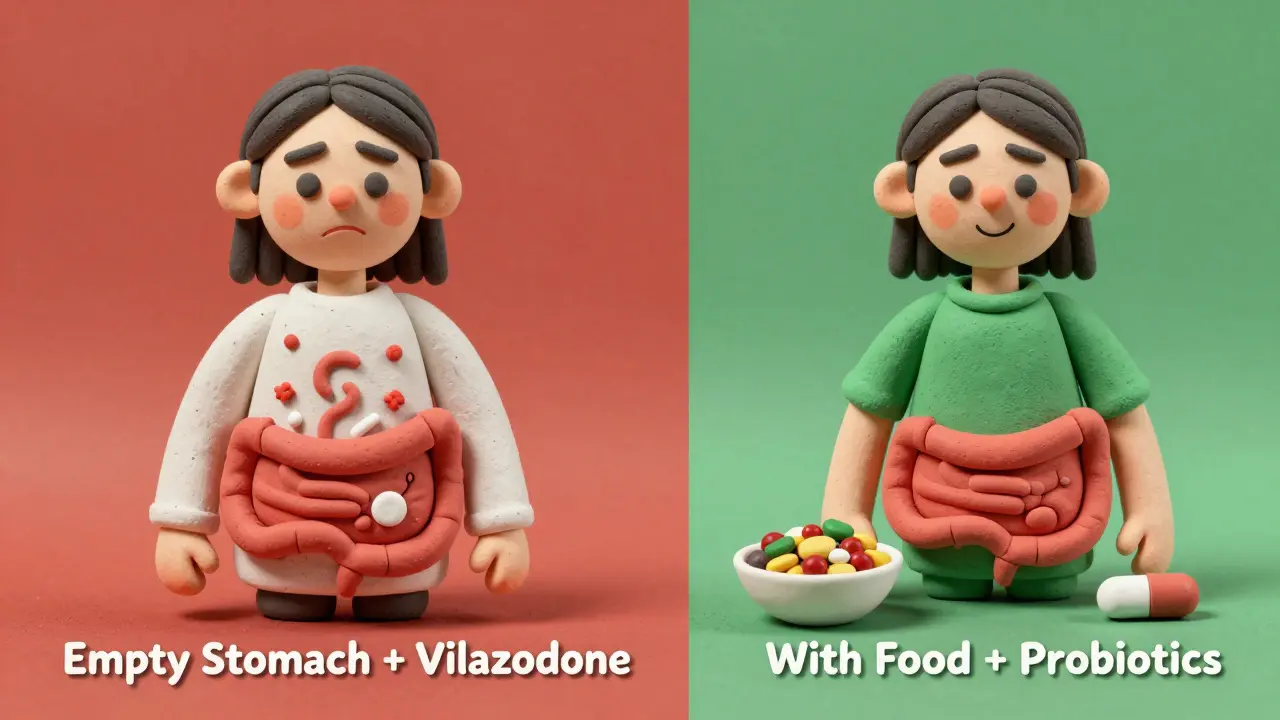
Take vilazodone with food. Not a snack. Not a handful of crackers. At least 500 calories of a full meal.The FDA labeling and multiple clinical studies confirm this. Taking vilazodone on an empty stomach increases the chance of diarrhea by 35%. When you take it with a proper meal, your body absorbs the drug more slowly. That reduces the sudden serotonin spike in your gut. It also improves how much of the drug actually gets into your bloodstream-by 60%.
What counts as a 500-calorie meal? Think: two eggs with whole-grain toast and avocado, a turkey sandwich with cheese and fruit, or oatmeal with nuts and yogurt. Protein and complex carbs help slow digestion. Avoid greasy, spicy, or sugary foods. They make diarrhea worse.
People who follow this rule are 74% more likely to keep taking vilazodone without stopping. It’s that simple-and that effective.
Diet tweaks that actually work
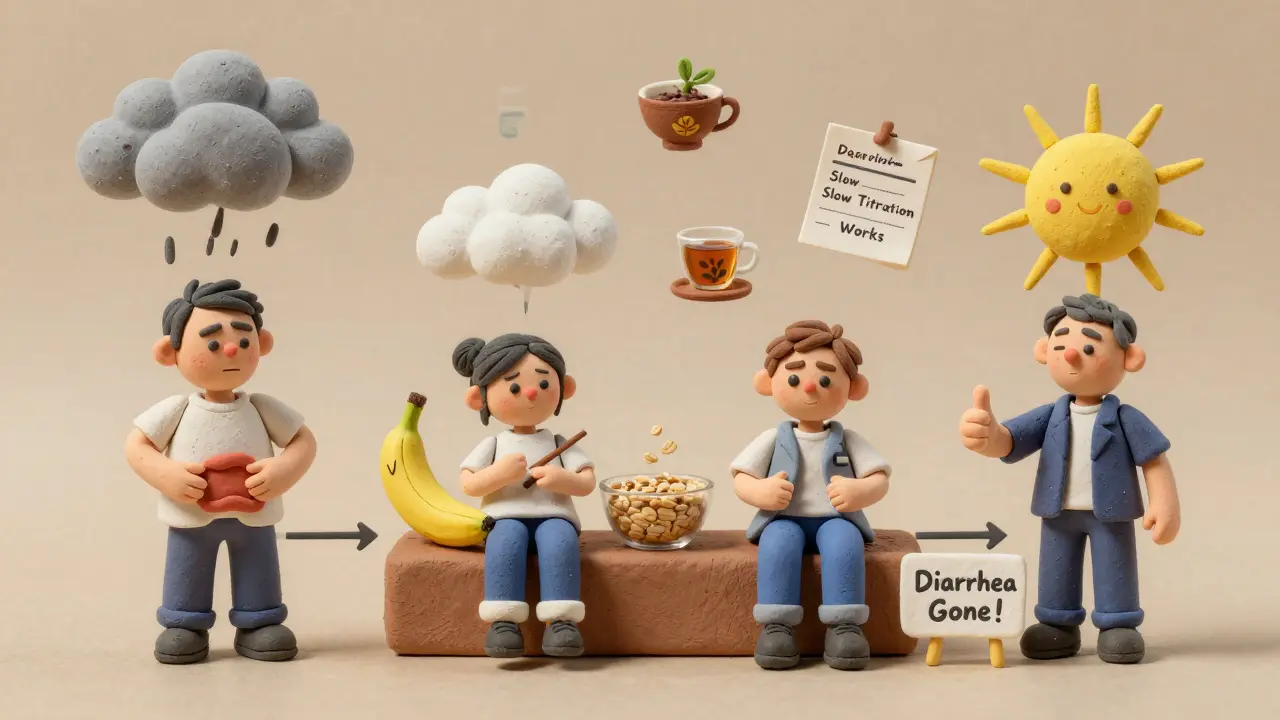
Beyond meals, small dietary changes can make a big difference:- Increase soluble fiber: Aim for 10-15 grams daily. Oats, bananas, applesauce, and psyllium husk help firm up stools. Don’t go overboard-too much fiber too fast can cause bloating.
- Try probiotics: The 2023 VIVALDI study showed that taking a probiotic with Bifidobacterium longum cut diarrhea rates from 28% to 15%. Lactobacillus rhamnosus GG (found in many store brands) also helps. Take it daily, ideally at a different time than your pill.
- Avoid caffeine and artificial sweeteners: Coffee, energy drinks, diet sodas, and sugar-free gum can irritate your gut and make diarrhea worse. Swap coffee for herbal tea or water.
- Stay hydrated: Drink water throughout the day. Coconut water or broth-based soups help replace lost electrolytes better than plain water.
One patient on Reddit wrote: “I switched from coffee to chamomile tea and added a banana to my breakfast. Diarrhea went from 5 times a day to once. I didn’t even need Imodium.”
Should you use Imodium?
Loperamide (Imodium A-D) is safe for short-term use. If diarrhea is disrupting your work, sleep, or social life, taking 2 mg once or twice a day for a few days can help. Don’t use it long-term. It doesn’t fix the root cause-it just slows things down. Always check with your doctor first, especially if you’re on other meds. Vilazodone is processed by the liver, and some drugs can interact with loperamide.One study found that 32% of people who used Imodium got relief. But 82% of people who stuck to food and diet changes didn’t need it at all.
Dosing matters more than you think
The standard dosing schedule isn’t arbitrary. You start at 10 mg for 7 days, then 20 mg for another 7 days, then 40 mg. That’s not just to see how you tolerate it-it’s to give your gut time to adapt.Jumping straight to 40 mg? You’re more likely to get bad diarrhea. Slowing down the ramp-up gives your body time to adjust. Some doctors now recommend even slower: 10 mg for 10-14 days, then 20 mg for 14 days before going to 40 mg. If you’re still having trouble at 20 mg, stay there longer. You don’t have to hit 40 mg to get benefits. Many people respond well to 20 mg.
Don’t be afraid to ask your doctor about a slower titration. It’s not “weak.” It’s smart.
Who should avoid vilazodone?
Vilazodone isn’t the right fit for everyone. If you already have IBS, Crohn’s, or chronic diarrhea, it’s probably not the best choice. Your gut is already sensitive. Adding a drug that speeds up digestion could make things worse.Also, if you’re taking other medications that affect the liver-like ketoconazole, clarithromycin, or certain HIV drugs-you’re at higher risk for side effects. Vilazodone is broken down by the CYP3A4 enzyme, and those drugs can interfere. Always tell your doctor about every supplement or OTC med you take.
And remember: vilazodone carries the same FDA boxed warning as all antidepressants-increased risk of suicidal thoughts in people under 25. Watch for mood changes early on. But for GI side effects? They’re not a red flag. They’re a signal to adjust, not quit.
How vilazodone stacks up against other antidepressants
Let’s be honest: vilazodone’s diarrhea rate is high. Sertraline causes it in 18% of users. Escitalopram? Only 6%. So why even consider it?Because for many people, the trade-off is worth it. Sexual side effects-like low libido or trouble reaching orgasm-are common with SSRIs and SNRIs. Studies show 25-70% of people on those drugs have them. With vilazodone? Just 2-3%. That’s a huge difference for people who’ve tried other meds and couldn’t handle the sexual side effects.
Weight gain is another issue. Medications like paroxetine and mirtazapine can add pounds. Vilazodone doesn’t. That makes it a better option for people watching their weight.
It’s not the first-line choice for most doctors. But for people who’ve tried everything else and can’t tolerate sexual side effects or weight gain? Vilazodone can be a game-changer-if you manage the diarrhea.
What if it never goes away?
If diarrhea lasts longer than 3 weeks, doesn’t improve with food or probiotics, or keeps you from living your life, talk to your doctor. You’re not failing. The drug just isn’t right for you.Switching to bupropion (Wellbutrin) is a common next step. It’s not a serotonin drug, so it rarely causes GI issues. Or you might try escitalopram or sertraline, which have lower diarrhea rates. Some people even go back to an SSRI they tried before and tolerated better.
Don’t feel pressured to stick with vilazodone just because it’s “newer” or “better.” The goal is to feel better-mentally and physically.
What’s next for vilazodone?
There’s promising research on a delayed-release version of vilazodone that releases the drug more slowly in the gut. Early trials suggest it could cut diarrhea rates by half. If approved, it could make vilazodone a much more tolerable option.For now, the best strategy is simple: take it with food, go slow with the dose, drink water, avoid irritants, and give your body time. Most people get through it. And once they do, they find that their mood improves without the sexual side effects that ruined other treatments.
It’s not easy. But it’s doable. And for many, it’s worth it.
How long does vilazodone-induced diarrhea usually last?
For most people, diarrhea lasts 1 to 2 weeks after starting vilazodone. About 94% of cases are mild to moderate and resolve on their own. By day 14, over two-thirds of users report no more diarrhea. If it lasts longer than 3 weeks or gets worse, talk to your doctor.
Can I take vilazodone without food?
No. Taking vilazodone on an empty stomach increases your risk of diarrhea by 35% and reduces how well your body absorbs the drug by up to 60%. Always take it with at least 500 calories of food-a full meal with protein and complex carbs is best.
Is it safe to use Imodium with vilazodone?
Yes, loperamide (Imodium A-D) is generally safe for short-term use to manage diarrhea. Take no more than 2 mg up to four times a day. But don’t use it long-term. It doesn’t fix the cause-it just slows symptoms. Always check with your doctor first, especially if you’re on other medications.
Will vilazodone cause weight gain?
No, vilazodone is not associated with weight gain. In fact, it’s often chosen by people who’ve gained weight on other antidepressants like paroxetine or mirtazapine. It’s one of the few SSRIs that doesn’t typically lead to increased appetite or weight gain.
Is vilazodone better than other antidepressants?
It’s not better for everyone. Vilazodone has a higher rate of diarrhea than most SSRIs and SNRIs, but it has significantly lower rates of sexual side effects and weight gain. It’s a good option for people who’ve struggled with those issues on other meds. But if GI side effects are a major concern, other drugs like sertraline or bupropion may be better starting points.
If you’re struggling with vilazodone’s side effects, you’re not alone. Many people feel discouraged at first. But with the right adjustments-food, timing, diet-you can get through it. And if you do, you might find that this is the antidepressant that finally lets you feel like yourself again-without the other side effects that made other meds unbearable.


