
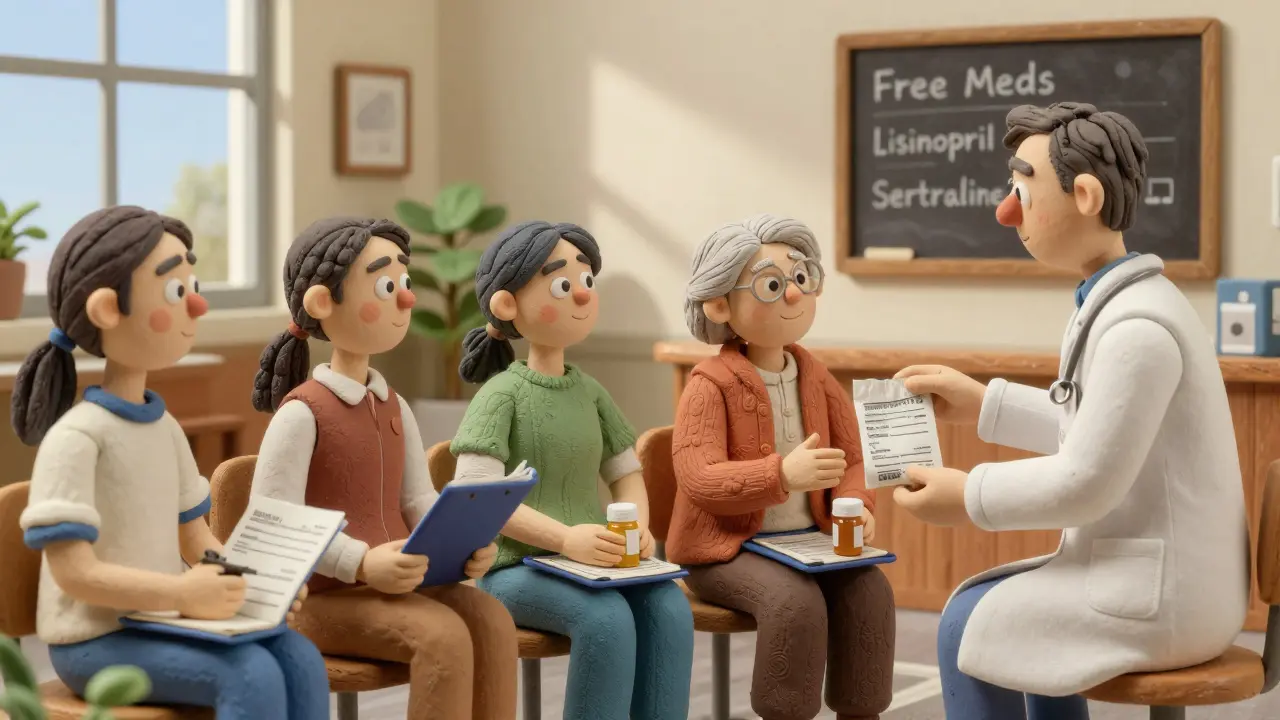
If you’re struggling to pay for your prescriptions, you’re not alone. Over 30 million Americans don’t have health insurance, and millions more are underinsured-meaning they can’t afford copays, deductibles, or the full cost of their meds. But there’s help. Free and low-cost community clinics across the U.S. give people access to essential medications without the price tag. These aren’t charities that barely function-they’re real, working systems that handed out $190 million in medicines last year alone to over 7 million people.
How Free Clinics Give You Medications for Free
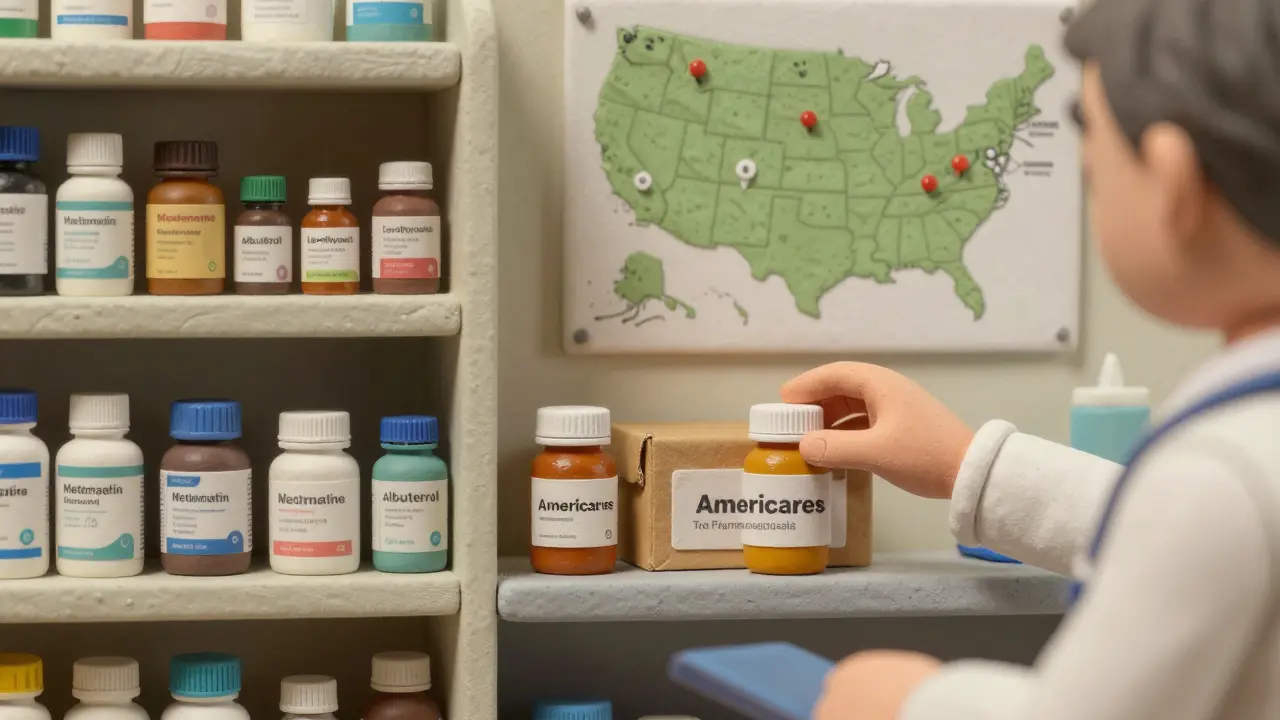
Community clinics don’t just hand out pills. They have structured programs built to connect you with free or deeply discounted drugs. Many partner with major pharmaceutical companies that donate surplus or unused medications. Americares, one of the biggest distributors, works with nearly 1,000 clinics to supply medicines for chronic conditions like diabetes, high blood pressure, asthma, and depression. These aren’t generic samples. These are the exact brand-name or generic drugs your doctor prescribed. Some clinics run their own in-house pharmacies. Others work with local pharmacies to fill prescriptions at zero cost. The key is eligibility: you usually need to prove you’re uninsured or underinsured and make less than 200% of the federal poverty level. For a single person in 2025, that’s about $30,000 a year. If you’re working but still can’t afford your meds, you qualify.Where to Find These Clinics
Start with the National Association of Free & Charitable Clinics (nafcclinics.org). Their website has a searchable map of member clinics in every state. You can filter by services offered-some focus on mental health, others on chronic disease management. For example, the Free Clinic of Powhatan in Virginia provides in-house medication management for hypertension, diabetes, and asthma. The Charlottesville Free Clinic, started by UVA medical residents, helps working people who fall through the cracks of the system. If you’re not sure whether a clinic is free or sliding-scale, use the HRSA Find a Health Center tool (findahealthcenter.hrsa.gov). This shows Federally Qualified Health Centers (FQHCs), which charge based on income. You might pay $20 to $50 per visit, but your medications could still be free or under $10. FQHCs are open more hours and often have better access to specialists, but they serve people with insurance too. Free clinics? They’re for the uninsured only.What You Need to Bring
Don’t show up empty-handed. Most clinics require proof of income, residency, and current medications. Bring:- Recent pay stubs or tax returns (to prove income)
- Utility bill or lease agreement (to prove you live in their service area)
- Current prescription bottles or a list of meds you take
- Photo ID
What Medications Are Available?
Free clinics don’t stock every drug under the sun. They focus on the most common and critical ones:- Diabetes meds (metformin, insulin, glipizide)
- Blood pressure drugs (lisinopril, amlodipine, hydrochlorothiazide)
- Cholesterol meds (atorvastatin, simvastatin)
- Asthma inhalers (albuterol, fluticasone)
- Antidepressants and anti-anxiety meds (sertraline, fluoxetine, lorazepam)
- Thyroid medication (levothyroxine)
FQHCs vs. Free Clinics: What’s the Difference?
| Feature | Free Clinics | FQHCs |
|---|---|---|
| Eligibility | Uninsured only, income under 200% FPL | Anyone, including insured patients |
| Cost for meds | Free | Sliding scale (often $0-$15 per script) |
| Hours | Limited (e.g., 2 evenings per week) | Regular business hours, often weekends |
| Specialty care | Basic chronic disease only | More services: dental, labs, mental health |
| Wait times | 4-6 weeks common | 1-3 weeks typical |
What If No Clinic Is Near You?
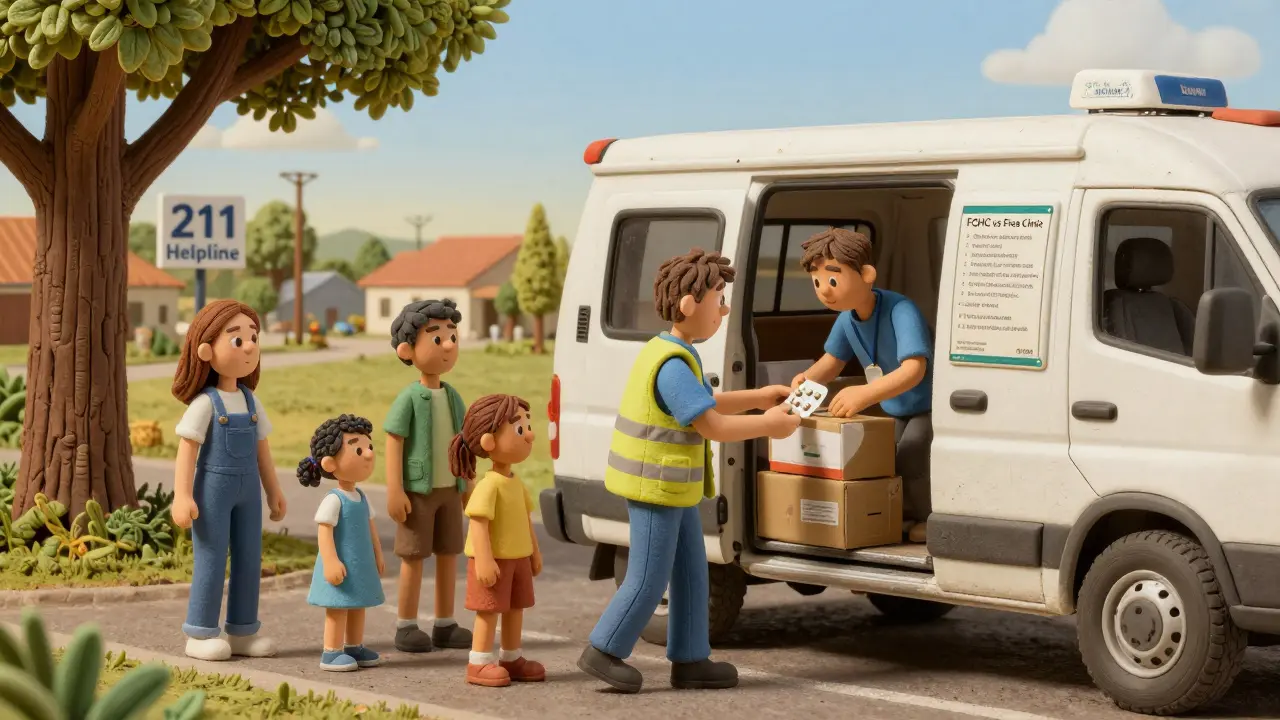
If you live in a rural area or can’t find a clinic within driving distance, try these options:- Call 211-the free national helpline that connects people to local health and social services.
- Check with your state’s health department. Many have lists of mobile clinics or outreach programs.
- Ask your doctor if they know of any pharmacy assistance programs. Many drugmakers offer free meds directly to patients who qualify.
- Look into nonprofit programs like NeedyMeds.org or RxAssist.org. They list free or low-cost drug programs by name.
Why This System Exists-and Why It’s Struggling
These clinics exist because the system fails too many people. Even if you work full-time, you might still earn too much for Medicaid but too little to afford insulin that costs $300 a vial. Clinics fill that gap. But they’re stretched thin. Forty-two percent of clinics reported medication shortages in 2022. Volunteer staff burn out. Donations fluctuate. New clinics get $25,000 grants from Family Medicine Cares USA, but that’s barely enough to open a door. The good news? Pharmaceutical companies are stepping up. Teva, Americares, and Direct Relief are investing millions into mental health meds and chronic disease programs. The trend is clear: partnerships between nonprofits and drugmakers are becoming the lifeline for people who can’t pay.What You Can Do Right Now
1. Find your nearest clinic using nafcclinics.org or HRSA’s tool. 2. Call before you go. Ask if they have your meds in stock and if you qualify. 3. Bring all your documents. Missing one piece can delay your care by weeks. 4. Ask about mental health meds. They’re in high demand and often overlooked. 5. Don’t wait until you’re out. If you’re running low, call now. Many clinics have emergency refill programs. You don’t have to choose between rent and your pills. These clinics were built for people like you. Use them. They’re there.Can I get free medications if I have insurance?
Most free clinics only serve people without insurance. But if your insurance has high copays or doesn’t cover your meds, you might still qualify as underinsured. Check with the clinic-they’ll ask about your out-of-pocket costs. Federally Qualified Health Centers (FQHCs) accept everyone, including those with insurance, and charge based on income.
Do I need to be a U.S. citizen to get free meds?
No. Citizenship is not required. Most clinics serve anyone living in their service area, regardless of immigration status. Proof of residency-like a utility bill or lease-is what matters. Many clinics actively serve immigrant and refugee communities.
Can I get brand-name drugs for free?
Yes, but it depends. Many clinics give out generic versions because they’re cheaper and just as effective. However, if your condition requires a specific brand (like certain insulin types or biologics), clinics with pharmaceutical partnerships may be able to provide it. Ask directly-don’t assume they only have generics.
How long does it take to get my meds after I apply?
It varies. Some clinics have meds on-site and can give them the same day. Others need to order from a donor program like Americares, which can take 1-3 weeks. If you’re running out, tell them-it’s an emergency. Many clinics have emergency refill protocols for people in crisis.
Are mental health medications available?
Yes, and it’s getting better. A major $2 million initiative launched in 2023 expanded access to anxiety and depression meds in seven states. Clinics now prioritize these drugs because untreated mental illness leads to worse physical health outcomes. If you need antidepressants or anti-anxiety meds, ask specifically-many clinics have limited supply, so call ahead.


