
When someone with celiac disease eats bread, pasta, or even a small amount of soy sauce, their immune system doesn’t just react to food-it attacks their own intestines. This isn’t a food allergy. It’s an autoimmune response, and it’s more complex than most people realize. Celiac disease affects about 1 in 100 people worldwide, yet many go undiagnosed for years, mistaking their symptoms for irritable bowel syndrome or simple indigestion. The truth is, celiac disease isn’t about being picky about food. It’s about a biological error that turns gluten, a common protein in wheat, barley, and rye, into a trigger for internal damage.
How Gluten Turns Into an Enemy Inside the Body
Gluten itself isn’t toxic to everyone. For most people, it passes through the digestive tract without issue. But for those with celiac disease, the body’s immune system sees gluten as a threat. The process starts when gluten fragments-especially a stubborn piece called the 33-mer gliadin-survive digestion and slip through the gut lining. This doesn’t happen by accident. Research from 2020 shows that gluten can force open the tight junctions between intestinal cells using a protein called zonulin, essentially creating a doorway for these fragments to enter deeper tissues.
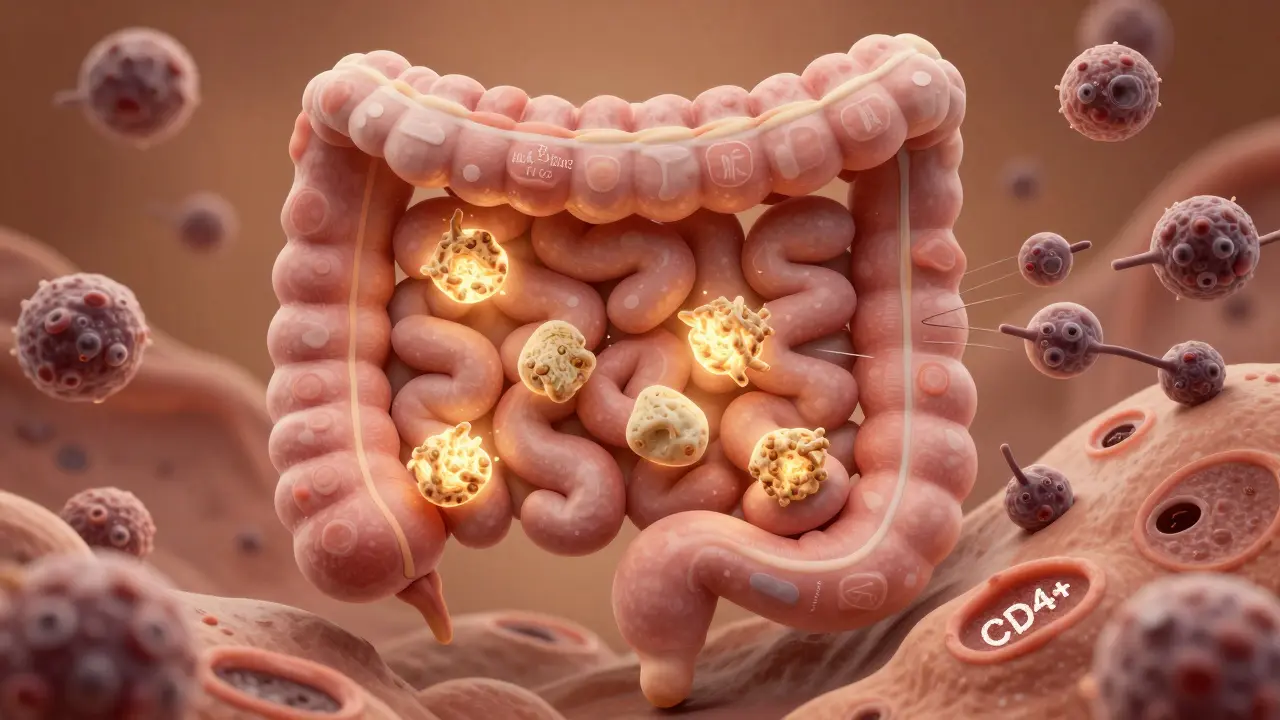
Once inside, tissue transglutaminase 2 (TG2), an enzyme normally involved in wound healing, chemically alters gluten peptides. It changes their structure, making them stickier and more recognizable to the immune system. In people with specific genetic markers-HLA-DQ2 or HLA-DQ8-these altered gluten pieces get presented to immune cells like a wanted poster. That triggers CD4+ T cells to launch an attack. These T cells release large amounts of interferon-gamma, a signaling molecule that tells other immune cells to destroy nearby tissue. The result? The finger-like projections in the small intestine, called villi, begin to flatten. This is villous atrophy, and it’s the hallmark of celiac disease.
A groundbreaking study in August 2024 changed how we think about this. Scientists at McMaster University found that the gut lining itself isn’t just a passive barrier-it can actively start the immune response. Cells in the intestinal wall, when they carry the same genetic markers as immune cells, can present gluten directly to T cells. This means the gut isn’t just being attacked-it’s helping to start the attack. That’s a major shift in understanding.
Celiac vs. Gluten Sensitivity: Not the Same Thing
Many people assume that if they feel better avoiding gluten, they have celiac disease. That’s not true. Non-celiac gluten sensitivity (NCGS) is real, but it’s different. While celiac disease affects 1-4% of the population, NCGS may affect up to 13%, depending on where you live. The key difference? Celiac disease causes measurable damage to the intestine. NCGS doesn’t. People with NCGS might feel bloated, tired, or foggy after eating gluten, but their biopsy looks normal. Their blood tests show no tTG antibodies. They don’t have the same genetic risk factors.
The immune response in celiac disease is precise and persistent. It produces IgG3 antibodies, which signal repeated, long-term activation. NCGS patients show different antibody patterns, suggesting a more temporary reaction. Diagnosis for celiac disease relies on two things: positive blood tests for anti-tTG antibodies (98% accurate if you’re still eating gluten) and a biopsy showing intestinal damage. NCGS has no lab test. It’s diagnosed by elimination-removing gluten and seeing if symptoms improve, then reintroducing it to confirm.
That’s why self-diagnosing is dangerous. If you cut out gluten before getting tested, your blood work and biopsy can look normal-even if you have celiac disease. You’ll miss the diagnosis, and over time, untreated celiac disease raises your risk of osteoporosis, infertility, neurological disorders, and even intestinal cancer.

The Only Treatment: A Strict Gluten-Free Diet
There’s no cure. No pill. No vaccine. The only proven treatment is a lifelong gluten-free diet. But what does that really mean? It’s not just about avoiding bread and pasta. Gluten hides in soy sauce, malt vinegar, processed meats, some medications, and even lip balm. The legal limit for a product to be labeled “gluten-free” is 20 parts per million (ppm). That’s tiny-about one drop of water in a full bathtub. But for someone with celiac disease, even that small amount can cause damage over time.
Getting started means cleaning out your kitchen. You’ll need separate toasters, cutting boards, and utensils. Cross-contamination is the biggest problem. A shared toaster can transfer enough gluten crumbs to trigger symptoms. A 2022 study found that using a dedicated gluten-free toaster reduces cross-contamination risk by 85%. Many people keep gluten-free snacks on hand-crackers, rice cakes, nuts-so they’re never caught without safe food.
Gluten-free products cost, on average, 242% more than their regular counterparts. That’s a real burden. But availability has improved. In 2010, there were about 2,500 gluten-free products on the market. By 2024, that number jumped to over 45,000. Stores like Whole Foods and Trader Joe’s now have entire gluten-free sections. Apps like Find Me Gluten Free help users locate safe restaurants and products with real-time reviews from other patients.
What Happens After You Go Gluten-Free?
Most people feel better within weeks. Bloating, diarrhea, and fatigue often vanish in 2-6 weeks. But healing the gut takes longer. For adults, it can take 6 months to 2 years for the villi to fully recover. Children heal faster. A 2023 survey of over 15,000 patients found that 89% saw major improvement within six months of going gluten-free. But 42% still had occasional symptoms, usually because of hidden gluten.
One patient, diagnosed at age 35 after seven years of misdiagnosis, said her endoscopy in 2024 showed complete mucosal healing. She’d been strict for five years. But she still checks every label. “One slip-up,” she wrote, “and I’m back to feeling like I’ve been hit by a truck.”
Nutrient deficiencies are common at diagnosis. Iron deficiency affects one-third of patients. Vitamin D deficiency? Nearly half. That’s because damaged villi can’t absorb nutrients properly. Doctors usually recommend supplements during the first year of healing. Bone density scans are also common, since celiac disease increases fracture risk.

The Future: What’s Coming Next?
While the gluten-free diet works, it’s not easy. That’s why researchers are racing to find alternatives. Three therapies are in advanced trials:
- Nexvax2 is a vaccine-like treatment that desensitizes the immune system to gluten. In a 2023 trial, it reduced symptom severity by 42%.
- Latiglutenase is an enzyme that breaks down gluten in the stomach before it reaches the intestine. In a 2022 trial, it improved symptoms by 37%.
- TAK-101 uses nanoparticles to retrain immune cells to tolerate gluten. A 2023 study showed a 63% reduction in intestinal damage.
These aren’t cures, but they could reduce the burden. Imagine being able to eat a slice of pizza without fear. That’s the goal.
Another promising area is gluten detection. Researchers are developing handheld devices that can test food for gluten at levels as low as 5 ppm. If this becomes affordable and reliable, it could change how people manage their diet outside the home.
And then there’s the gut microbiome. Early studies show that people with celiac disease have different gut bacteria than healthy people. Scientists are exploring whether probiotics or targeted diets could help restore balance and reduce inflammation.
What You Need to Know Right Now
If you suspect you have celiac disease, don’t cut gluten before seeing a doctor. Get tested. Blood tests for tTG-IgA antibodies are highly accurate-if you’re still eating gluten. Genetic testing for HLA-DQ2/DQ8 can rule out celiac if negative. A biopsy confirms it.
If you’re diagnosed, work with a dietitian who specializes in celiac disease. Learn to read labels. Know the hidden sources. Keep emergency snacks. Use dedicated kitchen tools. And don’t feel guilty for asking restaurants about cross-contamination. Your health depends on it.
The gluten-free diet isn’t trendy. It’s medical. And for millions, it’s the difference between feeling okay and feeling destroyed.
Can celiac disease develop at any age?
Yes. While celiac disease is often diagnosed in childhood, it can appear at any age. Many people aren’t diagnosed until their 40s, 50s, or even later. Symptoms may have been mild or misattributed for years. Stress, surgery, pregnancy, or infection can trigger the onset in genetically susceptible people.
Is a little gluten okay if I don’t feel symptoms?
No. Even if you don’t feel sick, consuming gluten-even tiny amounts-continues to damage your intestines. Studies show that people who think they’re “tolerating” gluten often have ongoing intestinal inflammation and are at higher risk for complications like osteoporosis and lymphoma. The goal is zero exposure.
Can I outgrow celiac disease?
No. Celiac disease is a lifelong condition. Unlike some food allergies that fade over time, celiac disease doesn’t go away. The genetic risk remains, and the immune system will always react to gluten. Strict, lifelong avoidance is required.
Are oats safe for people with celiac disease?
Pure, uncontaminated oats are generally safe for most people with celiac disease. But most oats are processed in facilities that also handle wheat, barley, or rye. Only choose oats labeled “gluten-free” and certified by trusted organizations. Even then, some individuals react to avenin, a protein in oats similar to gluten. Start with small amounts and monitor symptoms.
How do I know if my gluten-free diet is working?
Symptoms should improve within weeks. Blood tests for tTG-IgA antibodies should drop significantly within 6-12 months. A follow-up endoscopy, usually done 1-2 years after diagnosis, confirms healing of the intestinal lining. If antibodies remain high or symptoms persist, you may be unknowingly consuming gluten. Talk to your doctor or dietitian.
Can celiac disease affect mental health?
Yes. Studies show higher rates of anxiety, depression, and brain fog in people with untreated celiac disease. This is likely due to inflammation, nutrient deficiencies (especially B vitamins and iron), and the stress of managing a restrictive diet. After starting a gluten-free diet, many report improved mood and mental clarity within months.


