

The Real Risk: What Actually Happens?
It isn't just a vague possibility-the numbers are concrete. People on biologics face about a 2.1 times higher risk of being hospitalized for an infection compared to those on non-biologic therapies. Most of these are respiratory infections, which account for nearly 44% of serious cases. But not every drug carries the same weight. Some, like adalimumab and infliximab, show a higher hazard ratio for serious infections. Others, like ustekinumab, generally have a milder infection profile. It is also not just about the drug; your own health profile matters. If you are over 50, your risk climbs by about 37% every decade. If you're taking prednisone (more than 10mg a day), you're adding a 2.3x multiplicative risk to the mix. Other factors like diabetes or chronic kidney disease also make you more susceptible, as they already stress your immune system.| Biologic Class | Common Examples | Key Risk Factor | Risk Level |
|---|---|---|---|
| TNF Inhibitors | Adalimumab, Infliximab | HBV Reactivation | Higher |
| IL-12/23 Inhibitors | Ustekinumab | General Infection | Lower |
| IL-17 Inhibitors | Secukinumab | Candidiasis (Fungal) | Moderate |
| JAK Inhibitors | Tofacitinib | Herpes Zoster (Shingles) | Moderate/High |
The Essential Screening Checklist
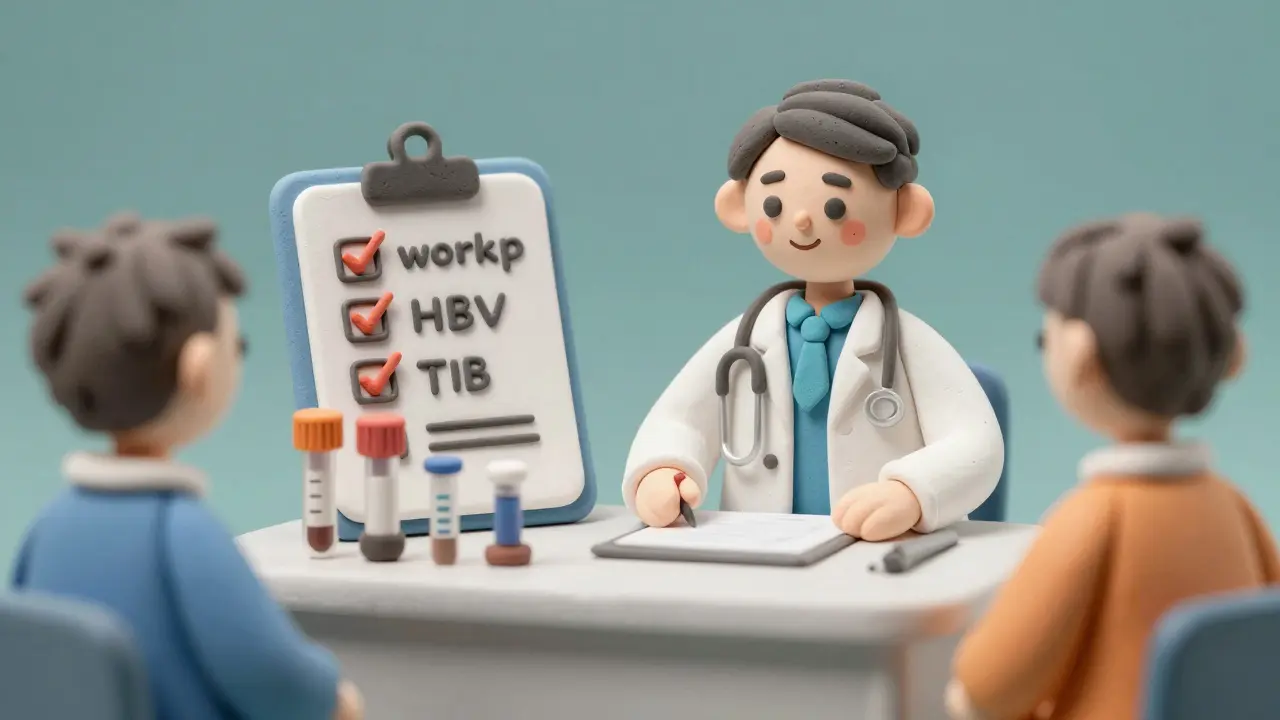
Before you take your first dose, your doctor should put you through a "workup." This isn't just paperwork; it's a way to find "sleeping" infections that could wake up and cause havoc once your immune system is suppressed.The most critical check is for Hepatitis B (HBV). This is a silent virus that can reactivate in nearly 28% of untreated patients starting biologics. A proper screen requires three specific markers: HBsAg, HBsAb, and HBcAb. If you're HBcAb positive, your doctor needs to check your HBV DNA levels, even if other tests look normal, because occult HBV is surprisingly common in autoimmune patients.
Then there is Tuberculosis (TB). Most guidelines demand an interferon-gamma release assay (IGRA). While some experts argue this might over-diagnose risk in certain regions, it's better to be safe. If you have latent TB, you'll usually need a few months of preventative treatment before the biologic can safely start. Skipping this step is a recipe for a medical emergency.
Timing Your Vaccinations
Timing is everything. Once you start a biologic, your body may not respond as well to vaccines, and some vaccines could actually be dangerous.- Live Vaccines: These (like MMR or Varicella) must be finished at least 4 weeks before you start. Once you're on the drug, live vaccines are generally a no-go.
- Inactivated Vaccines: These (like the flu shot or pneumonia vaccine) should be done at least 2 weeks before starting.
- Serology Checks: Your doctor should check if you already have antibodies for things like Shingles (VZV). If your IgG levels are too low (under 140mIU/mL), you need a booster-like Shingrix-before starting therapy.
Practical Tips for Staying Safe
Safety doesn't end after the first appointment. Living with a biologic means being more aware of your environment. Use a simple rule of thumb: if you feel a fever coming on, call your provider immediately. Don't wait to see if it "goes away," because infections can move much faster when you're immunosuppressed. Keep a digital record of all your screenings. Some clinics fail to keep these for the required 10 years, so having your own copy of your HBV and TB results is a smart move. If you are moving to a new specialist, make sure they see your baseline screening data so they don't have to guess your risk level.For those at the highest risk-such as those who are VZV-seronegative-some doctors are now prescribing preemptive antiviral prophylaxis (like valacyclovir). This has been shown to cut viral infections by over 60% in some groups. It's worth asking your doctor if this is right for you, especially if you're starting a high-risk TNF inhibitor.
Common Questions About Biologics and Safety
Can I get a flu shot while taking a biologic?
Yes, but the timing matters. Inactivated vaccines like the flu shot are safe and recommended. Ideally, you should get them at least two weeks before starting your medication. If you are already on the drug, you can still get the shot, but your body might not produce as strong an immune response. Always use the injectable version, not the nasal spray (which is a live vaccine).
What happens if I test positive for latent TB?
A positive TB screen doesn't mean you have active disease; it means the bacteria are "sleeping" in your body. Because biologics can wake them up, you will typically undergo a course of preventative antibiotics for several months. Your doctor will monitor you closely and only start the biologic once the TB risk is neutralized.
Why do I need three different Hepatitis B tests?
Hepatitis B is tricky. HBsAg tells us if you have a current infection. HBsAb tells us if you're immune (from a vaccine or old infection). HBcAb tells us if you've ever been exposed. Some people have "occult" HBV, where the virus is hidden. Testing all three is the only way to ensure you won't suffer a dangerous reactivation once the biologic suppresses your immune system.
Are some biologics safer than others regarding infections?
Generally, yes. TNF inhibitors tend to have higher rates of serious infections compared to IL-12/23 inhibitors. However, different drugs have different "blind spots." For example, IL-17 inhibitors have a higher link to fungal infections like candidiasis, while JAK inhibitors are more closely tied to shingles outbreaks.
How often should I be re-screened for infections?
While the primary screening happens before you start, your doctor will monitor you throughout treatment. This usually involves periodic blood work and a review of any new symptoms. If you travel to a region where TB is common or have a significant change in health (like developing diabetes), a new round of screening may be necessary.


