
Aminoglycoside Nephrotoxicity Risk Calculator
This tool estimates your risk of kidney damage when taking aminoglycoside antibiotics like gentamicin, tobramycin, or amikacin. Based on factors mentioned in the article, it calculates a risk score that helps you understand potential dangers.
Remember: This is for informational purposes only. Always consult your healthcare provider before making any medical decisions.
Why aminoglycosides can hurt your kidneys - even when used correctly
When you’re fighting a serious bacterial infection, especially one caused by Gram-negative bugs like E. coli or Pseudomonas, doctors sometimes turn to aminoglycoside antibiotics. Drugs like gentamicin, tobramycin, and amikacin are powerful. They kill bacteria fast. But there’s a dark side: up to 1 in 4 people who take them develop kidney damage. This isn’t rare. It’s predictable. And it’s preventable - if you know what to watch for.
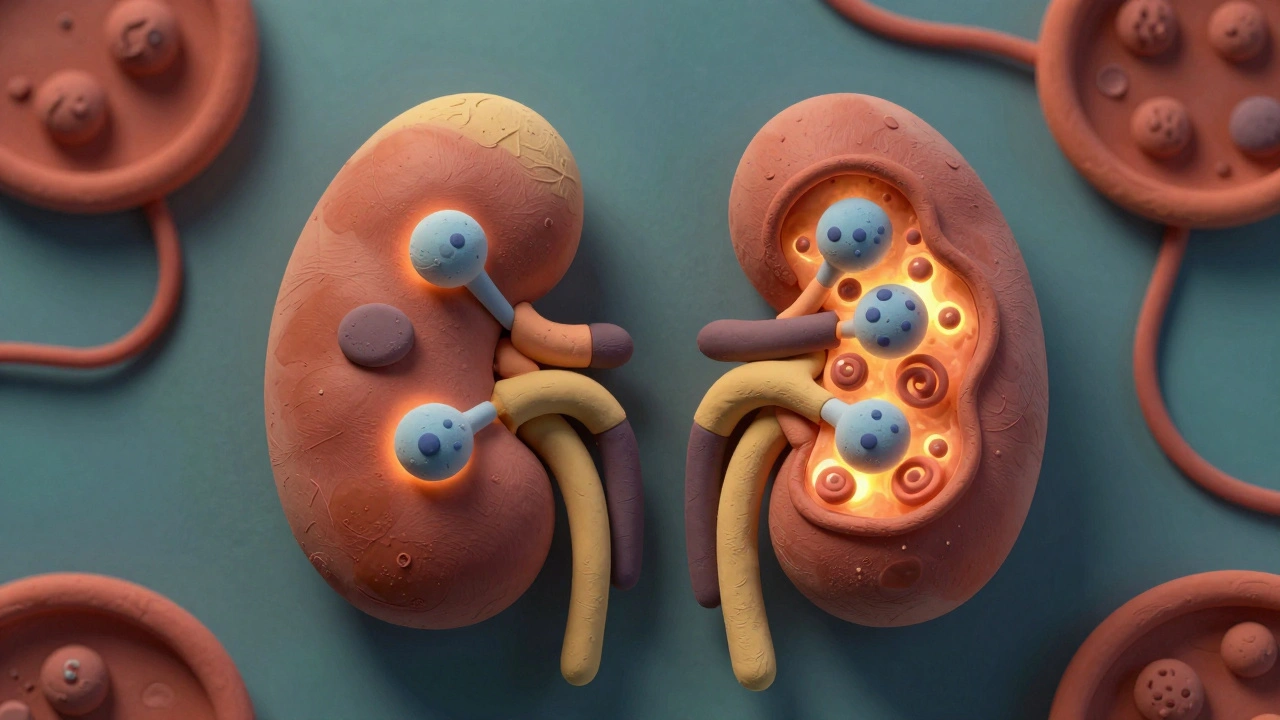
These antibiotics don’t just target bacteria. They also stick to the cells in your kidneys. Specifically, they build up in the proximal tubules, the part of the kidney that filters waste and reabsorbs nutrients. Over time, this buildup triggers a chain reaction that damages those cells. The result? A slow, silent drop in kidney function. Often, you won’t feel it until your creatinine levels rise on a blood test.
How aminoglycosides actually damage the kidneys
The damage isn’t just from one thing. It’s a mix of problems working together. About 5% of every dose gets trapped in kidney cells. Once inside, the drug latches onto the surface of tubule cells and gets pulled into tiny sacs called lysosomes. These sacs normally break down waste, but aminoglycosides mess with their enzymes. That leads to a buildup of phospholipids - fatty substances that shouldn’t be there. This is called phospholipidosis.
Under the microscope, you’d see swollen lysosomes filled with spiral-shaped structures called myeloid bodies. These show up in urine before kidney function even starts to decline. That’s why doctors check for certain proteins and enzymes in urine - not just creatinine. Early signs include elevated levels of beta-2-microglobulin, lysozyme, and N-acetylglucosaminidase. These are like warning lights on your kidney’s dashboard.
But here’s what most people don’t realize: it’s not just the tubules. The blood vessels in the kidneys also constrict. This reduces blood flow. Studies show that aminoglycosides cause mesangial cells - the ones that support the filtering units - to contract. That’s why glomerular filtration drops. It’s not just clogged pipes. It’s also narrowed arteries.
Who’s most at risk - and why
Not everyone who takes aminoglycosides gets kidney damage. But some people are far more likely to. If you’re over 65, your kidneys naturally filter slower. That means the drug sticks around longer. If you already have kidney disease - say, an eGFR under 60 - your risk jumps 3.2 times. Combine that with dehydration, and it gets worse.
The biggest red flag? Taking another nephrotoxic drug at the same time. Vancomycin is the worst offender. Studies show using it with gentamicin increases kidney injury risk by 2.7 times. Other culprits include NSAIDs like ibuprofen, contrast dye used in CT scans, and certain antifungals. Even a single dose of these can tip the balance.
Length of treatment matters too. Most cases show up after 5 to 7 days. That’s why short courses (3-5 days) are preferred. If you’re on it for 10 days or more, your risk climbs sharply. The longer the drug stays in your system, the more it accumulates - and the harder it is for your kidneys to recover.
Once-daily dosing: the smarter way to use these drugs
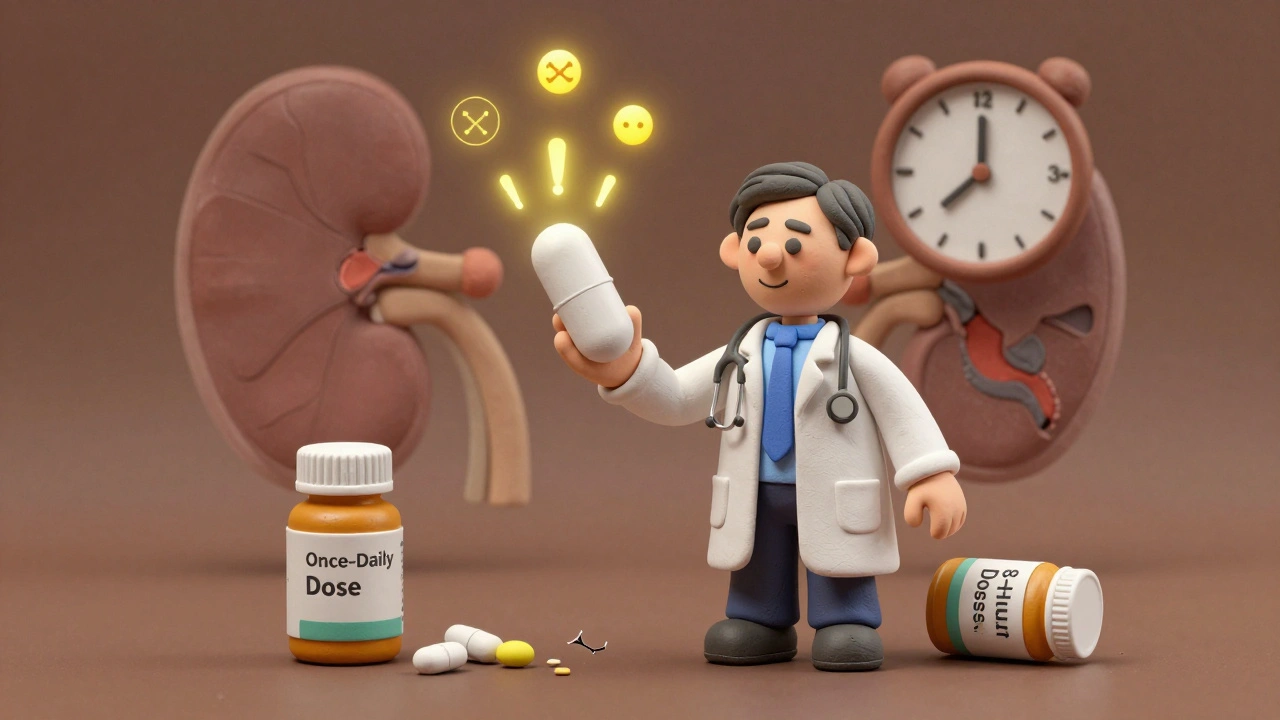
For years, aminoglycosides were given every 8 hours. That’s how they were originally designed. But research changed everything. In the 1990s, scientists discovered that giving the full daily dose all at once - once-daily dosing - actually worked better and caused less kidney damage.
Why? Because your kidneys have a natural rhythm. When you give a large dose once a day, the drug concentration spikes high enough to kill bacteria, then drops low enough that kidney cells can clear it before it builds up. Multiple daily doses keep the concentration constantly elevated - a recipe for toxicity.
Studies show once-daily dosing cuts nephrotoxicity by nearly half. The American Society of Health-System Pharmacists and the European Society of Clinical Microbiology both recommend it. Even better: timing matters. One study found the lowest kidney damage occurred when the drug was given at 1:30 p.m. - possibly because kidney blood flow peaks in the afternoon.
What kidney damage looks like - and how to spot it early
Aminoglycoside-induced kidney injury is usually nonoliguric. That means you’re still peeing - often more than 400 mL a day - even as your kidneys struggle. That’s different from other types of kidney failure where urine output drops to almost nothing.
The classic sign? A rise in serum creatinine. A rise of 0.5 mg/dL or 50% above your baseline is considered clinically significant. For someone with normal kidney function (creatinine around 1.0 mg/dL), that means hitting 1.5 mg/dL. For older adults with baseline creatinine of 1.2, it’s hitting 1.8.
But creatinine lags. It doesn’t rise until damage is already happening. That’s why doctors monitor urine for early biomarkers. Elevated sodium, potassium, magnesium, and calcium in urine signal tubule dysfunction. Protein in the urine - especially small proteins like beta-2-microglobulin - means the filtering barrier is breaking down.
Recovery usually starts 3 to 5 days after stopping the drug. Most people regain normal kidney function in 1 to 3 weeks. But not everyone. About 1 in 5 patients in one large Mayo Clinic study had permanent kidney damage. That’s why early detection matters.
What’s being done to protect kidneys - and why nothing’s approved yet
For decades, the only protection was careful dosing and monitoring. But researchers have been looking for drugs that can shield the kidneys. One promising candidate is polyaspartic acid. In lab studies, it blocks aminoglycosides from sticking to kidney cells. It prevents phospholipid buildup, stops myeloid body formation, and protects mitochondrial function.
It works in rats. It works in cells. But it’s not approved for humans. Why? Because no large-scale clinical trial has proven it saves kidneys in real patients. The European guidelines say it’s promising but unproven. The U.S. National Institutes of Health is funding trials - including a phase II study of a modified version (NCT04567821) - but results won’t be out until late 2026.
Meanwhile, doctors rely on what they know: avoid combining with other kidney toxins, use once-daily dosing, keep trough levels below 1 μg/mL for gentamicin, and check creatinine every 48 to 72 hours. Some hospitals now use automated alerts in their electronic records to flag when a patient has been on aminoglycosides for more than 5 days.
When aminoglycosides are still worth the risk
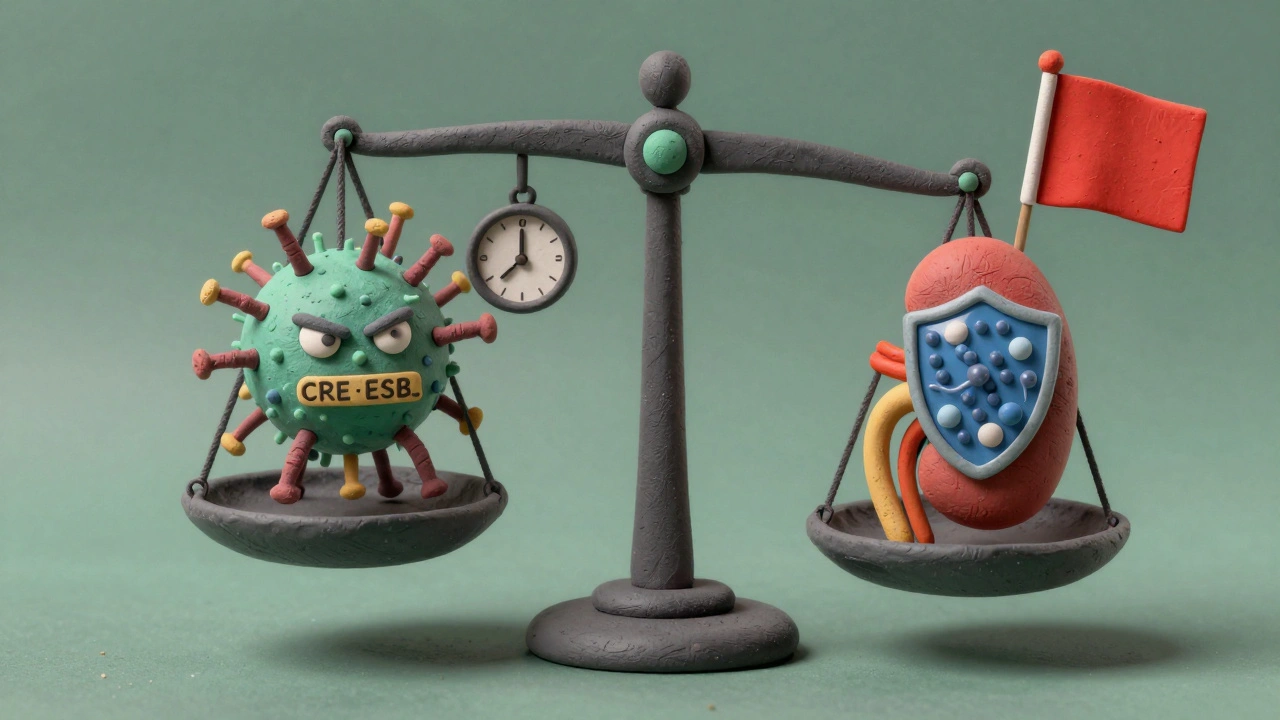
Despite the dangers, these drugs are still essential. They’re one of the few options left for multidrug-resistant infections - especially in sepsis, pneumonia in ICU patients, or complicated urinary tract infections caused by superbugs like CRE or ESBL-producing bacteria. The World Health Organization estimates 12.5 million aminoglycoside courses are given worldwide every year.
For many, there’s no alternative. Newer antibiotics either don’t work against these bugs or are too expensive. In life-or-death situations, the risk of kidney damage is weighed against the risk of dying from an untreated infection. That’s why these drugs haven’t been retired - they’re just used more carefully now.
What’s changing is the mindset. Instead of seeing nephrotoxicity as an unavoidable side effect, experts now treat it as a preventable complication. That means monitoring smarter, dosing smarter, and stopping sooner.
What patients should ask their doctor
If you’re prescribed an aminoglycoside, here’s what to ask:
- Is this the best option, or is there a less toxic alternative?
- Will this be given once a day or multiple times a day?
- What’s my baseline creatinine? What level should trigger concern?
- Am I taking any other drugs that could hurt my kidneys?
- How often will my kidney function be checked?
- What symptoms should I report right away - like swelling, less urine, or extreme fatigue?
Don’t assume your doctor knows all this. Many still default to old habits. Be informed. Ask questions. Your kidneys will thank you.


