

Medication Dizziness Risk Checker
This tool helps you understand the potential dizziness risk from the medications you're taking. Based on data from recent studies, it estimates your risk level and provides practical advice for managing symptoms.
Your Dizziness Risk Assessment
Feeling dizzy or lightheaded after taking a new medication isn’t just annoying-it’s more common than most people realize. In fact, about dizziness affects 1 in 5 adults every year, and nearly a quarter of those cases are directly tied to medications. It’s not always the drug itself that’s to blame, but how it interacts with your body’s balance systems, blood pressure, or brain chemistry. For older adults, this isn’t just a nuisance-it’s a serious fall risk. About 35% of people over 65 fall at least once a year, and medications are a major contributor.
How Medications Make You Feel Dizzy
Dizziness isn’t one thing. It can feel like the room is spinning (vertigo), like you’re about to faint (lightheadedness), or just unsteady on your feet. Medications cause these feelings in three main ways: by messing with your inner ear, dropping your blood pressure, or changing brain signals.
Your inner ear holds tiny hair cells that tell your brain which way is up. Some drugs, especially certain antibiotics like gentamicin, can kill those cells. Once they’re gone, the damage is permanent. Studies show 17% to 40% of patients on long-term gentamicin develop lasting balance problems. Chemotherapy drugs like cisplatin are even worse-up to 65% of patients lose vestibular function entirely.
Then there’s blood pressure. Many heart and high blood pressure meds-like beta-blockers, diuretics, and ACE inhibitors-lower blood pressure too much, especially when you stand up. That sudden drop, called orthostatic hypotension, makes you feel like you’re going to pass out. Propranolol causes dizziness in nearly 20% of users. Furosemide (a water pill) hits 22%. Even common drugs like lisinopril affect over 14% of people.
And then there’s your brain. Antidepressants, especially tricyclics like amitriptyline, interfere with neurotransmitters that help control balance. SSRIs like fluoxetine cause dizziness in about 25% of people during the first few weeks. Antiseizure drugs like carbamazepine and pregabalin are also big offenders, with dizziness rates over 25%. Even something as simple as an antacid like omeprazole can cause dizziness in 5% of users-and since millions take it daily, that adds up fast.
Which Medications Are Most Likely to Cause Dizziness?
Not all drugs are created equal when it comes to balance problems. Here’s what the data shows:
| Medication Class | Example Drug | Dizziness Rate | Primary Mechanism |
|---|---|---|---|
| Antiepileptic | Carbamazepine | 29.7% | CNS depression |
| Antibiotic (Ototoxic) | Gentamicin | 17-40% | Vestibular toxicity |
| Diuretic | Furosemide | 22.1% | Orthostatic hypotension |
| Tricyclic Antidepressant | Amitriptyline | 28.4% | Anticholinergic effect |
| SSRI Antidepressant | Fluoxetine | 25.3% | Neurotransmitter shift |
| Beta-blocker | Propranolol | 19.7% | Blood pressure drop |
| Proton Pump Inhibitor | Omeprazole | 5.2% | Unknown (likely CNS) |
What’s surprising is how often people don’t connect the dots. You might start a new pill, feel dizzy a week later, and assume it’s stress or lack of sleep. But if the dizziness happens within hours of taking the drug-and repeats every time-you’re likely looking at a side effect.
Why Older Adults Are at Higher Risk
As we age, our bodies process drugs differently. Liver and kidney function slow down. Balance systems weaken. And most older adults take multiple medications at once. That’s called polypharmacy-and it’s a recipe for trouble.
People over 65 who take five or more medications are three times more likely to experience dizziness than those on just one. The American Geriatrics Society’s Beers Criteria lists 17 high-risk drugs for seniors, including benzodiazepines (like diazepam), first-gen antihistamines (like diphenhydramine), and muscle relaxants. These drugs don’t just cause dizziness-they increase fall risk by up to 50%.
Even drugs that seem harmless can be dangerous in older adults. For example, the new diabetes drug class SGLT2 inhibitors (like empagliflozin) showed a 9.3% dizziness rate in post-market studies. That’s why the 2024 update to the Beers Criteria is expected to add more of these drugs to the avoid list.

What to Do If You’re Feeling Dizzy
If you start feeling dizzy after starting a new medication, don’t panic-but don’t ignore it either. Here’s what to do:
- Track your symptoms. Keep a simple diary: write down when you feel dizzy, how long it lasts, what you were doing, and what meds you took. About 68% of cases show a clear pattern tied to timing.
- Don’t stop cold turkey. Stopping blood pressure or seizure meds suddenly can be deadly. Seizure frequency can jump 300% if you quit anticonvulsants abruptly. Always talk to your doctor first.
- Ask about alternatives. If you’re on a high-risk drug, ask if there’s a similar one with fewer balance side effects. For example, some newer antidepressants cause less dizziness than amitriptyline.
- Check your blood pressure. If you feel lightheaded when standing, measure your BP sitting and then standing. A drop of 20 mmHg systolic or 10 mmHg diastolic within 3 minutes confirms orthostatic hypotension.
- Try non-drug fixes. Move slowly when standing. Wear compression stockings. Stay hydrated. These simple steps can reduce dizziness by 45%.
Treatment That Actually Works
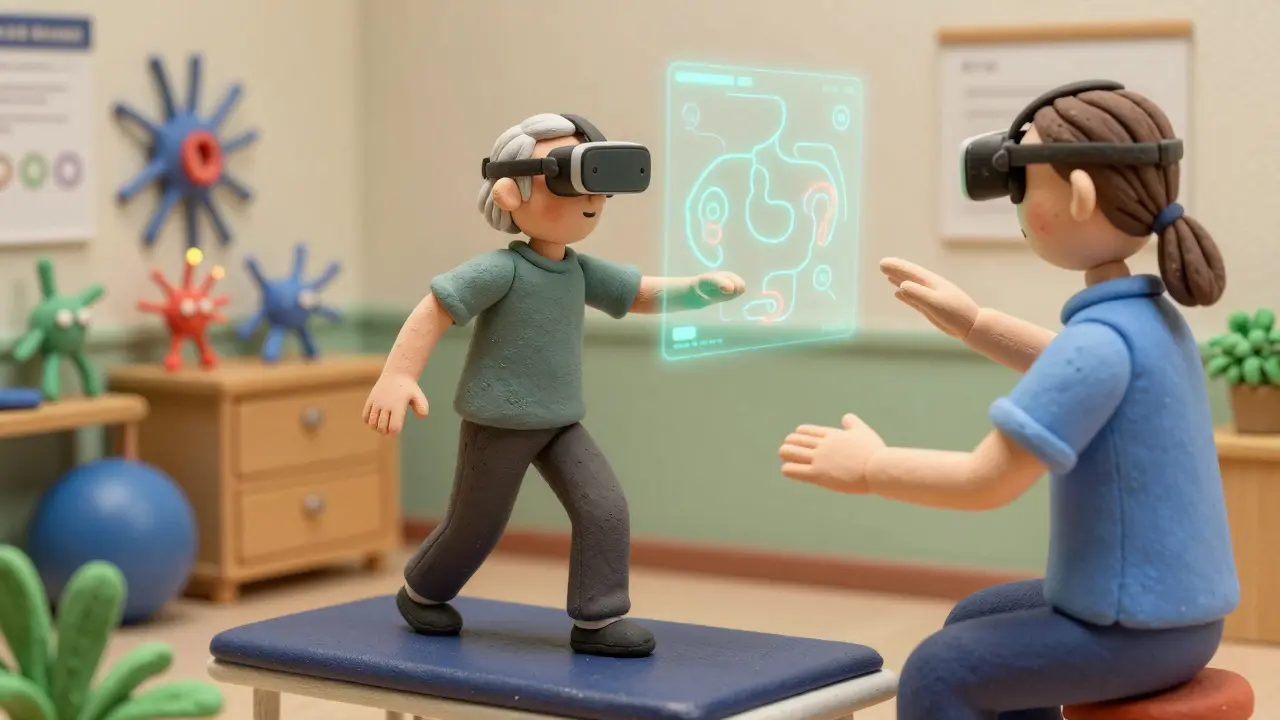
For persistent dizziness, medication changes aren’t always enough. That’s where vestibular rehabilitation therapy (VRT) comes in. It’s not just exercises-it’s a targeted program that retrains your brain to rely on other senses when your inner ear is damaged.
Studies show VRT works in 70% to 80% of cases. It usually takes 6 to 8 weekly sessions with a certified therapist. Newer methods, like virtual reality-based VRT, have shown even better results-82% symptom improvement in a 2023 trial with 347 patients.
And it’s not just for the elderly. Anyone with lasting dizziness from chemo, antibiotics, or even migraines can benefit. The key is starting early. The longer you wait, the harder your brain finds it to adapt.
When to Worry
Not all dizziness is harmless. Call your doctor right away if you have:
- Dizziness with chest pain, shortness of breath, or irregular heartbeat
- Sudden, severe headache or vision changes
- Difficulty speaking, weakness on one side, or confusion
- Loss of hearing or ringing in the ears after starting a new drug
These could signal something serious like a stroke, heart problem, or inner ear infection-not just a side effect.
The Bigger Picture
Dizziness from medications isn’t a minor issue. In the U.S. alone, it leads to over 1.2 million ER visits every year and costs more than $2.8 billion. The FDA now requires black box warnings on ototoxic antibiotics. The European Medicines Agency recommends routine balance tests for chemotherapy patients.
Looking ahead, science is getting smarter. A 2023 study identified 17 genetic markers linked to higher risk of dizziness from blood pressure drugs. In the future, a simple DNA test might help doctors pick meds that won’t make you dizzy in the first place. The NIH’s All of Us program is collecting data from a million people to make this real.
The message is clear: dizziness isn’t something you just have to live with. It’s a signal. And with the right steps-tracking symptoms, talking to your doctor, and trying rehab-you can get back to feeling steady again.
Can dizziness from medication go away on its own?
Yes, in many cases. If the dizziness is caused by a temporary change in brain chemistry-like starting an SSRI-it often fades after a few weeks as your body adjusts. But if it’s due to inner ear damage from drugs like gentamicin or cisplatin, the dizziness may be permanent. The key is knowing the cause. Tracking symptoms and talking to your doctor helps determine whether it’s likely to improve or needs active treatment.
Is it safe to stop a medication if it’s making me dizzy?
No, not without medical supervision. Stopping certain drugs suddenly can be dangerous. Quitting beta-blockers can cause rebound high blood pressure or heart problems. Stopping seizure medications can trigger seizures. Even antidepressants can cause withdrawal symptoms that mimic dizziness. Always talk to your prescriber first. They may suggest a slow taper or switch to a safer alternative.
Can over-the-counter drugs cause dizziness?
Absolutely. Many OTC meds are culprits. First-generation antihistamines like diphenhydramine (Benadryl) are notorious for causing dizziness and increasing fall risk in older adults. Decongestants like pseudoephedrine can raise blood pressure and trigger lightheadedness. Even some herbal supplements, like high-dose ginkgo biloba, can interfere with blood flow to the brain. Always check labels and talk to your pharmacist before mixing OTC drugs with prescriptions.
How do doctors know if dizziness is caused by a medication?
Doctors use tools like the Naranjo Scale, which rates the likelihood of a drug causing a side effect based on timing, improvement after stopping, and recurrence if restarted. A score of 9 or higher means the reaction is "definite." They also look at patterns in your symptom diary, review all your meds (including supplements), and sometimes run tests like balance assessments or blood pressure monitoring. If dizziness improves after stopping the drug-and returns when you restart it-that’s strong evidence.
What’s the difference between dizziness and vertigo?
Dizziness is a general term that includes feeling lightheaded, unsteady, or faint. Vertigo is a specific type of dizziness where you feel like you or your surroundings are spinning. Medications can cause both. Inner ear drugs like gentamicin cause true vertigo. Blood pressure meds usually cause lightheadedness. But the distinction matters for treatment-vestibular rehab works best for vertigo, while hydration and posture changes help more with lightheadedness.
Can I prevent medication-induced dizziness?
You can reduce your risk. Ask your doctor if a new medication has a known dizziness risk. Request alternatives with lower side effect profiles. Avoid mixing multiple drugs that affect balance. Stay hydrated. Move slowly when standing. Get regular balance checks if you’re over 65 or on high-risk meds. And always tell your doctor about any dizziness-even if it seems mild. Early intervention prevents falls and long-term damage.
Next Steps
If you’re currently taking any of the high-risk medications listed here and feel dizzy, schedule a review with your doctor or pharmacist. Bring your symptom diary. Ask: "Could this be a side effect? Is there a safer alternative?" Don’t wait for it to get worse. Most cases of medication-induced dizziness are manageable-once you know the cause.


