

Why Hepatitis A and B Vaccines Matter
Every year, millions of people worldwide get infected with hepatitis A or B. These viruses attack the liver, sometimes causing serious illness, liver failure, or even cancer. The good news? Both are preventable with vaccines. Hepatitis B can lead to chronic infection, especially if caught as a child, and is one of the leading causes of liver cancer. Hepatitis A usually causes a short-term illness but can still land you in the hospital. The vaccines are safe, effective, and have been used for decades. In fact, since the U.S. started vaccinating all infants for hepatitis B in 1991, new infections in kids and teens have dropped by more than 95%.
How Hepatitis B Vaccine Works: The Standard Schedule
The hepatitis B vaccine is given as a series of shots. For babies, the first dose should be given within 24 hours of birth - if the baby is healthy and weighs at least 2,000 grams. This first shot is critical. It protects the baby from infection passed from the mother during birth, which is the most common way infants get hepatitis B. The second dose comes at 1 to 2 months old, and the third dose is given between 6 and 18 months. The last shot must be at least 24 weeks after the first. Missing the birth dose increases the risk of lifelong infection. For older children and adults who haven’t been vaccinated, the same 3-dose schedule applies: shots at 0, 1, and 6 months.
Alternative Hepatitis B Schedules for Adults
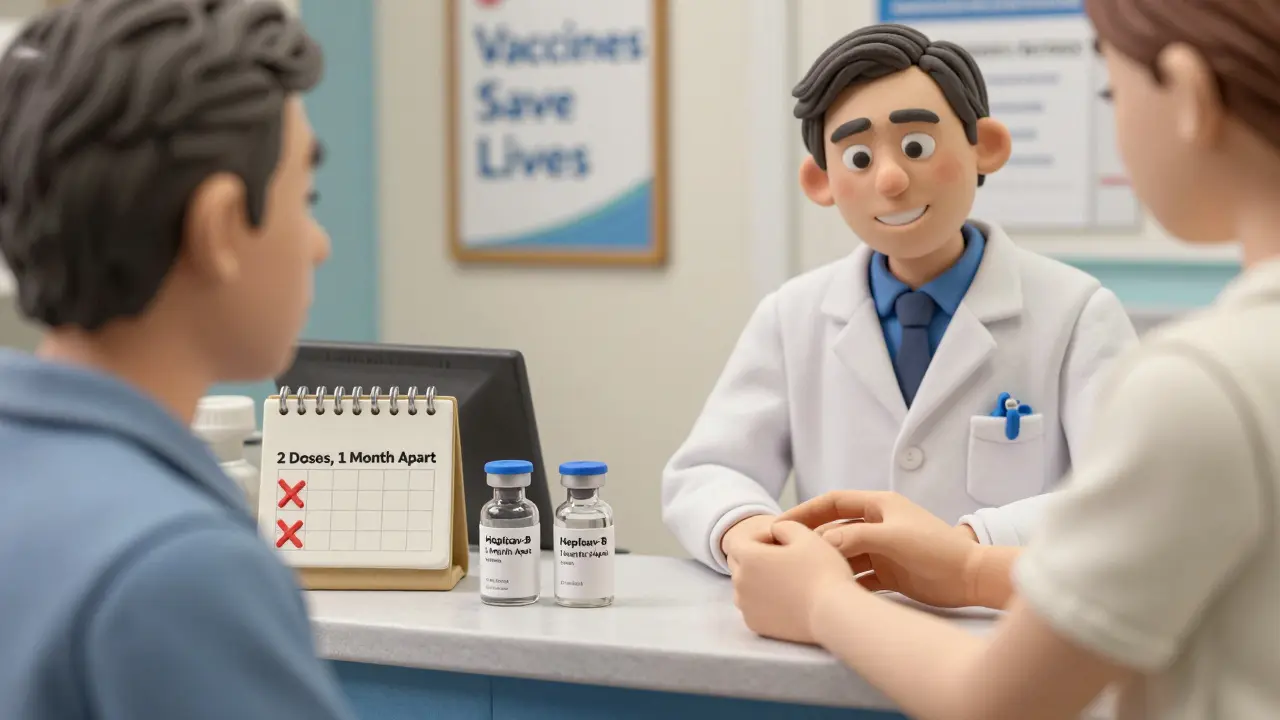
Not everyone needs three shots. Heplisav-B, a newer vaccine approved for adults, works in just two doses, given one month apart. It’s more effective than the traditional three-shot version, especially for people over 40, diabetics, or those with weakened immune systems. Studies show over 90% of adults develop protective antibodies after just two doses. But it comes with a warning: rare but serious heart-related side effects have been reported. That’s why doctors avoid it for people with existing heart conditions. Another option is PreHevbrio, a three-dose vaccine given at 0, 1, and 6 months. It’s newer, but just as safe and effective as the older brands like Engerix-B and Recombivax HB.
Hepatitis A Vaccine: Two Doses, Six Months Apart
Hepatitis A spreads through contaminated food or water. It’s common in places with poor sanitation, but it can happen anywhere - even in the U.S. The vaccine is given as two shots, at least six months apart. The first dose is usually given between 12 and 23 months of age. For older kids, teens, or adults who haven’t been vaccinated, the same two-dose schedule applies. You can get the second shot anytime after six months, but don’t rush it. Giving it too early reduces protection. The vaccine is highly effective: over 95% of people are protected for life after both doses.
Combination Vaccines: Hep A and B Together
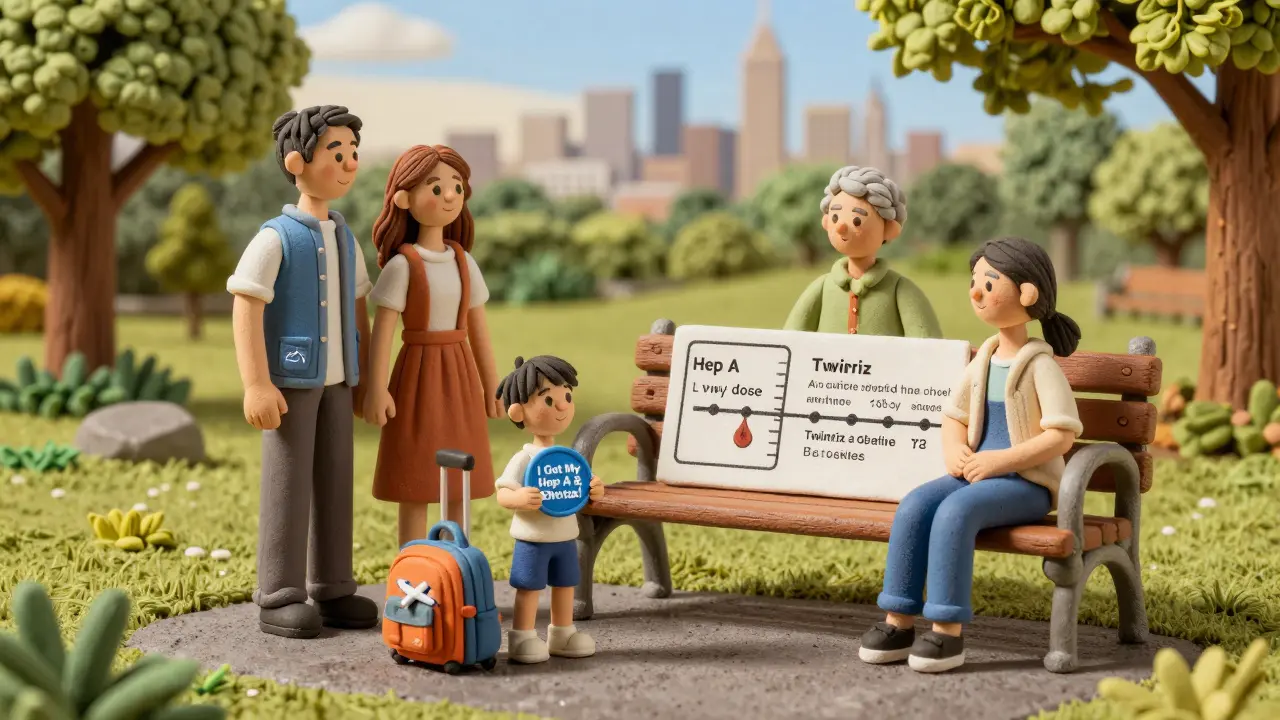
If you need both vaccines, you can get them in one shot: Twinrix. It combines hepatitis A and B into a single injection. For most adults, the standard schedule is three doses at 0, 1, and 6 months. But if you’re traveling in a hurry, there’s an accelerated version: four shots over three weeks, followed by a booster at 12 months. The first three doses are given on days 0, 7, and 21-30. The fourth dose, the booster, ensures long-term protection. This schedule is perfect for last-minute travelers. Studies show 94% of people develop protection within 21 days - compared to only 50% with the standard schedule at the same point. The downside? Twinrix costs more - around $150 to $180 per dose - compared to $60 to $80 for standalone hepatitis B shots.
Special Cases: Who Needs Different Schedules?
Some people need special attention. People on dialysis, those with HIV, or anyone with a weak immune system don’t respond as well to standard doses. For them, hepatitis B vaccines are given in higher doses or extra shots. Engerix-B, for example, requires four doses of 2 mL each for hemodialysis patients. Recombivax HB uses 40 mcg doses instead of the standard 10 mcg. The same applies to hepatitis A - if you’re immunocompromised, your doctor may recommend an extra dose or check your antibody levels after vaccination to make sure you’re protected. Pregnant women can safely get both vaccines. There’s no evidence of harm, and the risk of infection is far greater than any theoretical risk from the vaccine.
Why People Miss Their Shots
Even though the vaccines work, many people don’t finish the series. For kids, completion rates are high - over 90% in the U.S. But for adults? Only about one in three gets all the shots. Reasons? Cost, forgetfulness, or confusion. Insurance sometimes won’t cover newer vaccines like Heplisav-B or PreHevbrio. One 45-year-old in Texas paid $450 out of pocket because his insurer refused to cover the newer vaccine. Others miss appointments because they’re busy, don’t realize they need a booster, or think one shot is enough. A CDC study found that 41% of adults who start the hepatitis B series never finish it. That leaves them vulnerable. Needle exchange programs in cities like Chicago and San Francisco have improved completion rates dramatically by offering Heplisav-B’s two-dose option - completion jumped from 38% to 89%.
What Happens If You Fall Behind?
Don’t panic if you miss a dose. You don’t need to start over. If you’re late on the second hepatitis B shot, just get it as soon as you can. The third dose still needs to be at least 16 weeks after the first and at least 8 weeks after the second. For hepatitis A, if you get the second shot early - say, after only four months - you still need a third dose, given at least six months after the first. For combination vaccines like Twinrix, if you miss the booster at 12 months, get it as soon as possible. The protection you got from the first three doses is still good, but the booster ensures it lasts. Your doctor can check your antibody levels if you’re unsure whether you’re protected.
Where to Get Vaccinated
You don’t need to go to a hospital. Most pharmacies now offer hepatitis vaccines. In 22 U.S. states, pharmacists can give the shots without a doctor’s prescription. This has boosted adult vaccination rates by 23% in just two years. Pediatricians give the birth dose and childhood shots. Travel clinics handle the accelerated Twinrix schedule. Community health centers and public health departments often offer free or low-cost vaccines. If you’re uninsured, ask about the Vaccines for Children program or local health department clinics. The CDC’s Vaccine Price List shows most public health clinics charge under $25 per dose.
What’s Coming Next
Scientists are working on better vaccines. One candidate, from Valneva, could protect against both hepatitis A and B in just two shots - no booster needed. Another NIH project is testing a single-dose hepatitis B vaccine using a new immune-boosting molecule. If it works, it could revolutionize vaccination in poor countries where multiple visits are a barrier. The WHO is also exploring fractional dosing - using one-fifth of the regular dose - to stretch vaccine supplies in low-income regions. These innovations could make global elimination of hepatitis B possible by 2030.
Bottom Line: Get Vaccinated, Stay Protected
There’s no excuse not to get vaccinated. Hepatitis A and B are serious, but they’re completely preventable. Babies get their first shot at birth. Kids get the rest by age two. Adults who never got vaccinated? It’s not too late. Whether you’re 20 or 60, you can still protect yourself. Choose the right schedule for your life: two shots if you’re an adult and want it quick, three if you’re getting the standard version, or four if you’re flying overseas next week. Talk to your doctor, visit a pharmacy, or check with your local health department. One conversation could keep you - and your family - safe for life.


