
The global generic drug market isn’t just surviving-it’s evolving. While many still think of generics as cheap copies of brand-name pills, the reality is far more complex. By 2030, this market will be shaped by shifting supply chains, rising biosimilar demand, regulatory pressure, and the growing power of emerging economies. If you’re wondering how affordable medicine will stay affordable, the answers lie in where these drugs are made, who’s buying them, and what’s coming next.
Why Generics Are More Important Than Ever
Generic drugs are the backbone of affordable healthcare. They contain the exact same active ingredients as brand-name medications but cost 80-85% less. In the U.S., generics make up 90% of all prescriptions, yet they account for just 23% of total drug spending. That’s the power of scale and competition. In Europe, the numbers vary: Germany uses generics in 72% of prescriptions, while Italy lags at 28%. Why? It’s not about availability-it’s about reimbursement rules and doctor habits. As healthcare costs hit $9.8 trillion globally in 2024, governments are under pressure to cut spending. Chronic diseases like diabetes, heart disease, and cancer now affect 41% of the world’s population. Treating these conditions long-term is expensive. Generics are the only practical way to keep treatment accessible. Without them, millions would go without medicine.The Rise of Biosimilars: The New Frontier
The biggest shift in the generic market isn’t happening in pills-it’s happening in injectables. Biosimilars are generic versions of biologic drugs, which are made from living cells instead of chemicals. Think cancer treatments like Humira or insulin analogs. These used to be locked behind patents and priced at $10,000 a year. Now, biosimilars are entering the market at 15-30% below the original price. Here’s the catch: biosimilars aren’t easy to make. Producing one takes 10-20 times more steps than a traditional small-molecule generic. Development costs range from $100 million to $250 million, compared to $1-5 million for a regular pill. Only big players with advanced labs and strict quality controls can compete. Smaller manufacturers are being pushed out-or forced to partner up. The growth is explosive. Mordor Intelligence projects biosimilars will grow at a 12.3% CAGR from 2025 to 2030. That’s faster than any other segment in generics. By 2030, biosimilars could account for nearly 15% of the entire generic market. That’s not just a trend-it’s a transformation.Who’s Making the Drugs? India and China Dominate
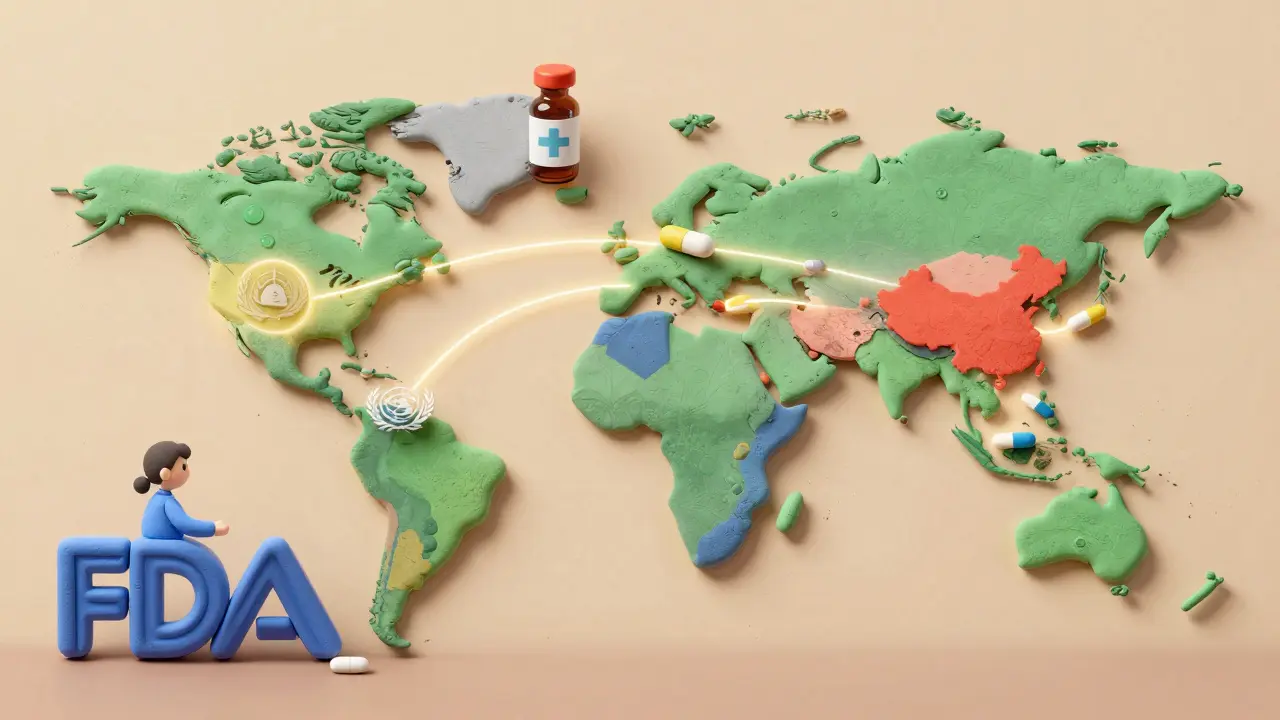
Nearly every generic pill you take was made in Asia. India produces over 60,000 different generic medicines and supplies 20% of the world’s generic volume by volume. China makes about 40% of the world’s active pharmaceutical ingredients (APIs)-the raw chemical building blocks of drugs. Together, they control roughly 35% of global manufacturing capacity. But this isn’t just about scale-it’s about control. China supplies 65% of global APIs for generics. That’s a vulnerability. If a factory shuts down due to pollution crackdowns, political tensions, or a natural disaster, drug shortages ripple across continents. The U.S. FDA issued 187 warning letters to foreign generic manufacturers in 2023-40% of all warning letters went to facilities in India and China. Quality issues aren’t rare. They’re systemic. Governments are reacting. India’s $1.34 billion Production Linked Incentive (PLI) scheme in 2024 is pushing local API production. The goal? Reduce dependence on China. In Egypt, new rules require 50% of essential medicines to be made locally by 2025. Saudi Arabia’s Vision 2030 is building domestic pharma capacity. The world is realizing: relying on two countries for your medicine is risky.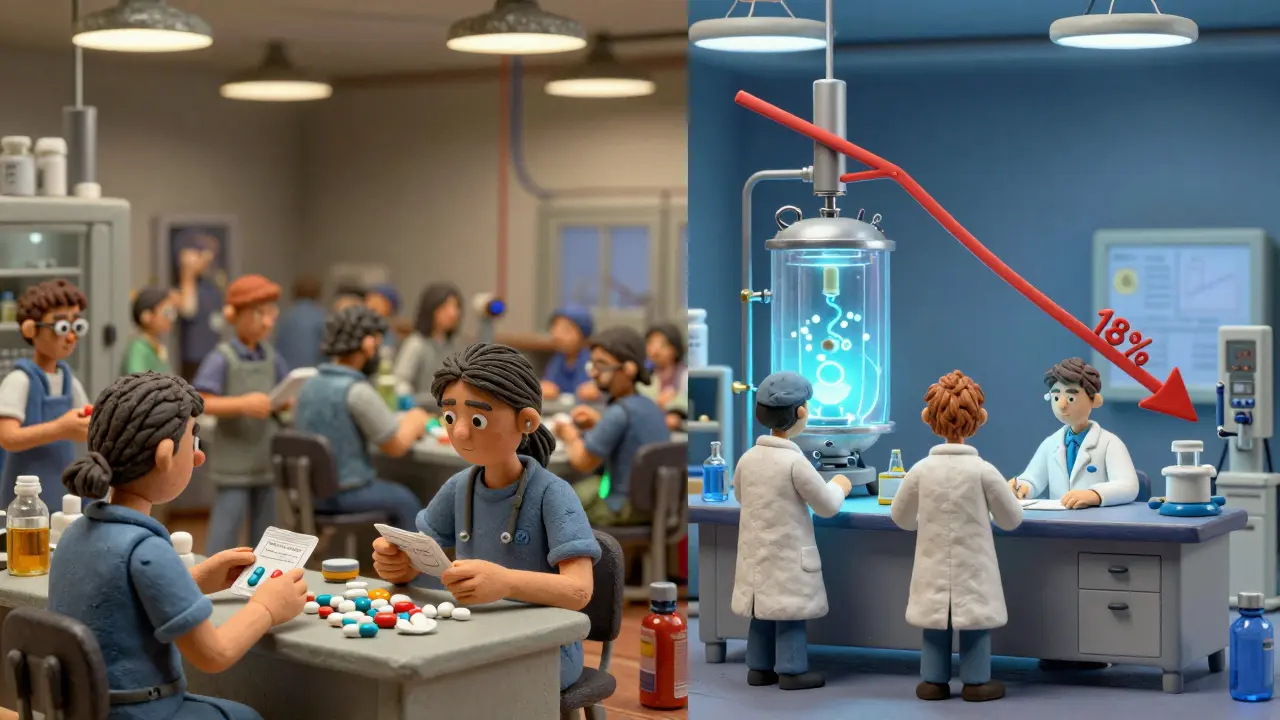
Where’s the Growth? The Pharmerging Markets
While the U.S. and Europe see slow growth (2-5% CAGR), the real action is in the so-called pharmerging markets: India, China, Brazil, Turkey, Russia, and parts of Africa and the Middle East. These countries are expanding insurance coverage, building clinics, and pushing for cheaper drugs. Mordor Intelligence reports these markets are growing at 9.66% CAGR from 2025 to 2030. IQVIA estimates they’ll add $140 billion in drug spending by 2025 alone. In 2024, these regions contributed 65% of all global medicine spending growth. That’s not a trend-it’s the new normal. Why? Population size, rising incomes, and government policy. Brazil’s public health system now covers over 200 generic drugs. Turkey’s drug pricing authority caps prices aggressively. In the Gulf, countries like Saudi Arabia and the UAE are tightening regulations to attract quality manufacturers. It’s not charity-it’s economics. Cheaper drugs mean more patients treated, fewer hospitalizations, and lower public spending.The Profit Problem: Margins Are Squeezed
Making generics used to be profitable. In 2020, average profit margins were around 18%. By 2024, they’d dropped to 12%. Why? Too many players, too much competition, and too many price cuts. In the U.S., the FDA approves hundreds of new generic applications each year. When five or six companies can make the same drug, prices crash. A common blood pressure pill that sold for $100 a month in 2015 now costs $4. That’s great for patients-but terrible for manufacturers. The only way to survive is to get bigger, go vertical, or specialize. Some companies are buying API suppliers. Others are moving into biosimilars. A few are partnering with pharmacies to skip wholesalers and sell directly. The era of the small generic manufacturer making a few low-margin pills is ending.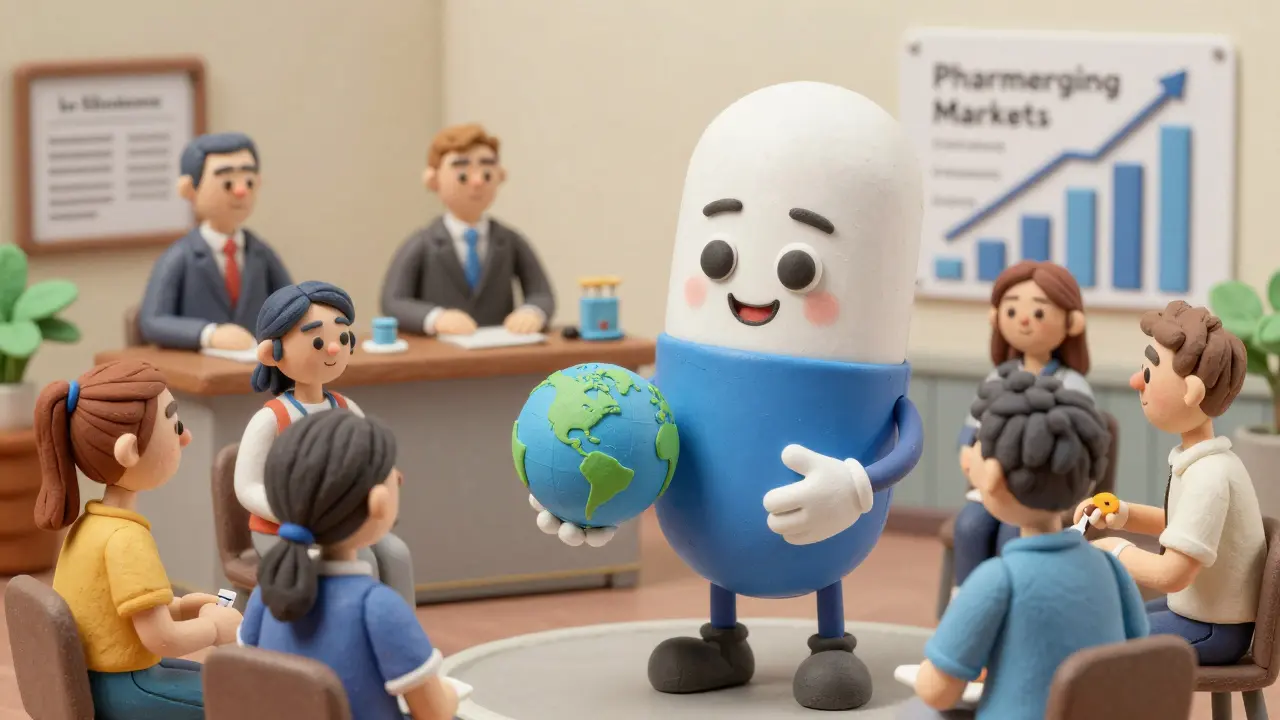
Regulation: A Double-Edged Sword
There are 78 different regulatory systems for drugs around the world. That’s a nightmare for manufacturers trying to sell globally. But there’s progress. The International Council for Harmonisation (ICH) has added 15 new member countries since 2024. That means fewer duplicate tests, faster approvals, and lower costs. Still, quality control remains a huge issue. The FDA’s 2023 warning letters show that foreign plants often cut corners-poor sanitation, falsified data, inadequate testing. These aren’t isolated cases. They’re structural. Without consistent oversight, trust erodes. And trust is what keeps patients and doctors choosing generics over expensive brands. Countries like Saudi Arabia and Canada are now requiring third-party audits of foreign suppliers. The EU is tightening import rules. This will raise costs-but it will also raise quality. The market will split: low-cost, low-quality players will fade. The winners will be those who invest in compliance.What’s Next? The 2030 Outlook
By 2030, the global generic market is expected to hit $650-700 billion. But here’s the twist: while the market grows, its share of total pharmaceutical spending is expected to shrink-from 57.56% in 2024 to around 53%. Why? Because specialty drugs, biologics, and GLP-1 weight-loss medications are growing even faster. Generics won’t disappear. They’ll just become more specialized. The future belongs to manufacturers who can do three things:- Make biosimilars with precision and scale
- Build secure, diversified supply chains for APIs
- Adapt to stricter regulations without losing price advantage
What This Means for You
If you’re a patient: generics will remain your best option for affordable care. Don’t fear them-use them. They’re safe, effective, and regulated. If you’re a policymaker: invest in local manufacturing, enforce quality standards, and support biosimilar adoption. The cost of inaction is millions going without treatment. If you’re in the industry: stop competing on price alone. Build expertise. Partner. Diversify. The low-margin game is over. The future of generics isn’t about being cheap. It’s about being reliable, scalable, and smart. The world needs these drugs. The question is: who will make sure they’re ready when it matters most?Are generic drugs as safe as brand-name drugs?
Yes. By law, generic drugs must contain the same active ingredients, strength, dosage form, and route of administration as the brand-name version. They must also meet the same strict quality and manufacturing standards set by agencies like the FDA and EMA. The only differences are in inactive ingredients (like fillers or dyes) and packaging. Over 90% of U.S. prescriptions are filled with generics, and studies consistently show they work just as well.
Why are biosimilars more expensive to make than regular generics?
Biosimilars are made from living cells-like proteins or antibodies-rather than synthesized chemicals. This makes them incredibly complex. A single biosimilar can require over 100 manufacturing steps, with strict controls on temperature, pH, and cell culture conditions. Even tiny changes can affect how the drug works. Traditional generics are simple molecules made in chemical reactors. Biosimilars need bioreactors, advanced purification systems, and years of testing to prove they’re similar to the original. That’s why development costs are 20-100 times higher.
Is India still the top producer of generic drugs?
Yes, India remains the world’s largest supplier of generic medicines by volume. It produces over 60,000 different formulations and supplies 20% of the world’s generic drugs. However, China dominates the production of active pharmaceutical ingredients (APIs), which are the raw materials used to make those drugs. India is now investing heavily in domestic API production to reduce reliance on China, especially after supply chain disruptions during the pandemic and recent geopolitical tensions.
Why do some countries use generics less than others?
It’s mostly about policy and culture. Countries like Germany and the UK have strong reimbursement systems that encourage doctors to prescribe generics. In contrast, countries like Italy and France have historically favored brand-name drugs due to physician habits, marketing influence, and weaker price controls. Patient trust also plays a role-some believe generics are inferior, even though there’s no scientific basis for that. Education and policy reform are key to increasing adoption.
Will China lose its dominance in generic drug manufacturing?
Not soon, but its role is changing. China supplies 65% of global APIs for generics and 40% of finished generic drugs. However, rising labor costs, stricter environmental regulations, and geopolitical pressure are pushing buyers to diversify. India, Vietnam, and even Mexico are stepping up. The U.S. and EU are also incentivizing local production. China won’t disappear, but it won’t be the only option anymore. The future is a multipolar supply chain.


