
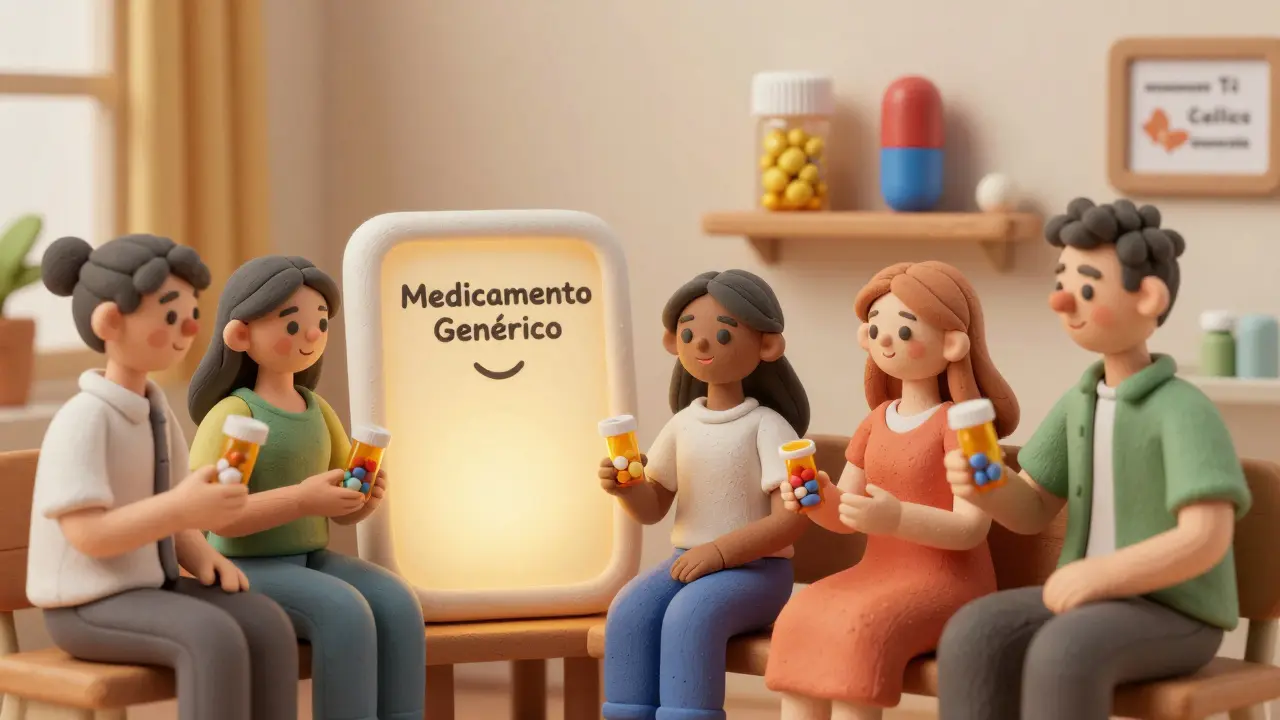
Many Spanish-speaking patients in the U.S. are told they can save money by switching to generic medications, but they don’t always understand what that really means. They see a pill that looks different-smaller, a different color, maybe even a strange logo-and wonder if it’s the same medicine. Is it weaker? Safer? Will it even work? Without clear, trustworthy information in their own language, patients often stop taking their meds altogether. This isn’t just about confusion. It’s about safety.
What Exactly Is a Generic Medication? (In Spanish)
The term medicamento genérico doesn’t mean "cheap" or "second-rate." It means the same active ingredient, same dose, same way it works in your body as the brand-name version. The only differences? The shape, color, filler ingredients, and price. The FDA requires that generic drugs meet the same strict standards as brand-name ones. But patients don’t hear this from their doctors or pharmacists in a way they understand.
One of the most common phrases patients say in Spanish is: "¿Tiene la versión genérica de esa medicina? La original es muy cara." (Do you have the generic version of that medicine? The original one is too expensive.) That’s a good sign-they want to save money. But without proper explanation, they’re left guessing.
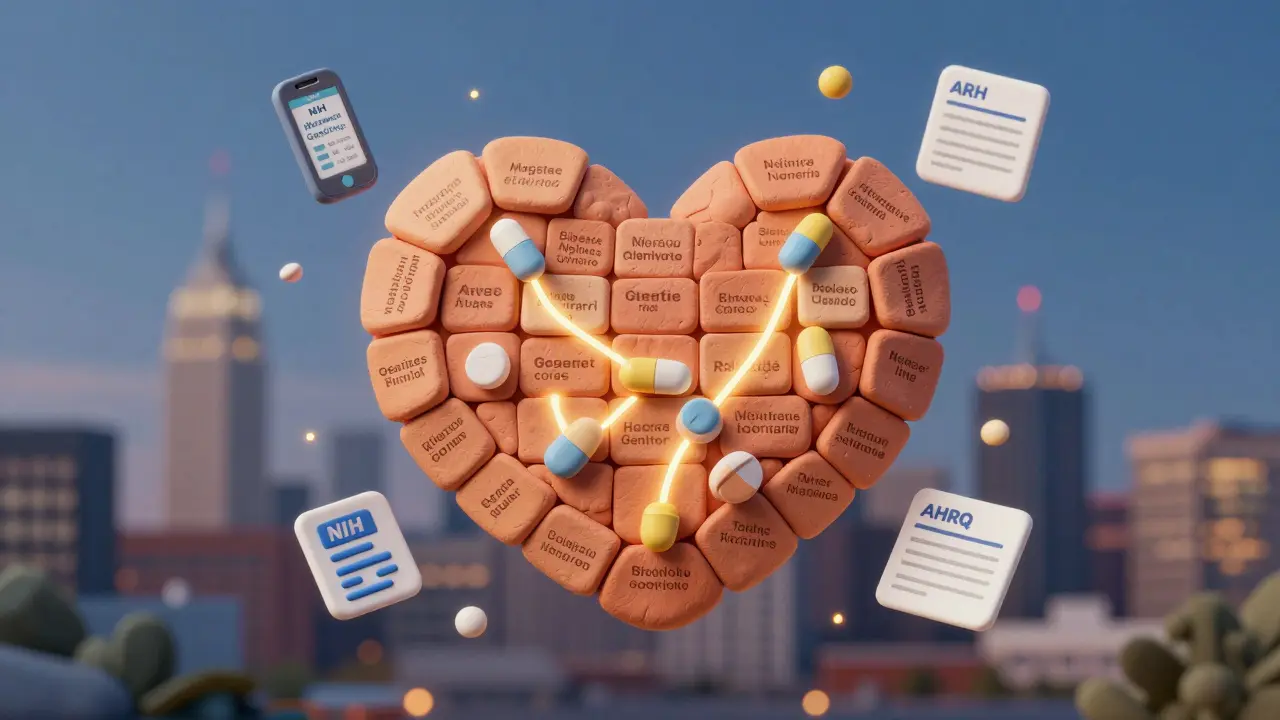
Resources like the My Medicines List from the Agency for Healthcare Research and Quality (AHRQ) help. Available in Spanish since 2023, it walks patients through writing down both the brand and generic names, why they’re taking the medicine, the dose, and how often. It’s simple. It’s practical. And it’s one of the few tools that treats generic meds as equal, not as an afterthought.
Why Visuals Matter More Than Words
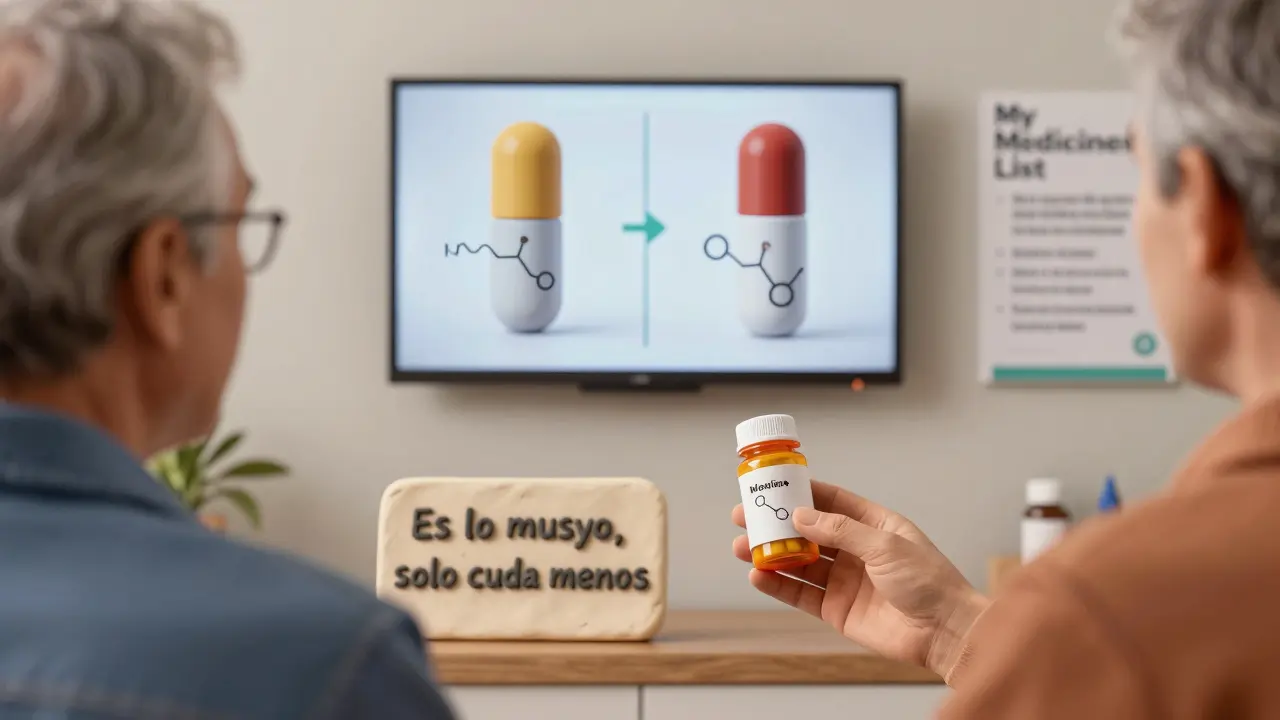
Words alone won’t fix this. A patient might hear "es lo mismo" (it’s the same), but if the pill looks nothing like what they’re used to, doubt creeps in. That’s why the best Spanish-language resources now include side-by-side images.
Kaiser Permanente’s Spanish medication portal, launched in late 2022, shows pictures of brand-name pills next to their generic equivalents. One patient said: "Vi la foto y entendí de inmediato. No era otra medicina, solo otra forma de la misma." (I saw the picture and understood right away. It wasn’t another medicine, just another form of the same one.)
Studies show visual aids reduce confusion by 37%. A University of Miami study found that when patients could see the difference between brand and generic pills, they were far less likely to stop taking them. That’s not just helpful-it’s life-saving. Imagine someone on blood thinners, seeing a different-looking pill, and thinking it’s not working. They stop. That’s how strokes happen.
Regional Differences in Spanish Can Be Dangerous
Not all Spanish is the same. In Spain, the word for acetaminophen is paracetamol. In Mexico, Colombia, and most of Latin America, it’s acetaminofén. Same drug. Different name. If a patient moves from Texas to Florida, or visits family in Puerto Rico, they might get a prescription written in a term they’ve never heard before.
Healthcare providers often use "neutral Spanish" to avoid confusion. But even that isn’t enough. A 2023 American Hospital Association survey found 68% of U.S. clinics use neutral Spanish, yet 41% still don’t have any Spanish-language resources at all. And of those that do, only 28% specifically explain that generics are therapeutically equivalent.
Translation apps and generic Google Translate won’t cut it. They don’t know that pastillas means "pills" in most places-but in some regions, it specifically means birth control pills. One patient in California told a nurse she was taking pastillas for high blood pressure. The nurse assumed she meant birth control. The patient didn’t correct her because she didn’t know the term was ambiguous.
Tools That Actually Work
Not all Spanish-language resources are created equal. Here are the ones patients and providers actually rely on:
- AHRQ’s My Medicines List (Spanish): A fillable PDF that helps patients track both brand and generic names. Used in over 1,200 clinics nationwide. Scored 4.7/5 in patient clarity tests.
- MedlinePlus Spanish Medication Guide: Offers side-by-side brand/generic comparisons. Updated quarterly. Includes warnings about interactions and side effects.
- Wake AHEC Pharmacy Translation Cards: Designed for pharmacists. Includes phrases like: "Esta medicina tiene una apariencia diferente, pero es lo mismo." (This medicine looks different, but it’s the same.)
- Medicamento Genérico App (NIH, 2023): A free mobile app with 147,000 downloads. Lets users scan a pill, see its brand equivalent, compare prices, and hear correct pronunciation of drug names in multiple dialects.
These tools aren’t just translations. They’re education. They answer the unspoken question: "¿Estoy seguro de que esto va a funcionar?" (Am I sure this will work?)
Why Patients Still Don’t Trust Generics
A California Health Care Foundation survey of 1,200 Spanish-speaking patients in early 2023 found that 78% felt more confident after using bilingual guides. But 63% still worried the generic version wouldn’t work as well.
Why? Because the system doesn’t reinforce trust. A patient gets a new prescription. The pharmacist hands them a different-looking pill. No one explains why. No one shows them a picture. No one says, "El medicamento genérico es igual, solo cuesta menos." (The generic medicine is the same, it just costs less.)
One Reddit user shared how their father stopped taking his heart medication after switching to a generic. The pharmacist didn’t explain the change. The father assumed it was a mistake. He stopped taking it. He ended up in the ER. The problem wasn’t the medicine. It was the silence.
Dr. Maria Hernandez from Harvard Medical School says bilingual medication resources have cut medication errors by 23% since 2015. But generic confusion remains one of the top three reasons patients don’t take their meds as prescribed.
What Providers Can Do Today
You don’t need a fancy app or a big budget. Here’s what works right now:
- Print and hang AHRQ’s Spanish Medicines List in your waiting room.
- Use Wake AHEC’s translation cards when handing out prescriptions. Say: "Esta es la versión genérica. Es igual, pero más barata."
- Point to the pill. Show the picture. Say: "Mira, esta es la misma medicina, solo se ve diferente."
- Ask: "¿Tienes alguna pregunta sobre esta medicina?" (Do you have any questions about this medicine?)
- Don’t assume they understand. Ask them to repeat back what they’re supposed to take.
Simple. Human. Effective.
The Bigger Picture: Why This Matters
Generic medications make up 90% of all prescriptions filled in the U.S. But they cost only 22% of what brand-name drugs do. That’s billions in savings-for patients, for insurers, for the system.
Yet, if Spanish-speaking patients don’t trust generics, they won’t use them. And that means they pay more. They get sicker. They go to the ER more often. It’s a cycle.
The Hispanic population in the U.S. is growing. By 2060, it will hit 111 million. If we don’t fix how we communicate about medicines now, we’ll face a crisis of non-adherence, preventable hospitalizations, and wasted healthcare dollars.
It’s not about translation. It’s about trust. And trust comes from clarity, consistency, and care.
What does "medicamento genérico" mean in English?
"Medicamento genérico" means "generic medication" in English. It refers to a drug that has the same active ingredient, strength, dosage form, and route of administration as the brand-name version, but is sold under its chemical name and usually at a lower price. The FDA requires it to work the same way in the body.
Why do generic pills look different from brand-name ones?
By law, generic drugs can’t look exactly like brand-name drugs. That’s because of trademark rules. So manufacturers change the color, shape, or markings. But the active ingredient-the part that treats your condition-is identical. Visual aids showing both versions side by side help patients understand this difference isn’t a change in effectiveness.
Are generic medications safe?
Yes. The FDA requires generic drugs to meet the same strict standards for quality, safety, and effectiveness as brand-name drugs. They must contain the same active ingredient, work the same way, and be taken the same way. The only differences are in inactive ingredients like fillers or dyes, which don’t affect how the drug works.
What should I say if my patient thinks the generic doesn’t work?
Start by asking them what made them think that. Often, it’s because the pill looks different. Show them a picture of the brand and generic side by side. Say: "Esta es la misma medicina, solo se ve diferente." Then explain that the FDA checks that both work the same way. Offer to call the pharmacy to confirm the generic is approved. Many patients just need to see and hear it clearly.
Where can I find free Spanish-language resources for my clinic?
Start with AHRQ’s "My Medicines List" in Spanish (available at ahrq.gov). MedlinePlus.gov offers free bilingual PDFs on generic medications. The NIH’s "Medicamento Genérico" app is free to download and includes images, pronunciation guides, and cost comparisons. Wake AHEC also provides printable pharmacy translation cards for providers. All are free and designed for real-world use.


