
Elderberry Interaction Risk Assessment
Check Your Safety Profile
Select all that apply to your current health status.
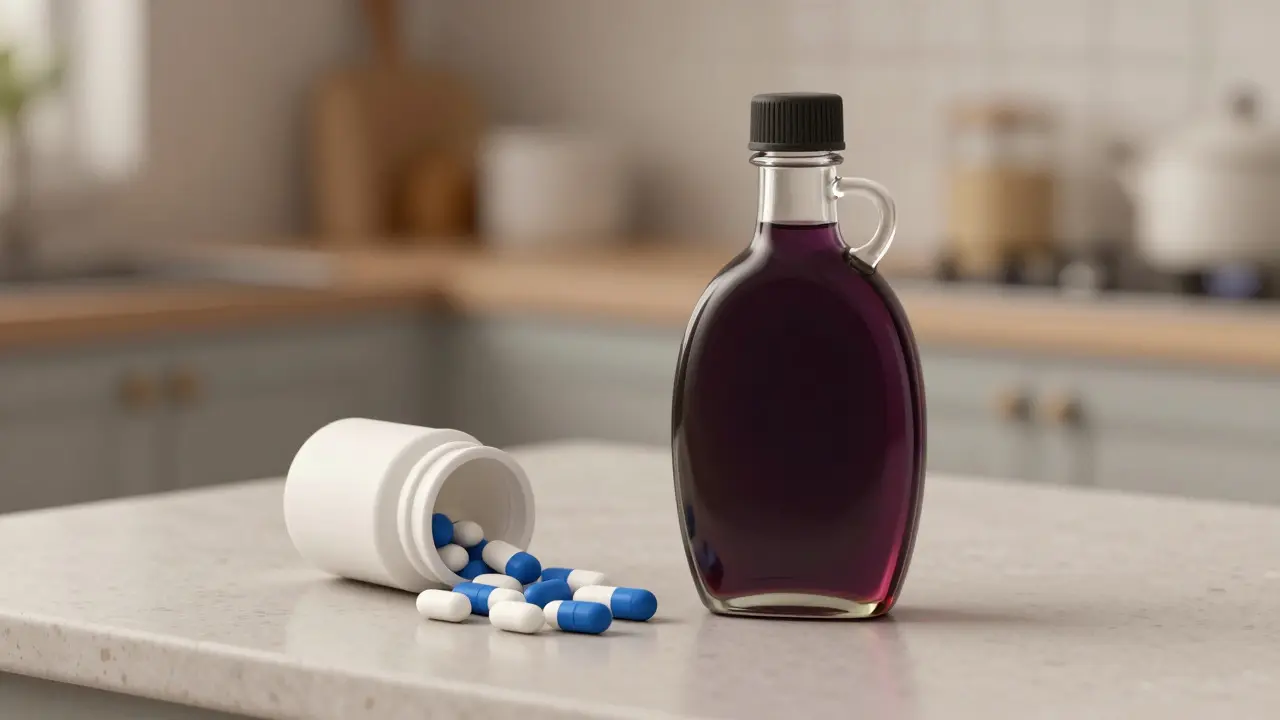
Imagine you just got over a nasty cold thanks to that bottle of elderberry syrup sitting on your kitchen counter. It worked wonders for you. But now, imagine you are taking medication to keep your body from attacking a newly transplanted kidney or fighting off an autoimmune flare-up. Suddenly, that same bottle isn't just a remedy; it could be a risk. This is the core conflict when discussing elderberry and immunosuppressants.
Elderberry (Sambucus nigra) has become a household name for immune support. People reach for it during flu season to shorten the duration of illness. However, if you are on drugs designed to calm down your immune system, adding a supplement designed to wake it up creates a direct contradiction. The question isn't just whether they can be taken together-it's whether doing so undermines the very therapy keeping you healthy.
How Elderberry Works on the Immune System
To understand the risk, we first need to look at what elderberry actually does inside your body. Elderberry contains powerful plant compounds called anthocyanins. These are the pigments that give the berries their deep purple color. In scientific terms, these compounds act as immunomodulators. They don't just passively sit there; they actively signal your immune cells to ramp up activity.
Research published in the Journal of Primary Health Care (2021) highlights that elderberry can increase the production of cytokines, interleukins, and tumor necrosis factors. Think of cytokines as the alarm bells of your immune system. When you have a virus, you want those alarms ringing so your body can fight back. That’s why elderberry helps reduce cold symptoms by 3-4 days in healthy people, as shown in a 2016 study by Tiralongo et al. involving air travelers.
But here is the catch: if your immune system is already overactive (as in autoimmune diseases like lupus or rheumatoid arthritis) or if you need it suppressed (as after an organ transplant), ringing those alarm bells is counterproductive. The mechanism that makes elderberry effective for the general population is exactly what makes it problematic for patients on immunosuppressive therapy.
The Specific Medication Conflicts
Not all medications react the same way, but the list of immunosuppressants that may interact with elderberry is significant. According to medical databases like RxList (updated 2023), the concern applies to several major classes of drugs:
- Corticosteroids: Such as prednisone (Deltasone). These reduce inflammation broadly.
- Calcineurin Inhibitors: Including cyclosporine (Neoral, Sandimmune) and tacrolimus (Prograf). These are critical for preventing organ rejection.
- Purine Synthesis Inhibitors: Like azathioprine (Imuran) and mycophenolate (CellCept).
- Mammalian Target of Rapamycin (mTOR) Inhibitors: Such as sirolimus (Rapamune).
- TNF Blockers and Monoclonal Antibodies: Including basiliximab (Simulect) and daclizumab (Zenapax).
The theoretical risk is that elderberry stimulates the immune pathways these drugs are trying to block. For example, if you are taking tacrolimus to prevent your body from rejecting a liver transplant, and elderberry boosts the specific immune cells responsible for rejection, the medication becomes less effective. This doesn't mean the drug stops working entirely, but its efficacy could be compromised, potentially leading to higher drug levels needed or, worse, tissue damage.
| Supplement | Primary Mechanism | Risk with Immunosuppressants | Expert Consensus |
|---|---|---|---|
| Elderberry | Cytokine stimulation via anthocyanins | Moderate to High | Avoid or use with extreme caution |
| Echinacea | General immune activation | Moderate | Often avoided in transplant patients |
| Vitamin D | Immune regulation (not stimulation) | Low | Generally safe; often recommended |
| Zinc | Antiviral enzyme inhibition | Low to Moderate | Safe in standard doses |
The Debate: Is the Risk Real or Theoretical?
If you dig into the medical literature, you will find a split opinion. On one side, you have authoritative bodies like the Royal New Zealand College of General Practitioners, which explicitly states that elderberry may interfere with the effectiveness of immunosuppressants. On the other side, a 2021 systematic review (PMID: 33827515) argued that there is "no evidence that it overstimulates the immune system" in a way that causes harm.
So, who is right? The nuance lies in the population studied. Many studies proving elderberry's safety focus on healthy individuals with respiratory viruses. Fewer rigorous trials exist specifically for patients on long-term immunosuppression. Dr. Baker, co-author of the 2016 Nutrients study, noted that the effects are "context-dependent." This means while a healthy person might handle the immune boost fine, a transplant recipient with a fragile balance might not.
This ambiguity is dangerous. Patients often see "natural" and assume "safe." But natural compounds are biologically active. A 2023 sentiment analysis by Health Union found that 87% of forum posts discussing this interaction advised avoidance, reflecting a growing wariness among patient communities despite the lack of definitive black-box warnings from regulators like the FDA.

Real-World Patient Experiences
Statistics tell one story, but patient anecdotes provide another layer of context. On platforms like Mayo Clinic Connect and Reddit’s r/Transplant community, stories emerge that align with the theoretical risks.
One kidney transplant recipient reported that their immunologist ordered them to stop elderberry supplements immediately after annual checkups revealed a 25% drop in stable tacrolimus levels. Another liver transplant patient noted a rejection episode coinciding with starting elderberry syrup for cold prevention. Conversely, some users report no issues. A lupus patient on CellCept mentioned taking elderberry for three winters without incident.
However, anecdotal evidence is tricky. Just because someone didn't have a reaction doesn't mean the interaction didn't occur at a cellular level. Subclinical inflammation might be rising without obvious symptoms until a flare-up happens. The absence of immediate disaster isn't proof of safety, especially when the stakes involve organ rejection or severe autoimmune flares.
Who Should Avoid Elderberry?
Based on current clinical guidance, certain groups should treat elderberry with extreme caution or avoid it entirely:
- Organ Transplant Recipients: The risk of rejection is too high. Sweet's Elderberry safety guide (2023) explicitly advises anyone with an organ transplant to avoid it.
- Autoimmune Disease Patients: Those with rheumatoid arthritis, lupus, multiple sclerosis, or Hashimoto's thyroiditis are often told to skip it, especially during active disease phases.
- Patients on Biologics: Drugs like Remicade (infliximab) target specific inflammatory pathways that elderberry may stimulate.
If you fall into these categories, the standard recommendation is complete avoidance. If you are unsure about your status, the rule of thumb is to consult your specialist before taking any immune-boosting supplement.
Safer Alternatives for Immune Support
You still need to protect yourself from colds and flu. You don't have to sacrifice health for immunity. There are safer alternatives that do not carry the same immunostimulatory baggage.
Vitamin D is the top recommendation. Unlike elderberry, Vitamin D helps regulate the immune system rather than blindly stimulating it. A 2022 survey of 150 rheumatologists showed that 78% preferred suggesting Vitamin D over elderberry for autoimmune patients. It supports immune function without triggering the cytokine storms that interfere with drugs like prednisone or methotrexate.
Zinc is another option. While high doses can have side effects, standard zinc supplementation works by inhibiting viral replication directly, rather than by hyping up your white blood cells. It poses a much lower risk of interacting with immunosuppressant mechanisms.
Honey (specifically Manuka honey) has antimicrobial properties and soothes sore throats without activating the adaptive immune system. It’s a gentle, physical barrier against pathogens rather than a chemical trigger for immune response.
Practical Steps for Patients
If you are currently taking immunosuppressants and want to navigate this safely, follow these steps:
- Check Your Med List: Look for the drugs listed earlier (tacrolimus, cyclosporine, etc.). If you see them, flag elderberry as a potential conflict.
- Talk to Your Specialist: Don't just ask your GP. Ask the rheumatologist or transplant coordinator managing your condition. They know your specific drug levels and history.
- Watch for Flare-Ups: If you have already taken elderberry, monitor for increased joint pain, fatigue, or signs of infection/rejection. Report these changes immediately.
- Consider a Washout Period: Some clinicians suggest a 48-hour gap between stopping elderberry and restarting intense immunosuppressive courses, though this is not universally standardized.
The global elderberry market is booming, projected to hit $2.14 billion by 2028. With such popularity, misinformation spreads quickly. Remember that "GRAS" (Generally Recognized As Safe) status from the FDA refers to toxicity, not drug interactions. Just because it won't poison you doesn't mean it won't mess with your meds.
In the end, the decision comes down to risk management. For the average person, elderberry is a helpful tool. For the immunosuppressed, it is a variable that complicates a delicate equation. Until more definitive clinical trials-like the ongoing NIH Phase II trial on tacrolimus levels-are completed, caution remains the wisest path.
Can I take elderberry if I have an autoimmune disease?
It depends on your medication and disease activity. Most specialists recommend avoiding elderberry if you are on active immunosuppressive therapy (like methotrexate or biologics) because it may stimulate the immune system, potentially causing flare-ups. Always consult your rheumatologist before starting.
Does elderberry interact with prednisone?
Yes, there is a moderate risk of interaction. Prednisone suppresses inflammation, while elderberry may increase inflammatory cytokines. Taking them together could theoretically reduce the effectiveness of prednisone, leading to poorer control of your condition.
Is elderberry safe for organ transplant recipients?
Generally, no. Transplant recipients are advised to avoid elderberry because it may stimulate the immune system enough to increase the risk of organ rejection. Drugs like tacrolimus and cyclosporine require precise immune suppression, which elderberry may disrupt.
What are safer immune-boosting alternatives for people on immunosuppressants?
Vitamin D and Zinc are considered safer alternatives. Vitamin D helps regulate immune function without over-stimulation, and Zinc works by inhibiting viral replication directly. Both are widely recommended by rheumatologists for patients on immunosuppressive therapy.
How long does it take for elderberry to leave your system?
While specific washout periods vary by individual metabolism, many clinicians suggest allowing at least 48 hours after stopping elderberry before relying solely on intermittent immunosuppressive treatments, to ensure the immunomodulatory effects have subsided.
