

Imagine you are 78 years old. You get up to use the bathroom at night, feel a sudden wave of dizziness, and stumble. It wasn’t just bad luck; it was your blood sugar dropping too low while you slept. For older adults with diabetes is a chronic condition that affects how the body processes blood sugar (glucose), this scenario is terrifyingly common. We often hear that keeping blood sugar tight is the golden rule of diabetes care. But for seniors, that rule can be dangerous. The goal shifts from perfect numbers to staying safe.
Hypoglycemia-when blood glucose drops below 70 mg/dL-is not just an inconvenience for older adults. It is a major health threat. Research shows that even mild episodes can lead to falls, fractures, confusion, and heart problems. In fact, a single severe hypoglycemic event increases the risk of death within a year by 60% in adults over 65. This article breaks down which medications pose the greatest risks, which ones are safer, and how families and patients can work together to prevent these dangerous drops.
Why Seniors Are More Vulnerable to Low Blood Sugar
To understand the risk, we have to look at how aging changes the body. As we get older, our kidneys don’t filter waste as efficiently as they used to. Many diabetes drugs leave the body through the kidneys. If the kidneys slow down, the medication stays in the system longer and works harder than intended. This leads to lower blood sugar levels than expected.
Additionally, older adults often take multiple other medications for blood pressure, cholesterol, or pain. These drugs can interact with diabetes treatments, amplifying their effects. For example, beta-blockers used for heart conditions can mask the early warning signs of low blood sugar, like a racing heartbeat. Without those signals, a senior might not realize their sugar is dropping until they feel confused or faint.
The American Diabetes Association notes that seniors experience hypoglycemia at rates two to three times higher than younger adults. This isn’t because they are doing anything wrong; it’s because their physiology has changed. Recognizing this vulnerability is the first step in choosing the right treatment plan.
High-Risk Medications to Avoid or Use with Caution
Not all diabetes pills are created equal when it comes to safety in older age. Some classes of drugs carry a significantly higher risk of causing hypoglycemia. Understanding these risks helps patients and doctors make smarter choices.
| Medication Class | Common Brand Names | Hypoglycemia Risk | Key Concern for Seniors |
|---|---|---|---|
| Glyburide | Glynase, Diabeta | Very High (30-40%) | Long half-life; stays in the body too long if kidney function is reduced. Listed as a medication to avoid by the American Geriatrics Society. |
| Glipizide | Glucotrol | Moderate (15-20%) | Shorter duration than glyburide, but still carries significant risk. Safer alternative within the sulfonylurea class, but caution is still needed. |
| Insulin Therapy | Various (Lantus, Humalog, etc.) | High | Increases fall risk by 30% due to dizziness and lightheadedness. Requires strict monitoring and dietary consistency. |
Sulfonylureas are a class of oral diabetes medications that stimulate the pancreas to release more insulin. Among these, glyburide is particularly problematic for seniors. Because it is excreted by the kidneys, it can accumulate in the body, leading to prolonged and severe low blood sugar episodes. The American Geriatrics Society’s Beers Criteria explicitly lists glyburide as a potentially inappropriate medication for older adults. Studies show that nearly 20% of elderly patients on glyburide experience severe hypoglycemia, compared to about 11% on glipizide.
Even glipizide, while safer than glyburide, requires careful dosing. Insulin therapy also presents substantial risks. While insulin is life-saving for many, its narrow therapeutic window means small errors in dosing or missed meals can lead to dangerous lows. For seniors who may have irregular eating habits or cognitive decline, this adds another layer of complexity.
Safer Alternatives: Lower Risk Options
Fortunately, newer classes of diabetes medications offer effective blood sugar control with a much lower risk of hypoglycemia. These options are often preferred for seniors, especially those with multiple health conditions.
DPP-4 Inhibitors are oral medications that help the body maintain higher levels of incretin hormones, which stimulate insulin production only when blood sugar is high. Drugs like sitagliptin (Januvia), linagliptin (Tradjenta), and saxagliptin (Onglyza) rarely cause low blood sugar when used alone. Clinical data shows hypoglycemia rates of only 2-5% with these drugs, compared to 15-40% with sulfonylureas. Linagliptin is particularly notable because it does not require dose adjustment for kidney disease, making it a convenient choice for seniors with renal issues.
SGLT2 Inhibitors are medications that help the kidneys remove sugar from the body through urine. Examples include empagliflozin (Jardiance) and dapagliflozin (Farxiga). When used as monotherapy, they present minimal hypoglycemia risk. Trials show hypoglycemia rates of around 4.5%, similar to placebo groups. Beyond blood sugar control, these drugs also offer cardiovascular and kidney protection, which is beneficial for older adults with heart disease.
Tirzepatide is a newer injectable medication approved by the FDA in 2022 that targets both GLP-1 and GIP receptors. Known by the brand name Mounjaro, it demonstrated only a 1.8% hypoglycemia incidence in elderly trial participants, compared to 12.4% with insulin glargine. While it is an injection rather than a pill, its safety profile makes it an emerging option for seniors who need potent blood sugar control without the fear of lows.

Setting Realistic Glycemic Targets
One of the biggest misconceptions in senior diabetes care is that everyone needs an HbA1c level below 7%. This target is appropriate for healthy younger adults, but it is often too aggressive for older patients. Striving for near-normal blood sugar in a frail senior can lead to frequent hypoglycemia, which is far more harmful than slightly elevated blood sugar.
Clinical guidelines recommend individualized targets based on the patient’s overall health:
- Healthy Older Adults: Those with few comorbidities and good cognitive function should aim for an HbA1c of 7.0-7.5%.
- Intermediate Health Status: Patients with multiple chronic conditions or mild cognitive impairment should target 7.5-8.0%.
- Frail Elderly or Complex Care Needs: For those with significant comorbidities, limited life expectancy, or advanced dementia, an HbA1c up to 8.5% is acceptable. The priority here is avoiding symptoms and hypoglycemia, not hitting a specific number.
This approach, advocated by the American Diabetes Association and the American Geriatrics Society, prioritizes quality of life and safety over rigid numerical goals. It acknowledges that a senior with ten years left to live faces different risks than one with forty.
Practical Strategies for Hypoglycemia Prevention
Choosing the right medication is only part of the solution. Daily habits and monitoring play a crucial role in keeping seniors safe.
Regular Medication Reviews: Polypharmacy is common in seniors, with the average diabetic patient over 65 taking nearly five prescription medications. Doctors should review all medications every 3-6 months to identify interactions. Tools like the STOPP/START criteria can help identify potentially inappropriate drugs. Studies show that comprehensive medication management involving pharmacists can reduce hypoglycemia events by 28%.
Recognizing Early Symptoms: Families and caregivers need to know the signs of low blood sugar. These include headache, drowsiness, weakness, dizziness, confusion, irritability, hunger, fast heartbeat, sweating, and shaking. Because beta-blockers can mask some of these symptoms, relying solely on physical feelings is risky. Regular monitoring is essential.
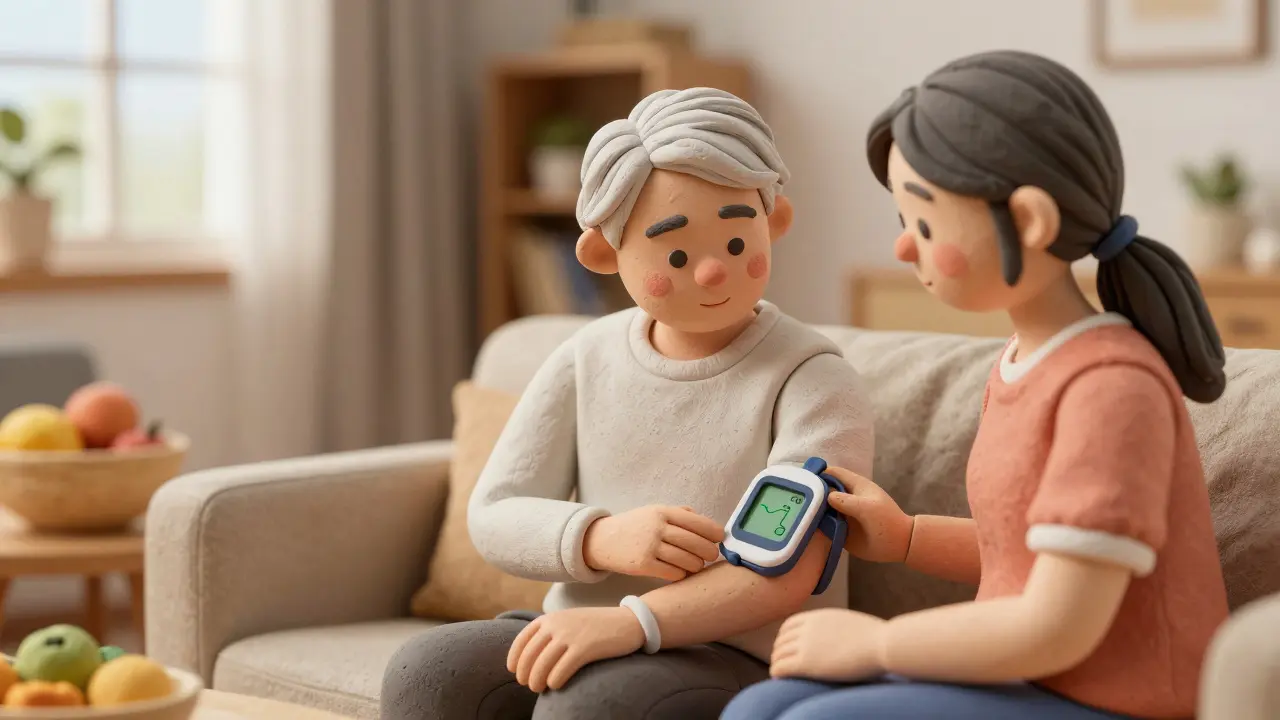
Technology Solutions: Continuous Glucose Monitors (CGMs) have revolutionized diabetes care for seniors. Unlike traditional fingerstick tests, CGMs provide real-time data and alerts when blood sugar is dropping. Research shows that seniors using CGMs experienced 65% fewer hypoglycemia events than those using fingersticks. For patients with visual impairments or dexterity issues, CGMs can be easier to use and provide peace of mind for caregivers.
Eating Consistently: Skipping meals is a common trigger for hypoglycemia, especially for those on insulin or sulfonylureas. Encouraging regular meal times and having a quick source of carbohydrates (like juice or glucose tablets) available at all times can prevent minor drops from becoming emergencies.
Real-World Impact: Stories from Patients
Data is important, but personal experiences highlight the human cost of these decisions. Mary Thompson, 78, shared her story on the American Diabetes Association forum: "After my third fall from low blood sugar on glyburide, my doctor switched me to sitagliptin. In six months, I've had zero hypoglycemia episodes and feel much safer walking around my home." Her experience mirrors clinical findings: switching from high-risk sulfonylureas to safer DPP-4 inhibitors can dramatically improve safety and quality of life.
Conversely, negative experiences with high-risk medications are prevalent. GoodRx data shows that 37% of patients over 65 taking glyburide report at least one hypoglycemia episode monthly, compared to just 8% of those on DPP-4 inhibitors. These stories underscore the importance of proactive medication management.
When to Seek Help
If a senior experiences recurrent hypoglycemia, it is a sign that their treatment plan needs adjustment. Do not wait for a severe event. Contact their healthcare provider immediately. Discuss:
- Switching from high-risk medications like glyburide to safer alternatives.
- Adjusting insulin doses based on recent trends.
- Incorporating technology like CGMs for better monitoring.
- Reviewing all other medications for potential interactions.
Prevention is always better than cure, especially when the stakes are as high as falls and cognitive decline. By prioritizing safety and individualizing care, seniors can manage their diabetes effectively without living in fear of the next low blood sugar episode.
What is the safest diabetes medication for seniors?
DPP-4 inhibitors (like sitagliptin/Januvia and linagliptin/Tradjenta) and SGLT2 inhibitors (like empagliflozin/Jardiance) are generally considered the safest options for seniors because they have a very low risk of causing hypoglycemia. Metformin is also commonly used but requires monitoring of kidney function.
Why is glyburide dangerous for older adults?
Glyburide is a sulfonylurea that stimulates insulin production. It has a long half-life and is excreted by the kidneys. Since kidney function declines with age, glyburide can build up in the body, leading to prolonged and severe low blood sugar episodes. The American Geriatrics Society recommends avoiding it in older adults.
What is a safe HbA1c target for an 80-year-old?
For healthy 80-year-olds, an HbA1c of 7.0-7.5% is often appropriate. However, for those with multiple health conditions or frailty, a target of 7.5-8.0% or even up to 8.5% is recommended to prioritize safety and avoid hypoglycemia.
Can continuous glucose monitors (CGMs) help seniors prevent hypoglycemia?
Yes, CGMs are highly effective for seniors. They provide real-time alerts when blood sugar is dropping, allowing for immediate action. Studies show that seniors using CGMs experience 65% fewer hypoglycemia events compared to those using traditional fingerstick monitoring.
How do other medications affect hypoglycemia risk in diabetics?
Polypharmacy is a major risk factor. Beta-blockers can mask the symptoms of low blood sugar, such as a racing heartbeat. NSAIDs can potentiate the effects of sulfonylureas. Regular medication reviews with a doctor or pharmacist are essential to identify and manage these interactions.
