
Blood Thinner Bleeding Emergency Checker
Check Your Symptoms
Taking a blood thinner can save your life - but it also means even a small cut or bump can turn scary fast. You’re not alone if you’ve panicked over a nosebleed, a bruise, or a spot of blood in your urine. The real question isn’t whether bleeding is bad - it’s whether it’s life-threatening. Knowing the difference can mean the difference between a quick fix at home and a trip to the ER that could save your life.
What Blood Thinners Do - and Why They’re Risky
Blood thinners like warfarin, apixaban (Eliquis), rivaroxaban (Xarelto), and dabigatran (Pradaxa) don’t actually thin your blood. They slow down the clotting process. That’s why they work so well to prevent strokes in people with atrial fibrillation, or clots after a deep vein thrombosis. Studies show they cut stroke risk by 60-70%. But every time you prevent a clot, you also increase the chance of bleeding somewhere else. About 3% of people on these medications have a major bleeding event each year. For some, it’s a nosebleed that won’t stop. For others, it’s internal bleeding that sneaks up silently. The key is learning which signs demand immediate action - and which ones you can handle safely at home.When to Go to the ER: Life-Threatening Bleeding Signs
If you’re on a blood thinner and experience any of these, don’t wait. Call 999 or head to the nearest emergency department right away:- Vomiting blood - bright red or dark, coffee-ground-looking material. This signals bleeding in your stomach or esophagus.
- Coughing up blood - even a small amount. It could mean bleeding in your lungs or airways.
- Bloody or black, tarry stools - this is a classic sign of gastrointestinal bleeding. Black stools mean blood has been digested; bright red means active, recent bleeding.
- Passing blood in urine - pink, red, or brown urine. It’s not normal, even if it only happened once.
- Prolonged nosebleeds - if pressure doesn’t stop it after 30 minutes, you need help.
- Sudden, severe headache or confusion - especially after any head injury, even a minor one. Internal bleeding in the brain can take hours to show symptoms.
- Severe back or abdominal pain - could mean bleeding behind the abdomen or around the kidneys.
- Difficulty breathing or chest pain - could signal bleeding into the lungs or around the heart.
- Extreme lightheadedness, dizziness, or fainting - when you lose more than 15% of your blood volume, your body can’t keep up.
- Unexplained, large bruises - especially if they’re spreading fast or appear without injury.
- Menstrual bleeding that’s drastically heavier than usual - soaking through a pad or tampon every hour for several hours.
These aren’t "maybe" signs. They’re red flags. Delaying care can lead to shock, organ damage, or death. The American College of Surgeons says uncontrolled bleeding can cause hypovolemic shock in as little as 30-60 minutes.
What Counts as Minor Bleeding (And How to Handle It)
Most bleeding on blood thinners isn’t an emergency. In fact, over half of ER visits by people on anticoagulants are for things that don’t need hospital care. Here’s what’s usually okay - if you handle it right:- Minor cuts - apply firm, continuous pressure for at least 10 minutes. Don’t peek. Check only after the full time. Elevate the area if possible.
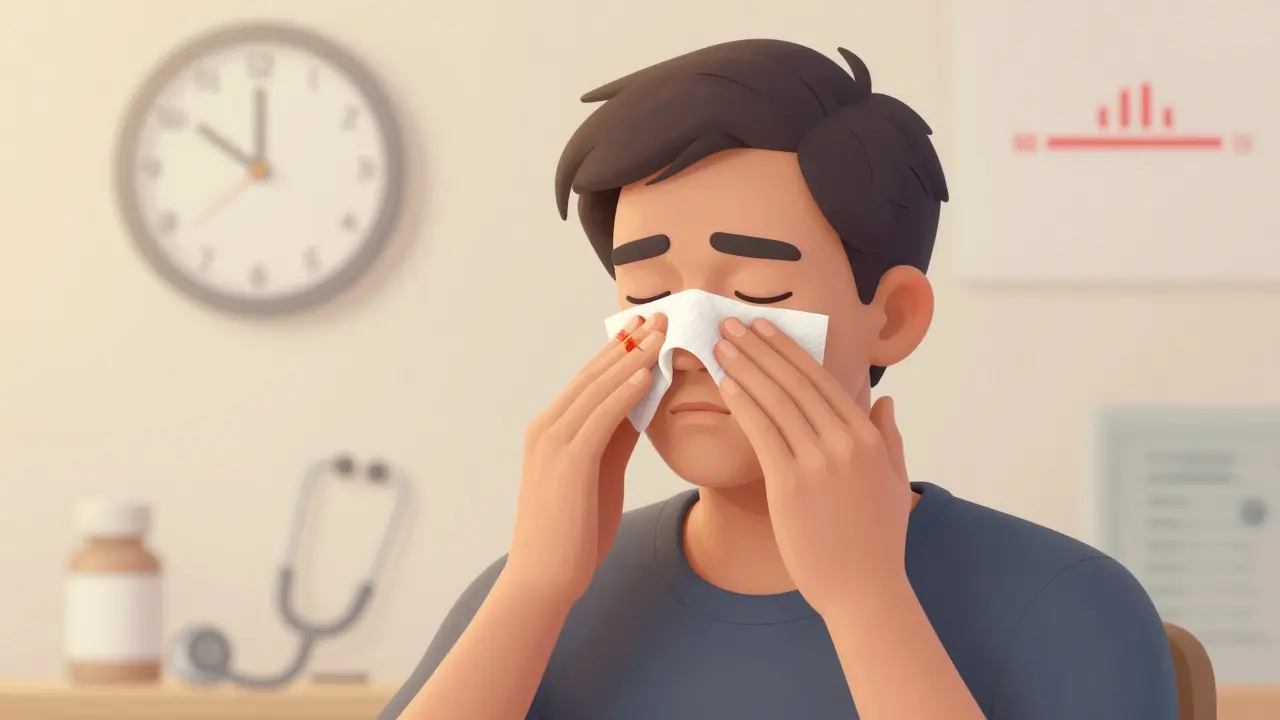
- Nosebleeds - pinch the soft part of your nose (not the bridge) for 10-15 minutes. Sit upright, lean slightly forward. Spit out any blood, don’t swallow it. If it stops within 15 minutes, you’re fine. If it keeps going past 30 minutes, go to the ER.
- Bleeding gums - gentle pressure with a damp gauze or tea bag (tannins help). Avoid vigorous brushing or flossing until it settles.
- Small bruises - apply ice for 15 minutes, rest the area. If it’s not growing or painful, it’s likely just a reaction to the medication.
Harvard Health and the NHS both agree: pressure must be firm and continuous. Many people don’t press hard enough. It should hurt a little. If you’re not feeling pressure, you’re not pressing enough.
Never use hydrogen peroxide or alcohol on cuts. They damage tissue and slow healing. Stick to clean water and gentle soap.

Why You Should Never Stop Your Blood Thinner
One of the biggest dangers isn’t the bleeding - it’s what happens when you quit your medication out of fear. A 2022 study from the Michigan Anticoagulation Quality Improvement Initiative found that 68% of people who stopped their blood thinner after minor bleeding had a clot within 30 days. One man in the study had a pulmonary embolism two weeks after skipping his pills because he was scared of nosebleeds. He didn’t survive. Stopping your medication even for a day or two can spike your risk of stroke or heart attack. The European Heart Journal found that the risk of clotting jumps by 300% in the first week after stopping. If you’re worried about bleeding, talk to your doctor - don’t self-manage. Most bleeding issues can be solved with simple adjustments: changing your dose, switching medications, or learning how to manage minor episodes at home.What’s New in Emergency Care for Bleeding
In recent years, treatments have gotten faster and smarter. Andexanet alfa (Andexxa), approved in 2023, can reverse the effects of apixaban and rivaroxaban in under an hour - cutting emergency response time from over 3 hours to just 30-60 minutes. That’s huge. By 2026, experts predict that nearly half of all bleeding concerns on blood thinners will be handled by telemedicine. If you’re unsure whether it’s an emergency, call your anticoagulation clinic or use a secure video consult. Many hospitals now offer 24/7 anticoagulation hotlines. A new reversal agent called ciraparantag is in final trials. If approved, it’ll work on nearly all blood thinners - even the ones without a current antidote. That’s a game-changer.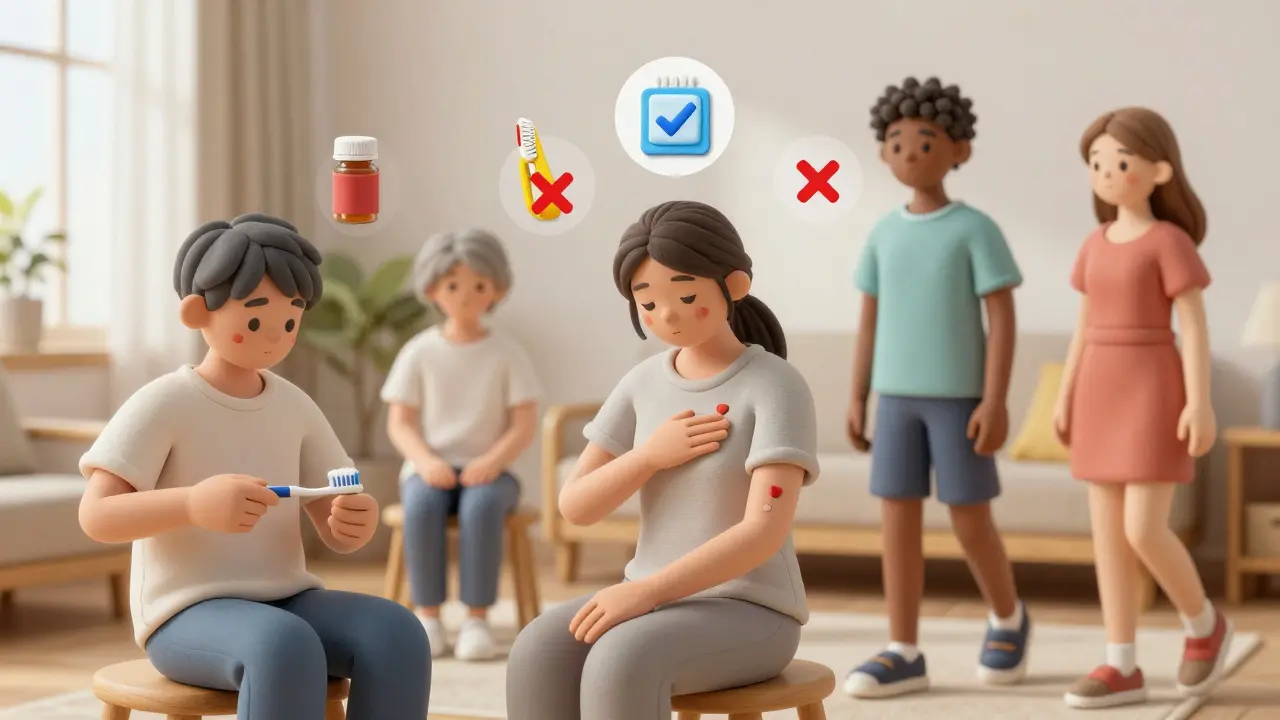
Who’s at Higher Risk?
Some people are more likely to bleed:- Those over 75
- People with kidney or liver disease
- Those taking other medications like aspirin, NSAIDs (ibuprofen, naproxen), or steroids
- People with a history of falls or head injuries
- Those with uncontrolled high blood pressure
Women on blood thinners should also watch for heavy periods. If you’re soaking through a pad or tampon every hour for more than two hours, that’s not normal - get checked.
Research also shows disparities in care. Black and Hispanic patients wait 23-28% longer for reversal agents in ERs. If you’re in one of these groups, speak up. Ask directly: "Do I need a reversal agent?" and "How long until I get it?"
What to Do Before You Go to the ER
If you’re heading to the emergency room because of bleeding:- Bring a list of all your medications - including doses and when you last took them.
- Have your latest INR or blood test results if you’re on warfarin.
- Know when you started your blood thinner and if you’ve had bleeding before.
- Don’t eat or drink anything unless told to - you might need surgery or a reversal agent.
- Bring someone with you if you can. You might be disoriented.
Emergency teams will check your clotting time, give you reversal agents if needed, and may do imaging scans (CT or ultrasound) to find the source of bleeding. The goal isn’t just to stop the bleeding - it’s to get you back on your medication safely.
How to Reduce Your Risk
- Use a soft-bristle toothbrush and electric razor. - Avoid contact sports or activities with high fall risk. - Wear slip-resistant shoes - falls are the #1 cause of major bleeding in older adults. - Ask your doctor about switching to apixaban (Eliquis) - it has the lowest bleeding risk among DOACs. - Get regular blood tests if you’re on warfarin. - Use a medical alert bracelet that says "ON BLOOD THINNERS".Education works. A 2022 study in the American Journal of Managed Care found that patients who got structured bleeding education cut unnecessary ER visits by 37%. You don’t have to live in fear. You just need to know what to look for.
Can I use ibuprofen if I’m on a blood thinner?
No. Ibuprofen, naproxen, and other NSAIDs increase bleeding risk when taken with blood thinners. Use acetaminophen (paracetamol) for pain instead - it doesn’t affect clotting. Always check with your doctor before taking any new medication, even over-the-counter ones.
Is it normal to bruise easily on blood thinners?
Yes, mild bruising is common - especially on the arms and legs. But if bruises are large, painful, appear without injury, or keep growing, get checked. That could mean deeper bleeding under the skin or in muscles.
How long should I apply pressure to a cut?
At least 10 minutes - and don’t check during that time. Lift the gauze too soon, and you’ll disrupt clotting. Press hard enough that it hurts a little. For nosebleeds, keep pressure for 10-15 minutes. If it doesn’t stop after 30 minutes, go to the ER.
Can I still exercise on blood thinners?
Yes - but avoid high-risk activities. Walking, swimming, cycling, and yoga are safe. Avoid contact sports, skiing, or activities where you could fall or get hit. Talk to your doctor about what’s right for you based on your condition and medication.
What should I do if I miss a dose of my blood thinner?
Don’t double up. Call your doctor or anticoagulation clinic immediately. The advice depends on which drug you take. For example, if you miss a dose of Eliquis, you might be told to take it as soon as you remember - but only if it’s within 6 hours. For Xarelto, it’s different. Never guess - get specific instructions.


