
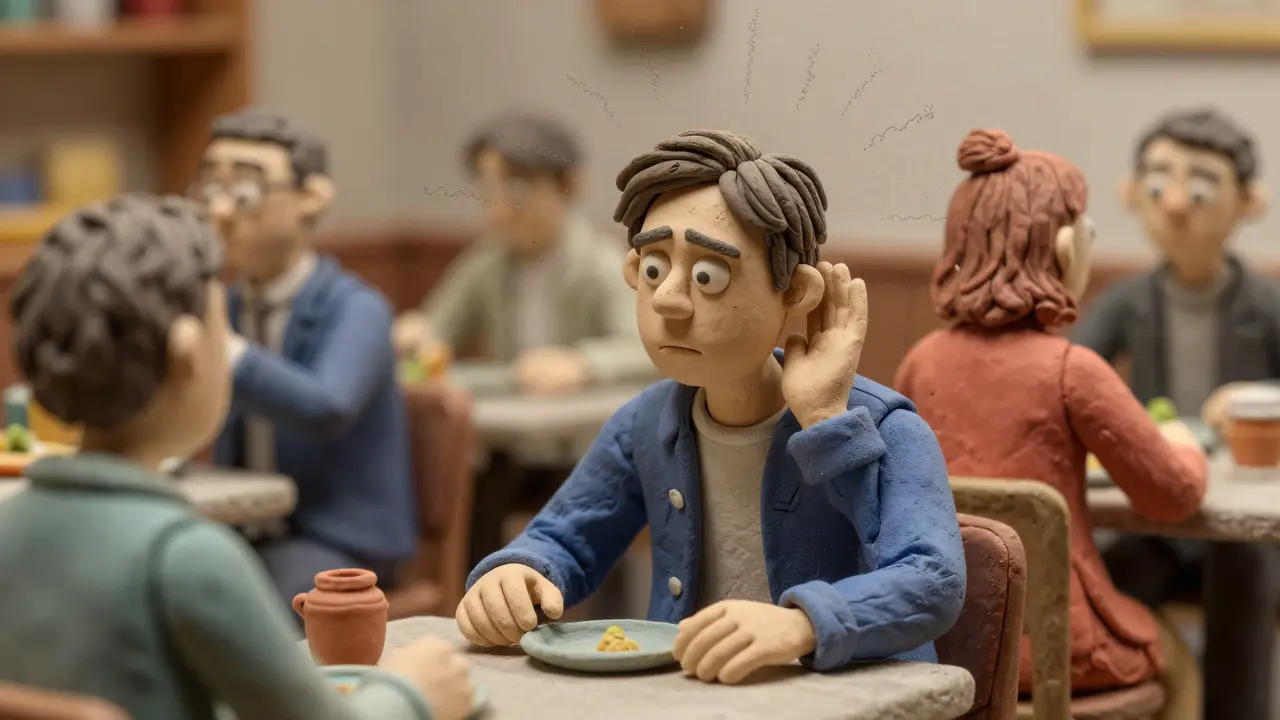
Imagine sitting in a crowded restaurant. Everyone around you is laughing and talking over the clatter of plates. For many people, this is annoying background noise. For someone with sensorineural hearing loss (SNHL), this sounds like listening to muffled radio static while trying to hear a single voice. This isn't just about volume; it's about clarity. Unlike losing your keys or tripping over a wire, SNHL represents a breakdown in the delicate biological machinery of your head.
This condition is actually the most common form of permanent hearing impairment we face today. While earwax blockages or fluid infections often resolve on their own, damage to the inner ear structures doesn't heal like a scraped knee. Once the microscopic parts responsible for translating sound waves into brain signals break down, they generally don't grow back. Understanding why this happens helps explain why treating it requires specific tools rather than quick fixes.
The Biology of Sound: What Gets Damaged
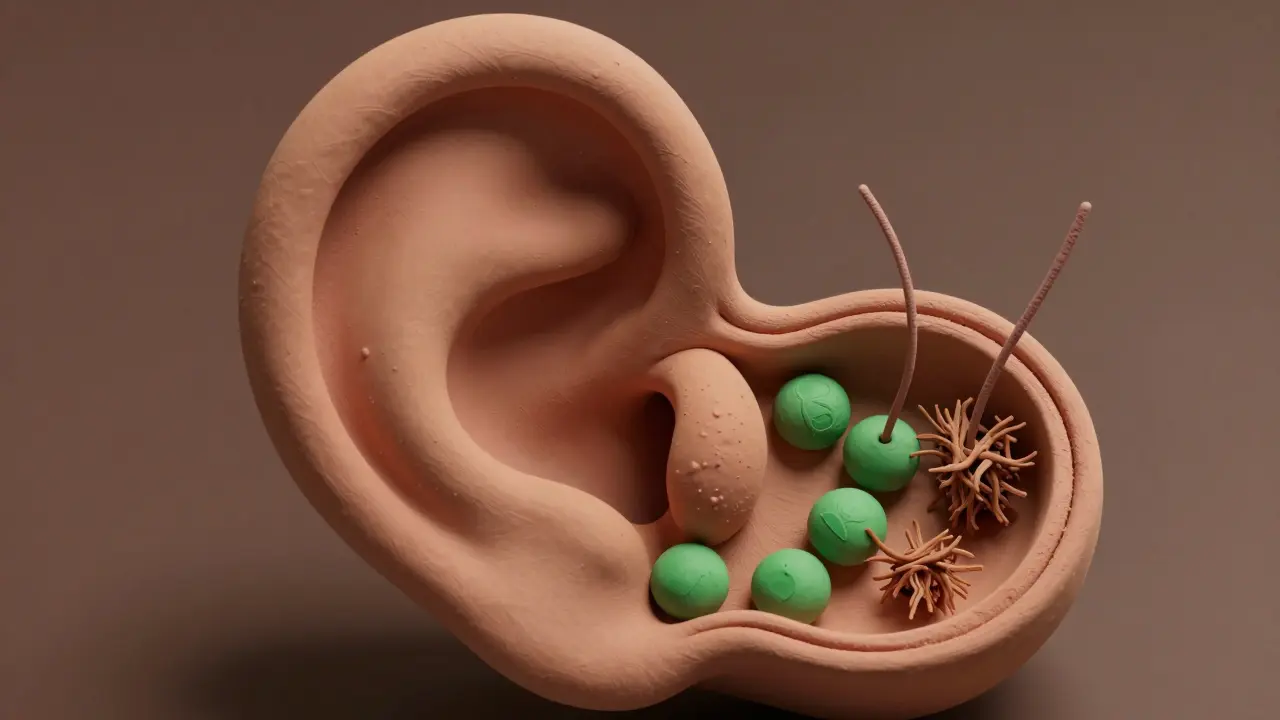
To grasp why this type of deafness feels so different, you have to look at what's inside your skull. Deep inside the temporal bone lies the cochlea, a spiral-shaped chamber filled with fluid. Think of this as the actual microphone of your body. Inside the cochlea sit thousands of microscopic structures known as hair cells tiny sensory receptors that vibrate in response to sound waves. These aren't like the hair on your scalp; they are specialized organelles acting as mechanical transducers.
There are two types of these cells working together. Outer hair cells act like a pre-amplifier, boosting soft sounds so they can be detected. Inner hair cells take those vibrations and convert them into electrical impulses that travel up the auditory nerve the bundle of fibers carrying hearing signals to the brain to the brain. In sensorineural hearing loss permanent hearing impairment caused by damage to the inner ear or auditory nerve, either these hair cells die off or the nerve itself stops transmitting data effectively.
| Feature | Conductive Hearing Loss | Sensorineural Hearing Loss |
|---|---|---|
| Location of Damage | Outer or Middle Ear | Inner Ear (Cochlea) or Nerve |
| Reversibility | Often Temporary/Reversible | Typically Permanent |
| Primary Solution | Medical/Surgical Intervention | Hearing Aids or Implants |
| Symptom Focus | Loudness (Volume) | Clarity (Frequency/Understanding) |
You can see the critical difference here. Conductive loss is like turning the volume knob down on a speaker. Turn it back up, and everything is fine. Sensorineural loss is like breaking the speaker cone itself. Cranking the volume up won't fix the distortion; the signal itself is degraded before it ever reaches your brain.
Recognizing the Symptoms in Daily Life
Paying attention to how you interact with sound reveals clues about your hearing health. Most people with SNHL don't realize they are going deaf until social situations become painful or impossible. If you find yourself constantly asking others to repeat themselves during dinner, that is a major red flag. It's not just that you can't hear them; it's that you can't distinguish their words from the background chaos.
One very distinct symptom is tinnitus. About 80% of patients report this ringing or buzzing in the ears. Often, this starts when hair cells are damaged. The brain, sensing a lack of input from a specific frequency range, begins generating its own phantom noise to fill the silence. Another sign is 'recruitment,' where soft sounds seem silent, but once a sound passes a certain threshold, it suddenly becomes painfully loud. This makes balancing headphones or TV volume extremely frustrating.
- Difficulty understanding speech in noisy environments (like restaurants).
- Perception of sounds as distorted or muffled.
- Frequent requests for repetition during conversations.
- Presence of persistent ringing or buzzing (tinnitus).
- Dizziness or balance issues, since the inner ear controls equilibrium.
Why This Damage Becomes Permanent
The reason this condition is classified as permanent lies in our unique biology. Many animals, like birds and frogs, can regenerate these hair cells. Humans, unfortunately, cannot. Once an outer hair cell dies due to excessive vibration, age, or disease, there is no natural backup system to replace it. This biological limitation is what defines the trajectory of the condition.
While we wait for future treatments-researchers are currently exploring stem cell therapies that aim to regenerate these cells in the lab-we must manage the loss as it exists today. The damage is usually cumulative. Exposure to sounds above 85 decibels is the danger zone. Listening to music through earbuds at maximum volume for hours is essentially the same risk factor as standing next to a running motorcycle engine.
Aging plays a massive role too. This is medically termed presbycusis age-related hearing loss affecting high frequencies first. As we get older, the blood supply to the inner ear diminishes, and oxidative stress accumulates in the cochlear fluids. By the time a person reaches 75 years old, roughly half of the population shows signs of significant presbycusis. It is a natural wear-and-tear process, much like arthritis, affecting the most sensitive parts of the ear.
The Medical Pathway: Diagnosis and Testing
If you suspect something is wrong, guessing is dangerous. Only a professional test can confirm if the loss is truly sensorineural. An audiologist will perform a pure-tone audiometry test. They will ask you to press a button every time you hear a beep in different pitches. The results are plotted on a chart called an audiogram graphical representation of hearing sensitivity across frequencies.
In a healthy ear, both air conduction (sound traveling through the ear canal) and bone conduction (vibrations transmitted directly to the skull) should match. In sensorineural loss, both methods show similar levels of reduced hearing. There is no "gap" between them, which rules out middle ear problems. This distinction matters because it dictates treatment.
Doctors also look for "sudden" onset. If you wake up one morning unable to hear in one ear, this is a medical emergency. While chronic SNHL is permanent, sudden sensorineural hearing loss (SSHL) can sometimes be reversed if treated with corticosteroids within the first 48 to 72 hours. Time is tissue in this scenario. Waiting weeks means missing the narrow window where medication might restore nerve function.
Living Well with Amplification
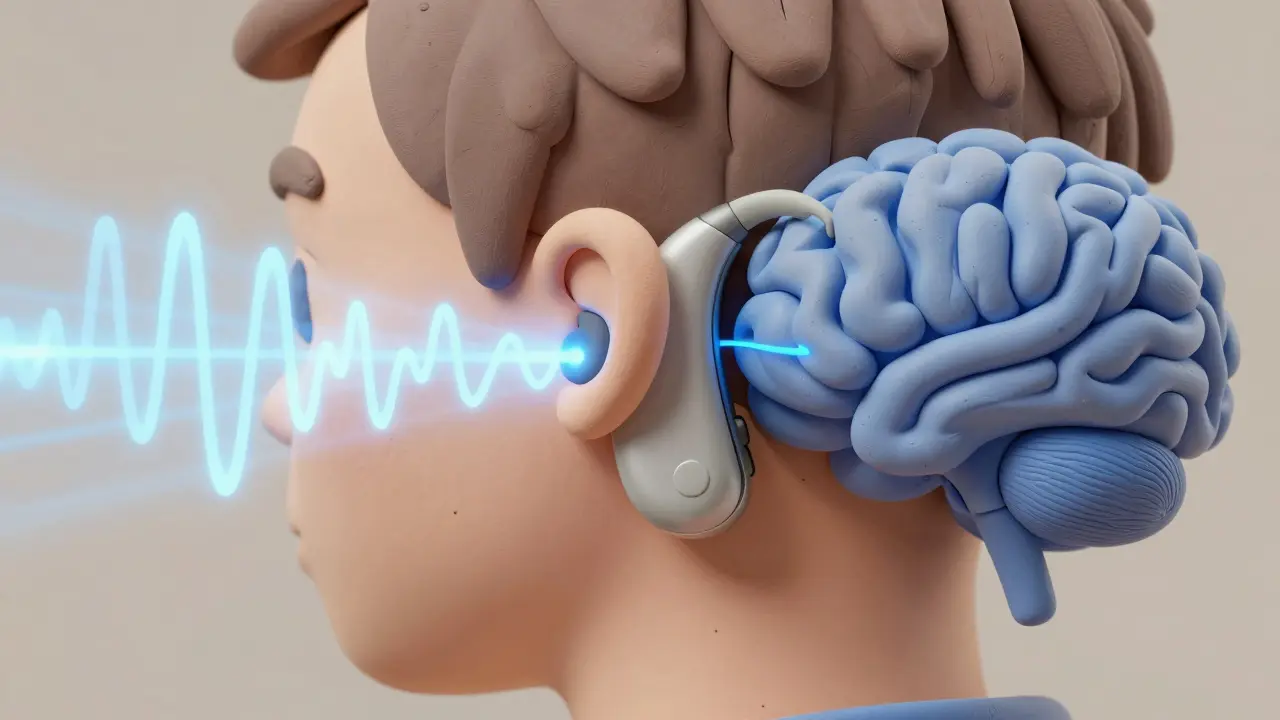
For permanent loss, the standard solution involves amplification. Modern hearing aids electronic devices worn to amplify sound for those with hearing loss are far removed from the bulky boxes of the past. Today's digital processors analyze the environment in real-time, suppressing wind noise and prioritizing voices. They target specific frequency ranges. If you've lost the ability to hear high-frequency consonants like 's', 'f', or 't', the device boosts those specific tones without making low rumble sounds uncomfortably loud.
Getting used to them takes effort. Your brain has to relearn how to process the amplified signals. This adaptation period typically lasts 4 to 8 weeks. Users often report feeling overwhelmed initially, as the world sounds "crisper" than it has been for years. Consistent wear is key. Wearing them for short periods trains the brain faster than sporadic use.
For profound loss where amplification isn't enough, cochlear implants surgical devices that bypass damaged hair cells to stimulate the auditory nerve directly offer a lifeline. These involve surgery to place an electrode array into the cochlea. Instead of relying on dead hair cells to turn sound into vibration, the implant sends direct electrical stimulation to the nerve. Roughly 82% of recipients achieve open-set speech recognition, meaning they can identify words without lip-reading.
However, these are heavy interventions. Implants require months of auditory therapy afterward. The brain needs to interpret these electrical sparks as meaningful language. It is a partnership between technology and biology, proving that while we can't cure the damage yet, we can bridge the gap effectively.
Protecting What Remains
Prevention is always smarter than repair. Since the damage is cumulative, protecting your remaining hearing is crucial. Using ear protection in loud environments is non-negotiable. Music enthusiasts often underestimate the impact of daily listening habits. Following the 60/60 rule (60% volume for 60 minutes max) helps limit exposure.
Awareness of your environment changes behavior. Stepping away from a lawnmower, wearing earplugs at a concert, or moving away from speakers at a party preserves the hair cells you still have. The economic burden of unaddressed hearing loss is staggering, estimated in the hundreds of billions globally, largely due to lost productivity and healthcare costs associated with cognitive decline. Taking care of your ears is an investment in your long-term quality of life.
Can sensorineural hearing loss be cured naturally?
Currently, there is no natural cure to regenerate damaged hair cells or nerves in the human ear. While some supplements claim to help, scientific consensus states that the loss is permanent. Treatments focus on managing the condition with devices rather than reversing the damage.
What is the difference between sudden and gradual hearing loss?
Sudden sensorineural hearing loss happens quickly, often overnight, and can be treated with steroids if caught early. Gradual loss develops over years due to age or noise exposure. Gradual loss is irreversible, whereas sudden loss has a chance of recovery with immediate medical intervention.
Do hearing aids make sounds clearer or just louder?
Modern digital hearing aids do more than boost volume. They use processing algorithms to enhance specific frequencies, reduce background noise, and improve speech intelligibility, aiming to make sounds clearer rather than just louder.
Is tinnitus linked to sensorineural loss?
Yes, about 80% of people with sensorineural hearing loss experience tinnitus. The ringing occurs when the brain tries to compensate for the missing input from damaged hair cells, creating phantom sounds.
When should I see a specialist for hearing checks?
You should seek help if you notice difficulty hearing speech in crowds, constant ringing, or if family members complain you are watching TV too loudly. Annual screenings are recommended after age 50 or earlier if you are exposed to high noise levels regularly.


