
The Economics of Generic Substitution
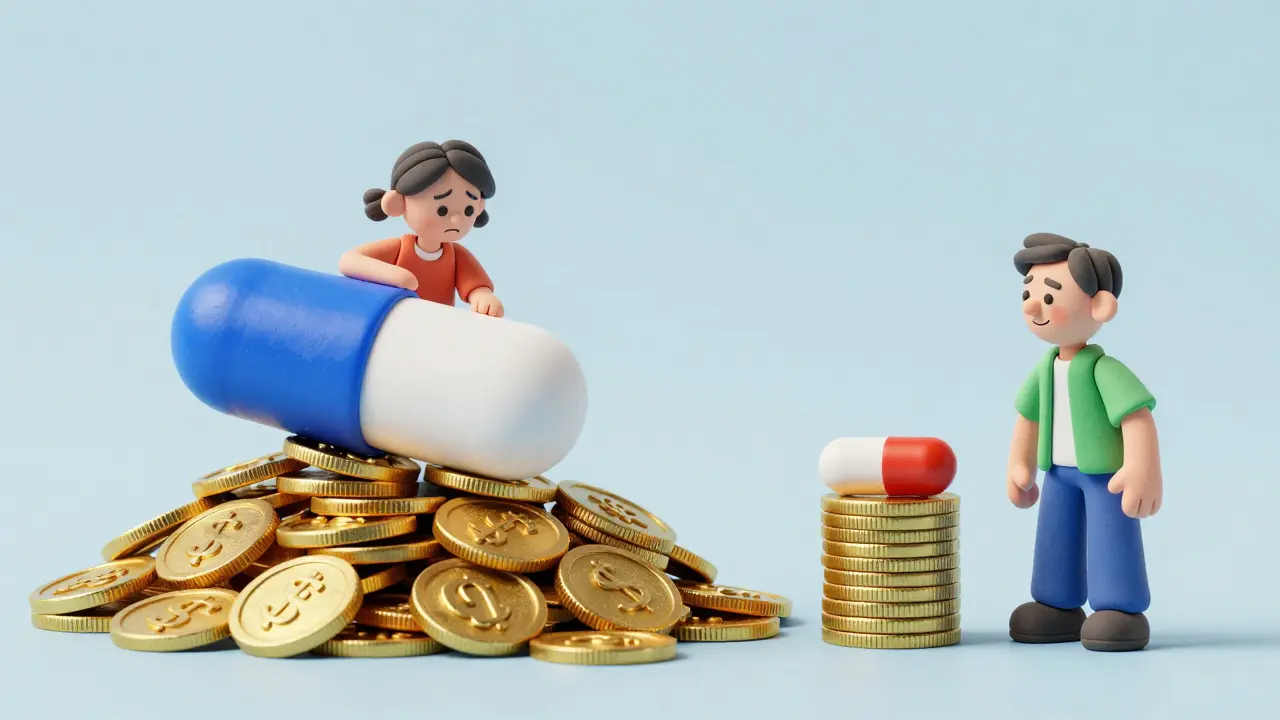
Why is the price difference so extreme? It comes down to research and development. When a company creates a new drug, they spend billions-roughly $2.6 billion on average-and years of clinical trials to prove it works. They get a patent to protect that investment and charge a premium. However, once that patent expires, other companies can enter the market. These generic manufacturers don't have to repeat the expensive clinical trials; they just have to prove their version is "bioequivalent."
This regulatory shortcut, established by the Hatch-Waxman Act is a 1984 law that created the modern generic drug industry by allowing abbreviated new drug applications , allows prices to plummet. Typically, generics are 80% to 85% cheaper than the brand name. When multiple companies compete to sell the same generic, prices drop even further. Expert analysis from Harvard Medical School suggests that every additional generic competitor that enters the market can shave another 11% to 15% off the price.
| Feature | Brand-Name Drugs | Generic Drugs | Biosimilars |
|---|---|---|---|
| Development Cost | Very High (~$2.6B) | Low (ANDA process) | Moderate to High |
| Price Relative to Brand | 100% (Baseline) | 15-20% | 65-85% |
| Market Volume (2024) | 10% | 90% | Growing |
| Primary Use Case | New therapeutic innovations | Chronic disease (Statins, Metformin) | Complex biologics (Insulin, mAbs) |
How Do We Know They Actually Work?
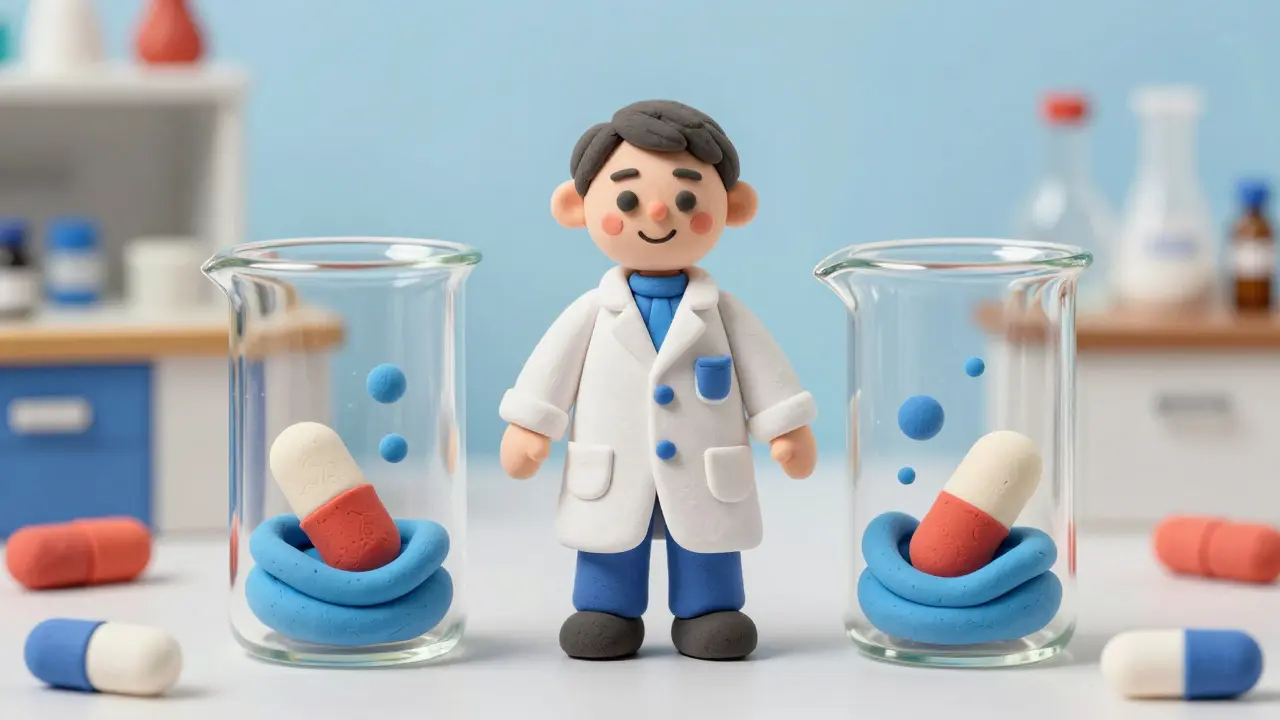
A common worry is that "cheaper" means "lower quality." In reality, the FDA holds generics to a strict standard of pharmaceutical equivalence. This means the generic must have the same active ingredient, strength, dosage form, and route of administration as the brand. To prove this, manufacturers conduct pharmacokinetic studies on healthy volunteers. They look at two main metrics: Cmax (the peak concentration of the drug in the blood) and AUC (the total drug exposure over time). For a drug to be approved, these values must fall within 80-125% of the brand-name product's performance.
If you're curious about a specific medication, the FDA Orange Book is the official list of approved drug products with therapeutic equivalence evaluations is the gold standard. It assigns codes to drugs; for example, an "A" code means there's no known bioequivalence problem, giving pharmacists and doctors the confidence to swap a brand for a generic without a new prescription.
The Next Frontier: Biosimilars and Complex Molecules
Not all drugs are easy to copy. Small molecule drugs (like aspirin or metformin) are simple chemical structures. But biologics-drugs made from living cells-are massive, complex proteins. You can't just "copy" a biologic; you can create a Biosimilar is a biological product that is highly similar to a reference biologic drug . These provide a 15% to 35% discount over the original biologic, which is a huge win considering these drugs often cost tens of thousands of dollars per year.
However, we are facing a "biosimilar void." While almost every small molecule drug gets a generic competitor within a year of patent expiration, about 90% of brand-name biologics losing patents in the next decade still have zero biosimilars in development. This is a massive missed opportunity for cost control, especially in specialty pharmacy areas that currently account for over 50% of all drug spending.
Why Aren't All Drugs Generic? The "Patent Thicket"
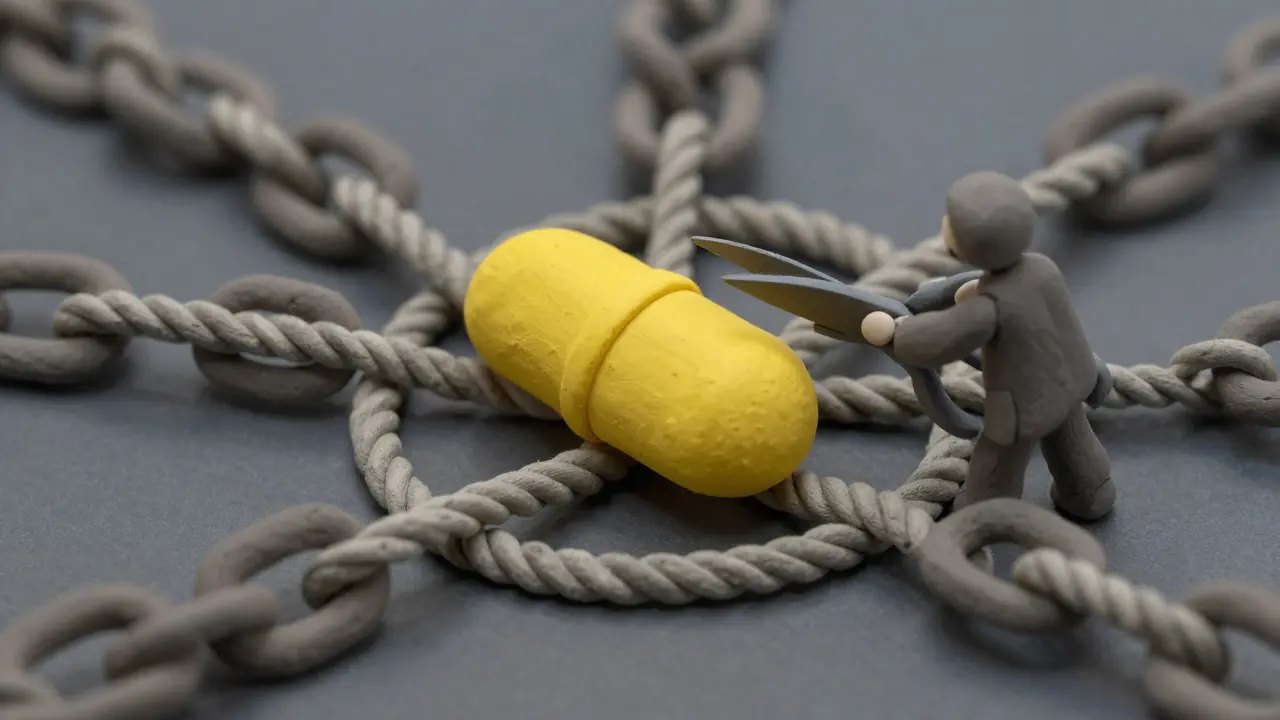
If generics save so much money, why do brand-name companies fight them so hard? The answer is profit. Many companies use a strategy called a "patent thicket," where they file hundreds of secondary patents on a single drug-covering things like the coating of the pill or the way it's administered-just to extend their monopoly. They might also use "product hopping," where they release a slightly modified version of the drug just as the original patent expires, pushing patients toward the new, patented version.
There's also a darker tactic known as "pay-for-delay." This is where a brand-name company literally pays a generic manufacturer to stay out of the market for a few more years. According to the Federal Trade Commission, these deals can delay generic entry by an average of 17 months, costing consumers billions of dollars every year.
Practical Tips for Navigating Drug Costs
If you're looking to lower your monthly pharmacy bill, there are a few concrete steps you can take. First, ask your doctor if a generic version exists for your prescription. Most do, but some doctors stick to brands out of habit. Second, check your insurance formulary. Some Pharmacy Benefit Managers (PBMs) use "generic differentials," meaning they might actually charge you a higher copay for a generic if the insurance company is getting a massive rebate from the brand-name manufacturer. It sounds backward, but it happens.
For those on Medicare, the Inflation Reduction Act is a 2022 US law that introduced drug price negotiations and capped costs for certain medications like insulin has already made a dent. For example, some insulin costs have dropped from over $200 per vial to just $35. When you combine government negotiation with generic competition, the potential for savings is massive.
Potential Pitfalls and Patient Experiences
While generics are safe for most, they aren't perfect for everyone. The active ingredient is the same, but the "inactive" ingredients-the fillers, dyes, and binders-can differ. This can lead to issues for people with specific allergies. For instance, a different filler in a generic tablet might cause gastrointestinal distress for some patients.
There's also the issue of "narrow therapeutic index" (NTI) drugs. These are medications where a tiny change in the dose or absorption can lead to a big change in how the drug works. Drugs like warfarin or levothyroxine fall into this category. In these cases, switching from a brand to a generic (or between different generics) can sometimes cause symptoms to return, requiring the patient to go back to the brand-name version for stability.
Are generic drugs less effective than brand-name drugs?
No. The FDA requires generics to be bioequivalent, meaning they deliver the same amount of active ingredient into the bloodstream at the same rate as the brand. In clinical terms, they provide the same therapeutic effect.
Why do some generics cost more than others?
Price is usually driven by competition. If only one company makes a generic, they can keep the price higher. If ten companies make it, the price drops. Additionally, "complex generics" (like inhalers or injectables) cost more to manufacture than simple pills.
What is a biosimilar, and is it the same as a generic?
Not exactly. Generics are exact chemical copies. Biosimilars are "highly similar" versions of complex biological drugs. Because biologics are made from living cells, they can't be identical copies, but they are designed to have no clinically meaningful differences in safety or efficacy.
How can I tell if my medication has a generic equivalent?
The easiest way is to ask your pharmacist or check the FDA Orange Book. Most pharmacies will automatically notify you or your doctor if a cheaper, equivalent generic becomes available.
Can a generic drug cause different side effects than the brand?
The active ingredient won't cause different effects, but the inactive ingredients (fillers and dyes) can. Some people may react to a specific filler in a generic version that wasn't present in the brand-name version.
Next Steps for Cost Reduction
If you are managing chronic health conditions, start by auditing your current medications. Compare your current copays against the list price of generics via tools like GoodRx. If you're taking a biologic, ask your provider if a biosimilar is available and if your insurance covers it. For those in a clinical or administrative role, focusing on the "biosimilar void" and pushing for policies that discourage "pay-for-delay" agreements is the most effective way to drive long-term systemic savings.


