
You’ve probably noticed that some prescriptions cost a fortune while others are nearly free. It’s not just bad luck; it comes down to whether your medication is single-source or multi-source. These terms determine how much you pay, which brands your insurance covers, and whether you get the exact same pill every time. Understanding the difference can save you hundreds of dollars a month and prevent frustrating coverage denials.
The Core Difference: Competition vs. Exclusivity
At its simplest, a single-source drug is a medication manufactured by only one company with no generic alternatives available. This usually happens because the drug is new, still under patent protection, or too complex for other manufacturers to replicate easily. Think of newer cancer treatments or specialized immunology drugs. Because there is no competition, the manufacturer has total control over the price. In pharmacy coding systems like Medi-Span’s MONY classification, these are often marked with an 'N' code.
In contrast, a multi-source drug is available from multiple manufacturers, including the original brand and various generic versions. Once a patent expires, other companies can produce generic equivalents. The FDA requires these generics to be bioequivalent-meaning they contain the same active ingredients, dosage forms, and strengths as the brand name, and work in the body the same way. These are marked with 'O' (originator) or 'Y' (generic) codes. Roughly 86% of medications sold in the United States fall into this category, making them the backbone of everyday healthcare.
How Pricing Works: Why One Costs More Than the Other
The price gap between these two types of drugs is stark. Single-source drugs command higher list prices because there is no alternative for patients or insurers to switch to. According to research from the USC Schaeffer Center, when a drug lacks generic competition, rebates and list prices move together dollar-for-dollar. This means the net price remains high. For example, a single-source specialty drug might have an average monthly cost of $587 for the patient.
Multi-source drugs benefit from intense market competition. When multiple companies make the same drug, they compete on price. Insurance plans and Pharmacy Benefit Managers (PBMs) use Maximum Allowable Cost (MAC) limits to cap what they pay for these generics. MAC prices typically sit 50-60% below the Average Wholesale Price of the brand-name version. As a result, the average monthly cost for a multi-source drug drops to around $132. This competitive pressure is why switching from a single-source to a multi-source option can save patients an average of $287 per month.
| Feature | Single-Source Drug | Multi-Source Drug |
|---|---|---|
| Manufacturers | One exclusive company | Multiple (Brand + Generics) |
| Patient Cost | High ($587 avg/month) | Low ($132 avg/month) |
| Insurance Tier | Tier 3 or 4 (Specialty) | Tier 1 or 2 (Preferred) |
| Generic Availability | None | Yes (Bioequivalent) |
| Price Control | Manufacturer sets price | Market competition & MAC limits |
Navigating Insurance Formularies and PBMs
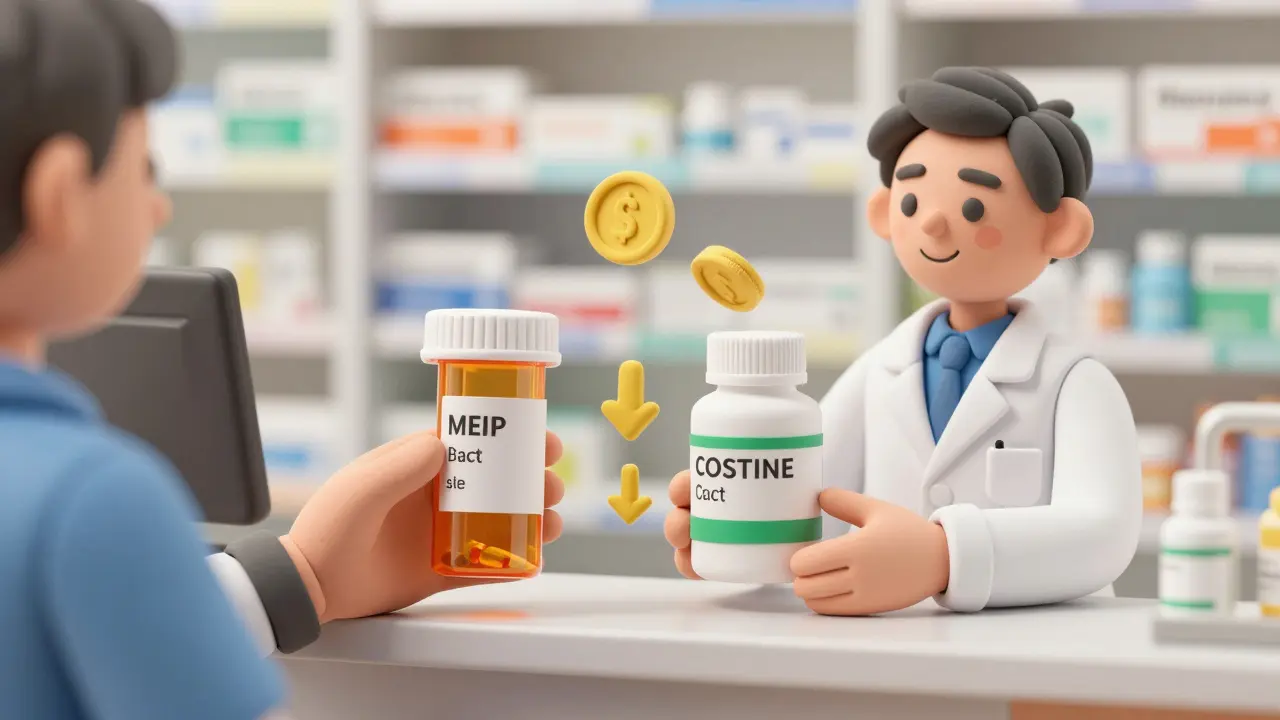
Your insurance plan’s formulary-the list of covered drugs-is structured around these categories. Single-source drugs are almost always placed in higher tiers (Tier 3 or 4), meaning you pay more out-of-pocket. Insurers often require "step therapy" for these expensive options, forcing you to try cheaper multi-source alternatives first before approving the single-source drug. If you skip this step, your claim gets denied.
For multi-source drugs, PBMs steer you toward the cheapest generic equivalent. They do this through preferred formulary status. Sometimes, a PBM will designate one specific generic manufacturer as "preferred," even if other generics exist. This creates a hybrid situation known as a "single-source generic," where one company holds exclusive rights to the generic supply. While still cheaper than the brand, it doesn’t offer the full price benefits of true multi-source competition. Always check your plan’s details to see if your specific generic is preferred.
Effectiveness and Safety: Are Generics Really the Same?
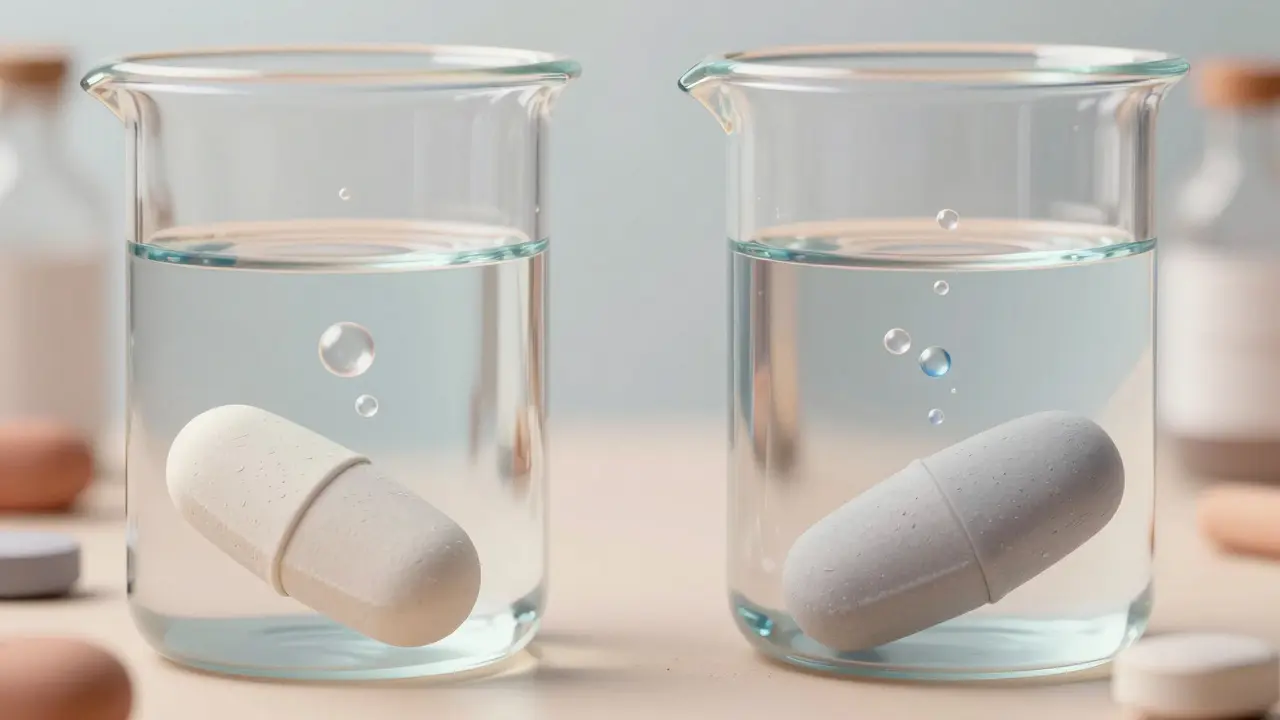
A common worry among patients is whether switching to a multi-source generic affects how well the medicine works. The FDA regulates this strictly. To get approved, a generic must demonstrate bioequivalence within 80-125% of the reference brand drug’s pharmacokinetic parameters. In plain English, this means it enters your bloodstream at the same rate and amount as the brand name.
However, real-world experiences vary. A 2023 survey on Drugs.com showed that while multi-source drugs maintain a high rating (4.2/5.0), about 68% of negative reviews cited "inconsistent effectiveness" between different generic manufacturers. This isn’t necessarily because the active ingredient is different, but because inactive ingredients (fillers, dyes, binders) change between manufacturers. For most people, this makes no difference. But for those with sensitive allergies or conditions requiring precise dosing, such as narrow therapeutic index medications (e.g., warfarin or levothyroxine), switching manufacturers can sometimes cause noticeable side effects or efficacy changes.
What Patients Should Do Next
If you are prescribed a single-source drug, ask your doctor if there is a therapeutic alternative that is multi-source. Even if the drug name is different, it might treat the same condition for a fraction of the cost. If you must stay on a single-source drug, look into patient assistance programs offered by the manufacturer, as many provide copay cards to lower costs.
If you are on a multi-source drug and notice a change in how you feel after a refill, check the manufacturer label on the bottle. PBMs frequently switch suppliers based on contract changes, affecting 63% of multi-source users according to a 2022 report. You can ask your pharmacist to dispense the same manufacturer each time, though this may increase your cost slightly. Communication is key: tell your pharmacist if a specific generic formulation causes issues, so they can note it in your profile.
Can I force my insurance to cover a single-source drug?
Not directly, but you can appeal. If your doctor proves that multi-source alternatives failed or caused adverse reactions, you can request a "formulary exception." This process usually requires prior authorization and medical documentation showing clinical necessity.
Why did my generic pill change color or shape?
Your pharmacy likely switched to a different manufacturer. Generic drugs from different companies can look different due to varying inactive ingredients. The active medicinal component remains the same and meets FDA bioequivalence standards, but visual differences are normal.
Are single-source drugs always newer?
Mostly, yes. Single-source status usually indicates the drug is under patent protection or exclusivity periods granted by the FDA. However, some older drugs remain single-source if they are difficult to manufacture or have limited market demand, preventing generic competitors from entering.
What is a Maximum Allowable Cost (MAC)?
MAC is a price ceiling set by insurers or PBMs for generic (multi-source) drugs. It ensures that pharmacies are reimbursed fairly without overpaying. If the pharmacy pays less than the MAC, they keep the difference. This system helps keep multi-source drug costs low for patients.
Does the FDA test every batch of generic drugs?
The FDA does not test every batch, but it inspects manufacturing facilities regularly and requires rigorous quality control data from manufacturers. Before approval, generics undergo extensive testing to prove bioequivalence. Once approved, manufacturers must maintain consistent production standards.
