

Heavy Menstrual Bleeding (HMB) Symptom Checker
Bleeding Severity
Medication Profile
Recommended Discussion Points for Your Doctor
Imagine starting a life-saving medication for a blood clot or heart condition, only to find your monthly cycle turning into a medical emergency. You’re not alone. If you are taking blood thinners, also known as anticoagulants, and experiencing heavier-than-normal periods, this is a common-and often overlooked-side effect. It’s not just an inconvenience; it can lead to anemia, missed work days, and significant anxiety. But here’s the good news: you don’t have to choose between preventing dangerous clots and managing your quality of life. There are effective strategies to control heavy menstrual bleeding (HMB) while staying safe on your medication.
Why Blood Thinners Cause Heavy Bleeding
To understand why this happens, we need to look at how these medications work. Anticoagulants like warfarin and direct oral anticoagulants (DOACs) prevent your blood from forming clots by interfering with the clotting cascade. While this is crucial for stopping deep vein thrombosis or stroke, it also means your body struggles to stop normal menstrual bleeding efficiently.
The statistics are striking. A study published in the journal Blood in August 2022 found that two out of three women (66.7%) who started blood-thinning therapy experienced abnormally heavy periods in the months that followed. Dr. Cindy de Jong of Leiden University Medical Center led this research, highlighting that while 10-30% of women normally experience heavy periods, that number skyrockets with anticoagulant use. This isn't "minor" bleeding-it's what experts now call "patient-relevant bleeding," which significantly impacts daily functioning.
Identifying Heavy Menstrual Bleeding
How do you know if your bleeding is too heavy? It’s not just about feeling tired. Look for these specific signs:
- Changing pads, tampons, or menstrual cups every hour or less for several consecutive hours.
- Passing large blood clots (larger than a quarter).
- Leakage through your menstrual products despite frequent changes.
- Feeling dizzy, short of breath, or unusually fatigued due to potential iron deficiency.
- Needing to wake up during the night to change protection.
If you recognize these symptoms, document them. Keep a log of how many products you use per day and any associated symptoms. This data is invaluable when discussing treatment options with your healthcare provider.
Choosing the Right Anticoagulant
Not all blood thinners affect menstruation equally. Research indicates that the type of anticoagulant matters. According to a 2020 analysis by Dr. Bethany Samuelson Bannow of Oregon Health & Science University, the risk of heavy menstrual bleeding varies among drugs. Specifically, apixaban (Eliquis) and dabigatran (Pradaxa) were associated with lower rates of HMB compared to rivaroxaban (Xarelto).
| Medication | Type | HMB Risk Profile | Key Consideration |
|---|---|---|---|
| Apixaban | DOAC | Lower | Often preferred for patients with prior HMB |
| Dabigatran | DOAC | Lower | May cause stomach upset in some users |
| Rivaroxaban | DOAC | Higher | Convenient once-daily dosing but higher bleed risk |
| Warfarin | Vitamin K Antagonist | Variable | Requires regular INR monitoring |
If you are currently on rivaroxaban and struggling with heavy bleeding, ask your hematologist if switching to apixaban is a viable option for your specific medical condition. However, never switch medications on your own. The goal is to maintain protection against clots while minimizing bleeding side effects.
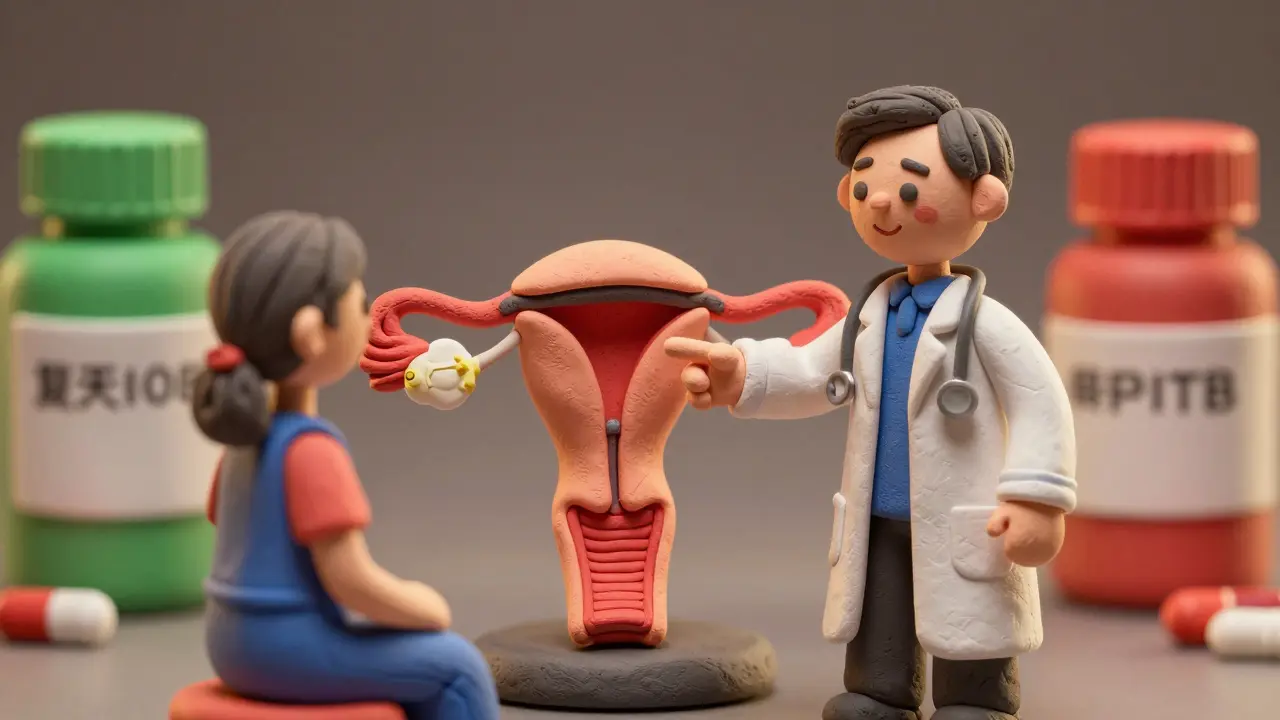
Hormonal Treatments: The First Line of Defense
You might worry that hormonal treatments will increase your clot risk. Surprisingly, for many women, they are safe and highly effective even while on anticoagulants. Hormone therapies remain the mainstay of treatment for HMB in this population.
The Levonorgestrel IUD
The levonorgestrel intrauterine system (such as Mirena or Kyleena) is often the gold standard. This small device releases progestin directly into the uterus, thinning the lining and reducing blood loss. Clinical data suggests it can reduce menstrual bleeding by 70-90% within three to six months. Many women report their periods becoming nearly nonexistent. Importantly, because the hormone acts locally, systemic absorption is low, making it a safer choice for those on blood thinners compared to oral hormones in some cases. Real-world feedback supports this: users in online communities have shared stories of going from emergency room visits for excessive bleeding to having no period at all after insertion.
Progestin Therapy
If an IUD isn’t right for you, oral progestins are another option. The American Society of Hematology’s 2024 guidelines recommend an extended regimen of high-dose progestin, such as norethisterone 5 mg taken three times daily for 21 days. This can be used cyclically or continuously to induce amenorrhea (absence of periods). Combined oral contraceptives can also be considered, but only after careful evaluation by both your gynecologist and hematologist to ensure they don’t interfere with your anticoagulation needs.
Non-Hormonal Medications
If hormones aren’t suitable, non-hormonal options exist. Tranexamic acid is a prescription medication that helps blood clot by blocking fibrinolysis (the breakdown of clots). Taken only during your period, it has been shown to reduce menstrual blood loss by 30-50%. However, timing is critical. Because it affects clotting, it must be coordinated carefully with your anticoagulant schedule to avoid increasing the risk of thrombosis. Your doctor will provide specific instructions on when to take it relative to your blood thinner dose.
What about over-the-counter pain relievers? Nonsteroidal anti-inflammatory drugs (NSAIDs) like ibuprofen can reduce menstrual bleeding by 20-40%. However, caution is required. NSAIDs can irritate the stomach lining and may interact with certain anticoagulants, increasing the risk of gastrointestinal bleeding. Always consult your doctor before adding ibuprofen or aspirin to your routine.
What to Avoid: Skipping Doses
A dangerous temptation when bleeding heavily is to skip doses of your blood thinner to "let your body heal." Do not do this. Dr. Samuelson Bannow warns that abbreviating anticoagulation or skipping doses can increase the risk of recurrent venous thromboembolism (VTE) by as much as fivefold. The risk of a life-threatening clot far outweighs the discomfort of heavy bleeding. Instead, address the bleeding with targeted treatments while maintaining your full anticoagulant regimen.

Managing Iron Deficiency
Chronic heavy bleeding leads to iron loss, resulting in anemia. Symptoms include fatigue, pale skin, and shortness of breath. The National Blood Clot Alliance recommends that all anticoagulated women be evaluated for iron deficiency. If your levels are low, your doctor may prescribe oral iron supplements or, in severe cases, intravenous iron infusion. Eating iron-rich foods like red meat, spinach, and fortified cereals can help, but supplements are often necessary to replenish stores quickly.
When to Seek Immediate Care
Contact your healthcare provider immediately if you experience:
- Bleeding so heavy you soak through one pad or tampon per hour for more than two hours.
- Signs of severe anemia: chest pain, fainting, or extreme weakness.
- Unusual bruising or bleeding from other sites (gums, nose).
Advocating for Yourself
Unfortunately, many women report that their hematologists never ask about menstrual changes after starting anticoagulation. A survey by the National Blood Clot Alliance found that 68% of respondents said their provider didn’t inquire about this issue, despite 72% experiencing problematic bleeding. Be proactive. At your next appointment, say: "I’ve noticed my periods are heavier since starting [medication name]. How can we manage this without compromising my clot prevention?"
Can I take birth control pills while on blood thinners?
It depends on the type of birth control. Combined oral contraceptives (containing estrogen) generally increase clot risk and are often avoided in patients already on anticoagulants for clot-related reasons. However, progestin-only methods like the mini-pill, implant, or hormonal IUD are usually safe and can help reduce bleeding. Always consult your hematologist and gynecologist together to make this decision.
Will the Mirena IUD increase my risk of blood clots?
The levonorgestrel IUD releases hormones locally in the uterus, resulting in very low systemic absorption. Current evidence suggests it does not significantly increase the risk of blood clots and is considered a safe option for women on anticoagulants who need to manage heavy bleeding. It is often preferred over estrogen-containing methods.
Is tranexamic acid safe with Eliquis or Xarelto?
Tranexamic acid can be used with DOACs like apixaban (Eliquis) or rivaroxaban (Xarelto), but it requires careful medical supervision. Because it promotes clotting, it must be timed correctly with your anticoagulant doses to minimize any theoretical risk of thrombosis. Never start this medication without explicit instructions from your prescribing doctor.
Should I switch from Rivaroxaban to Apixaban for heavy periods?
Research suggests that apixaban and dabigatran are associated with lower rates of heavy menstrual bleeding compared to rivaroxaban. If you are struggling with HMB on rivaroxaban, discuss switching with your doctor. However, the choice of anticoagulant depends on your underlying condition (e.g., atrial fibrillation vs. VTE), kidney function, and other factors. A switch should only be made under professional guidance.
Can endometrial ablation be done while on blood thinners?
Endometrial ablation is generally considered a last-resort option for women on anticoagulants. The procedure carries higher bleeding risks, and interrupting blood thinners for surgery increases clot risk. Additionally, contraception is still required afterward, which complicates management. Hormonal treatments like the IUD are typically tried first due to their safety profile and effectiveness.
