
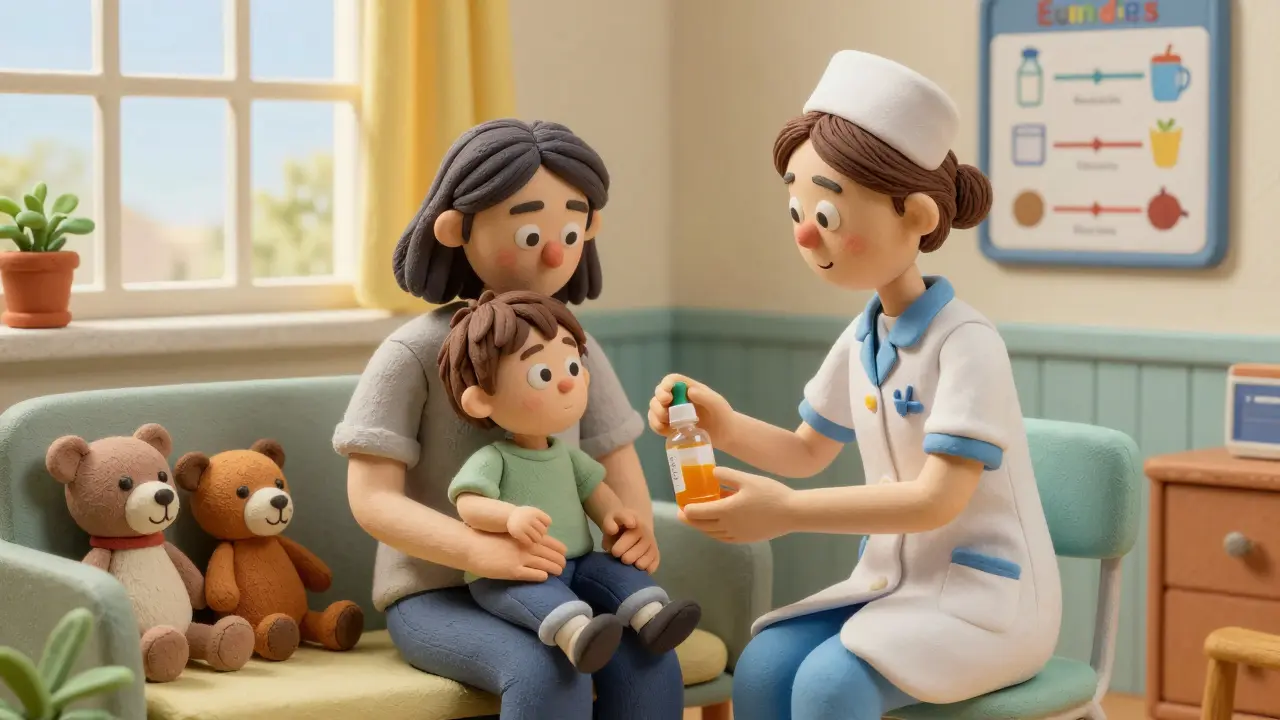
Getting ready for a child’s surgery or procedure isn’t just about showing up on time. It’s about making sure their body and mind are ready for what’s coming. One of the most important parts of that preparation? Pre-op medications. These aren’t just pills or sprays given to calm a child down-they’re carefully calculated tools that reduce fear, prevent complications, and make the whole experience safer and smoother for everyone involved.
Why Pre-Op Medications Matter for Kids
Children aren’t small adults. Their bodies process medicine differently. Their brains react more strongly to stress. And their stomachs empty faster. That’s why adult protocols don’t work for kids. When done right, pre-op medications can cut postoperative behavioral issues-like crying, nightmares, or refusing to go back to the hospital-by nearly 40%. At the Royal Children’s Hospital in Melbourne, studies showed that kids who got the right sedative before surgery were far less likely to panic during IV insertion or wake up confused in recovery.
But it’s not just about calming them down. These meds also help prevent dangerous situations. For example, if a child has asthma, skipping their inhaler before surgery could lead to breathing trouble under anesthesia. If they’re on seizure meds and you stop them, you risk a seizure during the procedure. Even something as simple as giving the wrong liquid can cause vomiting and aspiration-something that can turn a routine surgery into an emergency.
Fasting Rules: What They Can and Can’t Have
One of the biggest sources of confusion for parents? Fasting. What counts as a “clear liquid”? Can they have apple juice? What about milk? The rules aren’t the same as for adults.
- No solid foods after midnight for children over 12 months old.
- Milk and formula are okay until 6 hours before the procedure.
- Breast milk is allowed until 4 hours before.
- Clear liquids-water, Pedialyte, Sprite, 7-Up, or apple juice without pulp-can be given up to 2 hours before.
Why such short fasting times? Kids have faster stomach emptying than adults. Adults are told to stop liquids 4 hours before, but for children, 2 hours is safe and reduces dehydration and irritability. A 2023 Texas Children’s Hospital protocol found that sticking to these times led to a 92% compliance rate among families.
But here’s the catch: many parents get confused. In focus groups, 28% didn’t know what “clear liquid” meant. Some gave orange juice-wrong, because pulp can delay emptying. Others gave Gatorade thinking it was fine-it’s not always approved. Always check with your hospital’s specific list.
Common Pre-Op Medications and How They’re Given
There are three main types of sedatives used for kids before surgery:
- Oral midazolam: The most common. Given as a sweet liquid, 0.5-0.7 mg per kg of body weight (max 20 mg). Administered 20-30 minutes before the procedure. Works well for most kids, especially those who aren’t extremely anxious.
- Intranasal midazolam: A spray into the nose. Dose is 0.2 mg per kg (max 10 mg). Works faster-often within 10 minutes-and is great for kids who won’t swallow pills. But about 12% of children get nasal irritation or sneezing, so it’s not always the best fit.
- Intramuscular ketamine: Used only for highly anxious or uncooperative children. Given as a shot in the thigh, 4-6 mg per kg. Takes 3-5 minutes to kick in. It doesn’t make kids sleep like other sedatives-it creates a dreamlike state where they’re calm but still aware. Parents often report their child clings to them during this time before drifting off. But it can cause hallucinations or agitation after waking (called emergence delirium), which happens in 8-15% of cases.
Midazolam is preferred because it’s predictable, safe, and wears off quickly. Ketamine is reserved for tough cases. And never use nitrous oxide (laughing gas) for kids with asthma or pulmonary hypertension-it can worsen airway spasms by 25-30%.
Special Cases: Asthma, Seizures, and Weight Issues
Not all kids are the same. Some need extra care.
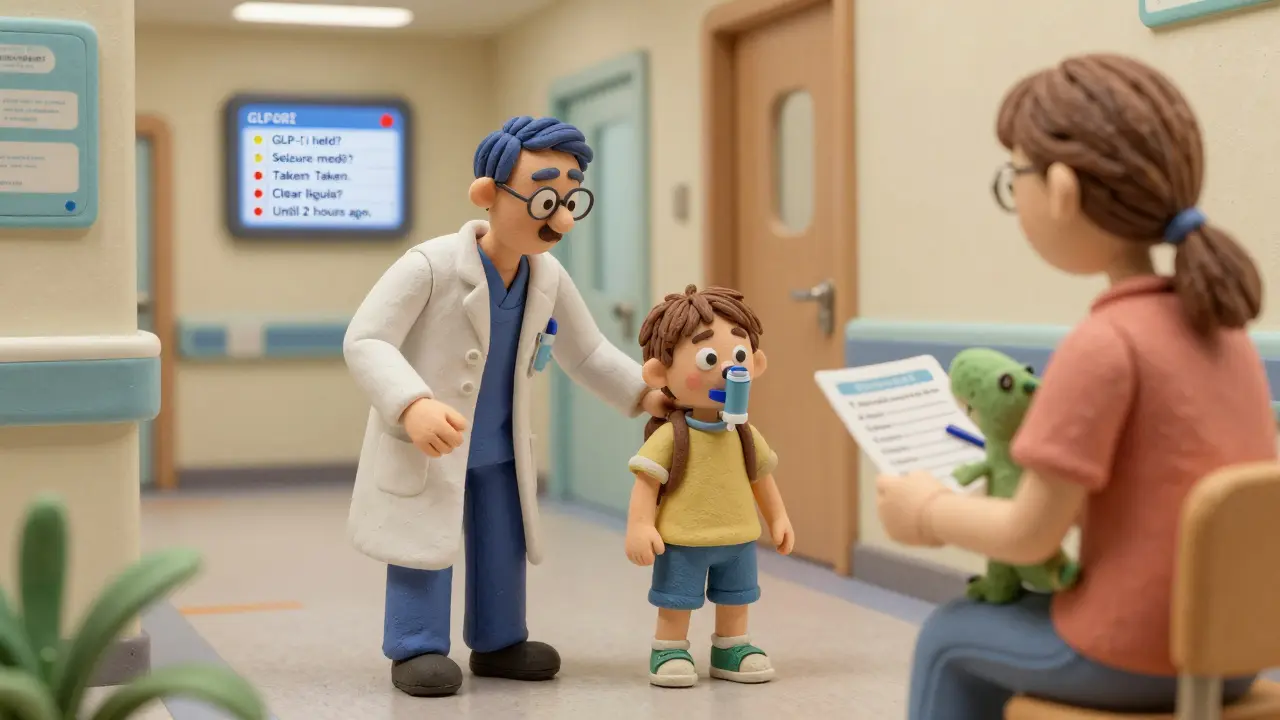
Asthma: If your child uses an inhaler like albuterol, they should use it 30-60 minutes before arriving at the hospital. CHOP data shows this reduces intraoperative bronchospasm by 40%. Don’t skip it-even if they feel fine.
Seizure medications: Never stop antiepileptic drugs like phenytoin or levetiracetam unless the doctor says so. Stopping them can trigger a seizure under anesthesia. The AAFP guidelines say they can be taken with a sip of water on the day of surgery.
Obesity: New data from the 2025 CHOP update shows that kids with obesity often need 20% higher doses of midazolam. Standard doses don’t work as well because fat tissue changes how the drug is absorbed. This isn’t common knowledge yet, so if your child is overweight, ask specifically about dosing adjustments.
GLP-1 agonists: If your child is taking semaglutide (Ozempic) or exenatide (Byetta) for weight or diabetes, these must be stopped before surgery. Semaglutide delays stomach emptying by 30-40%, which increases aspiration risk. Hold it for 1 week. Exenatide? Hold for 3 days. This was updated in June 2023 by the ASA and is now standard.
Preparing Your Child (and Yourself)
Medications are only half the battle. How you prepare your child matters just as much.
Start talking to them 24 hours before. Use simple words: “The doctors are going to give you a special medicine to help you sleep so they can fix your tooth/leg/ear.” Don’t say “you’ll be put to sleep like a superhero”-that sets up fear when they wake up confused.
Bring a comfort item: a stuffed animal, blanket, or tablet with a favorite show. Hospitals allow this. It reduces anxiety more than any drug sometimes.
For kids with autism or developmental delays, the process is different. At RCH Melbourne, 40% of these children needed clonidine (a blood pressure med) given 4 hours before to calm their nervous system. Talk to your anesthesiologist early if your child has special needs.
What Could Go Wrong (And How to Avoid It)
Errors happen. The ASA says 17% of hospitals have at least one pre-op medication mistake every month. The top three?
- Stopping seizure meds (32% of errors)
- Giving the wrong dose of midazolam (27% of errors)
- Letting a child eat or drink past the cutoff (21% of errors)
How to protect your child:
- Write down every medication they take-including vitamins and supplements.
- Bring the actual bottles to the hospital.
- Ask the nurse to repeat the name and dose of the pre-op med before giving it.
- If they’re giving a shot or spray, ask why they chose that over the oral version.
Also, don’t assume “everyone knows the rules.” Community hospitals follow guidelines only 78% of the time. Academic centers? 95%. If you’re at a smaller facility, be extra vigilant.
What Happens After the Medication
After the pre-op med is given, your child will start to feel sleepy, maybe giggly or quiet. That’s normal. They may not remember you leaving the room. Don’t panic. That’s the medicine working.
They’ll be monitored the whole time: oxygen levels, heart rate, breathing. That’s standard. If they’re getting ketamine, staff will watch for unusual movements or loud noises after waking up. Emergence delirium usually lasts less than 10 minutes and fades with cuddles and reassurance.
After surgery, most kids wake up calm. They might be groggy for a few hours. Let them rest. Don’t force food or drink until they’re fully alert. And expect some clinginess or moodiness for a day or two. That’s normal. It’s not the surgery-it’s the stress of the experience.
Final Checklist Before You Leave Home
Use this simple list to make sure nothing’s missed:
- Confirmed fasting times? No food after midnight, clear liquids only until 2 hours before.
- Medications: Are seizure meds, asthma inhalers, or heart meds still being taken?
- GLP-1 meds held for 1 week? (If applicable)
- Pre-op sedative selected? (Oral midazolam for most, intranasal if swallowing is hard, ketamine only if needed)
- Comfort item packed? (Stuffed animal, blanket, tablet)
- Medication list printed and brought? (All prescriptions, OTC, supplements)
- Questions written down? (Ask the anesthesiologist about dosing, alternatives, or risks)
Following this guide won’t just make the day smoother-it can reduce complications, prevent cancellations, and help your child feel safe. The goal isn’t just to get through the procedure. It’s to make sure they don’t remember it as scary.
Can I give my child a snack if they’re hungry before surgery?
No. Solid foods must be avoided after midnight. Even a small cookie or cracker can delay stomach emptying and increase the risk of vomiting during anesthesia. Stick strictly to the fasting rules: no solids after midnight, milk/formula until 6 hours before, breast milk until 4 hours before, and only clear liquids until 2 hours before.
Is midazolam safe for toddlers?
Yes, when given in the correct dose. Midazolam is the most commonly used pre-op sedative for children as young as 6 months. The dose is based on weight-0.5-0.7 mg per kg-and is carefully calculated by the anesthesiology team. Side effects are rare and usually mild, like drowsiness or temporary confusion. Paradoxical reactions (like increased agitation) happen in only 5-10% of cases, and staff are trained to handle them.
What if my child throws up after taking the pre-op medicine?
If vomiting happens after the medication is given but before the procedure, notify the staff immediately. They may delay the surgery to ensure the stomach is empty. This is not uncommon, especially if the child had a small amount of food too close to the cutoff. The team will reassess fasting status and may switch to a different sedative or approach.
Why can’t I give my child orange juice before surgery?
Orange juice with pulp contains fiber and solids that slow down stomach emptying. Only clear liquids-like water, Pedialyte, Sprite, or apple juice without pulp-are allowed because they pass through the stomach quickly. Pulp increases the risk of aspiration during anesthesia, which can cause pneumonia or airway blockage.
Do I need to stop my child’s vitamins before surgery?
It depends. Most multivitamins are safe to take with a sip of water. But if they contain iron, vitamin E, fish oil, or herbal ingredients like ginkgo or garlic, they may increase bleeding risk. Always list all supplements on your pre-op form and ask the anesthesiologist whether to stop them. When in doubt, hold off until after surgery.
Can my child take their ADHD medication before surgery?
Usually, yes. Medications like methylphenidate or amphetamines can be continued on the day of surgery with a small sip of water. Stopping them can cause irritability or withdrawal symptoms that make sedation harder. But check with your doctor-some facilities prefer to hold them if the child is very young or if the procedure is long. Never stop without asking.


