
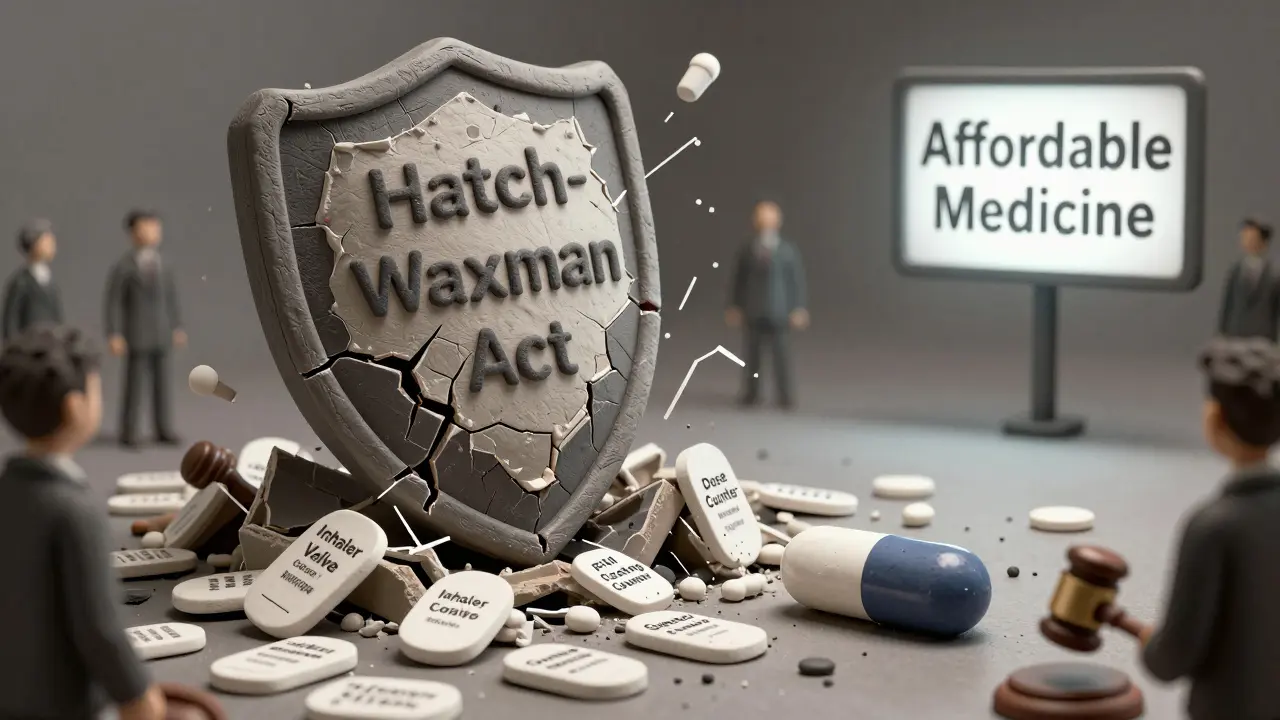
When a brand-name drug loses its patent, the market expects a flood of cheaper generic versions. But in reality, many patients wait years longer than they should. Behind the scenes, a complex legal battle is playing out - one that often has more to do with delaying competition than protecting innovation. This is the reality of patent litigation in the generic pharmaceutical market.
How the System Was Designed - and How It’s Being Used
The framework for generic drug approval in the U.S. was created by the Hatch-Waxman Act of 1984. It was meant to strike a balance: reward innovators with patent protection, but also let generics enter the market quickly once those patents expire. The key tool in this system is the Orange Book, a public list maintained by the FDA that links brand-name drugs to their patents. When a generic company wants to launch, it files what’s called a Paragraph IV certification - essentially saying, "Your patent is invalid or doesn’t apply to us." That triggers a legal countdown. The brand company has 45 days to sue. If they do, the FDA can’t approve the generic for up to 30 months. That’s supposed to give courts time to decide if the patent is valid. But in practice, this 30-month clock has become a tool for delay - not justice.Serial Litigation: The Hidden Game
Some brand companies don’t just file one lawsuit. They file a string of them. One after another. Each time a patent expires or gets challenged, they slap on a new patent - often covering something minor, like the shape of the pill, the color of the packaging, or even the dose counter on an inhaler. The FDA’s rules say only patents directly related to the drug’s active ingredient, formulation, or use should be listed. But in reality, companies are listing patents for delivery devices, manufacturing tools, and packaging methods. Take the case of ProAir® HFA, an asthma inhaler. In 2025, a federal judge ruled that six patents listed by the brand company didn’t even qualify. Why? Because they covered the inhaler’s dose counter - not the actual drug, albuterol sulfate. The judge made it clear: "The drug for which the application was approved was albuterol sulfate inhalation aerosol." Patents on the device? Not eligible. This ruling is now a blueprint for challenging hundreds of similar listings. But the damage was already done. By the time the court acted, generic entry had been blocked for years. The Association for Accessible Medicines found cases where companies used this tactic to delay competition for 7 to 10 years past the original patent expiry. That’s not innovation. That’s market control.Why the Eastern District of Texas Is Ground Zero
Where do these lawsuits happen? The Eastern District of Texas has become the go-to venue. In 2024, it handled 38% of all pharmaceutical patent cases - more than double the next busiest district. Why? Because its judges are experienced in patent law, its procedures favor plaintiffs, and its juries are seen as predictable. Even after the TC Heartland decision tried to limit "forum shopping," the Eastern District rebounded. It’s now the epicenter of patent litigation, drawing law firms like Fish & Richardson and Quinn Emanuel, whose revenues jumped 35-40% in 2024. This isn’t accidental. It’s strategic. Generic companies don’t have deep pockets. They can’t afford to fight 10 lawsuits across 10 different courts. So they’re forced to settle - even if the patent is weak.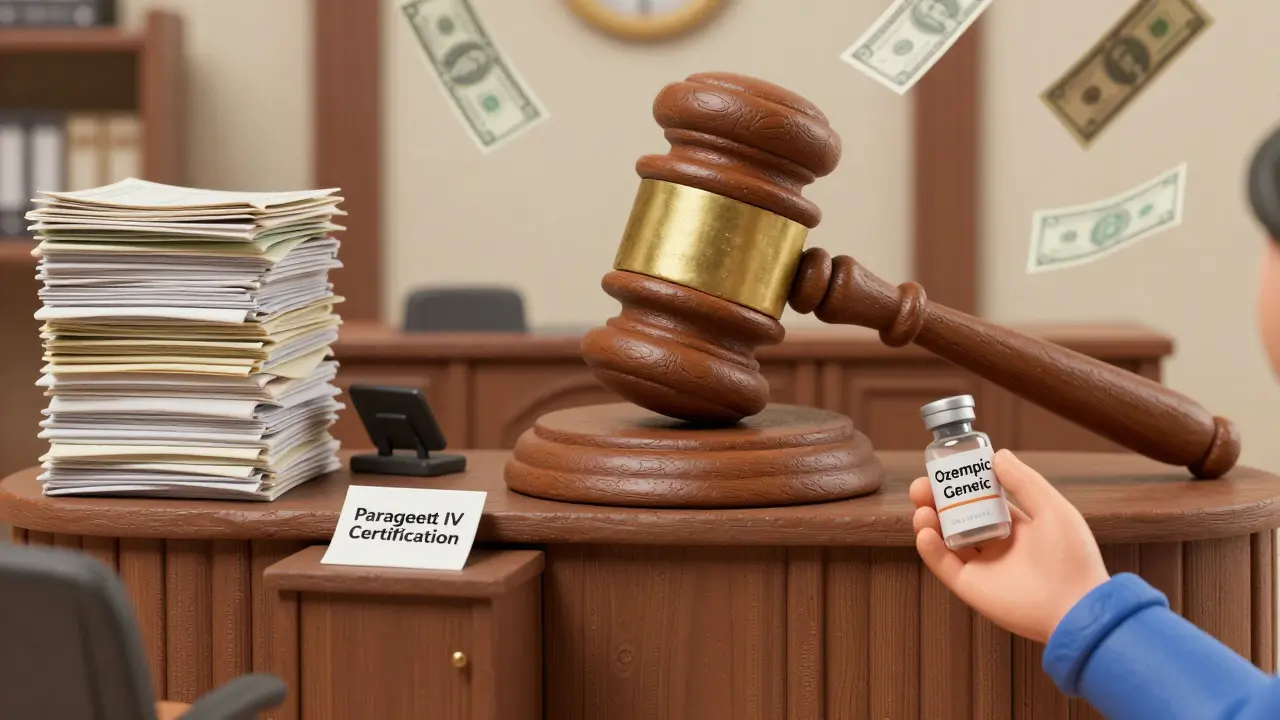
Settlements: Are They Helping or Hurting?
You might hear that patent settlements are a good thing. After all, if both sides agree to end the fight, why not? But here’s the catch: many of these settlements come with a price tag - literally. In "pay-for-delay" deals, the brand company pays the generic to stay out of the market. The FTC has challenged over 300 improper Orange Book listings in 2024 alone and issued warning letters on 200 more in 2025. These aren’t just paperwork. They’re signals that regulators are watching. Yet, the IQVIA Institute found something surprising: when brand and generic companies settle without pay-for-delay, generics enter the market more than five years earlier than they would if litigation dragged on. That’s because settlements remove uncertainty. Companies can plan. Investors can fund production. Pharmacies can stock shelves. The real problem isn’t settlement. It’s the flood of weak patents used to force those settlements. If you remove the bad patents, settlements become tools for faster access - not barriers.The Numbers Don’t Lie
Consider this: in 2005, the average time from brand drug approval to first generic entry was 14 months. In 2024? It’s 28 months. For cancer drugs? It’s 5.7 years after the patent expires. The FTC estimates improper patent listings delay generic access for about 1,000 drugs each year - costing the healthcare system $13.9 billion annually. Some drugs have absurdly high patent counts. Eliquis (apixaban) has 67 patents. Semaglutide (Ozempic, Wegovy) has 152. Oncology drugs average 237 patents per product. That’s not innovation. That’s a legal fortress. And it’s getting worse. The Lex Machina 2025 report predicts pharmaceutical patent litigation will grow 25-30% per year through 2027. Why? Because biologics and biosimilars - more complex than traditional pills - come with an average of 78 patents each. The legal complexity is exploding.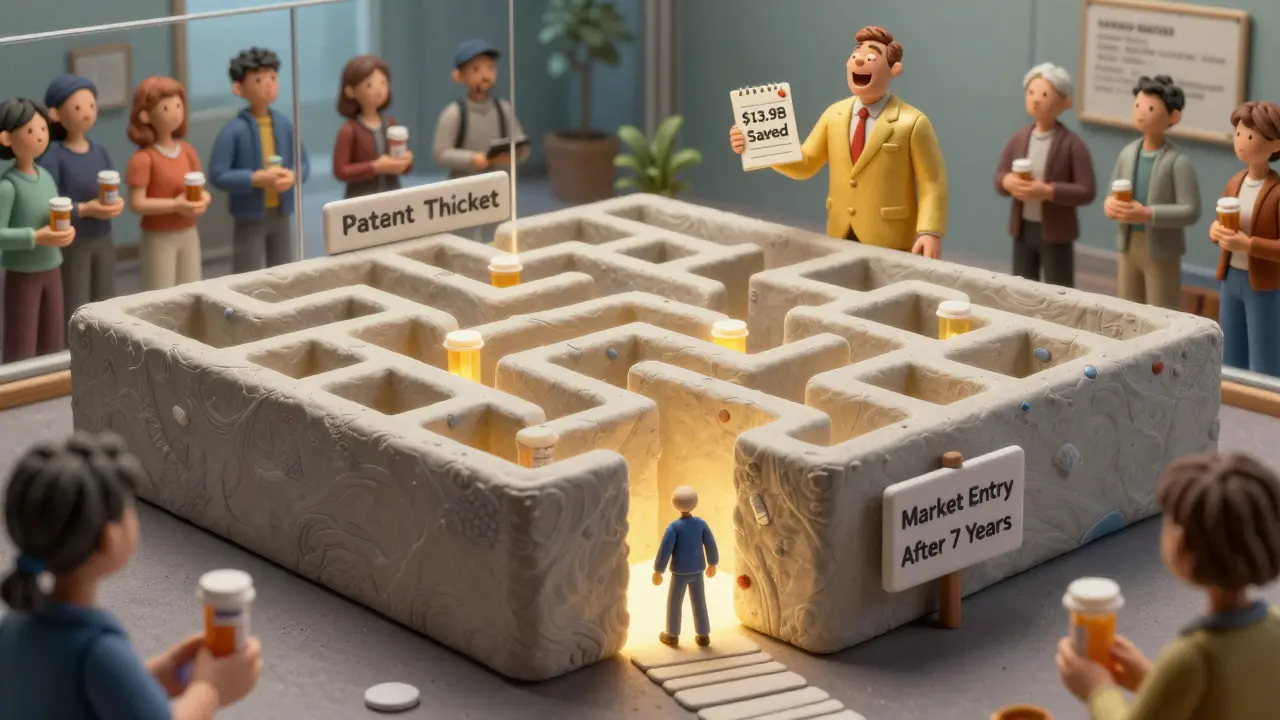
What’s Changing? New Rules on the Horizon
There’s momentum for reform. In March 2025, the FTC and Department of Justice held joint sessions with 12 generic manufacturers. Testimony revealed how patents on inhaler valves and pill-coating machines were used to block competition. In response, the FDA is moving to require brand companies to certify under penalty of perjury that every patent listed in the Orange Book meets the law. That change is expected in Q2 2026. Generic manufacturers are also turning to the Patent Trial and Appeal Board (PTAB), where they can challenge patents without going to court. IPR filings against pharma patents jumped 47% from 2023 to 2024. But the Supreme Court’s April 2025 ruling in Smith & Nephew v. Arthrex made it harder for generic companies to bring these challenges - raising the bar for who has legal standing to sue. The path forward isn’t clear. But one thing is: the current system is broken. It was designed to speed up access to affordable drugs. Instead, it’s being used to lock them out.What Patients and Providers Should Know
If your prescription drug suddenly becomes more expensive - or if a generic you’ve been using disappears - don’t assume it’s just market forces. Ask: Is there a new patent listing? Has the brand company filed a new lawsuit? Is the FDA’s Orange Book listing accurate? Pharmacists and doctors are on the front lines. They see the delays. They hear the frustration. But they rarely have the tools to fight back. That’s why transparency matters. Patients deserve to know why their medicine is delayed. Providers deserve to know what’s really happening behind the scenes. The next time you hear about a "patent dispute," ask: Who benefits? Is it the patient? Or the company that’s using the law to avoid competition?What is the Hatch-Waxman Act and how does it affect generic drugs?
The Hatch-Waxman Act of 1984 created a legal pathway for generic drugs to enter the market without repeating expensive clinical trials. It allows generic manufacturers to file Abbreviated New Drug Applications (ANDAs) and challenge existing patents through Paragraph IV certifications. If a brand company sues within 45 days, the FDA delays approval for up to 30 months - a mechanism meant to balance innovation and competition, but often exploited to delay generic entry.
What is the Orange Book and why does it matter?
The Orange Book is the FDA’s official list of approved drug products and their associated patents. Only patents covering the active ingredient, formulation, or method of use should be listed. But many companies list patents for delivery devices, packaging, or manufacturing tools - things not directly tied to the drug itself. These improper listings are used to trigger litigation and delay generic approval.
Can generic companies challenge patents without going to court?
Yes. Generic manufacturers can file inter partes review (IPR) petitions at the Patent Trial and Appeal Board (PTAB) to challenge the validity of patents. IPR filings against pharmaceutical patents rose 47% between 2023 and 2024. However, the Supreme Court’s 2025 ruling in Smith & Nephew v. Arthrex made it harder for generic companies to qualify for IPR by tightening standing requirements, limiting who can file these challenges.
What are "pay-for-delay" settlements and why are they controversial?
Pay-for-delay settlements occur when a brand-name drug company pays a generic manufacturer to delay launching its cheaper version. The FTC considers these anti-competitive and has challenged over 300 such agreements since 2020. Critics argue they harm patients by keeping drug prices high. Proponents claim they avoid costly litigation - but evidence shows they rarely lead to faster market entry.
Which courts handle the most pharmaceutical patent cases?
The Eastern District of Texas handled 38% of all pharmaceutical patent cases in 2024, making it the most active venue. It’s favored because of its experienced judges, fast-tracked procedures, and historically plaintiff-friendly rulings. Other major venues include the District of Delaware (15%) and the Western District of Texas (22%), but none come close to Texas’s dominance.
How many patents are too many for one drug?
There’s no legal limit, but industry data shows alarming numbers. The average small-molecule drug has 37 patents. Oncology drugs average 237. Eliquis has 67. Semaglutide products have 152 collectively. Experts like Dr. Rachel Sachs call this a "patent thicket" - a strategy to overwhelm generic challengers with legal costs and complexity, not innovation.
What’s the financial impact of delayed generic entry?
The FTC estimates improper patent listings delay generic competition for about 1,000 drugs each year, costing the U.S. healthcare system $13.9 billion annually. In 2024, patent litigation in the U.S. resulted in $4.3 billion in damages awarded - much of it tied to pharmaceutical cases. For patients, this means paying 80-90% more for brand drugs when cheaper generics could be available.


