
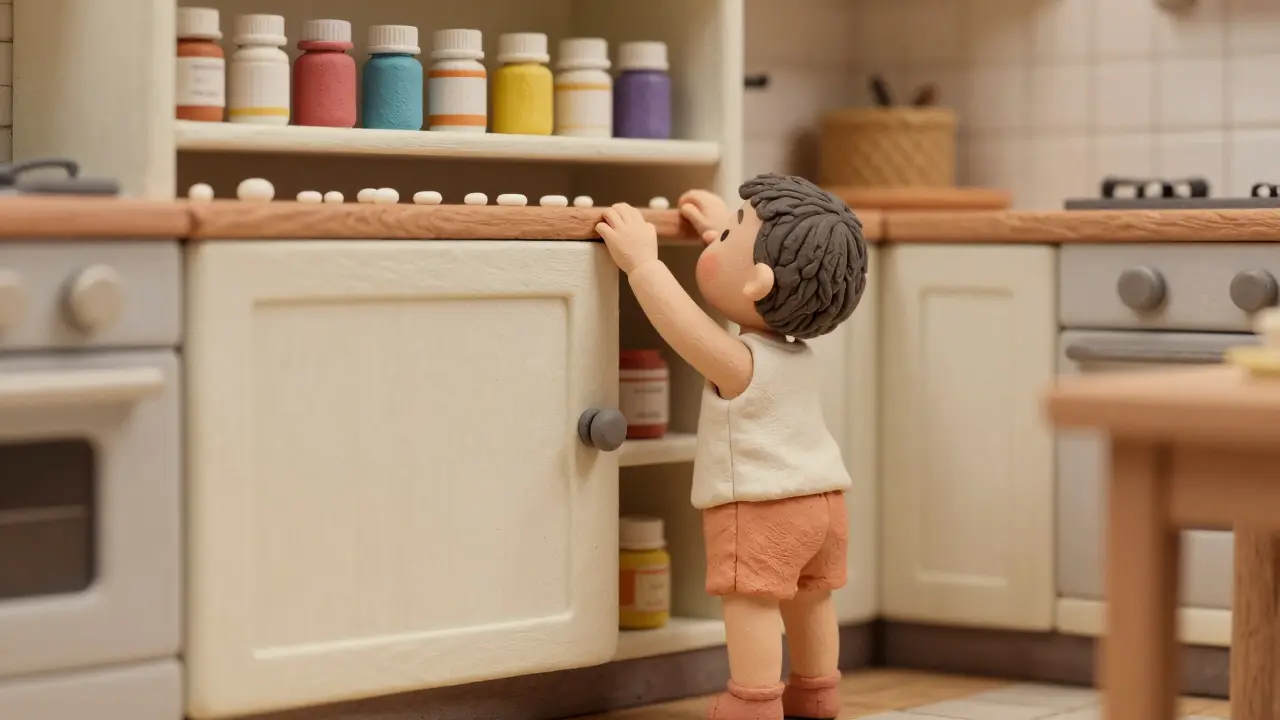
Imagine this: you’re rushing to get your toddler ready for school. You grab a multivitamin gummy from the counter, pop it into their mouth, and set the bottle back down-right next to the coffee maker. Or maybe you give your dog his arthritis pill, leave the container on the kitchen island while you wash dishes, and turn your back for just ten seconds. In those brief moments, a preventable tragedy can unfold.
Medication safety isn’t just about keeping pills in a cabinet. It’s about creating a fortress of habits and physical barriers that protect your most vulnerable family members-both human and furry. According to the American Association of Poison Control Centers, roughly 60,000 young children end up in emergency rooms every year due to accidental medication ingestion. For pets, the numbers are equally alarming, with dogs accounting for nearly 80% of veterinary emergency visits related to toxic ingestions. The good news? These incidents are largely preventable with the right strategies.
The "Up and Away" Rule: More Than Just a Slogan
You’ve probably heard the phrase "up and away." It’s the cornerstone of the CDC’s National Poison Prevention Week campaign, but most people don’t take it seriously enough. "Up" means high-specifically, higher than five feet off the ground. "Away" means out of sight and behind a lock. Why five feet? Because research shows that toddlers can reach up to four feet when standing or jumping, and they are surprisingly adept climbers.
Here’s the hard truth: child-resistant packaging is not child-proof. The ASTM International standard D3475 tests these caps against children aged 42-51 months, but determined kids (and clever pets) often find ways around them. Dr. Lara McKenzie from Nationwide Children’s Hospital notes that storing medicines in high places alone isn’t sufficient if they’re visible or accessible via furniture. You need a combination of height, visual obstruction, and physical locks.
- Avoid bathroom cabinets: They’re convenient, but humidity levels of 60-80% degrade medications quickly. Plus, bathrooms are often low-hanging fruit for curious toddlers.
- Skip the nightstand: If you keep sleep aids or painkillers here, ensure they’re in a locked box. Nightstands are eye-level for older toddlers and easily accessible.
- Choose high kitchen pantries or bedroom closets: Look for spots above eye level that require a step stool to reach-and then add a lock anyway.
Separating Human and Pet Medications: A Critical Safety Layer
If you have both kids and pets, your storage strategy needs an extra layer of complexity. The FDA warns that human medications can be deadly to animals, and vice versa. For instance, common human heart medications can cause fatal drops in blood pressure in dogs. Meanwhile, canine arthritis drugs containing NSAIDs can lead to renal failure in cats at therapeutic doses.
The risk goes both ways. About 25% of pet medication incidents involve owners accidentally taking their pet’s medicine because it looked similar to their own. To mitigate this, implement a strict "three-zone" storage system recommended by VCA Animal Hospitals:
| Zone | Purpose | Security Level | Location Example |
|---|---|---|---|
| Zone 1 | Immediate Administration | None (Supervised) | Flat surface during dosing only |
| Zone 2 | Short-Term Storage | Locked Container + High Elevation | High pantry shelf with child lock |
| Zone 3 | Long-Term/Separate Species | Separate Locked Locations | Different rooms for human vs. pet meds |
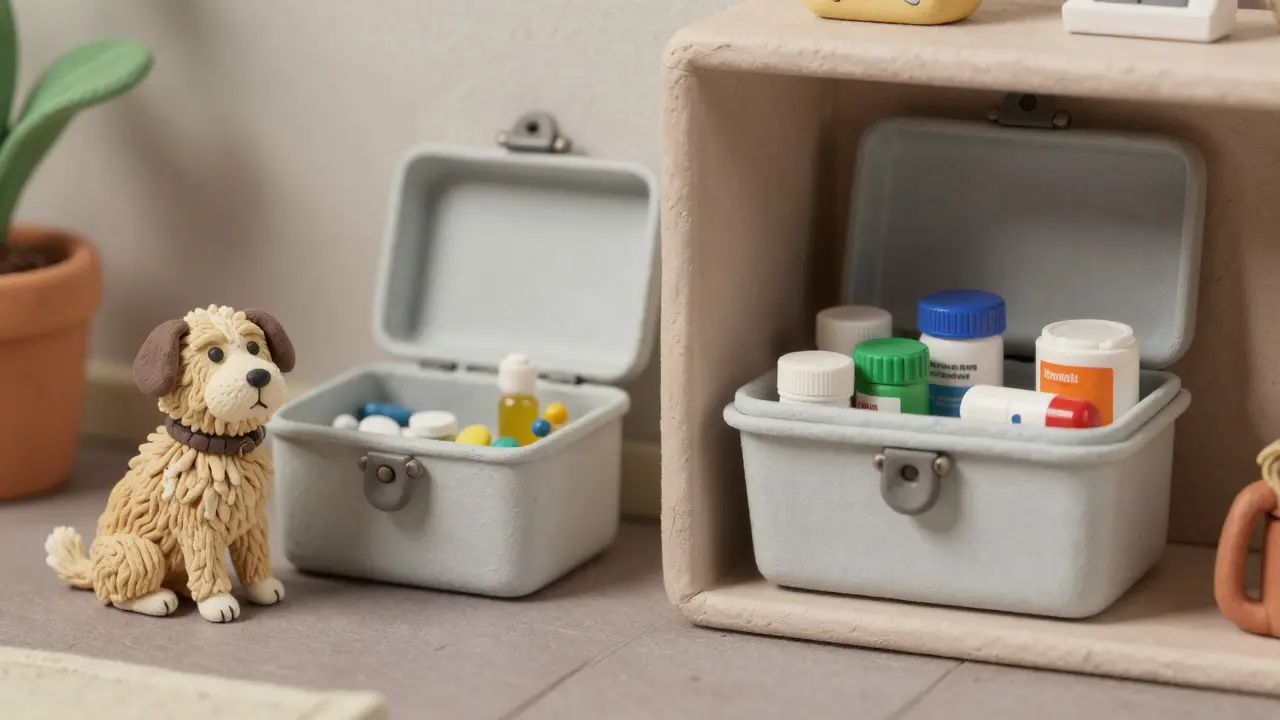
Never store pet medications alongside human ones. Keep them in separate, clearly labeled containers in different parts of the house. This prevents cross-contamination and reduces the chance of mix-ups during stressful moments.
The Gummy Trap: Why Supplements Need Extra Vigilance
Gummy vitamins and supplements are a major culprit in pediatric poisonings. They taste like candy, look like candy, and come in colorful packages that appeal to children. CDC data reveals that gummy vitamins account for 30% of childhood supplement ingestions, despite making up only 15% of the market. Pets are also attracted to the sweet flavors.
Treat gummy supplements with the same caution as prescription opioids. Store them in locked boxes, not just child-resistant bottles. If you buy bulk gummies, transfer them to opaque, locked containers immediately. Remember: convenience should never compromise safety.
The Two-Minute Rule: Building Safer Habits
Most accidents happen during temporary placement. Seattle Children’s Hospital reports that 78% of pediatric medication poisoning cases stem from improper storage, with the most common error being leaving meds on countertops during administration. Enter the "two-minute rule": secure medications within two minutes of use.
- Open on a flat surface: Never open pill bottles over counters where pills can roll under appliances or into couch cushions (a common retrieval spot for dogs).
- Count immediately: Verify the dose before handing it over.
- Secure instantly: Put the container back in its locked location before doing anything else-even if you need another dose in an hour.
This habit takes practice but becomes second nature. It eliminates the "I’ll put it away later" mindset that leads to disasters.
Safe Disposal: When Storage Isn’t Enough
Expired or unused medications shouldn’t sit in your cabinet forever. Improper disposal poses risks to children, pets, and the environment. Here’s how to do it right:
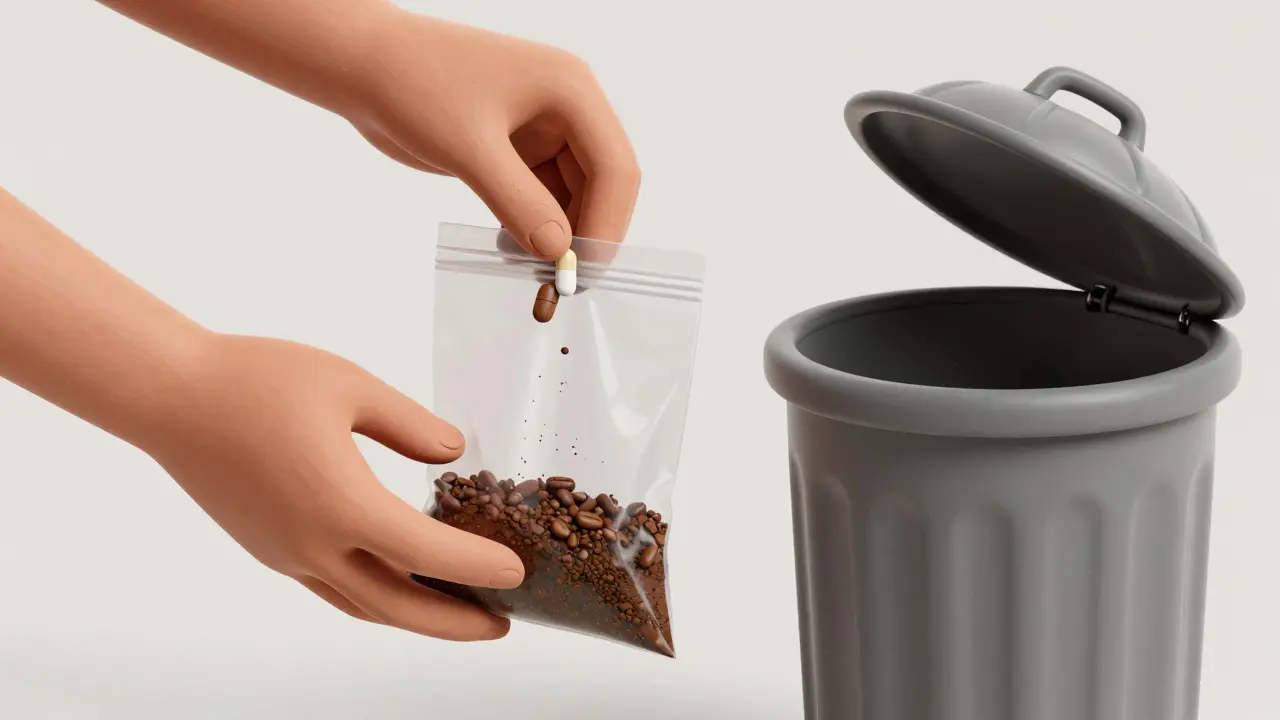
- Mix with unpalatable substances: Combine medications with coffee grounds, cat litter, or dirt in a ratio of 1:1 by volume. This makes them less appealing if accessed.
- Seal tightly: Place the mixture in a sealed plastic bag or container to prevent leaks.
- Trash it: Dispose of the sealed package in your household trash.
- Use take-back programs: Many pharmacies and law enforcement agencies host drug take-back days. Check local resources for safe drop-off options.
Avoid flushing medications unless specifically instructed on the label. Flushing can contaminate water supplies, though some high-risk drugs (like certain opioids) may require it to prevent immediate harm. Always consult your pharmacist or the FDA guidelines for specific instructions.
Tools That Help: Locks, Safes, and Smart Tech
Investing in the right tools can make safety easier. The market has seen a 75% year-over-year growth in medication lock boxes, reflecting increased awareness. Here are some effective options:
- Combination lock bags: Compact, portable, and affordable. Great for travel or small spaces.
- Biometric safes: Fingerprint access adds speed and security. Ideal for households with multiple adults who need quick access.
- Cabinet locks: Magnetic or adhesive locks for existing cabinets. Easy to install and remove.
- Bluetooth-enabled safes: Send smartphone alerts when opened. Useful for monitoring access in multi-user homes.
Choose tools that fit your lifestyle. If a lock is too cumbersome, you won’t use it consistently. Simplicity and reliability win every time.
Where is the safest place to store medications at home?
The safest place is a locked container stored at least five feet high, out of sight, in a dry area like a bedroom closet or high kitchen pantry. Avoid bathrooms due to humidity and nightstands due to accessibility.
Can I store pet and human medications together?
No. Always store pet and human medications in separate, clearly labeled locations. Cross-species toxicity is a real risk, and mix-ups can be fatal. Use different rooms or distinct locked zones for each.
Are child-resistant bottles enough to keep kids safe?
Not entirely. Child-resistant packaging provides temporary protection but can be opened by determined children or pets. Always combine these bottles with locked storage for maximum safety.
How should I dispose of expired medications?
Mix medications with unpalatable substances like coffee grounds or cat litter, seal them in a plastic bag, and throw them in the trash. Alternatively, use local drug take-back programs. Only flush if explicitly instructed on the label.
Why are gummy vitamins particularly dangerous?
Gummy vitamins resemble candy in taste, texture, and appearance, making them highly attractive to children and pets. They account for a disproportionate number of accidental ingestions compared to other supplement forms.
