
Imagine being told your life-saving medication is getting cheaper. For millions of people managing diabetes, that promise has arrived in the form of insulin biosimilars, which are highly similar follow-on versions of approved biological insulin products that offer cost-efficient alternatives without compromising safety or effectiveness. But if you’ve ever heard the term "generic" used for pills, you might wonder why insulin doesn’t just get a simple generic label. The answer lies in biology, not chemistry.
Unlike traditional small-molecule drugs like aspirin or ibuprofen, insulin is a complex protein made by living cells. You can’t just copy-paste its structure in a lab. This complexity means we don’t have "generics" for insulin; we have biosimilars. Understanding this distinction isn’t just academic-it affects your wallet, your blood sugar control, and how your doctor prescribes your care. As of mid-2026, the landscape of these medications is shifting rapidly, with new players entering the market and older patents expiring.
The Core Difference: Why Insulin Doesn’t Have Generics
To understand why biosimilars are biological products highly similar to an already approved reference biologic, requiring rigorous testing to demonstrate no clinically meaningful differences in safety and efficacy exist instead of generics, you need to look at how they are made. Generic drugs are chemically identical copies of their brand-name counterparts. If you take a generic version of acetaminophen, it is molecule-for-molecule the same as Tylenol.
Insulin, however, is a large, complex molecule produced inside living yeast or bacterial cells. Think of it like baking bread rather than mixing chemicals. Even if two bakeries use the exact same recipe (DNA sequence), slight variations in temperature, humidity, or fermentation time can result in loaves that taste nearly identical but have subtle textural differences. In pharmaceutical terms, these are called "minor structural variations."
Because of this manufacturing complexity, regulators like the U.S. Food and Drug Administration (FDA) and the European Medicines Agency (EMA) require extensive testing. A biosimilar must prove it is "highly similar" to the original reference product-known as the originator-with no clinically meaningful differences in purity, safety, or efficacy. This process is far more rigorous and expensive than approving a generic drug, which is why biosimilars typically launch at a discount of 15% to 30% off the brand price, rather than the 80%+ drop seen with generics.
| Feature | Generic Small-Molecule Drug | Insulin Biosimilar |
|---|---|---|
| Molecular Structure | Chemically identical to reference | Highly similar, minor allowed variations |
| Manufacturing Process | Chemical synthesis | Biological production in living cells |
| Regulatory Pathway | Abbreviated New Drug Application (ANDA) | Biosimilar License Application (BLA) |
| Typical Price Discount | 70-90% lower than brand | 15-30% lower than brand |
| Interchangeability | Automatic substitution allowed everywhere | Varies by region and specific product designation |
Market Landscape: Who Is Making Insulin Biosimilars?
The global insulin biosimilar market has exploded since the first approvals in Europe around 2014. By 2025, the market was valued at approximately $3.2 billion, with projections suggesting it could reach nearly $6 billion by 2035. This growth is driven by rising diabetes rates worldwide and intense pressure on healthcare systems to reduce costs.
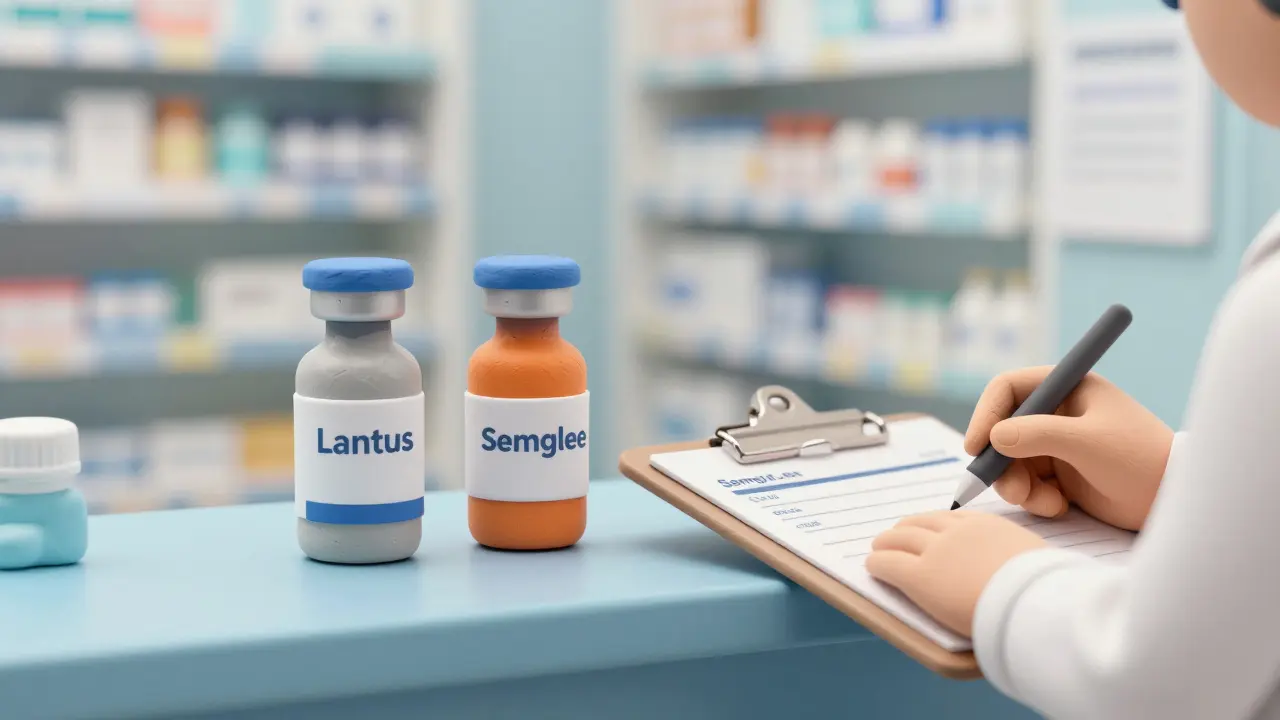
In the United States, the entry of biosimilars has disrupted the long-standing duopoly of Eli Lilly and Sanofi. One of the most significant developments was the launch of Semglee, a biosimilar to Lantus (insulin glargine) developed by Biocon and marketed by Viatris. Semglee became one of the fastest-growing biosimilars in history, capturing significant market share within months of its approval. It offers the same long-acting coverage as Lantus but often at a fraction of the cost for patients on certain insurance plans.
Another major player is Basaglar, a biosimilar insulin glargine originally launched by Eli Lilly as a dual-priced product to compete with its own branded Lantus. While technically a biosimilar, Basaglar’s pricing strategy has been unique. Initially priced similarly to Lantus to maintain profitability, it later saw price reductions to remain competitive against newer entrants like Semglee. This highlights a key nuance: not all biosimilars are automatically cheap. Pricing depends on negotiation with insurers, pharmacy benefit managers (PBMs), and government reimbursement policies.
Other notable examples include:
- Rezvoglar: Another insulin glargine biosimilar gaining traction in the U.S. market.
- Abasaglar: Available primarily in Europe and other international markets, offering a robust alternative to Lantus.
- Ryzodeg Biosimilars: Emerging options for premixed insulins, though this segment lags behind long-acting analogs in adoption.
Regionally, adoption varies wildly. In Europe, where biosimilars have been available longer, penetration rates exceed 50% for many reference products. In contrast, the U.S. market has been slower due to complex rebate structures and lack of automatic substitution laws in many states. However, with CMS (Centers for Medicare & Medicaid Services) increasing reimbursement rates for biosimilars to ASP + 8% through 2027, incentives are finally aligning to boost usage.
Clinical Considerations: Safety, Efficacy, and Switching
If you’re considering switching to an insulin biosimilar, your biggest question is likely: "Will it work the same way?" The short answer is yes. Multiple clinical trials and real-world studies have confirmed that biosimilar insulins provide comparable glycemic control to their reference products. For example, a 2025 study published in *Diabetes, Obesity and Metabolism* found no statistically significant difference in HbA1c levels between patients using Lantus and those switched to Semglee over a 52-week period.
However, "comparable" does not mean "identical." Because biosimilars are made in different facilities with slightly different processes, there can be minor variations in pharmacokinetics (how the body absorbs the drug). For most patients, these differences are negligible. But for others, especially those who are sensitive to changes in their regimen, a switch may require a brief adjustment period.
Here’s what you should know about the transition:
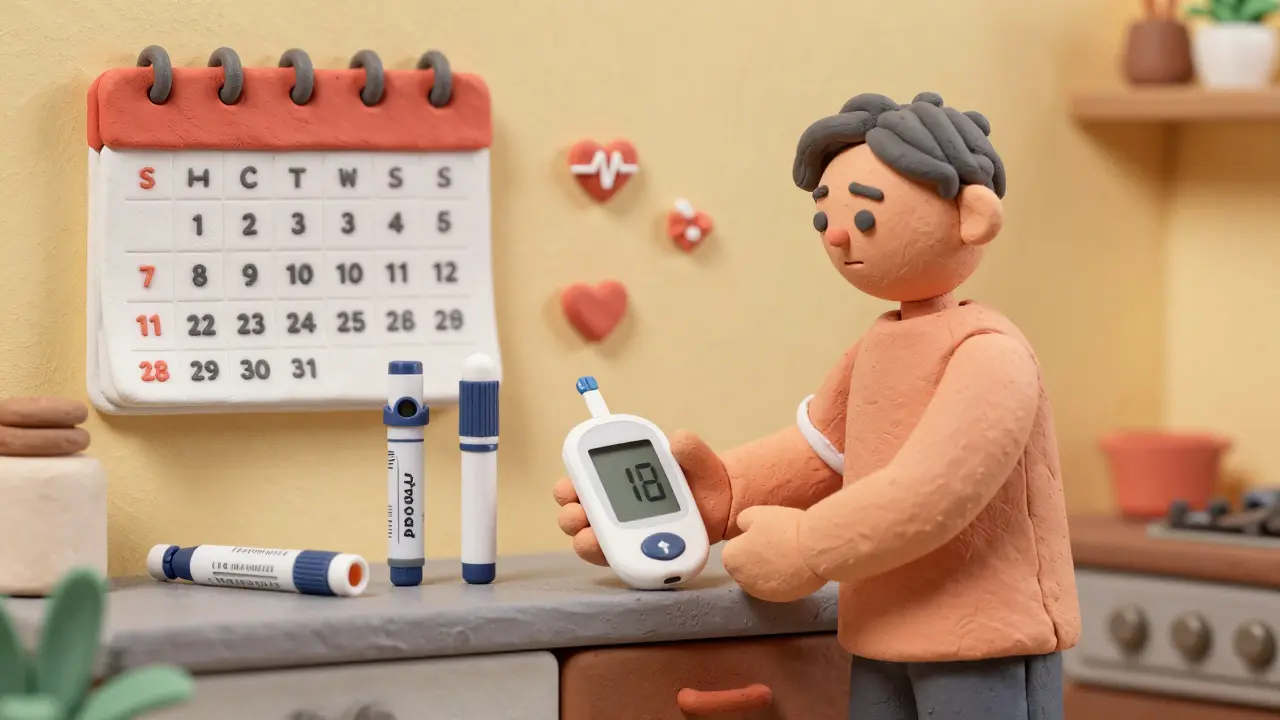
- Monitoring is Key: When switching from a reference insulin to a biosimilar, doctors recommend close glucose monitoring for the first 4-8 weeks. Check your blood sugar more frequently, especially before meals and at bedtime, to catch any unexpected highs or lows.
- Dosing May Need Tweaks: While the starting dose is usually the same, some patients find they need slight adjustments. This isn’t because the biosimilar is weaker or stronger-it’s because individual bodies respond differently to minor formulation differences.
- Immunogenicity Concerns Are Minimal: There was once concern that biosimilars might trigger immune responses (antibodies) more often than reference products. Current data shows this risk is extremely low and comparable to the original biologics.
Patient experiences vary. On online forums, some users report seamless transitions with improved affordability. Others describe frustration when pharmacies substituted a biosimilar without warning, leading to temporary instability in blood sugar control. This underscores the importance of communication with your healthcare provider.
Interchangeability and Substitution Laws: What You Need to Know
One of the most confusing aspects of insulin biosimilars is the concept of "interchangeability." In the U.S., the FDA grants "interchangeable" status only to biosimilars that meet additional stringent criteria, including demonstrating that switching back and forth between the biosimilar and reference product won’t pose safety risks. As of 2026, very few insulin biosimilars have achieved this designation.
Without interchangeable status, pharmacists cannot automatically substitute a biosimilar for a prescribed brand-name insulin unless state law allows it. Currently, only 17 U.S. states permit pharmacist-level substitution of insulin biosimilars. In other states, your doctor must specifically prescribe the biosimilar by name.
This patchwork of regulations creates uncertainty. If you travel across state lines or change insurance providers, you might receive a different insulin than expected. Always check your prescription label carefully. If you notice a change in manufacturer or product name, contact your doctor immediately to discuss whether a dosage adjustment is needed.
In Europe, the approach is different. The EMA generally considers approved biosimilars interchangeable with their reference products, allowing for easier substitution. This has contributed to higher adoption rates and greater cost savings for European health systems.
Cost Savings and Accessibility: The Real-World Impact
The primary driver behind the push for insulin biosimilars is cost. Brand-name insulins like Lantus, Tresiba, and Toujeo have faced intense scrutiny for their high prices, which can exceed $300 per vial without insurance. Biosimilars aim to break this cycle.
Data from 2025 shows that biosimilar insulins typically save patients 15-30% compared to reference products. For someone paying out-of-pocket, this can mean hundreds of dollars saved annually. In emerging markets like India and China, the impact is even more dramatic. Dr. Arjun Patel, an endocrinologist in Mumbai, noted that 60-70% cost reductions have made advanced insulin therapy accessible to middle-income families who previously relied on less effective human insulins.
However, savings aren’t guaranteed for everyone. In the U.S., the rebate system complicates things. Insurance companies often negotiate rebates with manufacturers, and if a biosimilar doesn’t generate a high enough rebate, it might not appear on your plan’s preferred list. Additionally, some patients face "copay assist" programs tied to brand-name products, making the upfront cost of a biosimilar seem higher despite its lower wholesale price.
To maximize savings:
- Ask your doctor to prescribe the biosimilar by name if you’re eligible.
- Check with your insurer to see if the biosimilar is on your formulary’s lowest tier.
- Look into patient assistance programs offered by manufacturers like Viatris (for Semglee) or Biocon.
Future Outlook: What’s Next for Insulin Biosimilars?
The horizon looks bright for biosimilar insulins. With patents expiring on popular rapid-acting and ultra-long-acting insulins like Humalog, Novolog, Tresiba, and Toujeo, we expect a wave of new biosimilar launches between 2026 and 2030. These entries will increase competition, potentially driving prices down further.
Regulatory harmonization is also progressing. Efforts to align FDA and EMA standards could streamline approval processes, reducing development timelines by up to 18 months. This would allow manufacturers to bring products to market faster and at lower costs.
Additionally, innovation isn’t stopping at biosimilarity. Companies are investing in next-generation delivery devices paired with biosimilar insulins, such as smart pens that track usage and integrate with mobile apps. This combination of affordable medication and digital health tools could transform diabetes management, making it more precise and convenient.
By 2030, experts predict insulin biosimilars will capture 35-40% of the market in developed nations and up to 65% in emerging economies. This shift represents not just a financial win, but a step toward equitable access to essential healthcare.
Are insulin biosimilars safe?
Yes, insulin biosimilars undergo rigorous testing to ensure they are highly similar to the original reference product in terms of safety, purity, and efficacy. Clinical studies have shown no clinically meaningful differences in outcomes between biosimilars and their reference insulins. However, individual responses can vary, so close monitoring during the initial switch is recommended.
Can my pharmacist substitute a biosimilar for my brand-name insulin?
It depends on your location and the specific product. In the U.S., only biosimilars with "interchangeable" status can be automatically substituted in states that allow it. As of 2026, few insulin biosimilars have this designation. In many cases, your doctor must explicitly prescribe the biosimilar. Always check your prescription label and consult your pharmacist if you’re unsure.
How much cheaper are biosimilar insulins?
Biosimilar insulins typically cost 15-30% less than their brand-name reference products. Actual savings depend on your insurance plan, pharmacy benefit manager negotiations, and available patient assistance programs. In some international markets, discounts can be significantly higher, reaching 60-70%.
What is the difference between Semglee and Lantus?
Semglee is a biosimilar to Lantus (insulin glargine). Both are long-acting insulins used to manage blood sugar levels throughout the day. Semglee is highly similar to Lantus in composition and effect but is manufactured by a different company (Biocon/Viatris) and is generally offered at a lower price point. Clinically, they perform comparably for most patients.
Do I need to adjust my dose when switching to a biosimilar?
Most patients can switch at the same dose, but minor adjustments may be necessary. Because biosimilars are not chemically identical, individual absorption rates can vary slightly. Your doctor will likely recommend frequent blood glucose monitoring for the first few weeks after switching to determine if any dose tweaks are needed.
Why aren’t there more insulin biosimilars in the U.S.?
The U.S. market has lagged behind Europe due to complex regulatory pathways, lack of automatic substitution laws in many states, and opaque rebate structures that sometimes favor brand-name products. However, with recent policy changes and patent expirations, the number of available biosimilars is growing rapidly.
