

Taking your medication every day shouldn’t feel like a chore. Yet for millions of people, it is. Missed doses, forgotten pills, skipped refills-these aren’t just minor oversights. They lead to hospitalizations, worsening conditions, and even preventable deaths. The good news? You don’t need to rely on willpower alone. Behavioral science has cracked the code on how to turn medication-taking into a habit that feels automatic, not exhausting.
Why Willpower Fails (And What Works Instead)
Most people think sticking to a medication schedule is about discipline. But willpower is a finite resource. You can’t muster it every morning, every evening, every single day. That’s why so many people start strong and fade out after a few weeks. The real solution? Make it effortless. Behavioral psychology shows that habits form when a behavior is tied to a consistent cue, repeated in the same context, and rewarded in some way. Medication-taking can become a habit-not because you’re motivated, but because it’s built into your daily flow. A 2022 Cochrane Review of over 68,000 patients found that behavioral interventions improved adherence by an average of 15.7%. The most effective ones didn’t rely on reminders alone. They combined cues, routines, and rewards in ways that matched the person’s life.Start with the Simplest Trick: Tie It to an Existing Habit
One of the most powerful techniques is called “habit stacking.” It means linking your new behavior to something you already do without thinking. For example:- Take your blood pressure pill right after you brush your teeth in the morning.
- Take your diabetes medication with your evening coffee.
- Take your antidepressant right before you get into bed.
Use a Pill Organizer (But Not Just Any One)
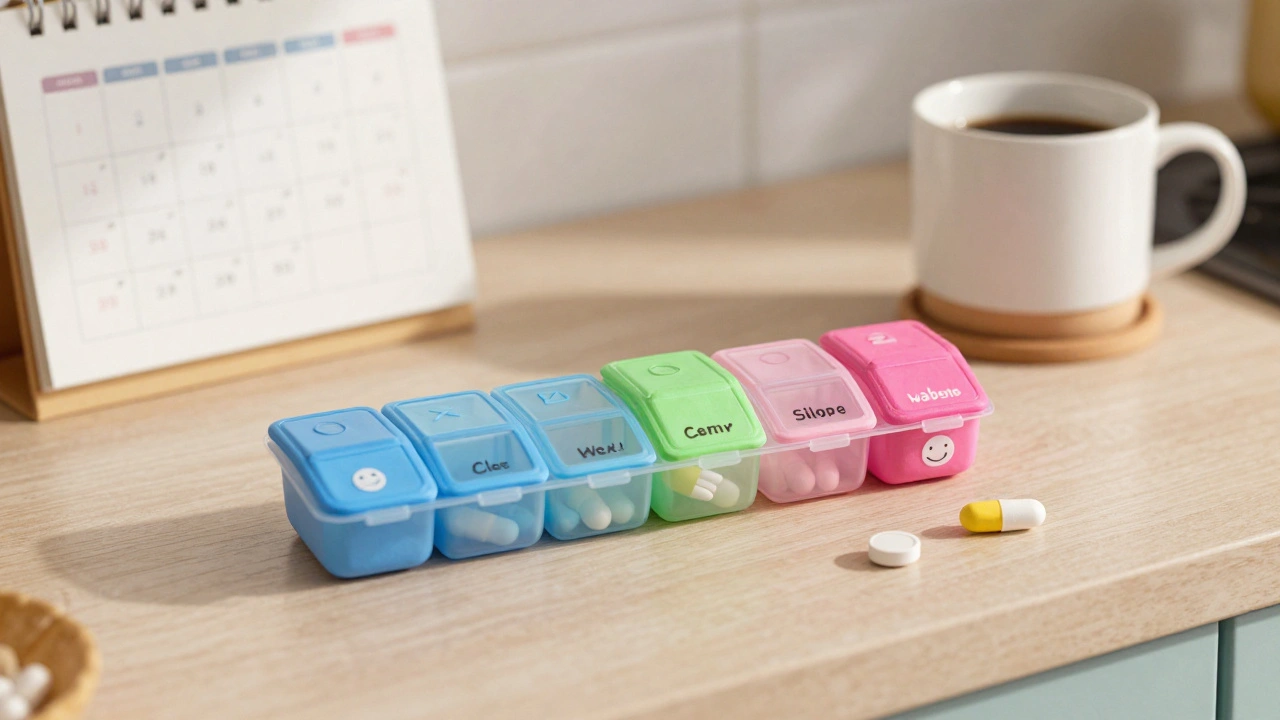
Pill organizers aren’t magic. But the right kind can make a huge difference. A 2021 study in the Journal of the American Geriatrics Society showed that using a weekly pill organizer reduced missed doses by 27% in older adults. Here’s how to use it right:- Choose one with clear labels for morning, afternoon, evening, and bedtime.
- Fill it every Sunday, right after you pick up your prescription.
- Put it next to your toothbrush or coffee maker-somewhere you’ll see it every day.
Set Smart Reminders (Not Just Alarms)
Phones are great for reminders-but only if they’re designed well. A 2021 meta-analysis in JMIR mHealth and uHealth found that smartphone apps with customizable reminders improved adherence by 28.7%. Don’t just set a generic alarm. Make it meaningful:- Use a sound you associate with routine-like your favorite song’s intro.
- Label the notification: “Take your statin - your heart thanks you.”
- Enable visual tracking: Some apps show a streak counter or progress bar. Seeing 14 days in a row builds momentum.
Make It Visible-And Reward Yourself
Out of sight, out of mind. But out of sight, also out of habit. Place your pill bottle or organizer where you’ll see it every day: the kitchen counter, your nightstand, your purse. Don’t hide it in a drawer. Visibility acts as a cue. And don’t underestimate rewards. Behavioral science shows that small, immediate rewards reinforce habits faster than distant, abstract benefits. Try this: After a week of taking your meds on time, treat yourself to something small but meaningful-a new book, a 20-minute walk in the park, a favorite snack. After a month, plan a bigger reward: a movie night, a massage, a weekend outing. The reward doesn’t have to be expensive. It just has to feel good.Get Your Pharmacy to Help (It’s Easier Than You Think)
Your pharmacist isn’t just there to hand out pills. They’re a key part of your support team. Enroll in auto-refill programs. A 2022 study in Medical Care found that patients who used auto-refill improved medication continuity by 33.4%. No more running out. No more last-minute pharmacy runs. Ask your pharmacist to:- Send you refill reminders via text or email.
- Package your meds in daily blister packs if you take multiple pills.
- Review your med list every 3 months to see if anything can be simplified.
Simplify Your Regimen (If You Can)
The more pills you take, the harder it is to remember. A 2011 meta-analysis of over 21,000 patients showed that switching from multiple pills to a single combination pill increased adherence by 26%. Talk to your doctor about:- Combining medications into one pill (e.g., blood pressure meds in a single tablet).
- Reducing dosing frequency-from three times a day to once.
- Switching to long-acting injectables (LAI), especially if you have a chronic mental health condition.
Track Your Progress-But Don’t Obsess
Self-monitoring works. A 2005 study by Cochran found that bipolar patients who kept a daily medication chart improved adherence by 19.3%. You don’t need a fancy app. Just use a calendar. Mark an X every day you take your meds. After a week, you’ll see a chain of X’s. Your brain loves continuity. You won’t want to break the streak. But don’t beat yourself up if you miss one day. Habit formation isn’t about perfection. It’s about getting back on track quickly. One missed dose doesn’t ruin progress. Two in a row? That’s when you need to pause and adjust your system.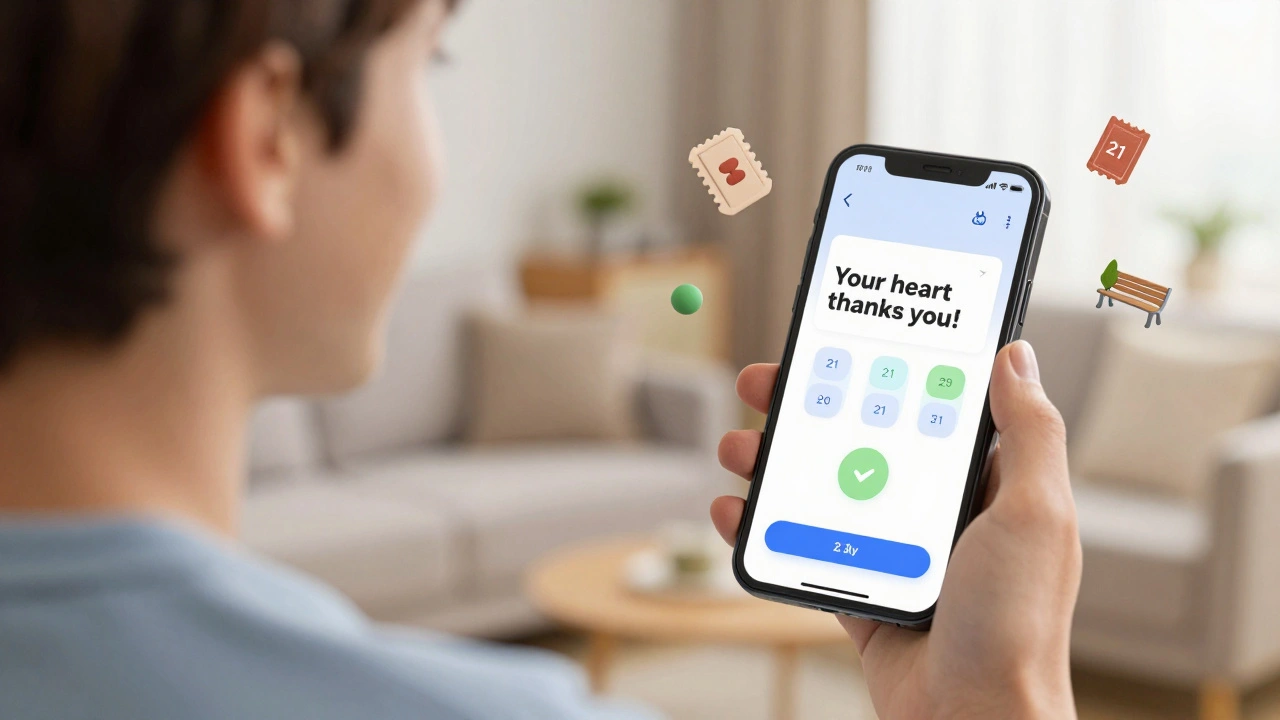
When You’re Struggling: Ask Yourself These Questions
Sometimes, the problem isn’t forgetfulness-it’s feelings. Maybe you hate how the meds make you feel. Maybe you’re scared of side effects. Maybe you think you don’t need them anymore. Ask yourself:- What’s the real reason I’m skipping my meds?
- What would happen if I stopped taking them for a month?
- Who would I be letting down if I stopped? (Not just yourself-family, doctors, your future self.)
Special Cases: What Works for Different People
Not everyone needs the same approach.- For older adults or those with memory issues: Pair meds with meals, use visual cues like colored stickers, and involve a family member to check in.
- For young adults with mental health conditions: Use apps with peer support features. Join online groups where people share their adherence journeys.
- For low-income patients: Ask about patient assistance programs. Some drug manufacturers offer free or discounted meds. A 2022 study showed financial incentives improved persistence by 34.2%.
- For parents managing a child’s meds: Turn it into a routine with a chart and stickers. Let your child pick the reward.
What Doesn’t Work (And Why)
Not all “adherence tools” are created equal.- Pill boxes alone: Just having one doesn’t help if you don’t use it consistently. Only 8.4% improvement in adherence.
- Generic alarms: “Take meds” as a notification? Too vague. You’ll ignore it.
- Shaming or guilt trips: “You know this is important!” doesn’t change behavior. It just makes people feel bad.
- Waiting until you feel sick: Chronic meds work best when taken daily-even when you feel fine.
Start Small. Build One Habit at a Time
Don’t try to fix everything at once. Pick one strategy and stick with it for two weeks. Maybe it’s tying your pill to brushing your teeth. Maybe it’s setting a personalized reminder. Maybe it’s signing up for auto-refill. Once that feels automatic, add the next one. This isn’t about becoming perfect. It’s about becoming consistent. And consistency-built through small, smart behavioral tricks-is what keeps you healthy, alive, and in control.What’s the fastest way to build a medication habit?
The fastest way is to link your medication to an existing daily habit, like brushing your teeth or drinking coffee. This technique, called habit stacking, turns medication-taking into an automatic behavior. Studies show it improves adherence by 15.8% within weeks.
Do pill organizers really help?
Yes-but only if used correctly. A weekly pill organizer with clear labels reduces missed doses by 27% in older adults. The key is filling it regularly and keeping it visible. Just owning one won’t help if it’s tucked away in a drawer.
Can smartphone apps really improve medication adherence?
Absolutely. Apps with customizable reminders, visual progress tracking, and refill alerts improve adherence by 28.7%. The most effective ones let you personalize the message and reward yourself for streaks. Generic alarms don’t work nearly as well.
What if I can’t afford my meds?
Cost is one of the biggest reasons people skip doses. Talk to your pharmacist about patient assistance programs, generic alternatives, or manufacturer coupons. A 2022 study found financial incentives improved medication persistence by 34.2%. No habit trick works if you can’t get the pills.
Is it okay to stop taking meds if I feel fine?
No. Chronic medications work best when taken daily-even when you feel fine. Stopping can lead to serious relapses. If you think you don’t need them anymore, talk to your doctor. Don’t make the decision on your own.
How long does it take to form a medication habit?
It varies, but most people start seeing automatic behavior after 2-4 weeks of consistent practice. The goal isn’t perfection-it’s consistency. Missing one day doesn’t ruin progress. Missing two in a row? That’s your cue to adjust your system.


