
It’s common for parents to panic when their child develops a fever after a vaccine. You want to help them feel better-fast. But giving fever reducers too soon might actually be doing more harm than good. The truth? Timing matters. And it’s not just about comfort-it’s about how well your child’s body learns to fight off diseases in the future.
Why Fever After Vaccines Isn’t Always Bad
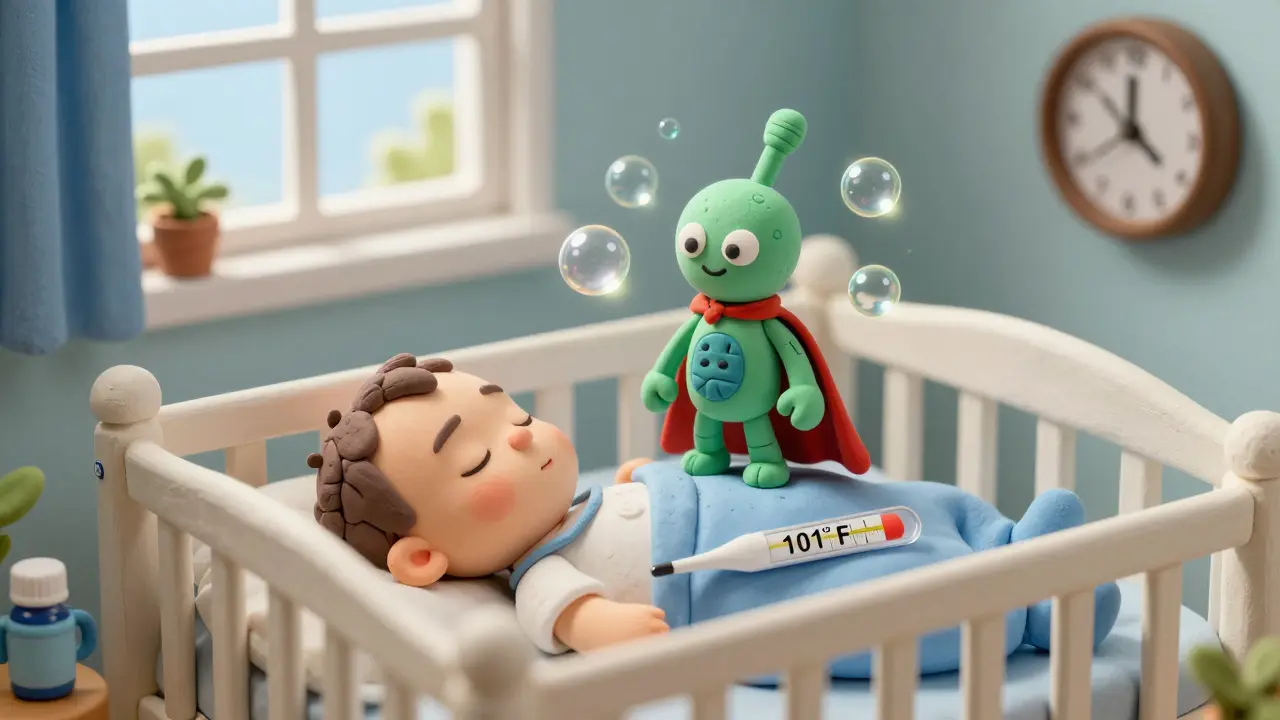
Fever isn’t a sign that something went wrong. It’s proof your child’s immune system is doing exactly what it’s supposed to do. After a vaccine, the body recognizes the harmless pieces of virus or bacteria and starts building defenses. That process can raise body temperature. It’s normal. And it’s a good sign. According to Seattle Children’s Hospital, most fevers after vaccines start within 12 hours and last just 1 to 2 days. Temperatures between 100°F and 102°F (37.8°C to 39°C) are common and usually don’t need medicine. Even higher fevers-up to 104°F (40°C)-aren’t dangerous in healthy kids. The body is working. Let it.The Problem with Giving Medicine Too Early
In the early 2000s, many doctors recommended giving acetaminophen (Tylenol) right after vaccines to prevent fever. It made sense-why let your child suffer? But research changed everything. A landmark 2009 study in The Lancet found that children who got fever reducers before or right after vaccination had lower antibody responses. That means their bodies didn’t build as strong a defense against the diseases the vaccines are meant to protect against. Follow-up studies confirmed this: prophylactic use-giving medicine before or within hours of vaccination-reduced immune response across multiple vaccines, including DTaP, pneumococcal, and meningococcal. The Children’s Hospital of Philadelphia says it plainly: “Children who got fever-reducing medication before vaccination had lower antibody responses compared with those who didn’t.” This isn’t a small difference. It’s enough to matter.What Does ‘Too Early’ Really Mean?
The key number is 4 hours. Multiple studies, including one published in PMC in 2018, show that giving acetaminophen or ibuprofen after 4 hours post-vaccine doesn’t interfere with immunity. That’s the window. Wait at least 4 hours. Then, if your child is uncomfortable, fussy, or has a fever over 102°F (39°C), it’s safe to give medicine. One Polish study compared two groups: one got medicine right after the shot and again at 6 and 12 hours. The other waited until 6-8 hours after the shot, only if fever appeared. The group that waited had no drop in antibody levels. The group that got medicine early did. So if your child gets vaccinated at 9 a.m., hold off on fever reducers until at least 1 p.m. If they’re happy, playing, drinking fluids, and not overly fussy-don’t give anything. Let the immune system do its job.When It’s Okay-and Even Recommended-to Give Medicine
You’re not ignoring your child’s discomfort. You’re just being smarter about it. Give fever reducers if:- Temperature is above 102°F (39°C)
- Your child is irritable, crying nonstop, or can’t sleep
- They’re refusing fluids or seem unusually lethargic
The One Big Exception: MenB Vaccine
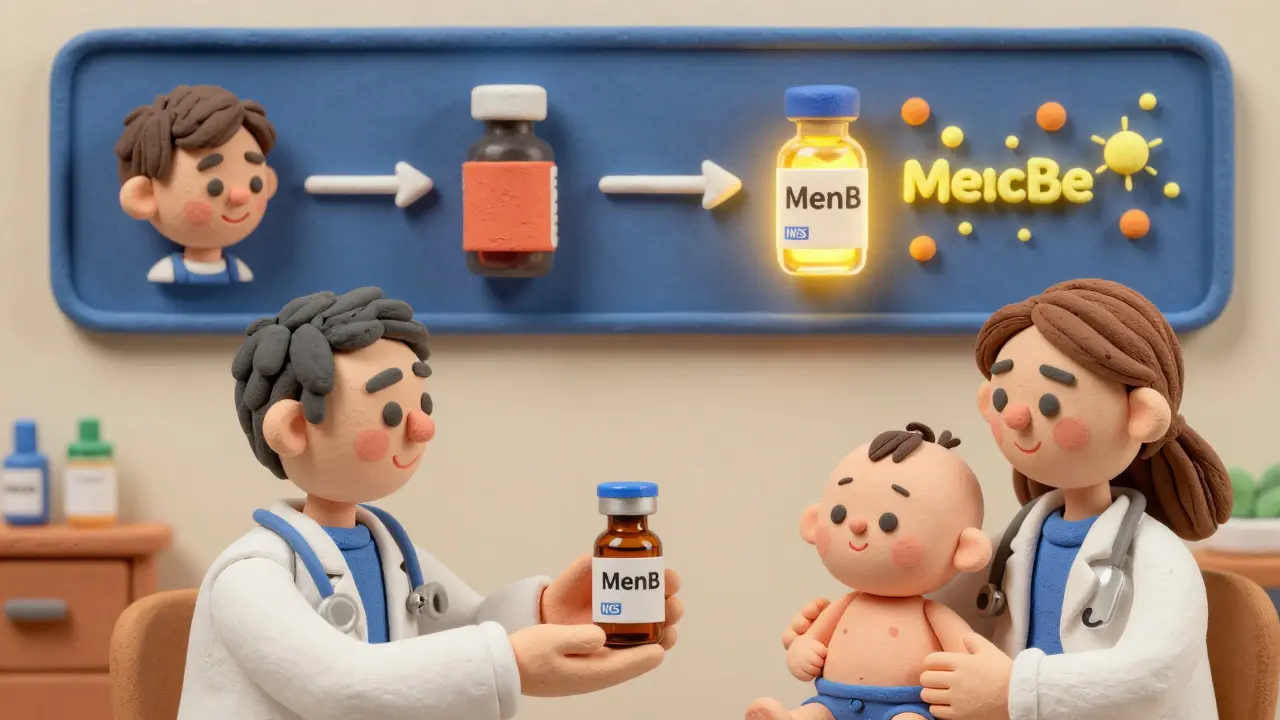
The UK’s NHS makes a clear, specific exception: give liquid paracetamol after the MenB vaccine at 8 weeks and 16 weeks. Why? Because the MenB vaccine has a much higher chance of causing high fevers-up to 50% of babies develop temperatures above 102°F. That’s why the NHS recommends three doses of paracetamol: one right after the shot, then again at 6 hours and 12 hours later. This isn’t about reducing immune response-it’s about preventing febrile seizures, which are rare but more likely with this vaccine. This is the only vaccine where prophylactic fever reducers are officially recommended. For all others, wait 4 hours.Medication Dosing: What to Use and How Much
Only use acetaminophen (Tylenol) or ibuprofen (Advil, Motrin). Never give aspirin to anyone under 20-it’s linked to Reye syndrome, a rare but serious illness.- Acetaminophen: Every 4-6 hours, no more than 4 doses in 24 hours.
- Ibuprofen: Every 6-8 hours, no more than 4 doses in 24 hours.
- Infants 6-11 months (18-23 lbs / 8-10 kg): 1.25 mL acetaminophen or 2.5 mL ibuprofen
What Not to Do
- Don’t give medicine before the vaccine. Even if your child had a fever after the last shot, don’t preempt it. Each vaccine is different.
- Don’t give medicine just because you’re worried. Fever is not an emergency. Watch for signs of real distress.
- Don’t mix or alternate acetaminophen and ibuprofen. There’s no proven benefit, and it increases the risk of dosing errors.
- Don’t overdress your child. Keep them lightly clothed. Over-bundling traps heat and makes fever worse.
Non-Medication Ways to Help
Medicine isn’t the only tool. Sometimes, simple care is all you need:- Offer fluids often-water, breast milk, formula, or electrolyte solution.
- Keep the room cool and quiet.
- Use a lukewarm sponge bath if your child is very hot and uncomfortable. Never use cold water or alcohol.
- Let them rest. Don’t force play or activity.
When to Call the Doctor
Most post-vaccine fevers are harmless. But call your pediatrician if:- Your baby is under 12 weeks old and has a fever of 100.4°F (38°C) or higher
- Fever lasts more than 48 hours
- Your child is having trouble breathing, is unusually limp, or won’t wake up
- They have a rash that doesn’t fade when pressed
- They’re refusing fluids for more than 8 hours
The Bigger Picture
Yes, vaccines can cause fever. Yes, it’s scary. But the diseases they prevent-measles, whooping cough, meningitis-are far worse. Even when antibody levels drop slightly after early fever reducer use, they still stay above the protective threshold in most cases. That means your child is still protected. But why risk it? Waiting 4 hours is simple. It’s free. And it gives your child’s immune system the best chance to build strong, lasting defenses. This isn’t about being strict. It’s about being smart. Let the fever do its job. Step in only when needed. Your child’s body is stronger than you think.Can I give my baby fever medicine before their vaccines?
No. Giving fever reducers like acetaminophen or ibuprofen before vaccination can reduce how well the vaccine works. Studies show lower antibody responses when medicine is given before or within the first few hours after the shot. Wait at least 4 hours after vaccination before giving any fever reducer.
Is it safe to give Tylenol after the vaccine?
Yes, but only if your child is uncomfortable or has a fever over 102°F (39°C). Wait at least 4 hours after the vaccine before giving acetaminophen. Follow weight-based dosing instructions carefully. Never give it to babies under 12 weeks without checking with your doctor.
What about the MenB vaccine? Do I give medicine then?
Yes. In the UK, the NHS recommends giving liquid paracetamol after the MenB vaccine at 8 weeks and 16 weeks. This is because MenB causes high fevers in up to half of babies. Three doses-right after the shot, then at 6 and 12 hours-are advised to reduce the risk of febrile seizures. This is the only vaccine where this is officially recommended.
Can I give ibuprofen instead of Tylenol after the vaccine?
Yes, ibuprofen (Advil, Motrin) is safe after 4 hours if your child is over 6 months old. It works similarly to acetaminophen for fever and pain. Do not give ibuprofen to babies under 6 months unless your doctor says it’s okay. Stick to one medication at a time-don’t alternate unless directed by a professional.
My child had a fever after the last vaccine. Should I give medicine before this one?
No. Each vaccine is different. Just because your child had a fever after the last shot doesn’t mean they will after this one. Giving medicine before the vaccine can reduce its effectiveness. Wait and see how your child responds after this shot. If they get a fever over 102°F, give medicine after 4 hours.
Is a low-grade fever (100-102°F) dangerous after a vaccine?
No. A fever between 100°F and 102°F is common and normal after vaccines. It means the immune system is working. You don’t need to give medicine for this range. Focus on keeping your child hydrated and comfortable. Medication is only needed if they’re very fussy, can’t sleep, or have a fever above 102°F.


