
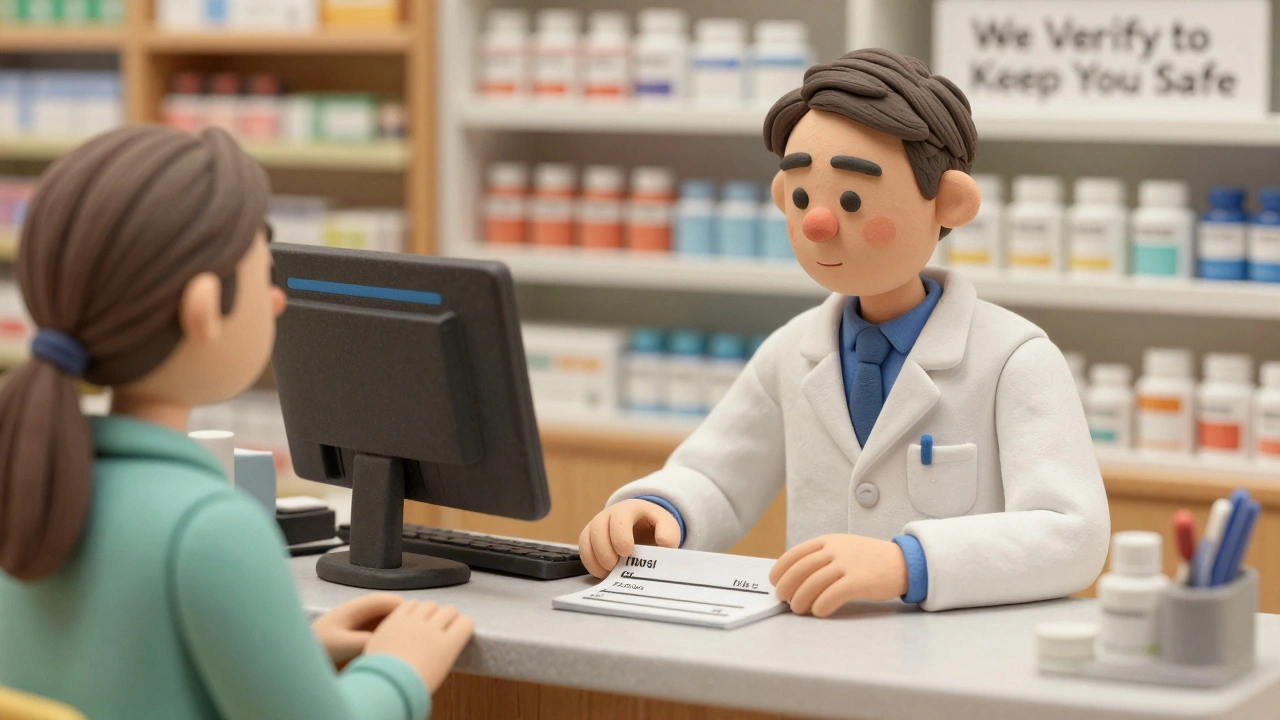
Every year, thousands of people walk into a pharmacy to pick up their medicine-only to walk out with someone else’s prescription. It sounds impossible, but it happens more often than you think. A wrong-patient error occurs when a pharmacist or technician hands a medication to the wrong person. The patient gets the wrong drug. The right patient goes home empty-handed. And in the worst cases, someone ends up in the emergency room-or worse-because of a simple mix-up.
Why Wrong-Patient Errors Are So Dangerous
These aren’t minor mistakes. The Institute for Safe Medication Practices calls wrong-patient errors one of the most dangerous types of medication errors. Why? Because the harm isn’t just about taking the wrong pill. It’s about taking the right pill for the wrong person. Someone with a peanut allergy gets penicillin. An elderly patient on blood thinners gets a new antidepressant that causes dangerous interactions. A diabetic misses their insulin because it was given to someone else. The consequences can be fatal.The Joint Commission has tracked these errors since 2003. They’re still among the top causes of serious patient harm reported to them. In the U.S. alone, medication errors send about 1.3 million people to the emergency room each year-and wrong-patient mistakes make up a significant portion of that number.
The Two-Step Verification System That Works
The simplest, most proven way to stop these errors? Verify two patient identifiers before handing over any prescription.That means asking for the patient’s full name and date of birth every single time. Not just once. Not when it’s busy. Not if the person looks familiar. Every time.
Then, compare what they say to what’s on the prescription label and in the pharmacy’s computer system. If the name is John Smith and the date of birth is 03/15/1958, make sure both match exactly. No shortcuts. No assumptions.
This method isn’t new. CVS, Walgreens, and Walmart have required it since 2015-2018. The National Association of Boards of Pharmacy made it mandatory in their Model State Pharmacy Act in 2024. And it works. A 2022 analysis of 15,000 pharmacies found this simple step cut wrong-patient errors by 45%.
But here’s the catch: 45% isn’t enough. People still slip up. Especially during rush hour. That’s why the best pharmacies don’t stop at two identifiers.
Barcode Scanning: The Game Changer
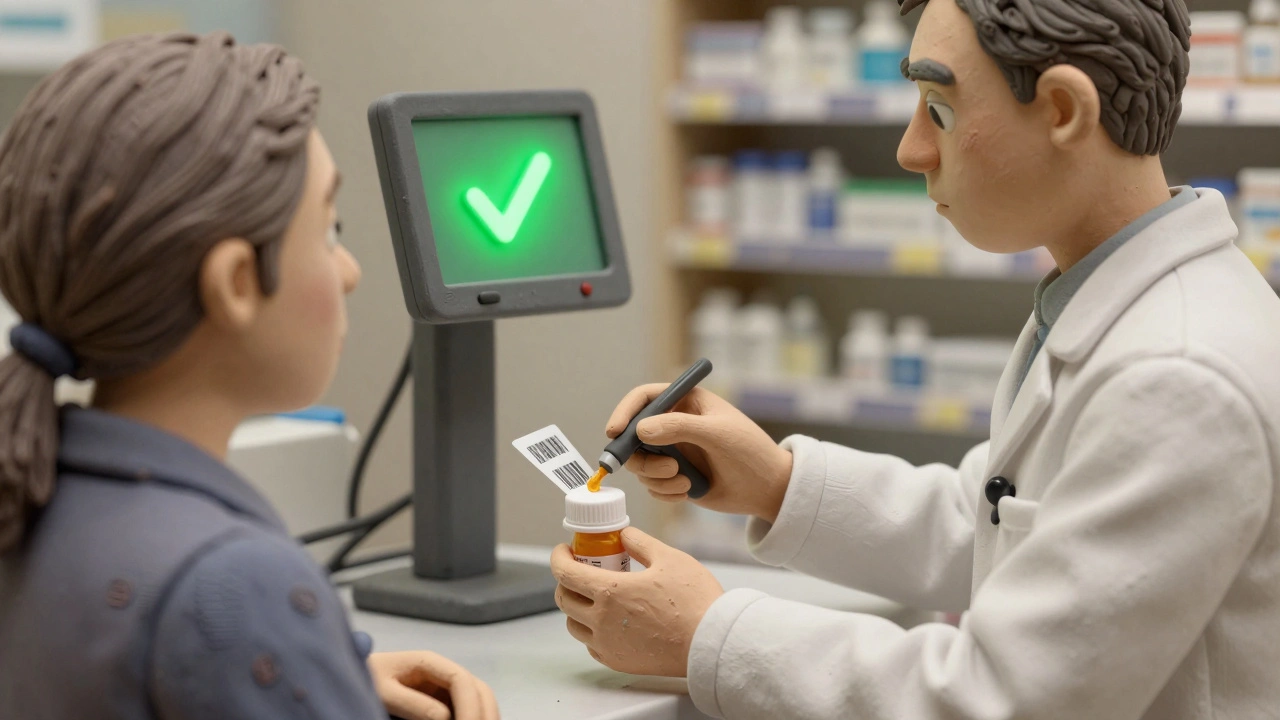
If you want to cut wrong-patient errors by more than half, add barcode scanning.Here’s how it works: Patients get a small card or sticker with a barcode that links to their pharmacy profile. When they arrive to pick up a prescription, the technician scans that barcode. The system checks if the person picking up matches the person the prescription was written for. If it doesn’t, the system won’t let the transaction complete.
Walgreens rolled this out across 9,000 locations in 2021. Within 18 months, wrong-patient errors dropped by 63%. That’s not a coincidence. It’s a system working as designed.
And it’s not just about scanning the patient. Some pharmacies now scan the prescription bottle too. The system confirms: Patient A is picking up Medicine X. If the bottle says Medicine Y, it flags the mismatch. Two scans. One safety net.
Yes, it costs money-$15,000 to $50,000 per pharmacy for hardware and software. But consider the cost of getting it wrong: lawsuits, lost licenses, reputational damage, and worst of all, a patient dying because you didn’t double-check.
RFID and Biometrics: The Next Frontier
Some pharmacies are already testing even more advanced tech. RFID wristbands-used mostly in hospitals-are now being tried in outpatient settings. A 2023 study showed a 78% drop in errors when patients wore wristbands with embedded chips that linked to their records.And in early 2025, Walgreens started a pilot in 500 stores using fingerprint verification. The system matches a patient’s fingerprint to their profile before dispensing. Early results? 92% accuracy. But privacy concerns are slowing the rollout. People don’t like handing over biometric data to pharmacies.
Still, the direction is clear: the future of patient safety isn’t just asking questions. It’s using technology to make mistakes physically impossible.
Why Counseling Is Your Last Line of Defense
Even with all the tech, nothing replaces a human conversation.When you hand a patient their medication, ask: “Do you know what this is for?” “Have you taken this before?” “Are you allergic to anything?”
Pharmacy Times found that 83% of dispensing errors are caught during this final counseling step. A patient says, “Wait, I don’t take blue pills,” and the pharmacist realizes they gave them the wrong prescription. A family member says, “That’s not what the doctor said,” and the error gets caught before the patient leaves the building.
This isn’t optional. It’s your last chance to prevent harm. And it takes less than 60 seconds.
The Culture That Stops Errors Before They Start
The most successful pharmacies don’t just have systems-they have a culture.At Kroger Health, they implemented a full safety program across 2,200 pharmacies in 2022. Since then? Zero wrong-patient errors reported for 18 straight months.
What did they do differently? They gave every staff member the power to stop the process. If a tech feels unsure-even if the system says it’s okay-they’re trained to say, “Hold on. Let me double-check.” No questions asked. No punishment.
Dr. Beth Kollisch from ECRI Institute says this is one of the three common traits of pharmacies that eliminated wrong-patient errors: “A culture where any staff member can stop the dispensing process if identification is uncertain.”
That’s the real secret. Technology helps. Procedures help. But if people are afraid to speak up, errors will slip through.
What Independent Pharmacies Can Do Without Big Budgets
Not every pharmacy can afford barcode scanners or RFID systems. Independent pharmacies, especially, struggle with costs. But that doesn’t mean they’re stuck.Start with the basics: strict two-identifier verification. Train every technician and pharmacist. Post signs reminding patients: “We ask for your name and DOB to keep you safe.”
Use free tools. Many pharmacy software systems-like PioneerRx and QS/1-now have built-in mandatory verification fields. If your system doesn’t force you to enter both name and DOB before dispensing, switch systems.
And don’t underestimate patient education. Hand out a small card that says: “We ask for your date of birth to make sure you get the right medicine. This protects you.” Most patients understand-68% of them in a 2024 ECRI survey said they appreciate it.

What Doesn’t Work
Don’t rely on memory. “I know Mrs. Johnson’s prescription.” Don’t use nicknames. “Is this for Jenny?” Don’t assume the person picking up is the patient. Many prescriptions are picked up by family members, caregivers, or delivery drivers.Don’t skip verification during busy hours. That’s when errors spike. A 2024 ASHP survey found 63% of pharmacies reported workflow pressure leading to skipped steps.
And don’t think technology alone will fix everything. A barcode scanner won’t help if the tech doesn’t scan it. A system won’t stop an error if the staff is too rushed to use it.
How to Start Fixing This Today
If you work in a pharmacy and want to reduce wrong-patient errors, here’s your action plan:- Implement mandatory dual-identifier verification (name + date of birth) for every single pickup.
- Train every staff member-front desk, technicians, pharmacists-on the protocol. Make it part of onboarding.
- Use your pharmacy software to force verification. Don’t let the system allow dispensing without both fields entered.
- Start counseling every patient: “What’s this medicine for?”
- Empower staff to pause the process if anything feels off-even if the system says it’s fine.
- Track near-misses. If someone almost got the wrong pill, log it. Learn from it.
You don’t need a big budget. You need consistency. You need discipline. You need to treat every patient like they’re your mother, your brother, your child.
What’s Next for Pharmacy Safety
The goal is simple: zero wrong-patient errors by 2030. The Pharmacy Quality Alliance has set that target. And they’re not alone.AI-powered systems using voice recognition and facial matching are being tested. By 2027, experts predict 70% of pharmacies will use some form of automated identification. But even then, the human element stays vital.
Because no algorithm can replace the moment a pharmacist looks a patient in the eye and says, “Are you sure this is right for you?”
Wrong-patient errors aren’t inevitable. They’re preventable. And they should never happen again.


