
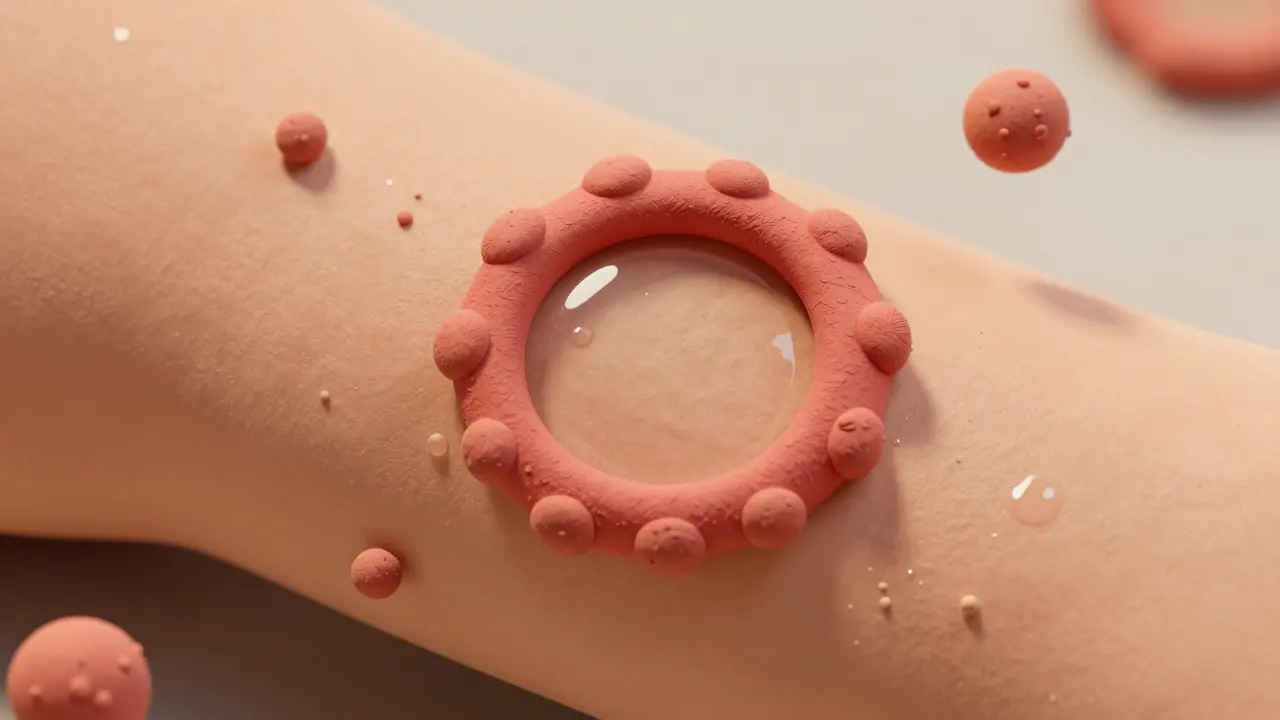
Almost one in four people worldwide has a fungal skin infection right now. It’s not rare. It’s not exotic. It’s fungal skin infection-and chances are, you or someone you know has dealt with it. Whether it’s the itchy red ring on your arm, the raw patch between your toes, or the stubborn diaper rash that won’t quit, these infections are everywhere. And they’re not all the same.
What’s Actually Growing on Your Skin?
Not all fungal skin infections are created equal. Two big players dominate: Candida and ringworm (also called tinea). They look different, act differently, and need different treatments.Ringworm isn’t caused by a worm. That’s a myth from the 1800s. It’s actually a group of fungi called dermatophytes-mostly Trichophyton species. These fungi eat keratin, the protein in your skin, hair, and nails. That’s why they hang out where you sweat, where skin rubs together, or where your shoes trap moisture. You’ll see it as a circular, red, scaly patch with a raised edge and a clearer center. It’s classic. It’s unmistakable. And it’s contagious.
Then there’s Candida. This isn’t a mold. It’s yeast. Normally, it lives harmlessly in your gut and on your skin. But when conditions get warm and wet-like under your breasts, in your groin, or under a diaper-it multiplies fast. Candida infections don’t form rings. They form beefy red, moist, sometimes pimple-covered patches. Think diaper rash that doesn’t improve with zinc oxide. Think a red, burning patch under your armpit that feels like it’s been rubbed raw. That’s Candida.
Where Do These Infections Hide?
Ringworm doesn’t pick a spot randomly. It picks based on where keratin is easy to reach.- Tinea pedis (athlete’s foot): Between your toes, especially the fourth and fifth. Common in gym-goers, swimmers, soldiers.
- Tinea cruris (jock itch): Inner thighs, groin, buttocks. More common in men, but anyone can get it.
- Tinea corporis (body ringworm): Arms, legs, face. Often from pets-cats and dogs carry it.
- Tinea capitis (scalp ringworm): Mostly in kids under 12. Can cause bald patches.
- Tinea unguium (nail fungus): Thick, yellow, crumbly nails. Takes months to clear.
Candida, on the other hand, loves skin folds.
- Candida intertrigo: Skin folds-armpits, under breasts, belly folds, groin.
- Candida diaper rash: Bright red with tiny red spots around the edges. Common in babies 9-12 months old.
- Vulvovaginal candidiasis: Itching, burning, thick white discharge. Affects up to 75% of women at least once.
How Do You Know It’s Fungal-and Not Eczema or Psoriasis?
This is where things get messy. Primary care doctors miss fungal infections about half the time. Why? Because they look like eczema, psoriasis, or even bacterial infections.Here’s how to tell:
- Ringworm: Clear center, raised red border, scales at the edge. Gets worse with heat or sweat. Doesn’t respond to steroid creams.
- Candida: No scaling. Moist, shiny, red with small satellite pustules. Often itches or burns. Doesn’t improve with moisturizers.
- Eczema: Dry, flaky, usually symmetrical. Itches but doesn’t have raised borders or pustules.
- Psoriasis: Thick, silvery scales, often on elbows and knees. Doesn’t spread outward like a ring.
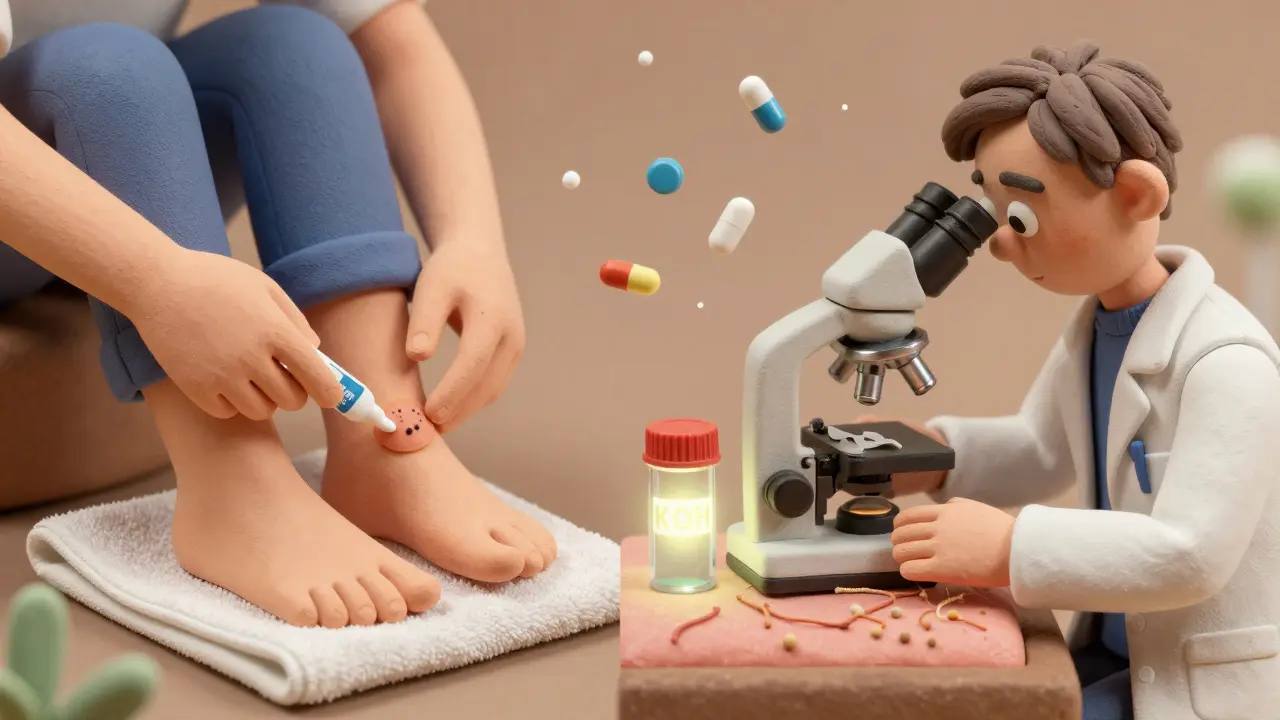
The gold standard for diagnosis? A KOH test. A doctor scrapes a bit of skin, puts it under a microscope after treating it with potassium hydroxide, and looks for fungal threads. It’s quick, cheap, and works in 70-80% of cases. If it’s negative but the suspicion is high, a culture might be sent-but it takes 2-4 weeks for results.

What Treatments Actually Work?
You can’t treat ringworm and Candida the same way. One size doesn’t fit all.For ringworm (dermatophytes):
- Topical antifungals: Terbinafine (Lamisil) or clotrimazole (Lotrimin). Apply twice daily for 1-2 weeks (terbinafine) or 2-4 weeks (clotrimazole). Cure rates: 70-90% for body and groin infections.
- Oral antifungals: Needed for scalp, nails, or stubborn cases. Terbinafine (250mg daily for 2-6 weeks) is first-line. It’s effective-but your liver needs checking before and during treatment.
- For nails: Oral terbinafine works best. Cure rates are 70-80%, but it takes 3-6 months. Topical creams alone won’t cut it.
For Candida:
- Topical antifungals: Clotrimazole, miconazole, or nystatin cream. Apply twice daily for 1-2 weeks. Works for diaper rash, intertrigo, mild vaginal yeast.
- Oral fluconazole: One 150mg pill for vaginal yeast. Two pills for stubborn skin folds. Avoid if you’re on blood thinners or have liver disease.
- For babies: Nystatin cream or drops. Keep the area dry. Change diapers immediately after they’re wet.
Don’t use steroid creams (like hydrocortisone) alone. They make fungal infections worse. They calm the redness, but the fungus keeps growing underneath.
Why Do These Infections Keep Coming Back?
Recurrent infections aren’t just bad luck. They’re a signal.Here’s what’s behind the repeats:
- Not finishing treatment: A 2022 JAMA Dermatology study found only 45% of people used their antifungal cream for the full course. Stopping early lets the fungus survive and bounce back.
- Moisture traps: Tight clothes, sweaty shoes, not drying skin after showers-all keep fungi happy.
- Underlying conditions: Diabetes increases risk 2.5 times. Immune problems (HIV, chemotherapy) make infections severe and hard to clear.
- Antibiotics: They kill good bacteria that keep Candida in check.
- Resistant strains: Trichophyton rubrum, the most common ringworm fungus, is showing reduced sensitivity to terbinafine in 5-7% of cases in North America.
- Candida auris: This emerging superbug is resistant to multiple antifungals. It’s spreading in hospitals and can live on skin for weeks.
People with recurrent Candida infections often report fewer flare-ups when they take probiotics-especially Lactobacillus strains. One Instagram survey of 850 people found 65% saw improvement when they added probiotics to their antifungal treatment.
What’s New in the Fight Against Fungi?
The antifungal world is changing.In April 2023, the FDA approved ibrexafungerp (Brexafemme) for recurrent vaginal yeast infections. It cut recurrence by half over 48 weeks compared to placebo. That’s a big deal.
Also in 2023, the American Academy of Dermatology updated guidelines: ciclopirox is now first-line for tinea versicolor (a mild fungal rash) because it works better than old-school selenium sulfide shampoos.
And researchers are looking beyond drugs. The NIH spent $32 million in 2023 studying the skin’s fungal microbiome-how good fungi might help keep bad ones away. Early work shows some probiotics and prebiotics may prevent infections before they start.
Meanwhile, the global antifungal market hit $14.7 billion in 2022. Over-the-counter creams like Lotrimin and Lamisil make up most of it. But prescriptions are shifting. Terbinafine use is up. Fluconazole use is down-because resistance is rising.
What Should You Do If You Suspect a Fungal Infection?
Don’t guess. Don’t reach for the steroid cream. Don’t wait for it to “clear up on its own.”Here’s your action plan:
- Look closely. Is it a ring? Is it moist with tiny bumps? Is it not improving after 3 days of basic care?
- Keep it dry. Dry between toes, under breasts, after showers. Wear cotton. Avoid tight synthetic fabrics.
- Use OTC antifungals. Terbinafine for ringworm. Clotrimazole for Candida. Apply as directed-even if it looks better after 2 days.
- Don’t share towels, shoes, or clothing. Fungi spread easily.
- See a doctor if: It spreads, doesn’t improve in 2 weeks, comes back after treatment, or you have diabetes or a weak immune system.
Most fungal skin infections are easy to treat-if you treat them right. The problem isn’t the fungus. It’s the delay, the misdiagnosis, and the incomplete treatment. Get it right the first time. Your skin will thank you.
Can fungal skin infections spread to other people?
Yes, especially ringworm. It spreads through direct skin contact, shared towels, gym equipment, or pets. Candida is less contagious but can spread in moist environments like shared showers or through poor hygiene in diaper changing. Always wash hands after touching infected areas.
Are over-the-counter antifungals strong enough?
For mild cases of ringworm on the body or groin, and for Candida in skin folds or diaper rash-yes. OTC terbinafine and clotrimazole work well for most people. But for scalp, nails, or if it keeps coming back, you need a prescription. Oral antifungals are stronger and reach deeper.
Why does my fungal infection keep coming back after treatment?
Most often, it’s because you stopped treatment too soon. Fungi can survive under the skin even after symptoms fade. Other reasons: moisture buildup, not treating the source (like a pet with ringworm), or an underlying condition like diabetes. Recurrence is a sign you need to dig deeper-not just reapply cream.
Can I use home remedies like tea tree oil or vinegar?
Some people report relief with tea tree oil or apple cider vinegar, but there’s no solid evidence they cure fungal infections. They might soothe itching, but they won’t kill the fungus reliably. If you’re using them instead of proven antifungals, you risk letting the infection spread or become resistant.
Is it safe to use antifungals during pregnancy?
Topical clotrimazole and nystatin are considered safe during pregnancy for vaginal and skin Candida. Oral fluconazole is not recommended in the first trimester. Always check with your doctor before taking any medication-even over-the-counter-while pregnant.
How long does it take to clear a fungal skin infection?
Body ringworm: 1-2 weeks with terbinafine, 2-4 weeks with clotrimazole. Groin infections: similar. Nail fungus: 3-6 months. Candida skin rashes: 1-2 weeks. But symptoms improve before the fungus is fully gone-so finish the full course.


