
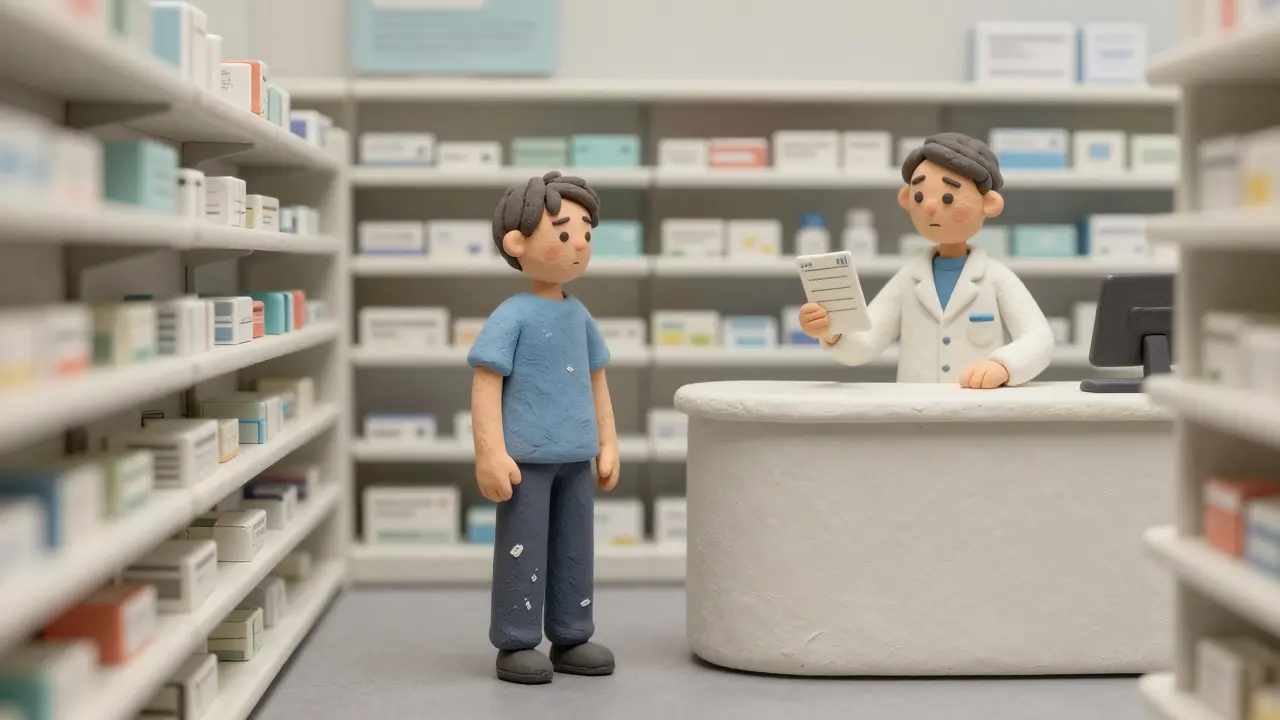
Imagine walking into a pharmacy, only to be told the life-saving medication your doctor prescribed is simply not available. This isn't a rare glitch; it is a daily reality for millions of Americans. As of late 2025, the United States faced a staggering crisis with drug shortages affecting nearly 300 different medications. The situation is dire, with almost half of these classified as 'critical' drugs needed for life-threatening conditions. While hospitals scramble to find alternatives and patients face dangerous delays, Washington D.C. has been attempting to respond. But how effective are these efforts when the government itself is paralyzed?
In the 119th Congress (2025-2026), lawmakers introduced specific bills aimed at tackling these systemic failures. Two pieces of legislation stand out: the Drug Shortage Prevention Act of 2025 (S.2665) and the Health Care Provider Shortage Minimization Act of 2025 (H.R.1160). However, these proposals arrived during one of the most turbulent periods in recent American history-the longest government shutdown in U.S. history, which began on October 1, 2025. This context drastically changes how we must view these legislative attempts.
The Core Problem: Why Shortages Happen
To understand why new laws are necessary, we have to look at what breaks down in the supply chain. It is rarely just one thing. According to data from the Association for Accessible Medicines (AAM) released in October 2025, manufacturing delays caused 63% of current drug shortages. This suggests that the issue is often logistical and operational rather than purely financial or regulatory.
When a manufacturer faces a delay-whether due to raw material scarcity, equipment failure, or quality control issues-they often do not immediately alert the Food and Drug Administration (FDA). By the time the shortage becomes public, pharmacies and hospitals are already scrambling. This lag time is deadly for patients relying on critical medications like insulin, antibiotics, or chemotherapy agents.
| Metric | Data Point | Source/Context |
|---|---|---|
| Total Drugs in Shortage | 287 | FDA Records (Sept 30, 2025) |
| Critical Shortages | 47% | Life-threatening conditions |
| Hospital Impact | 98% | AHA Survey (Q3 2025) |
| Physician Awareness | 87% | AMA Survey (Sept 2025) |
| Primary Care Desert Population | 122 Million | HRSA Data (Sept 2025) |
The impact is widespread. A survey by the American Hospital Association in October 2025 revealed that 98% of surveyed hospitals experienced at least one critical drug shortage in the third quarter of 2025 alone. Meanwhile, the American Medical Association found that while 87% of physicians reported these shortages affecting patient care, awareness of potential legislative solutions was low, with only 12% aware of the introduction of H.R.1160.
S.2665: The Drug Shortage Prevention Act
Senator Amy Klobuchar (D-MN) introduced the Drug Shortage Prevention Act of 2025 (S.2665) on August 1, 2025. This bill takes a proactive approach to the problem. Instead of waiting for a shortage to cripple the supply chain, S.2665 aims to force transparency earlier in the process.
S.2665 is a legislative proposal requiring pharmaceutical manufacturers to notify the FDA of increased demand for critical drugs before shortages occur. The core mechanism is simple but powerful: early notification. If a manufacturer sees a spike in demand or anticipates a production bottleneck, they must report it to the FDA immediately.
This aligns with existing frameworks under the Federal Food, Drug, and Cosmetic Act. The goal is to give the FDA and downstream distributors enough lead time to source alternative suppliers or adjust inventory. However, the bill’s technical details remain somewhat vague. Public records do not specify exact penalty structures for non-compliance or provide a precise legal definition of "critical drugs" beyond general categories. This ambiguity could lead to implementation challenges once the bill moves past the committee stage.
The estimated cost to implement S.2665 effectively is approximately $45 million annually for FDA oversight capacity, according to Congressional Budget Office analysts. In a normal fiscal year, this might be an easy sell. But in the context of a $1.74 trillion federal deficit and ongoing budget battles, finding this funding is no small feat.

H.R.1160: Addressing the Provider Gap
While S.2665 focuses on pills, H.R.1160 focuses on people. The Health Care Provider Shortage Minimization Act of 2025 addresses a different but equally severe crisis: the lack of healthcare workers. You can have all the drugs in the world, but if there are no doctors or nurses to prescribe and administer them, the system still fails.
H.R.1160 is a House bill aimed at reducing shortages of healthcare providers through workforce development initiatives. Unlike S.2665, very little detailed information about H.R.1160 is publicly available. Congressional records list the title but lack summaries, sponsor lists, or committee assignments. This opacity makes it difficult to assess its potential impact.
However, the need is undeniable. The Health Resources and Services Administration (HRSA) reported that 122 million Americans live in primary care Health Professional Shortage Areas. Furthermore, the American Association of Medical Colleges projects a shortage of 124,000 physicians by 2034. H.R.1160 appears designed to tackle this pipeline issue, likely through incentives for medical students, loan forgiveness programs, or expanded training facilities. Without more text, however, it remains a placeholder solution in a crowded legislative landscape.
The Shutdown Barrier: Why Progress Stalled
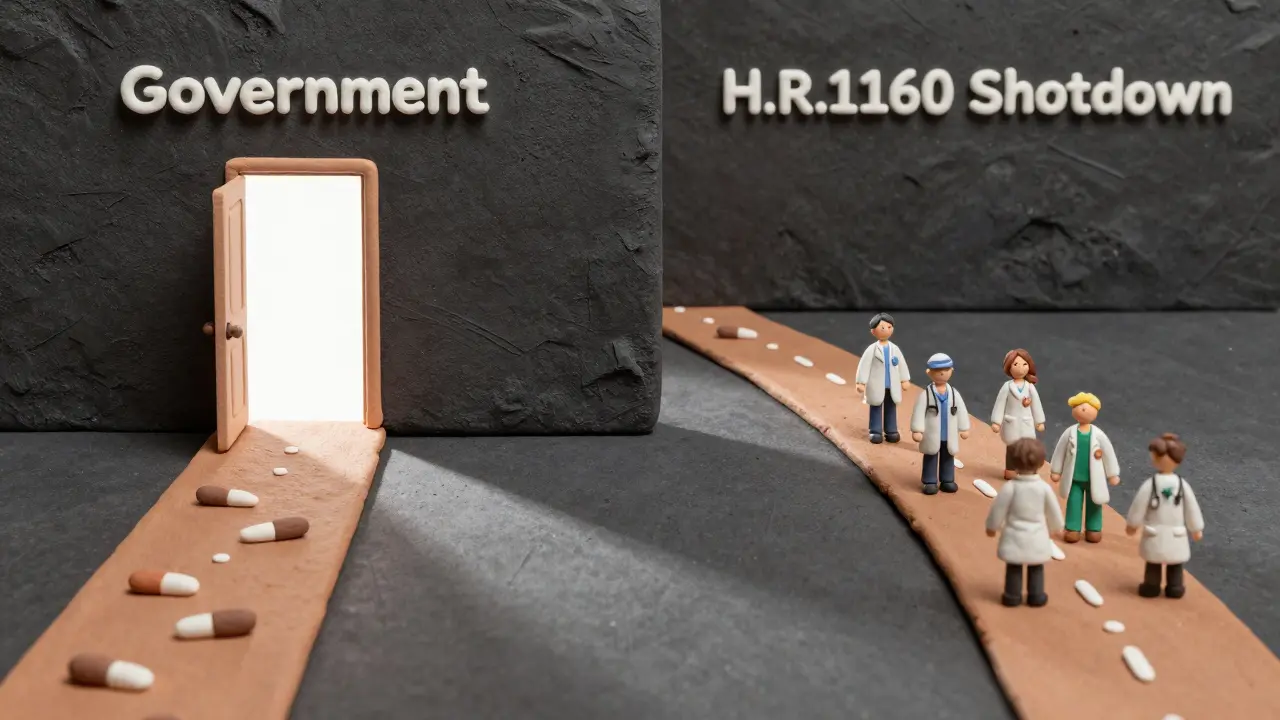
Here is where the story gets complicated. Both S.2665 and H.R.1160 were introduced, but they hit a wall: the government shutdown that began on October 1, 2025. By November 2025, this shutdown had become the longest in U.S. history, furloughing approximately 800,000 federal workers.
Why does this matter for drug shortages? Because the agencies responsible for monitoring and mitigating these crises-primarily the FDA-are part of the federal government. When the lights go off in D.C., the Drug Shortage Portal, a critical tool for tracking availability, suffers from maintenance issues and reduced functionality. Healthcare providers reported degraded performance of this platform in November 2025, making it harder to track which drugs were available where.
The shutdown effectively froze non-essential legislation. Politico reported in November 2025 that healthcare policy experts criticized the environment, noting that "the current shutdown has effectively frozen all non-essential legislation, including critical public health measures addressing drug and provider shortages." Even though S.2665 was referred to the Senate Committee on Health, Education, Labor, and Pensions, no further action was recorded by mid-November.
Moreover, the political focus shifted entirely to keeping the government open. A continuing resolution proposed by Senate Republicans on November 10, 2025, extended funding through January 30, 2026, but contained zero provisions addressing drug or provider shortages. Congressman Don Beyer highlighted this omission, pointing out that urgent public health needs were being marginalized in favor of broader fiscal negotiations.
Comparative Analysis: Notification vs. Workforce
If we compare the two approaches, S.2665 and H.R.1160 represent two sides of the same coin. One deals with the product, the other with the personnel.
| Feature | S.2665 (Drug Shortage Prevention Act) | H.R.1160 (Provider Shortage Minimization Act) |
|---|---|---|
| Focus Area | Pharmaceutical Supply Chain | Healthcare Workforce |
| Primary Mechanism | Early Demand Notification to FDA | Workforce Development (Details Undisclosed) |
| Legislative Status | Committee Stage (Senate HELP) | Introduced (House); No Committee Assignment |
| Implementation Cost | ~$45 Million/year (Est.) | Unknown |
| Immediate Impact Potential | High (if enforced) | Low (long-term structural change) |
S.2665 offers a quicker fix. By improving data flow, hospitals can react faster to shortages. H.R.1160 is a long-game strategy. Training a new generation of doctors takes years. In the immediate term, S.2665 holds more promise for alleviating the acute pain of drug shortages, provided it can survive the political gridlock.
What Comes Next?
The outlook for these bills is uncertain. With the shutdown extending potentially until January 30, 2026, both S.2665 and H.R.1160 face the risk of expiring at the end of the 119th Congress. If they do not pass by then, the issue will carry over to the 120th Congress in January 2027, leaving another two years without federal legislative remedies.
For patients and providers, this means relying on local workarounds. Hospitals are forming consortia to share resources, and pharmacists are increasingly using clinical judgment to substitute equivalent drugs. These are stopgaps, not solutions. The economic cost of the shutdown alone is projected at $1.5 billion per day by the CBO, straining the very resources needed to address healthcare gaps.
The frustration among healthcare professionals is palpable. Discussions on platforms like Reddit’s r/healthpolicy show users venting about Congress ignoring the crisis for partisan battles. Until leadership prioritizes public health infrastructure over political maneuvering, the cycle of shortages will continue.
What is the Drug Shortage Prevention Act of 2025 (S.2665)?
S.2665 is a bill introduced by Senator Amy Klobuchar that requires pharmaceutical manufacturers to notify the FDA of increased demand for critical drugs. The goal is to prevent shortages by enabling earlier intervention from regulators and suppliers.
How did the 2025 government shutdown affect drug shortage legislation?
The shutdown halted legislative progress and furloughed FDA staff, degrading the functionality of the Drug Shortage Portal. It also shifted political focus away from public health bills like S.2665 and H.R.1160 toward emergency funding negotiations.
What is H.R.1160 trying to solve?
H.R.1160, the Health Care Provider Shortage Minimization Act, aims to address the lack of healthcare workers. While details are scarce, it likely involves workforce development strategies to combat the projected shortage of 124,000 physicians by 2034.
How many drugs were in shortage as of late 2025?
As of September 30, 2025, FDA records showed 287 drugs in shortage, with 47% classified as critical medications for life-threatening conditions.
Will these bills expire if the shutdown continues?
Yes. If the government does not resolve the shutdown and advance these bills before the end of the 119th Congress, they will likely expire, requiring reintroduction in the 120th Congress in 2027.


