
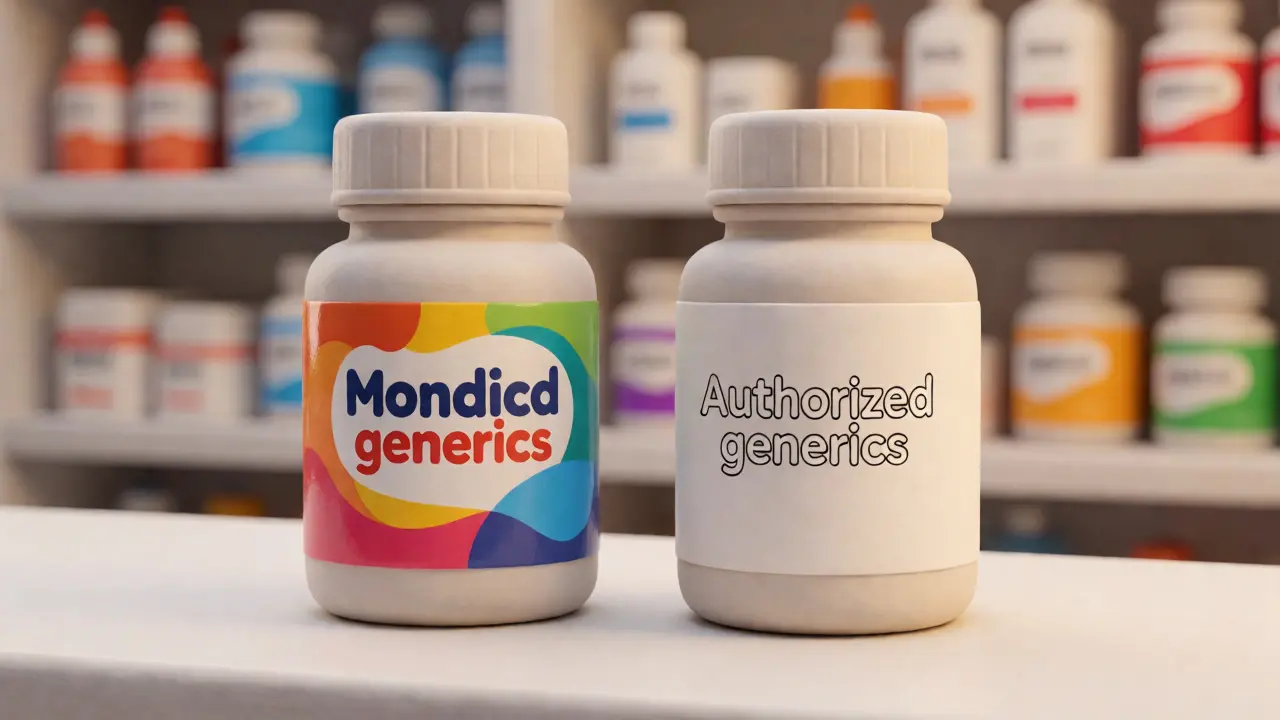
You’re standing at the pharmacy counter, holding a prescription that costs more than your weekly grocery bill. The pharmacist suggests an "authorized generic." You hesitate. Is it a knock-off? Will it work as well? Why is it cheaper if it’s made by the same company?
Here is the truth: Authorized generics are not just similar to the brand-name drug; they are chemically identical twins. They come from the same factory, use the same ingredients, and follow the same manufacturing processes. The only difference is the label on the box and the price tag. Switching to them can save you hundreds of pounds a year without compromising your health, but you need to know how to navigate the process correctly.
| Feature | Brand Name | Authorized Generic (AG) | Traditional Generic |
|---|---|---|---|
| Manufacturer | Original Brand Company | Original Brand Company or Licensee | Different Manufacturer |
| Active Ingredients | Identical | Identical | Identical |
| Inactive Ingredients | Specific Formula | Identical to Brand | May Vary |
| FDA Approval Path | New Drug Application (NDA) | Same NDA as Brand | Abbreviated New Drug Application (ANDA) |
| Average Cost Savings | $0 (Baseline) | 10-20% less than Brand | 50-80% less than Brand |
What Exactly Is an Authorized Generic?
Think of an authorized generic as the brand-name drug wearing a plain t-shirt instead of its designer jacket. Legally, it is defined by the FDA Orange Book as a product approved under the original brand’s application but sold without the brand name. This distinction matters because traditional generics have to prove they are bioequivalent through separate testing. Authorized generics skip that step entirely because they are the brand product, just unbranded.
This setup emerged from the Hatch-Waxman Act of 1984, which gave first-time generic competitors a 180-day exclusivity period. To compete during this window, brand companies started launching their own lower-priced versions. It’s a strategic move for them, but a financial win for you. According to the Federal Trade Commission, the presence of these drugs lowers retail prices by 4-8% and wholesale prices by 7-14%. That might sound small per pill, but over a year of daily medication, it adds up quickly.
Why Should You Make the Switch?
The most obvious reason is money. If you pay cash or have a high deductible, the difference between £50 for the brand and £40 for the authorized generic is immediate relief. But there is a subtler benefit: consistency. Because the active and inactive ingredients are identical, you don’t face the risk of reacting differently to fillers or dyes that sometimes change in traditional generics. For patients with allergies to specific dyes or binders, this is a massive safety advantage.
Insurance companies love them too. Most plans will automatically substitute an authorized generic when available. If you try to insist on the brand, you might end up paying a higher co-pay tier. By switching voluntarily, you often stay in the lowest cost bracket. Studies show that patients who switch see out-of-pocket savings averaging $15-$30 per prescription. Multiply that by twelve months, and you’ve paid for a nice dinner out every month just by changing the label on your bottle.
How to Verify It’s Truly an Authorized Generic
Don’t just take the pharmacist’s word for it-verify. Not all generics are authorized generics. Some are traditional generics from different factories. Here is how to check:
- Ask the Pharmacist Directly: Ask, "Is this an authorized generic from the brand manufacturer, or a third-party generic?" Pharmacists have access to databases like First Databank or Medi-Span that list this detail.
- Check the Label: Look at the National Drug Code (NDC) number. The first five digits represent the labeler code. If the labeler code matches the brand manufacturer’s code, it’s likely an authorized generic.
- Consult the FDA List: The FDA publishes a quarterly list of authorized generics. While it’s US-centric, many UK pharmacies source globally, and the principle of checking the manufacturer remains valid. In the UK, you can check the MHRA (Medicines and Healthcare products Regulatory Agency) register for marketing authorization holders.
If the box says "Manufactured by [Brand Company]" or lists a licensee known to produce for the brand, you’re good to go. If it says "Manufactured by Teva" or "Sandoz," it’s likely a traditional generic.
Navigating the Insurance Maze
Your insurance plan dictates much of this decision. Many plans have "step therapy" rules where they force you to try the generic before approving the brand. With authorized generics, this is rarely an issue because they are therapeutically equivalent. However, some specialty tiers might require prior authorization even for the AG.
Here is a practical tip: Call your insurer before your next refill. Ask specifically about the formulary status of the authorized generic versus the brand. Sometimes, the copay difference is negligible due to a flat-rate generic tier, making the switch pointless. Other times, the brand is excluded entirely, forcing the switch anyway. Knowing this beforehand prevents surprises at the counter.
Handling the Psychological Hurdle
Let’s be honest: seeing a different colored pill or a plain white box can trigger anxiety. "Did I get the right medicine?" is a common fear. Remember, the FDA requires that the dosage, strength, route of administration, and quality standards remain identical. The only things allowed to change are the appearance (color, shape, size) and the packaging.
If you struggle with visual identification, ask your pharmacist for a sample picture of the new pill. Keep it in your wallet or phone. When you open the new bottle, compare it immediately. If it looks wrong, call the pharmacy before taking it. This small step builds confidence. Most patients report no difference in efficacy or side effects once they overcome the initial visual shock. Adherence rates remain stable at around 85%, which is comparable to staying on the brand.

When NOT to Switch
While rare, there are cases where sticking with the brand is wise. If you have a history of adverse reactions to specific inactive ingredients (like lactose or gluten), verify the ingredient list. Even though authorized generics are supposed to be identical, manufacturing batches can vary slightly in trace elements. If your doctor has explicitly stated that a specific formulation is critical for your condition, consult them before switching.
Also, consider the timing. If you are starting a new medication, starting with the authorized generic is usually fine. But if you are mid-treatment and stable, any change carries a tiny risk of adjustment. If you are anxious, ask your doctor to write "Dispense as Written" on the prescription for one cycle, then switch later when you feel more prepared.
Practical Steps for a Smooth Transition
- Review Your Current Meds: Identify which drugs have patent expirations coming up. These are prime candidates for authorized generics.
- Talk to Your Doctor: Mention your interest in cost-saving options. Ask if any of your current meds have authorized generic equivalents.
- Check Pharmacy Inventory: Not all pharmacies stock authorized generics. Large chains often do, but independent pharmacies might only carry traditional generics. Call ahead.
- Monitor for Side Effects: Track how you feel for the first two weeks. Any changes should be reported, though they are unlikely.
- Update Your Records: Ensure your medical records reflect the switch, especially if you visit multiple specialists.
FAQ
Are authorized generics safer than traditional generics?
Both types must meet the same rigorous FDA or MHRA safety and quality standards. However, authorized generics are manufactured in the exact same facilities using the same processes as the brand, so they offer identical formulation assurance. Traditional generics undergo separate bioequivalence testing but may use different inactive ingredients.
Will my insurance cover an authorized generic?
In most cases, yes. Insurance plans typically categorize authorized generics under the same tier as other generics, offering lower copays than brand-name drugs. Always check your specific plan’s formulary to confirm coverage details and potential prior authorization requirements.
Can I tell the difference between an authorized generic and the brand?
Visually, yes. The packaging will lack the brand logo and color scheme, often appearing as plain white boxes with black text. The pill itself might differ in color, shape, or size, depending on the manufacturer's labeling choices, but the active ingredient remains unchanged.
Why are authorized generics cheaper if they are made by the brand company?
Brand companies reduce the price to compete with traditional generics entering the market. By lowering the price, they retain market share while still earning profit. Additionally, they save on marketing and branding costs associated with the primary brand label, passing some of those savings to consumers.
Do authorized generics have the same expiration date as the brand?
Not necessarily. Expiration dates depend on the specific batch production date. An authorized generic batch produced after the brand batch will have a later expiration date. Always check the date on the specific bottle you receive.
