
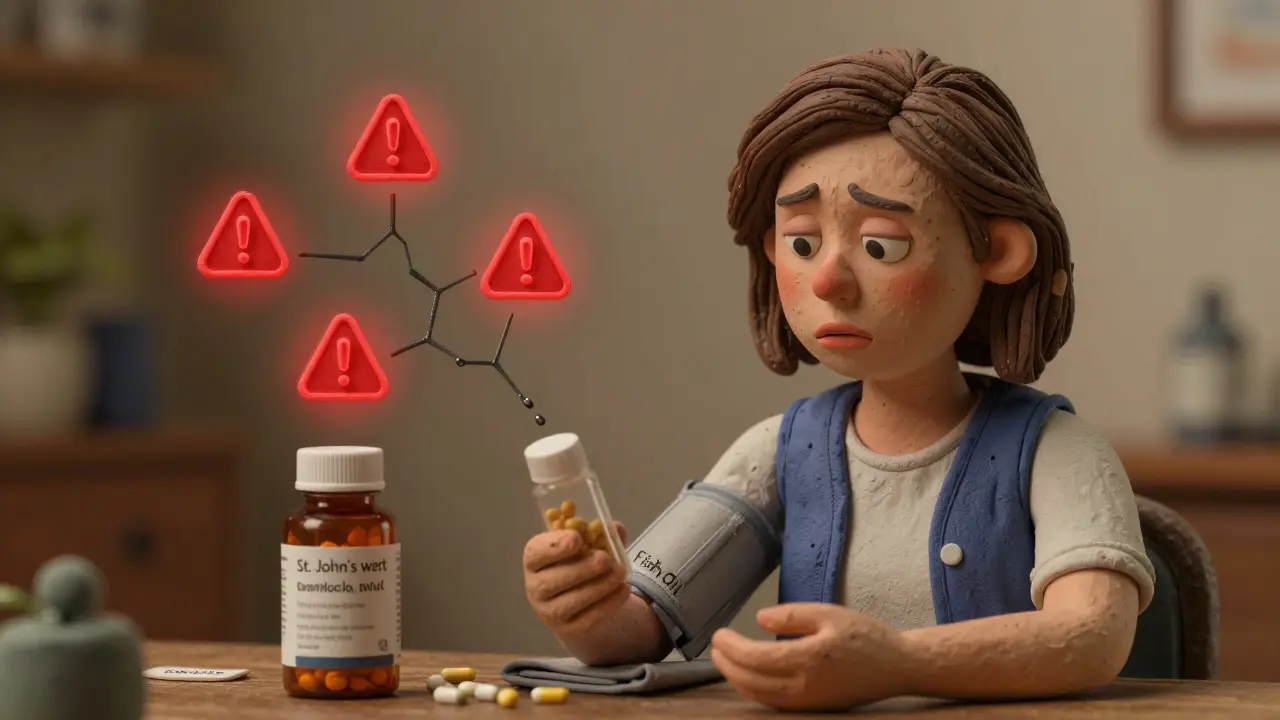
Every year, more than 23,000 people in the U.S. end up in the emergency room because their supplements clashed with their medications. And it’s not just rare cases - it’s happening to people who thought they were being careful. You take a vitamin, a herbal pill, or an omega-3 capsule because you want to feel better. But if you’re also on blood pressure meds, antidepressants, or blood thinners, that ‘natural’ supplement could be quietly undoing your treatment - or worse, putting you in danger.
Why Your Supplement Might Be Riskier Than You Think
Just because something is sold as a supplement doesn’t mean it’s safe with your prescription drugs. The FDA doesn’t test supplements for safety before they hit the shelf. That’s the law. So a bottle labeled “pure herbal extract” could contain anything - or nothing at all. Worse, many of them interact with medications in ways you can’t see or feel until it’s too late. Take St. John’s wort, for example. It’s popular for mild depression. But if you’re on birth control, it can make the pill useless. If you’re on cyclosporine after a transplant, it can drop the drug’s effectiveness by half. That’s not a rumor - it’s backed by pharmacokinetic studies from 2021. And it doesn’t just affect one drug. St. John’s wort interferes with over 57 prescription medications, including those for HIV, heart disease, and depression. The American Heart Association calls it one of the most dangerous supplements on the market. Even common supplements like vitamin E can be risky. If you’re taking warfarin (Coumadin), a daily dose of 400 IU or more can raise your INR - a measure of how long your blood takes to clot - by 15 to 20%. That means you’re at much higher risk of internal bleeding. One patient in Bristol reported a major stomach bleed after adding vitamin E to his warfarin regimen. He didn’t know the two could interact.Supplements That Are High Risk - And Which Ones Are Safer
Not all supplements are created equal when it comes to drug interactions. Some are mostly harmless. Others are ticking time bombs. High-risk supplements (avoid with most medications):- St. John’s wort - interferes with liver enzymes that break down drugs, making many meds less effective
- Ginkgo biloba - increases bleeding risk, especially with warfarin, aspirin, or Eliquis
- Garlic supplements - can thin blood, dangerous before surgery or with anticoagulants
- Goldenseal - blocks drug metabolism, can raise levels of heart meds and antidepressants
- Fish oil (high dose) - over 3,000 mg daily can increase bleeding risk with blood thinners
- Milk thistle - only 3 documented interactions in the last decade
- Black cohosh - no strong evidence of drug interactions
- Cranberry - generally safe, though some older studies warned about warfarin (recent data shows minimal risk)
- American ginseng - low interaction potential
- Valerian - may cause drowsiness with sedatives, but not dangerous in most cases
How Supplements Actually Interact With Medications
It’s not magic. It’s chemistry. Supplements can mess with your body’s ability to absorb, break down, or use your medications. Here’s how:- Enzyme interference - Many drugs are broken down by liver enzymes called CYP450. St. John’s wort turns on these enzymes, making your meds get cleared too fast. Calcium and iron supplements block absorption in your gut, so your thyroid or antibiotic won’t work.
- Additive effects - Taking garlic with aspirin? Both thin blood. Together, they can cause dangerous bleeding. Taking magnesium with a blood pressure pill? You might get too low of a reading.
- Competition for absorption - Iron, zinc, calcium, and magnesium all fight for the same spot in your intestines. Taking them together means none get absorbed well. You’re wasting money and risking nutrient gaps.

What You Should Do Right Now
You don’t need to stop all supplements. But you need to take control. Here’s what works:- Make a complete list - Write down every pill, capsule, powder, or tincture you take, including doses and how often. Don’t forget herbal teas, CBD oils, or protein powders with added vitamins.
- Bring it all to your next appointment - The “brown bag method” is simple: take your bag of meds and supplements to your doctor or pharmacist. A 2022 study found this cuts medication errors by nearly 40%. Pharmacists at Walgreens and CVS now screen for interactions during every consultation.
- Ask these three questions:
- “Could this supplement make my medication less effective?”
- “Could it make my medication stronger and cause side effects?”
- “Is there a safer alternative?”
- Check the label - Look for warning statements. If it says “May interact with blood thinners” or “Do not use with antidepressants,” take it seriously. If there’s no warning, that doesn’t mean it’s safe - just that the maker isn’t required to say anything.
- Wait before surgery - If you’re having any procedure, stop high-risk supplements like ginkgo, garlic, fish oil, and vitamin E at least 7-10 days before. Surgeons require this for a reason.
Who’s Most at Risk - And Why Nobody’s Talking About It
Adults over 50 are the most vulnerable group. Nearly 80% take both prescription drugs and supplements. But only 32% tell their doctor about the supplements. Why? Because they think “natural” means safe. A 2023 survey found 41% of supplement users believe they don’t need to mention them to their provider. And it’s not just older adults. Younger people are popping melatonin, ashwagandha, and collagen pills without realizing they might interfere with anxiety meds, thyroid drugs, or birth control. One Reddit user in Bristol shared how he ended up in the hospital after combining ginkgo with Eliquis. He’d read online that ginkgo was “good for memory.” No one warned him about the bleeding risk. Meanwhile, the supplement industry is booming - $56 billion in sales in 2023. With over 85,000 products on the market and no pre-market safety testing, you’re essentially guessing. The FDA issued 142 warning letters in 2023 to companies making illegal drug claims on supplements. That means some products are hiding active drugs - like steroids or antidepressants - inside “natural” formulas.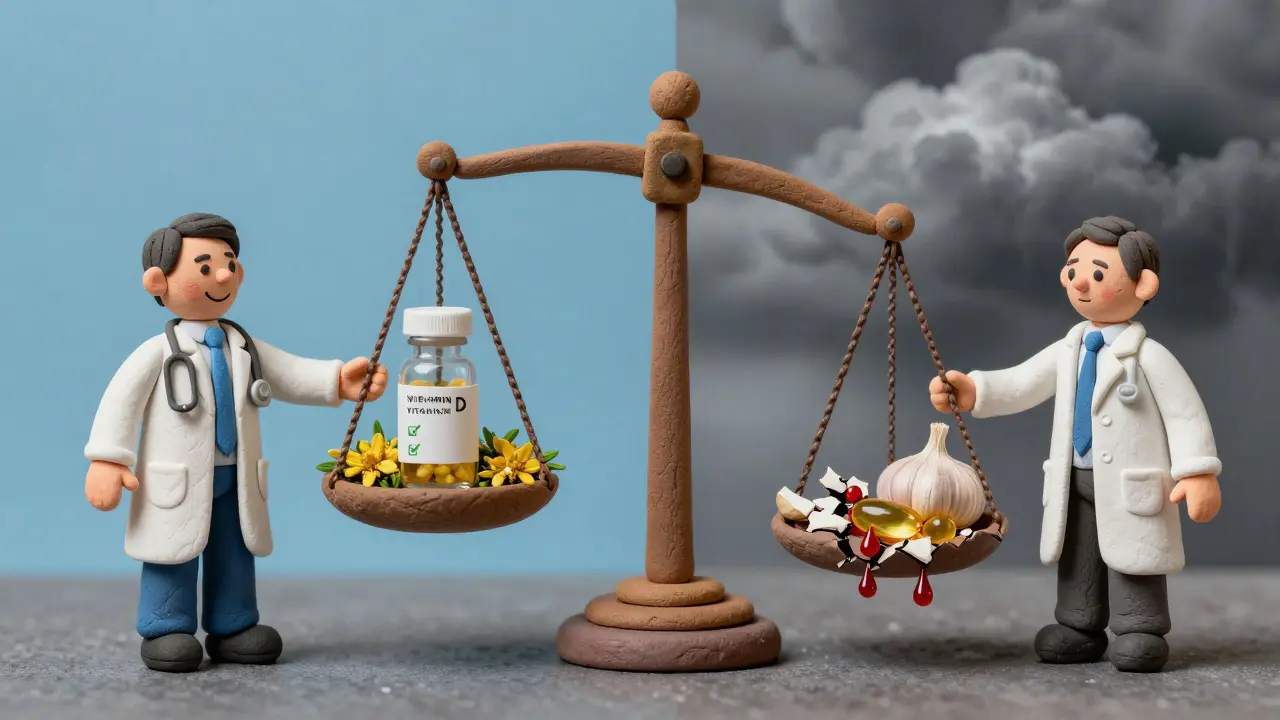
What’s Changing - And How to Stay Ahead
Good news: things are starting to change. In March 2024, the FDA announced a new mobile app - the Dietary Supplement Ingredient Database - that lets you scan a supplement barcode and instantly see interaction risks. It’s expected to launch in late 2024. Epic Systems, the main electronic health record platform, has already started adding supplement interaction alerts in 15% of U.S. hospitals. Pharmacists are now trained to ask about supplements during every medication review. And in January 2024, the National Institutes of Health released new clinical guidelines urging doctors to screen for supplement use during every visit. You don’t have to wait for the system to catch up. Be proactive. Keep your list updated. Talk to your pharmacist - they’re the most accessible expert on drug interactions. And if your doctor doesn’t ask about supplements, ask them yourself.Final Rule: If You’re Not Sure, Stop
There’s no shortcut. No app can replace a conversation with your healthcare provider. If you’re unsure whether a supplement is safe with your meds - don’t take it. Not for a day. Not for a week. Until you’ve confirmed it’s okay. The goal isn’t to scare you off supplements. It’s to help you use them wisely. Many people benefit from vitamin D, magnesium, or probiotics. But those benefits vanish - or turn dangerous - if they clash with your prescription. Your health isn’t a gamble. Don’t let a bottle on the shelf decide your outcome. Ask. Check. Confirm. Your life might depend on it.Can I take vitamin D with my blood pressure medication?
Yes, vitamin D is generally safe with most blood pressure medications. There’s no strong evidence it interferes with ACE inhibitors, beta-blockers, or calcium channel blockers. But if you’re taking a calcium-based supplement along with vitamin D, it could raise your calcium levels too high, which may affect heart rhythm. Always check with your doctor if you’re taking multiple supplements.
Is it safe to take melatonin with antidepressants?
Melatonin can increase drowsiness when taken with SSRIs or SNRIs like sertraline or venlafaxine. It doesn’t usually cause serious harm, but it can make you feel overly sleepy or dizzy. In rare cases, it may worsen symptoms of depression. If you’re on antidepressants and want to try melatonin, start with a low dose (1 mg) and talk to your doctor first.
What should I do if I’ve already been taking a supplement with my medication?
Don’t panic, but don’t ignore it either. Stop taking the supplement immediately and contact your doctor or pharmacist. They can check if you’re at risk for side effects or reduced medication effectiveness. If you’ve had symptoms like unusual bleeding, dizziness, nausea, or changes in mood or heart rate, mention them. Keep taking your medication as prescribed unless told otherwise.
Are there any supplements that are always safe?
No supplement is always safe for everyone. Even something as simple as calcium can interfere with antibiotics or thyroid meds. Milk thistle and vitamin C have very low interaction risk, but they’re not risk-free. The key isn’t finding a “safe” supplement - it’s checking each one against your specific medications. What’s safe for one person might not be for another.
Can my pharmacist check my supplements for interactions?
Yes - and they should. Since 2021, Walgreens and CVS have required pharmacists to screen for supplement-drug interactions during every prescription fill. Bring your supplements in a bag to your pharmacy visit. They’ll check them against your medications and flag any risks. This service is free and confidential. Most people don’t know it’s available - but it’s one of the best ways to stay safe.


