
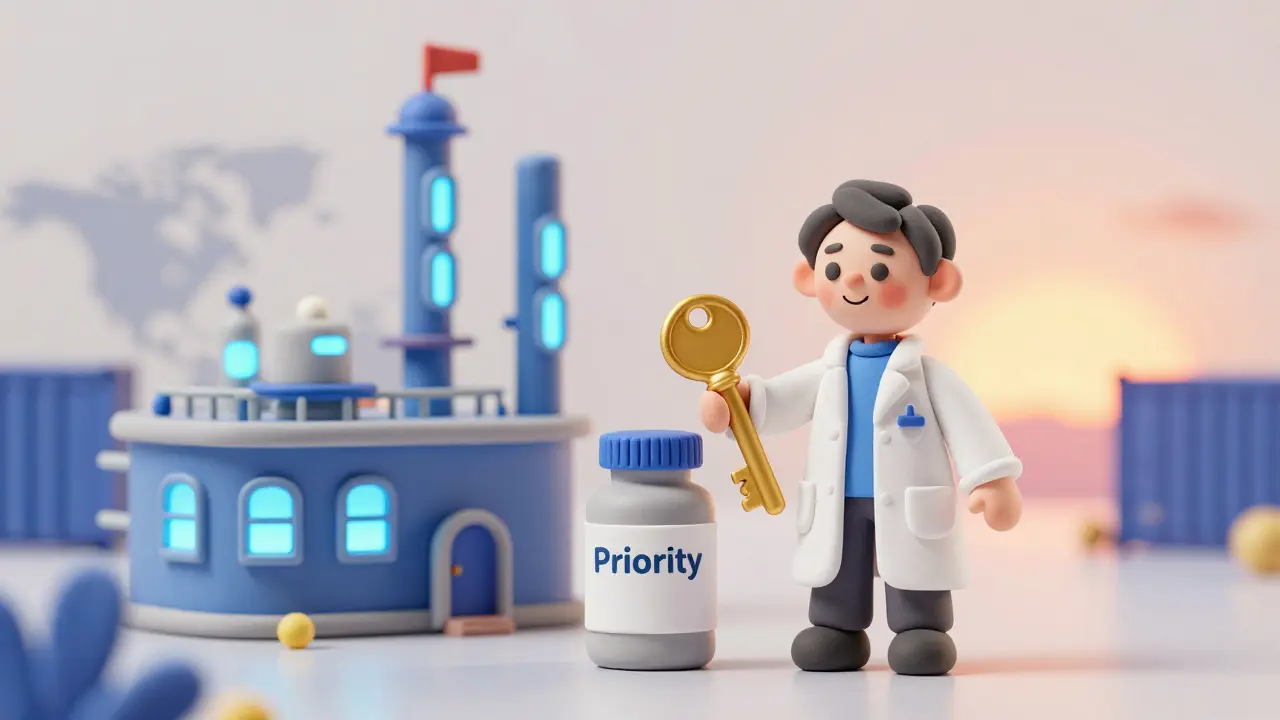
The rules for getting a generic drug approved in the United States have changed dramatically between 2023 and 2025. If you are a pharmaceutical manufacturer, a healthcare provider, or just someone who relies on affordable medication, these shifts matter. The U.S. Food and Drug Administration (FDA) has moved away from a purely global supply chain model toward one that heavily favors domestic production. This isn't just bureaucratic shuffling; it is a strategic overhaul designed to fix fragile supply lines and speed up access to critical medicines.
At the heart of this change is the new focus on where drugs are made. For years, the U.S. relied heavily on foreign manufacturing, particularly in India and China. That reliance created vulnerabilities. Now, the FDA is offering carrots-specifically faster review times-to companies that build and test their drugs right here at home. Let’s look at what exactly has changed, why it matters, and how it affects the market today.
The Big Shift: Why Domestic Manufacturing Matters
To understand the recent updates, you first need to see the problem they are solving. As of 2025, only 9% of active pharmaceutical ingredient (API) manufacturers are located in the U.S. Compare that to 22% in China and 44% in India. More than half of all pharmaceuticals distributed in the U.S. are manufactured overseas. During the pandemic, we saw how quickly those long international supply chains could break, leading to severe drug shortages.
The FDA realized that inspecting foreign facilities was not just logistically difficult but also inefficient. Foreign inspections require 47% more preparation time and cost 32% more than domestic inspections. Dr. George Tidmarsh, Director of the FDA's Center for Drug Evaluation and Research, noted that this inefficiency slows down the entire approval process. The goal now is clear: revitalize American industry while making the regulatory process smoother and safer.
What Is the ANDA Prioritization Pilot Program?
The most significant update in this period is the launch of the ANDA Prioritization Pilot Program. Announced on October 3, 2025, this program provides expedited review timelines for generic manufacturers who conduct testing and manufacturing within the United States. It operates under Manual of Policies and Procedures (MAPP) 5240.3.
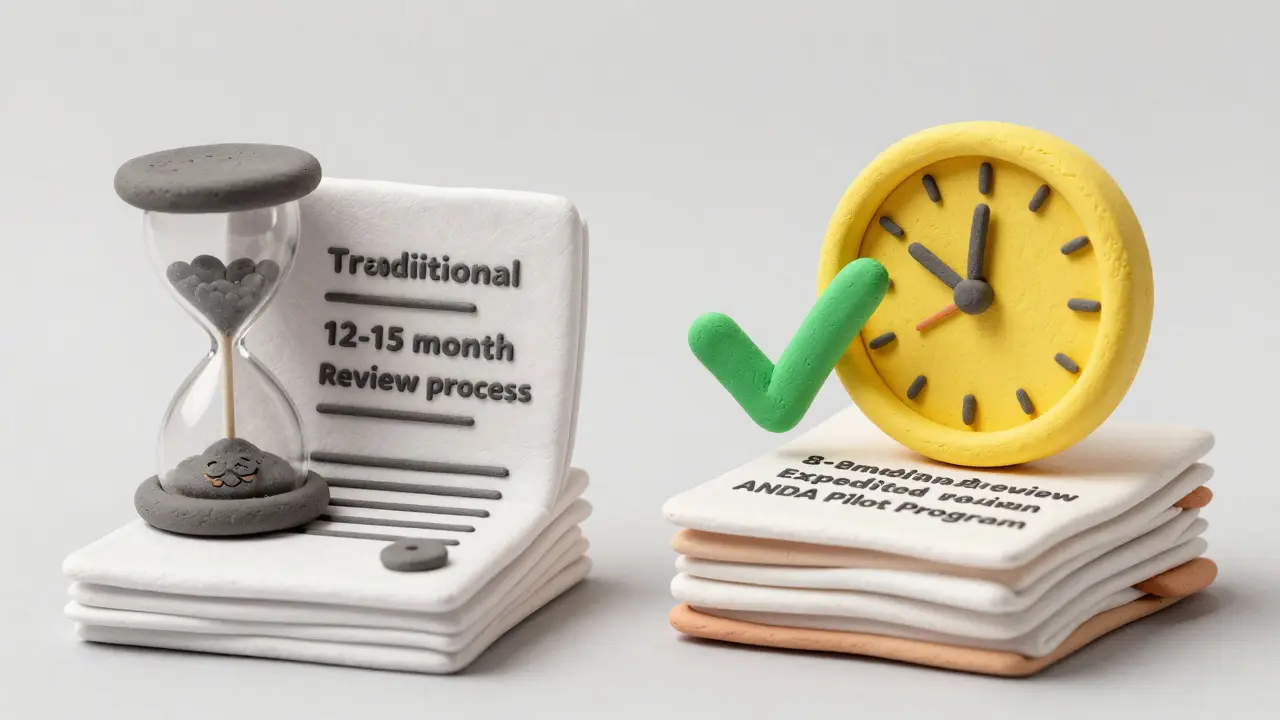
Here is how it works in practice. The program creates four distinct prioritization tiers based on how much of your process happens domestically. Tier 1 requires 100% U.S. manufacturing and testing. If you hit that mark, you get the fastest review timeline. The target is an 8-month review cycle, compared to the standard 12-15 months for traditional applications. That is a massive difference in time-to-market.
Eligibility isn’t automatic. You must submit verification of U.S. facility compliance with Current Good Manufacturing Practices (CGMP). You also need domestic bioequivalence testing conducted at FDA-registered laboratories. Crucially, you must source your API from U.S.-based facilities or facilities with validated equivalence to U.S. standards. The FDA estimates this program will reduce review times by 35-40% for qualifying applications.
Speed and Efficiency: The Numbers Behind the Change
If you are weighing whether to participate in the pilot, the data suggests strong advantages. According to the FDA’s Center for Drug Evaluation and Research, pilot applications demonstrate 28% faster time-to-market. On average, these apps take 11.2 months versus 15.6 months for non-pilot apps. But speed isn’t the only benefit.
- Faster Initial Review: Pilot-eligible applications receive initial review within 30 days, compared to 60-90 days for standard submissions.
- Quicker Feedback: Complete response letters are issued within 45 days of submission, versus 120 days for non-prioritized applications.
- Higher Success Rates: Manufacturers with fully domestic supply chains achieve 92% approval success rates under the pilot, compared to 68% for applications with foreign manufacturing components.
- Fewer Deficiencies: There is a 41% reduction in major deficiency letters for pilot participants.
These metrics show that the FDA is actively clearing the path for domestic producers. However, there is a catch. Complex generics, such as narrow therapeutic index drugs and certain transdermal patches, were excluded from the initial pilot phase. They are expected to be included starting January 2026.
The Cost of Going Domestic
While the speed benefits are real, the financial barriers are high. Transitioning to domestic manufacturing is not cheap. Industry analysts estimate that establishing U.S. manufacturing capabilities requires $120-180 million for a medium-scale generic production facility. Additionally, absorbing the costs for domestic facility validation adds $1.2-1.8 million per application.
This creates a divide in the industry. Small-volume, high-margin generics often find domestic production economics favorable. But for high-volume, low-cost generics, foreign manufacturing still maintains a 25-30% cost advantage. A survey by the Association for Accessible Medicines (AAM) revealed that while 54% of respondents had initiated domestic facility expansions, 31% reported delaying certain product developments due to these transition costs.
There is also a concern about pricing for consumers. MedPAC (Medicare Payment Advisory Commission) raised concerns in their June 2025 report, estimating that domestic manufacturing requirements could increase generic drug costs by 12-18% initially. However, they project these costs would normalize after 3-5 years as domestic capacity scales up.
| Feature | Traditional ANDA Pathway | ANDA Prioritization Pilot (Tier 1) |
|---|---|---|
| Average Review Time | 12-15 months | 8 months (target) |
| Initial Review Window | 60-90 days | 30 days |
| Approval Success Rate | 68% | 92% |
| Manufacturing Location | Global (Foreign allowed) | 100% U.S. Required |
| Upfront Validation Cost | Standard | $1.2-1.8 million additional |
Impact on Drug Shortages and First Generics
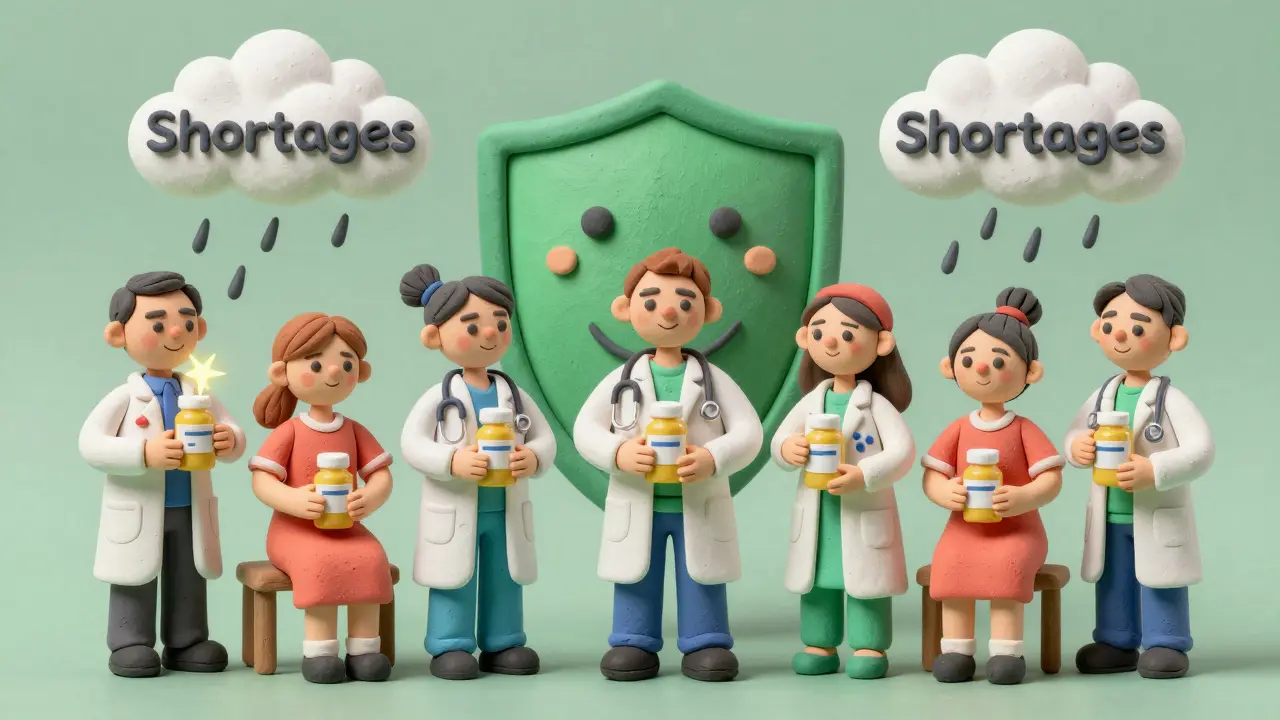
One of the primary goals of these changes is to address the chronic issue of drug shortages. The FDA specifically prioritizes applications for drugs on its Drug Shortage List. As of September 2025, there were 147 medications on this list. By speeding up approvals for these specific drugs, the FDA hopes to stabilize supply.
We are already seeing results in the "first generic" space. These are the first generic versions of brand-name drugs, which often face intense competition and patent litigation. In 2025, the FDA approved 9 first generic drugs through mid-year, including Ivermectin Tablet, Nimodipine Solution, and Azilsartan Medoxomil and Chlorthalidone Tablet. GoodRx analysis confirms that biosimilar and first generic approval numbers are pacing 18.7% ahead of 2024's trajectory through the first three quarters of 2025.
When a first generic enters the market, prices drop sharply. Data shows average price reductions of 78.3% within six months of first generic entry compared to branded equivalents. This keeps consumer costs down, even if the initial manufacturing shift causes slight inflationary pressure.
Challenges and Industry Sentiment
Not everyone is singing praises. The transition has been rocky for many. On the FDA’s industry forum, Teva Pharmaceuticals’ Director of Regulatory Affairs noted that while the 30-day initial review window transformed development timelines, there were "significant hurdles in qualifying domestic API suppliers for complex formulations."
Sentiment is mixed. A Reddit discussion in r/pharmaceuticals showed that 68% of manufacturers expressed optimism about long-term benefits, but 79% cited immediate cost pressures. Smaller companies feel the squeeze the hardest. The learning curve averages 4-6 months for companies transitioning from foreign to domestic models. In fact, the FDA reported that 82% of initial pilot applications required resubmission due to incomplete domestic verification documentation.
Common challenges include API quality consistency (cited in 67% of deficiency letters) and bioequivalence study design for complex generics (43%). To help, the FDA established a dedicated technical assistance team that has resolved 89% of these issues within 30 days. Documentation quality has improved significantly, with a 41% reduction in major deficiencies related to manufacturing documentation compared to 2024.
What Comes Next? 2026 and Beyond
The FDA is not stopping here. Starting January 2026, the pilot program will expand to include complex generics. Expect specific guidance for nasal sprays, ophthalmic suspensions, and transdermal patches in November 2025. The agency is also implementing AI-assisted review protocols, which promise a further 25% reduction in review times for pilot applications.
Long-term projections are ambitious. The FDA’s Office of Generic Drugs projects domestic API manufacturing will increase from 9% to 23% by 2028. The Congressional Budget Office indicates the program will become cost-neutral to taxpayers by 2027, with projected net savings of $4.2 billion annually by 2030 through reduced drug shortages. However, risks remain. The European Generic Medicines Association filed a formal inquiry in July 2025 regarding potential WTO trade compliance challenges.
For now, the direction is clear. The era of relying solely on cheap, fast foreign manufacturing is ending. The future of generic drugs in the U.S. is domestic, prioritized, and increasingly automated. If you are in the industry, adapting to MAPP 5240.3 isn't just a nice-to-have; it's becoming the standard for survival.
What is the ANDA Prioritization Pilot Program?
The ANDA Prioritization Pilot Program is an FDA initiative launched in October 2025 that offers expedited review timelines for generic drug manufacturers who perform 100% of their manufacturing and testing within the United States. It aims to strengthen domestic supply chains and reduce drug shortages by incentivizing local production.
How much faster is the review process for domestic manufacturers?
Under the pilot program, Tier 1 applications (100% domestic) target an 8-month review cycle, compared to the standard 12-15 months. Initial reviews happen within 30 days instead of 60-90 days, and complete response letters are issued within 45 days rather than 120 days.
Are complex generics included in the pilot program?
Initially, complex generics such as narrow therapeutic index drugs and certain transdermal patches were excluded. However, the FDA plans to expand the program to include these complex generics starting in January 2026, with specific guidance expected in late 2025.
What are the costs associated with switching to domestic manufacturing?
Establishing a medium-scale generic production facility in the U.S. can cost between $120 million and $180 million. Additionally, domestic facility validation adds approximately $1.2 to $1.8 million per application. While this increases upfront costs, it may lead to higher approval success rates (92% vs 68%) and faster time-to-market.
Will domestic manufacturing increase drug prices for consumers?
MedPAC estimates that domestic manufacturing requirements could increase generic drug costs by 12-18% initially. However, they project these costs will normalize after 3-5 years as domestic capacity scales. Meanwhile, first generic entries continue to drive significant price reductions, averaging 78.3% drops within six months of approval.
What is the current status of drug shortages in 2025?
As of September 2025, there were 147 medications on the FDA's Drug Shortage List. The ANDA Prioritization Pilot specifically prioritizes applications for drugs on this list to help stabilize supply. The FDA has seen a 41% reduction in major deficiencies related to manufacturing documentation, indicating improving supply chain resilience.


