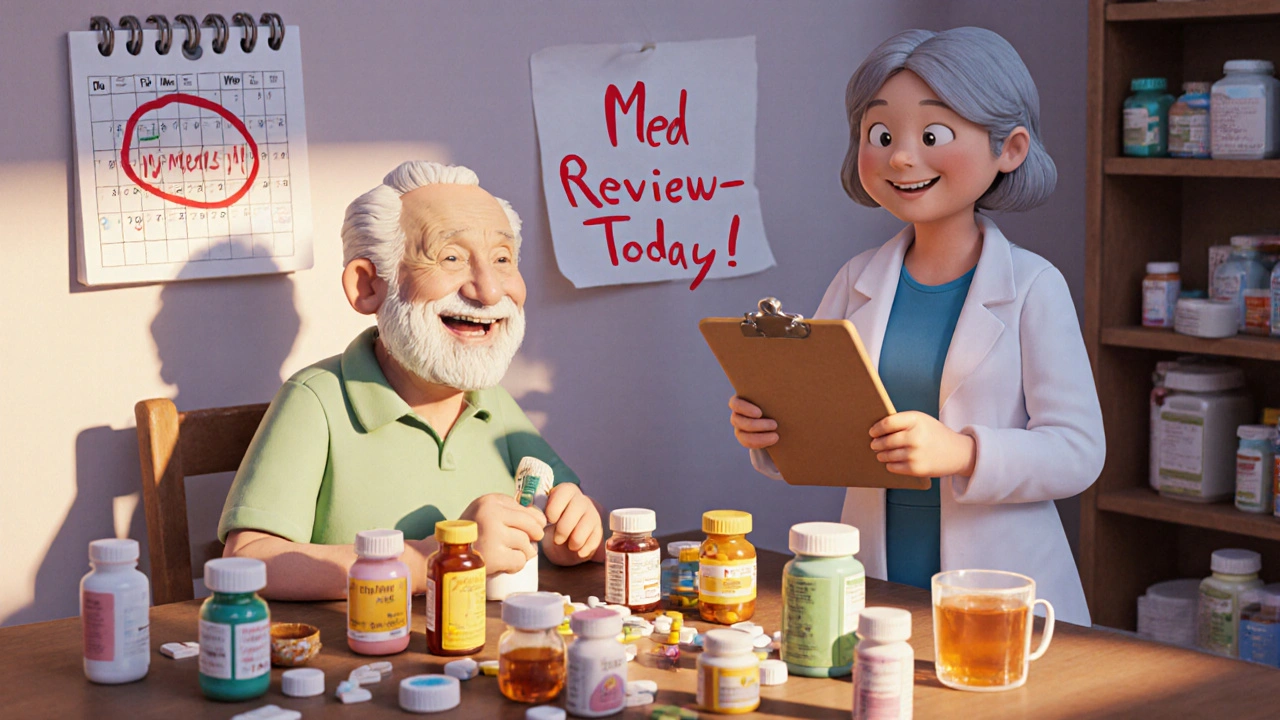
Medicare medication review: What it is and how it protects your health
When you’re on multiple medications, especially as you get older, a Medicare medication review, a free, personalized check-up of all your drugs covered under Medicare Part D. It’s not just a formality—it’s a safety net designed to catch dangerous overlaps, duplicate prescriptions, and drugs that don’t work well together. This isn’t something you have to ask for; if you’re on Medicare Part D and take more than a few prescriptions, you’re eligible for one at least once a year, usually done by your pharmacist or a trained counselor.
What makes this review so important? Because drug interactions, when two or more medications affect each other’s effectiveness or safety can turn a simple treatment plan into a health crisis. Think grapefruit making immunosuppressants toxic, or quercetin slowing down how your liver breaks down heart meds. These aren’t rare edge cases—they happen every day. And with elderly medication management, the complex process of coordinating multiple drugs for older adults with chronic conditions, the risk goes up fast. A 70-year-old with diabetes, high blood pressure, and arthritis might be taking six or seven pills. One wrong combo can cause falls, kidney damage, or even hospitalization.
The review doesn’t just look at what’s on paper. It asks: Are you taking these the right way? Are any of them outdated? Could a cheaper generic work just as well? It connects the dots between your prescriptions, supplements, and even over-the-counter stuff like ibuprofen or antacids. That’s why posts here cover everything from lithium generics needing strict blood level checks to how food changes how levodopa works for Parkinson’s. You’ll find real stories about people who avoided disaster because someone caught a hidden interaction. You’ll see how a 30-month patent delay can make generics unaffordable, forcing seniors to choose between meds and groceries. And you’ll learn how to use patient assistance programs so you don’t have to skip doses because of cost.
This isn’t about medical jargon. It’s about keeping you alive and independent. Whether you’re managing warfarin with genetic quirks, avoiding GI bleeds from the wrong PPI, or helping a parent use a pill organizer correctly, the goal is the same: make sure every pill you take does what it’s supposed to—and nothing more.
Below, you’ll find real cases, practical guides, and hard truths about how medications really work in everyday life—no fluff, no sales pitches, just what you need to stay safe and in control.