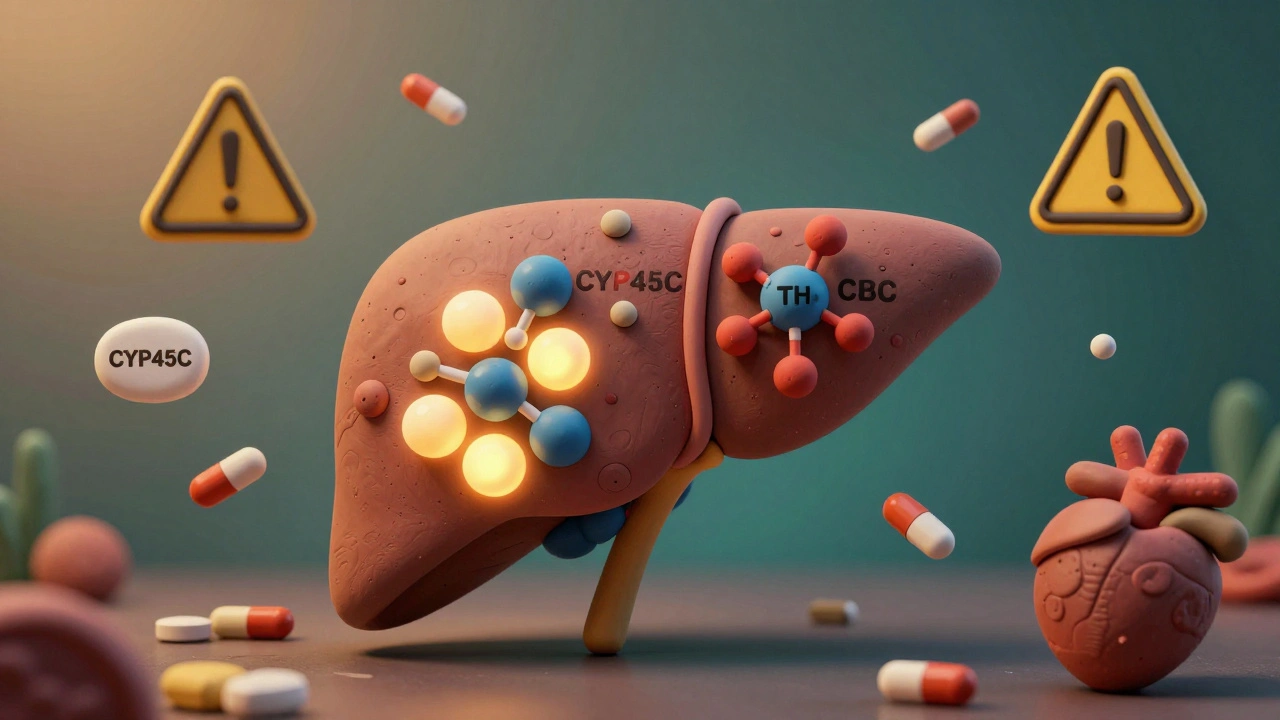
CBD and Medications: What You Need to Know About Interactions and Risks
When you take CBD, a compound derived from the cannabis plant used for pain, anxiety, and sleep. Also known as cannabidiol, it's one of the most popular supplements sold today—but it doesn't play nice with many prescription drugs. Unlike caffeine or vitamin D, CBD actively interferes with your liver’s ability to break down medications. This isn’t theory—it’s a documented risk backed by clinical studies and real-world cases where people ended up in the hospital because they didn’t know CBD could turn a safe dose of blood thinner into a dangerous one.
CBD affects the same enzyme system—CYP3A4 and CYP2C19—that processes over 60% of common medications. That means if you’re on warfarin, a blood thinner used to prevent clots, statins, cholesterol-lowering drugs like atorvastatin, or even antidepressants, such as SSRIs used for anxiety and depression, CBD can make their levels spike. One study found CBD increased blood levels of clobazam, an anti-seizure drug, by over 300%. That’s not a minor interaction—it’s the difference between relief and overdose. Even small amounts of CBD, like what’s in a gummy or a tincture, can stick around in your system for days, quietly messing with your meds.
It’s not just about what you take—it’s about when and how. People think if they take CBD at night and their pills in the morning, they’re safe. But enzymes don’t work on a schedule. Once CBD blocks them, it takes time to clear. That’s why some patients on immunosuppressants, like cyclosporine after a transplant, are told to avoid CBD entirely. A single dose can raise drug levels enough to cause kidney damage. And if you’re on anti-seizure drugs, used for epilepsy or bipolar disorder, even a tiny change in blood concentration can trigger seizures or worsen mood swings.
There’s no official safe dose of CBD when you’re on meds. The FDA doesn’t regulate most CBD products, so you don’t know how much you’re actually getting. One bottle might have 10mg per drop; another might have 50mg. And if you’re using it for sleep or pain, you might be tempted to increase the dose—without realizing you’re also increasing your risk of a bad reaction. This isn’t about fear. It’s about control. You’re already managing your health. Don’t let an unregulated supplement undo that work.
Below, you’ll find real-world cases and expert-backed guides that show exactly how CBD interacts with common prescriptions—from blood thinners to antidepressants to heart meds. No guesswork. No hype. Just what you need to know before you take another drop.