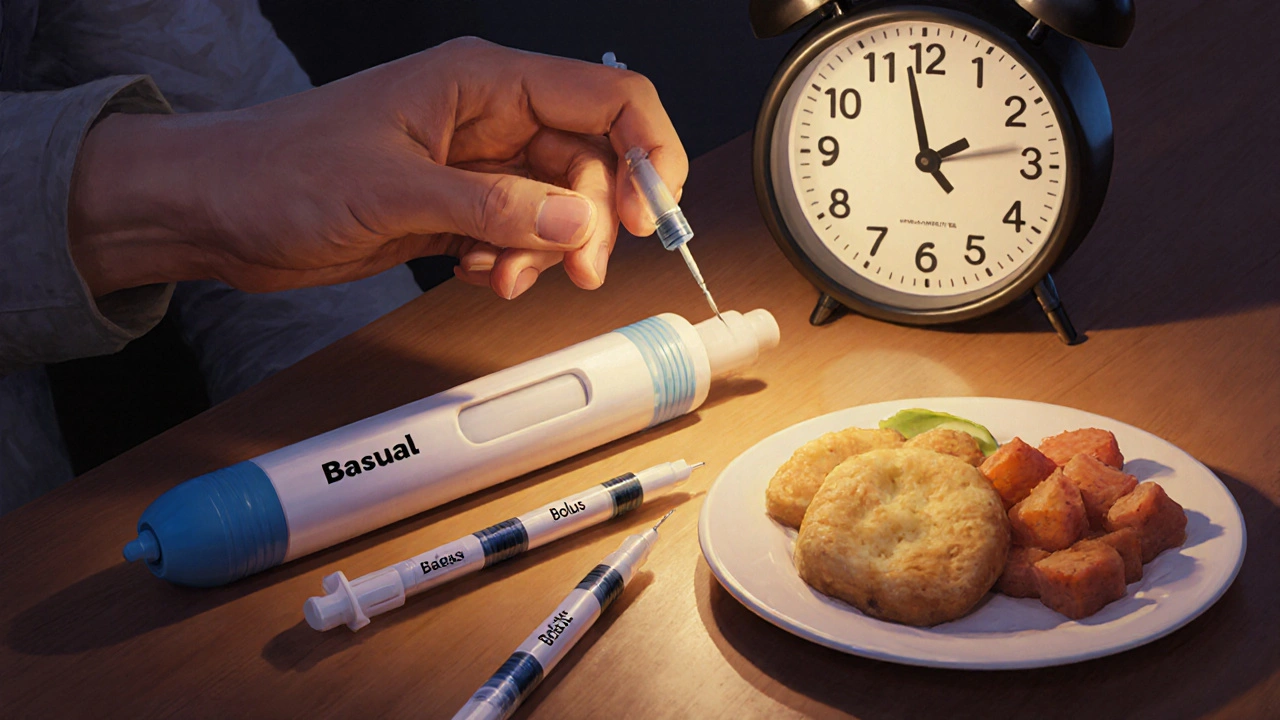
Basal-Bolus Insulin: How It Works and Why It Matters for Diabetes Management
When your body can’t make enough insulin, basal-bolus insulin, a diabetes treatment that combines long-acting and fast-acting insulin to mimic natural insulin release. Also known as intensive insulin therapy, it’s the gold standard for type 1 diabetes and often used in advanced type 2 diabetes. Unlike older methods that relied on mixed insulin shots, basal-bolus gives you precise control over when and how much insulin you get — letting you match food, activity, and blood sugar levels more accurately.
This system splits insulin into two parts: basal insulin, a slow-release form that keeps blood sugar steady between meals and overnight, and bolus insulin, a rapid-acting dose taken at meals to handle the spike from food. Basal insulin lasts 12 to 24 hours and doesn’t peak — think of it as your background insulin. Bolus insulin kicks in within 15 minutes, peaks in an hour, and wears off in 3 to 4 hours. Together, they work like a precision pump: one handles your body’s constant needs, the other handles meals. Missing a bolus? Your blood sugar will climb after eating. Skipping basal? Your numbers drift high all day and night.
People using basal-bolus insulin track carbs, test blood sugar multiple times a day, and adjust doses based on results — not guesswork. It’s not easy, but it works. Studies show it lowers HbA1c better than older regimens and reduces long-term complications. It’s also flexible: you can eat when you want, skip a meal, or exercise without being locked into a rigid schedule. But it demands attention. Too much bolus? Risk of low blood sugar. Too little basal? Fasting highs that wear you down. That’s why tools like insulin pumps and continuous glucose monitors are often paired with this approach — they make tracking easier and safer.
You’ll find real-world advice here on how to time your shots, avoid dosing errors, handle sick days, and deal with the emotional weight of constant management. We cover how insulin therapy interacts with food, exercise, and other meds — like how grapefruit can mess with some diabetes drugs, or why lithium levels need close watch when combined with certain insulin regimens. You’ll also see how genetic differences in how your body processes insulin — like variations in CYP enzymes — can affect dosing. Whether you’re newly diagnosed, struggling with highs and lows, or helping a loved one manage their care, the posts below give you clear, practical steps — no fluff, no jargon, just what works.