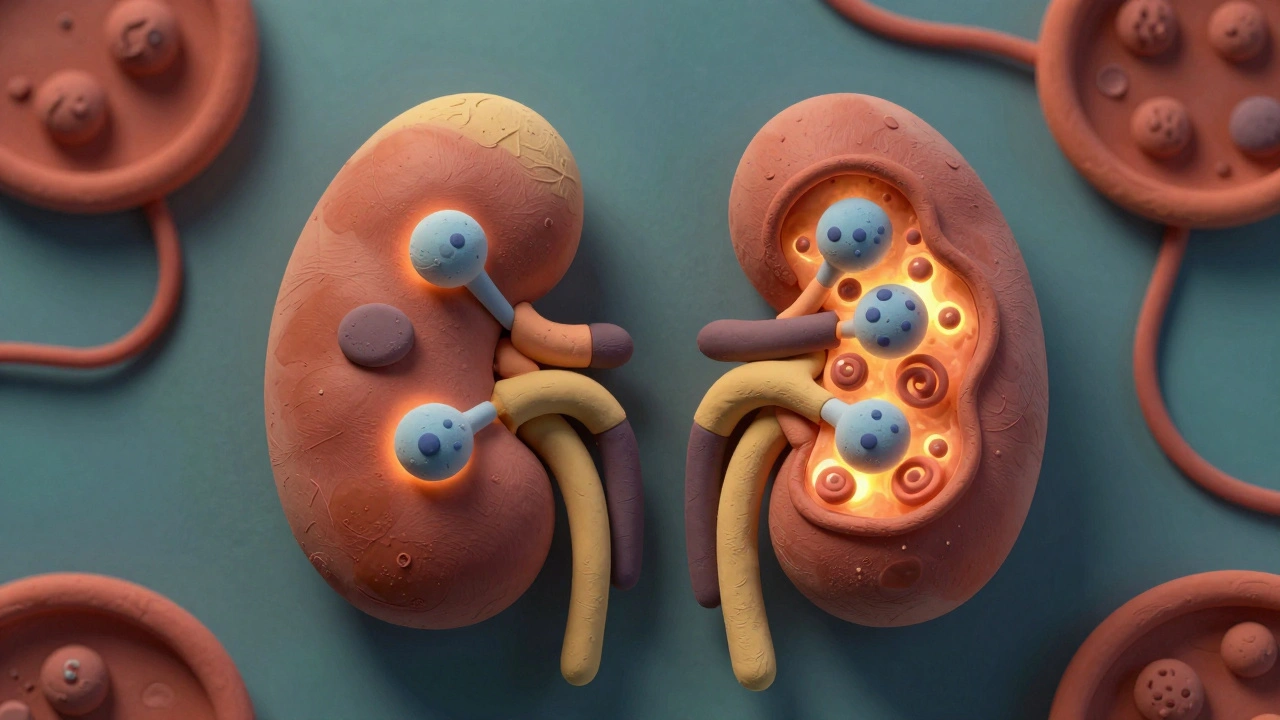
Amikacin Renal Toxicity: What You Need to Know About Kidney Damage from This Antibiotic
When you take amikacin, a powerful antibiotic used for serious bacterial infections like sepsis or pneumonia. Also known as an aminoglycoside, it works by killing tough bacteria—but it doesn’t distinguish between bad bugs and your kidney cells. That’s why amikacin renal toxicity is one of the most serious side effects doctors worry about. It’s not rare. Studies show up to 25% of patients on long-term amikacin develop some level of kidney stress, and for those already with weak kidneys, the risk jumps even higher.
This isn’t just about one drug. aminoglycoside nephrotoxicity, the broader category that includes amikacin, gentamicin, and tobramycin, is a well-documented problem in hospitals. These antibiotics build up in the kidney tubules, where they damage cells over time. The damage often starts quietly—no pain, no symptoms—until your blood tests show rising creatinine levels. That’s why doctors monitor kidney function closely during treatment. They check creatinine, urine output, and sometimes even drug levels in your blood to make sure you’re not getting too much.
Some people are at higher risk: older adults, those with diabetes, people on other kidney-harming drugs like NSAIDs or vancomycin, and anyone with pre-existing kidney disease. Even a short course can cause harm if you’re dehydrated or have low blood pressure. It’s not just about the dose—it’s about how your body handles it. That’s why many hospitals now limit amikacin to just 5–7 days unless absolutely necessary. And if you’re on it longer, your team will likely switch to a safer alternative as soon as they can.
There’s no magic fix to prevent this damage. But staying well-hydrated, avoiding other nephrotoxic drugs, and getting regular blood tests can make a big difference. If you’ve been on amikacin and feel unusually tired, notice less urine, or have swelling in your legs, tell your doctor right away. Early detection means the damage might be reversible.
Below, you’ll find real patient stories, clinical guidelines, and comparisons with other antibiotics that carry similar kidney risks. Whether you’re a patient, a caregiver, or just trying to understand why your doctor ordered extra blood tests, these posts give you the facts without the fluff.