
Statin Discontinuation Risk Estimator
Patient Profile
Risk Assessment Result
Select your profile details and click "Assess Risk Level" to see if stopping statins may be safe or dangerous for your specific situation.
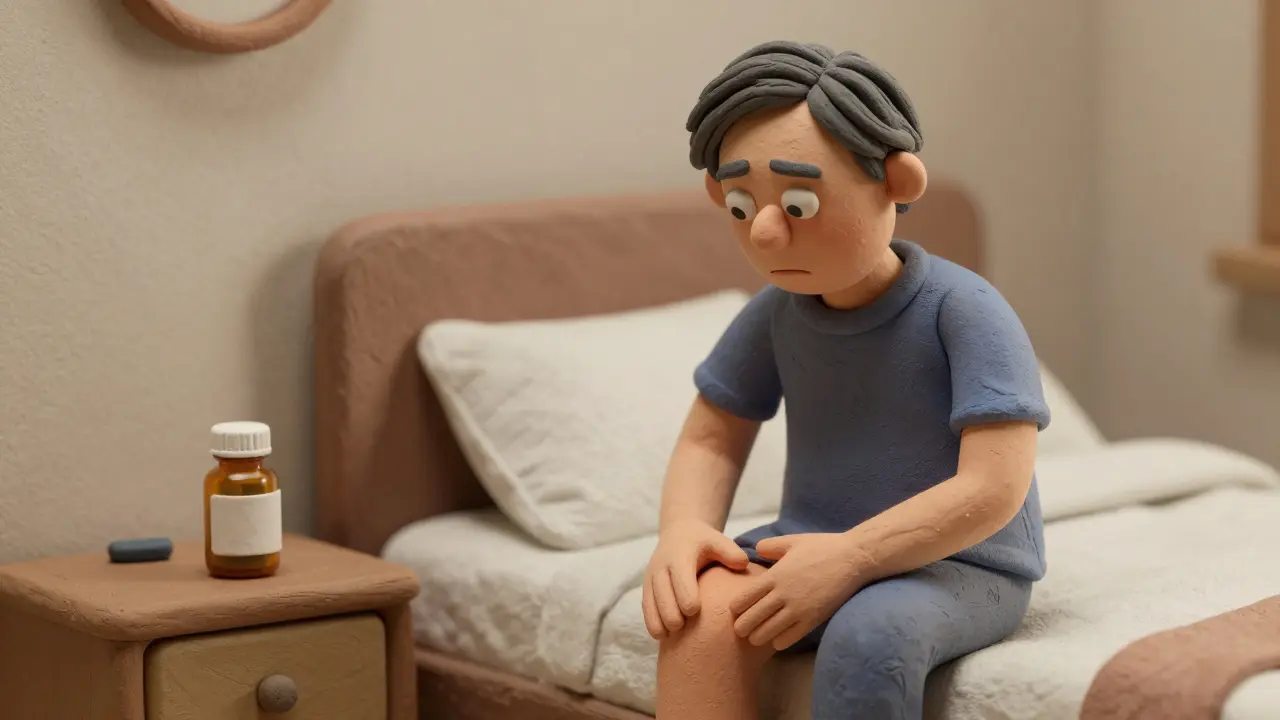
You have been taking statins for years. Maybe it was after a heart attack, maybe just because your doctor said your cholesterol numbers looked risky. Now, you are older. You feel tired. Your muscles ache. Or perhaps you are facing a serious health diagnosis that makes a "lifelong" medication seem like an unnecessary burden. The question on your mind is simple but terrifying: Can I stop? And if I do, will I have a heart attack?
This is one of the most common dilemmas in modern medicine. Approximately 39 million Americans take statins, yet nearly 19% of patients stop their therapy within a year, according to data from Zhang et al. published in 2013. Most people don't stop because they want to; they stop because the side effects become unbearable or their life circumstances change drastically. The fear of stopping is real-studies show that discontinuing statins increases the risk of major adverse cardiovascular events (MACE). But continuing them when they no longer serve you can also be harmful.
There is no single answer that fits everyone. The decision to discontinue statins depends entirely on your specific health profile, your age, and your life expectancy. This guide breaks down exactly when stopping is safe, when it is dangerous, and how to manage the transition without putting your heart at risk.
The Reality of Statin Discontinuation Rates
First, let’s look at what actually happens in clinical practice. It is not rare for patients to quit. In routine care settings, about one in five patients stops all statin therapy for at least 12 months. However, many of these aren't permanent quits. They are often "switches." A patient might stop atorvastatin due to muscle pain and switch to rosuvastatin or pravastatin. True cessation-where the patient stops all lipid-lowering therapy-is less common but still significant.
Why do people stop? According to a 2019 study by Bradley et al. in the Journal of the American Heart Association (JAHA), the top reasons are fear of side effects and actual perceived side effects. Muscle-related problems, known as statin-associated muscle symptoms (SAMS), are the most frequent culprit. Other factors include concerns about developing type 2 diabetes, cognitive changes, or simply the pill burden of taking multiple medications daily.
It is important to understand that hospital admissions significantly increase the likelihood of discontinuation. A massive 2019 study by Giral et al. in the European Heart Journal found that being admitted to the hospital increased the odds of stopping statins by more than three times (adjusted odds ratio [aOR] 3.28). Being moved to a skilled nursing home also raised the odds (aOR 2.66). These transitions in care often lead to medication reviews where statins are dropped, sometimes permanently.
When Stopping Is Dangerous: Secondary Prevention
If you have established cardiovascular disease-meaning you have had a heart attack, stroke, stent placement, or bypass surgery-you fall into the category of secondary prevention. For this group, the stakes are incredibly high.
A pivotal 2021 study by Thompson et al. in JAMA Network Open provided stark numbers on the risks of quitting. For patients with existing cardiovascular disease who stopped their statins, there was an excess risk of 1 major adverse cardiovascular event (MACE) for every 77 discontinuers per year compared to those who continued. To put that in perspective, if 77 people with heart disease stop their meds, one of them is statistically likely to suffer a heart attack or stroke in the next year solely due to stopping the drug.
For primary prevention patients-those without established heart disease but taking statins to prevent future issues-the risk is lower but still present. The same study found an excess risk of 1 MACE per 112 discontinuers per year. While the number is smaller, it underscores that statins provide a protective shield. Removing that shield exposes you to immediate risk, especially if your baseline risk was high enough to warrant the prescription in the first place.
Key Takeaway: If you have a history of heart disease, do not stop your statin without a very compelling reason and a close discussion with your cardiologist. The short-term relief from side effects is rarely worth the long-term risk of a recurrent cardiac event.
When Stopping May Be Safe: End-of-Life and Limited Life Expectancy
The calculus changes dramatically when we talk about quality of life and limited time left. Statins work over years. They stabilize plaque and lower LDL cholesterol gradually. If a patient has a prognosis of less than two years, the benefits of statins are unlikely to be realized before death occurs.
In these scenarios, continuing the medication adds burden without benefit. The MyPCnow 2023 Fast Fact on discontinuation at end-of-life notes that stopping statins is safe and prudent for patients with a prognosis of less than two years. This aligns with guidelines from the American Geriatrics Society, which suggests considering deprescribing in patients with poor health status or limited life expectancy.
Consider a patient with metastatic solid tumor or advanced dementia. A 2019 study identified metastatic cancer as a strong predictor of statin discontinuation (aOR 2.22). Why? Because the focus shifts from preventing a heart attack ten years from now to managing comfort today. Polypharmacy-taking too many drugs-becomes a liability. Each pill represents a potential side effect, a cost, and a hassle. For hospice patients, especially those with days or weeks to live, clinicians should consider discontinuing statins. Even for those with months to live, if the statin is causing muscle pain or fatigue, stopping it may improve their remaining quality of life.
A 2024 systematic review by Peixoto et al. in the Journal of the American Geriatrics Society concluded that statin discontinuation does not appear to affect short-term mortality near the end of life. In fact, some patients with terminal diagnoses related to recent acute coronary syndrome reported reduced angina when they continued statins, but this benefit diminishes rapidly as prognosis shortens to days or weeks.
The Gray Area: Older Adults and Primary Prevention
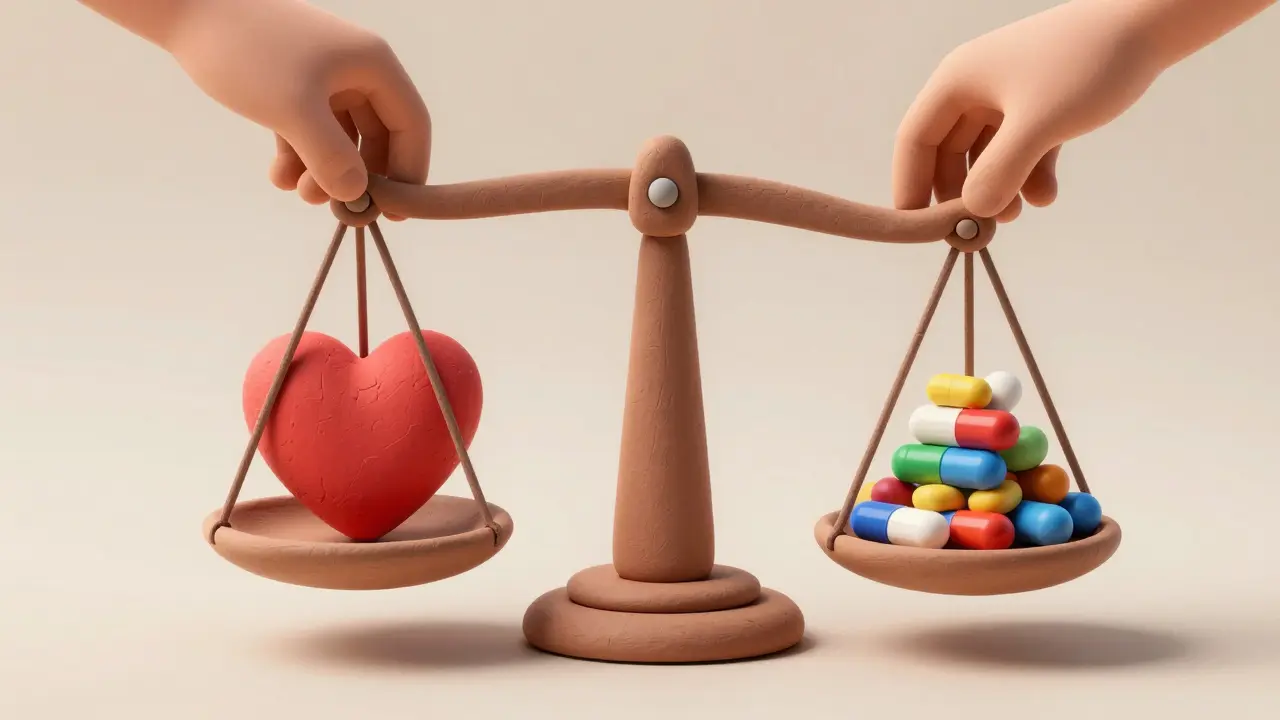
This is where the medical community is currently debating. What about an 85-year-old who has never had a heart attack but takes a statin for high cholesterol? Is it safe to stop?
Currently, there is no definitive consensus, which is why large trials are underway. The "Discontinuing Statins in Multimorbid Older Adults" randomized controlled trial (NCT03768536), running across Switzerland, France, and the Netherlands, is specifically designed to answer this. It aims to assess whether discontinuing statins in multimorbid older adults is non-inferior to continuing them, using a margin of 5.2 weeks over a 2-year observation period for major cardiovascular events and all-cause death.
Until these results are fully integrated into guidelines, experts like Scott et al. (2015 JAMA Internal Medicine) advocate for "deprescribing." This is the process of systematically reducing or stopping medications that are no longer beneficial. For older adults with multiple chronic conditions (multimorbidity), the goal of care often shifts from longevity to function and independence. If a statin is contributing to muscle weakness (sarcopenia) or falls, the risk of a hip fracture may outweigh the theoretical benefit of preventing a heart attack.
The American Geriatrics Society guidelines suggest that for older adults with poor health status, the harms of polypharmacy may exceed the benefits of preventive therapies. However, this requires careful individual assessment. It is not a blanket rule to stop all statins in the elderly.
How to Manage Statin Discontinuation Safely
If you and your doctor decide to stop, do not just throw the pills away. Here is a structured approach to managing the transition.
- Shared Decision-Making: Have an open conversation. Discuss your fears, your side effects, and your goals. Are you trying to avoid muscle pain? Are you worried about diabetes risk? Document the reason for discontinuation clearly. As Zhang et al. noted, electronic records often default to "No longer necessary," which obscures the true reason and can lead to confusion later.
- Gradual Tapering vs. Abrupt Cessation: There is no strict protocol for tapering statins, as they do not cause physical dependence. However, some clinicians prefer a gradual dose reduction to monitor for symptom recurrence. Others recommend abrupt cessation if the side effects were severe. Follow your doctor's advice based on your specific case.
- Monitor Symptoms: Keep a journal. Track any return of muscle pain, fatigue, or new symptoms. Also, monitor for signs of cardiovascular distress, such as chest pain or shortness of breath, though these are less likely to appear immediately after stopping.
- Lifestyle Interventions: If you stop the drug, you must replace its protective effect with lifestyle changes. Focus on a Mediterranean-style diet rich in vegetables, fruits, whole grains, and healthy fats. Increase physical activity. Quit smoking if applicable. These measures help manage cardiovascular risk independently of medication.
- Follow-Up Testing: Schedule a lipid panel (cholesterol test) 4-6 weeks after discontinuation to see your baseline levels without the drug. This helps determine if alternative therapies are needed.

Alternatives to Statins
If you cannot tolerate statins but still need to lower your cardiovascular risk, there are other options. However, these come with trade-offs.
| Therapy Type | Mechanism | Pros | Cons / Risks |
|---|---|---|---|
| Ezetimibe | Blocks cholesterol absorption in the gut | Well-tolerated, low side effect profile | Moderate LDL reduction (15-20%) |
| PCSK9 Inhibitors | Injectable drugs that boost LDL clearance | Potent LDL lowering (up to 60%) | High cost, injection required every 2-4 weeks |
| Bempedoic Acid | Inhibits cholesterol synthesis in the liver | Does not cause muscle pain (not activated in muscles) | Newer drug, limited long-term data, may increase uric acid |
| Fibrates | Lowers triglycerides, modestly raises HDL | Good for high triglycerides | Minimal impact on cardiovascular events, GI side effects |
| Omega-3 Fatty Acids | Reduces triglycerides | Natural source available, anti-inflammatory | Weak evidence for heart attack prevention at standard doses |
For many patients who stop statins due to muscle pain, switching to ezetimibe or bempedoic acid is a viable strategy. PCSK9 inhibitors are highly effective but often reserved for patients with familial hypercholesterolemia or very high risk due to cost. Always discuss these alternatives with your healthcare provider to ensure they fit your insurance coverage and medical needs.
Red Flags: When to Seek Immediate Help
While stopping statins is generally not an emergency, the underlying condition that led to their prescription might be. If you experience any of the following after discontinuation, seek medical attention immediately:
- Chest pain or pressure (angina)
- Sudden shortness of breath
- Pain radiating to the arm, jaw, or back
- Sudden weakness or numbness on one side of the body (signs of stroke)
- Severe muscle pain accompanied by dark urine (could indicate rhabdomyolysis, though rare after stopping, it can occur during withdrawal if combined with other triggers)
Conclusion: A Personalized Approach
Statin discontinuation is not a binary choice between "safe" and "dangerous." It is a nuanced decision that depends on your individual risk profile. For patients with established heart disease, the risks of stopping are high and should be weighed carefully. For those at the end of life or with limited life expectancy, stopping is often the kinder, safer choice. For older adults in primary prevention, the decision is evolving, with a growing emphasis on quality of life and reducing medication burden.
The key is communication. Do not stop in silence. Work with your doctor to create a plan that respects your health goals and minimizes risk. Whether you continue, switch, or stop, the goal is the same: living as well as possible for as long as possible.
Is it safe to stop taking statins suddenly?
Physically, statins do not cause withdrawal symptoms, so stopping abruptly is not physically dangerous in the way stopping benzodiazepines might be. However, medically, it can be risky. If you have heart disease, stopping suddenly removes your protection against heart attacks and strokes. The risk of a cardiovascular event increases shortly after discontinuation. Always consult your doctor before stopping, even if you plan to quit immediately.
Will my cholesterol go back up if I stop statins?
Yes, in most cases. Statins work by inhibiting an enzyme in the liver that produces cholesterol. Once you stop taking them, your liver resumes normal production, and your LDL cholesterol levels typically return to their pre-treatment baseline within a few weeks. This is why follow-up blood tests are essential after discontinuation.
Can I stop statins if I am over 80?
This depends on your overall health. If you have had a heart attack or stroke, continuing statins is usually recommended regardless of age. If you are taking them for prevention only (primary prevention) and have multiple chronic conditions or a limited life expectancy, stopping may be appropriate. Guidelines from the American Geriatrics Society suggest considering deprescribing in older adults with poor health status to reduce pill burden and side effects.
What are the most common side effects that lead people to stop statins?
The most common reason for discontinuation is muscle-related symptoms, including pain, weakness, or cramps (known as SAMS). Other reasons include fear of developing type 2 diabetes, cognitive complaints (brain fog), and general fatigue. Some patients also stop due to gastrointestinal issues or interactions with other medications.
Are there natural ways to lower cholesterol instead of statins?
Yes, lifestyle changes can significantly impact cholesterol. Adopting a Mediterranean diet, increasing soluble fiber intake (oats, beans), exercising regularly, and losing weight if overweight can lower LDL cholesterol. Supplements like plant sterols, psyllium husk, and red yeast rice (which contains a natural statin-like compound) may also help, but red yeast rice should be used with caution and under medical supervision due to variability in potency and potential side effects similar to pharmaceutical statins.
