
Citrus Drug Interaction Risk Calculator
Step 1: Select Your Medication Type
Choose the category of medication you are taking:
*Note: Pomelo may decrease effectiveness rather than increase toxicity for this category.
Step 2: Select Citrus Product
Which citrus fruit or product are you consuming?
Potency Comparison
You’ve likely heard the warning about grapefruit and your medications. It’s a standard question at the pharmacy counter. But what happens when you swap that grapefruit for a pomelo or a jar of traditional Seville orange marmalade? You might think you’re safe because you aren’t eating grapefruit. Unfortunately, that assumption can be dangerous.
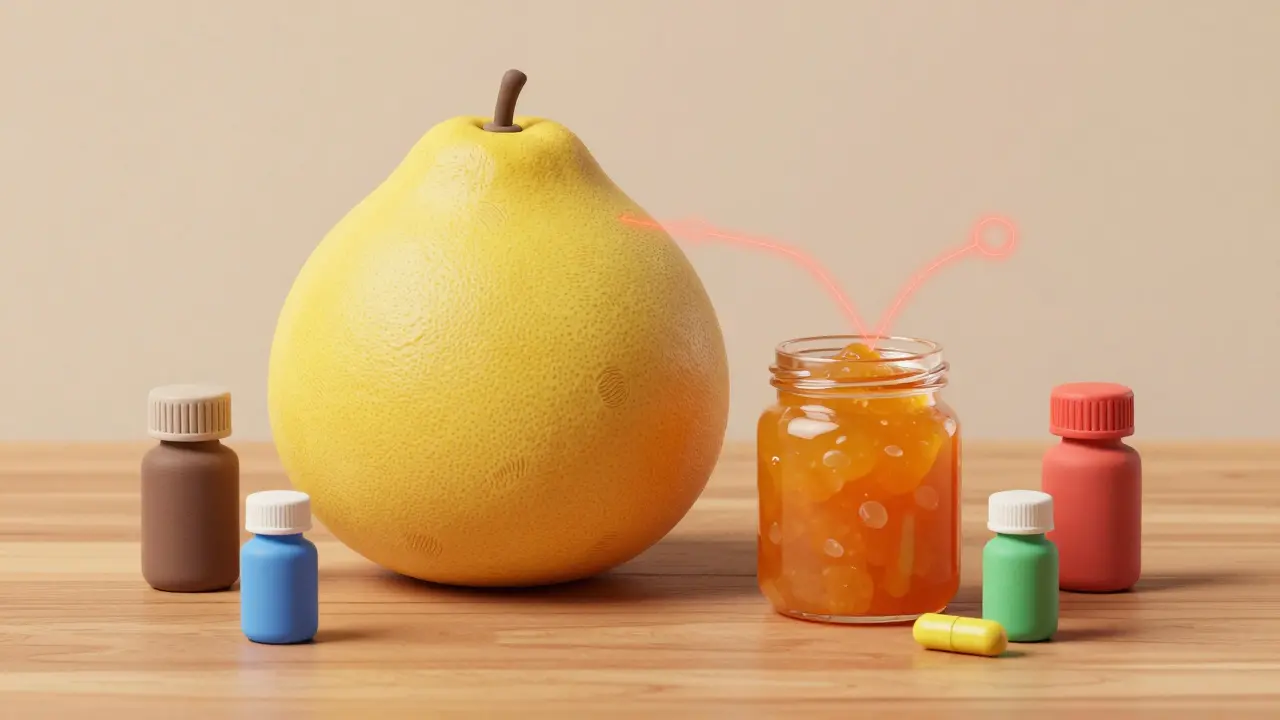
Pomelo (Citrus maxima is the largest citrus fruit, native to Southeast Asia, containing high levels of furanocoumarins that inhibit drug metabolism) and Seville oranges (Seville orange is a bitter citrus variety used in marmalades, known for potent enzyme-inhibiting compounds) are not harmless alternatives. They contain the same active chemical compounds as grapefruit-specifically furanocoumarins like bergamottin. These compounds block the enzymes your body uses to break down many common drugs. The result? Your medication stays in your system longer and at higher concentrations than intended, potentially leading to severe side effects or toxicity.
The Chemistry Behind the Danger
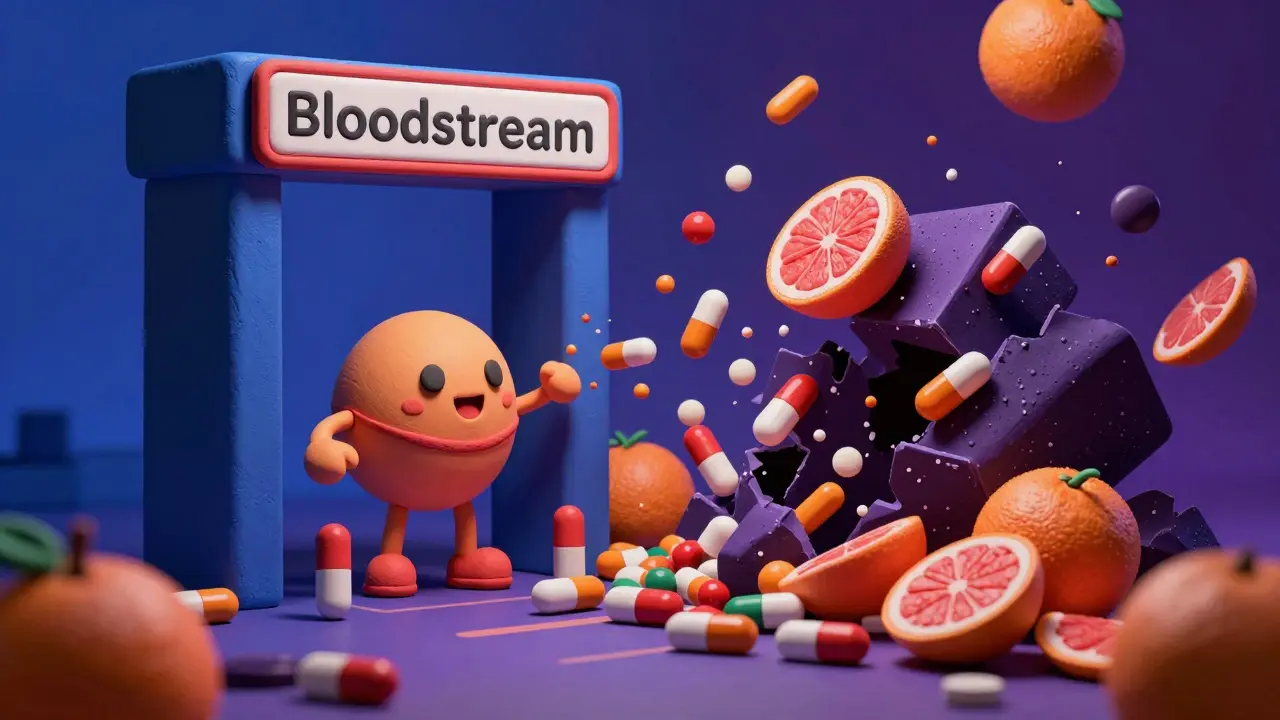
To understand why these fruits cause trouble, we need to look at how your body processes medicine. Most drugs undergo "first-pass metabolism" in your intestines before entering your bloodstream. This process relies heavily on an enzyme called CYP3A4. Think of CYP3A4 as a bouncer at a club; it decides how much of a substance gets into the main party (your blood) and breaks down the rest.
Furanocoumarins found in pomelo and Seville oranges act like a brick through the bouncer’s window. They irreversibly inhibit CYP3A4. When this enzyme is blocked, it doesn't just slow down; it stops working until your body produces new enzymes, which takes time. A 2014 study in the *Journal of Agricultural and Food Chemistry* noted that pomelo contains bergamottin concentrations ranging from 1.5-2.5 μM, which is comparable to or even higher than grapefruit. Seville oranges can have levels up to 30% higher than grapefruit.
This isn't just about slowing things down slightly. By blocking this pathway, these fruits can increase the amount of drug in your system by 30% to over 200%. For some medications, a 200% increase turns a therapeutic dose into a toxic one. The effect lasts for up to 72 hours after consumption because the inhibition is irreversible. Drinking juice today affects how your body handles meds taken tomorrow and the day after.
Pomelo vs. Seville Orange: Which Is Riskier?
While both fruits pose significant risks, they differ in intensity and how often people encounter them.
| Fruit Type | Key Compound Level | Interaction Intensity | Common Forms |
|---|---|---|---|
| Grapefruit | Moderate | Baseline Risk | Juice, Whole Fruit |
| Pomelo | High (1.5-2.5 μM bergamottin) | Equal to or Greater than Grapefruit | Whole Fruit, Juice, 'Chinese Grapefruit' |
| Seville Orange | Very High (up to 4.0 μM bergamottin) | Highest Risk | Marmalade, Concentrated Peel Products |
Pomelo is essentially grapefruit’s larger, more potent cousin. Dr. David Bailey, who discovered the grapefruit-drug interaction phenomenon in 1989, described pomelo as having higher furanocoumarin content, making it potentially more dangerous. A 2018 study in the *British Journal of Clinical Pharmacology* found that pomelo juice increased the absorption of simvastatin (a cholesterol drug) by 350%, compared to 300% for grapefruit juice.
Seville orange presents a unique stealth risk. You rarely eat a whole Seville orange because it’s too bitter. Instead, you consume it in marmalades. Because marmalade uses the peel-which concentrates the furanocoumarins-a single spoonful can deliver a massive dose of these inhibitors. A 2011 case report in *Transplantation Proceedings* documented a patient whose tacrolimus levels spiked by 400% after eating Seville orange marmalade, requiring hospitalization.
Medications Most Affected by Citrus Inhibitors
Not every pill reacts to citrus. Drugs metabolized by other pathways, such as CYP2D6, are generally safe. However, if your medication is processed by CYP3A4 or transported by OATPs (organic anion-transporting polypeptides), you are at risk. Here are the primary categories to watch:
- Statins: Simvastatin (Zocor), lovastatin (Mevacor), and atorvastatin (Lipitor). Increased risk of muscle damage (rhabdomyolysis).
- Calcium Channel Blockers: Felodipine, nifedipine, and diltiazem. Can cause dangerously low blood pressure and swelling.
- Immunosuppressants: Cyclosporine and tacrolimus. Critical for transplant patients; overdose can lead to kidney failure.
- Anti-anxiety Medications: Buspirone and diazepam. Can cause excessive sedation.
- Some Anti-allergy Drugs: Fexofenadine (Allegra). Pomelo can actually decrease its absorption by blocking OATP transporters, making it less effective.
The University of Florida Center for Pharmacogenomics identified 107 medications with significant interaction potential with pomelo and Seville orange as of late 2023. If you take any medication daily, check its prescribing information for "CYP3A4 substrate" or "grapefruit warning." If it lists grapefruit, assume pomelo and Seville orange apply equally.
The Awareness Gap: Why Patients Get Caught Off Guard
Despite the clear biochemical evidence, public awareness remains low. Only 37% of pomelo and Seville orange products carry drug interaction warnings, compared to 78% for grapefruit products, according to a 2022 FDA compliance review. This labeling gap creates a false sense of security.
Healthcare providers also struggle to keep up. A 2023 survey by the American Pharmacists Association showed that only 42% of community pharmacists routinely screen for pomelo and Seville orange interactions, while 87% screen for grapefruit. Many patients don’t realize that "Chinese grapefruit" sold in markets is actually pomelo. Others don’t connect their morning toast with Seville orange marmalade to their evening blood pressure medication.
User experiences online highlight this confusion. On Reddit’s r/pharmacy, users shared stories of patients developing rhabdomyolysis after consuming pomelo daily without warning. One transplant patient reported tacrolimus toxicity after eating traditional British marmalade. The common thread? No one told them these specific citrus fruits were hazardous.
Practical Steps to Stay Safe
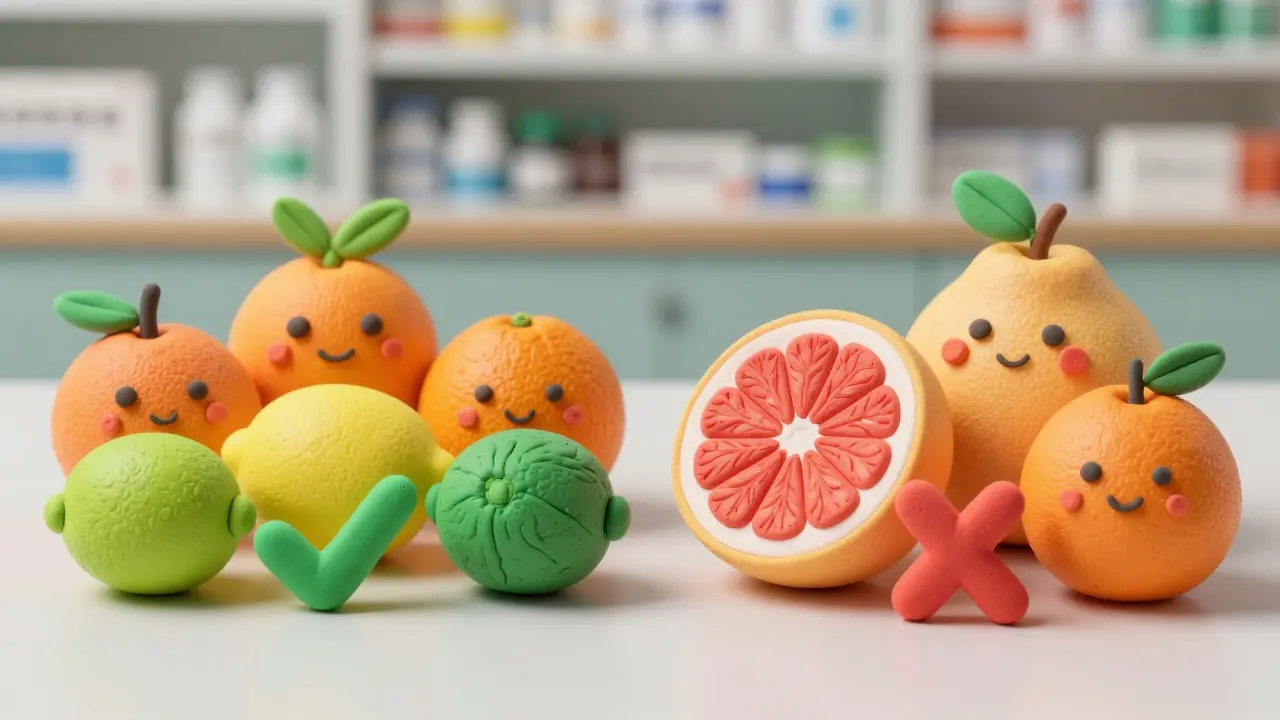
If you take prescription medications, you don’t necessarily need to give up all citrus. Sweet oranges, lemons, limes, and tangerines do not contain significant amounts of furanocoumarins and are generally safe. The key is specificity.
- Read Labels Carefully: Look for "Seville orange," "bitter orange," or "Citrus aurantium" on marmalade jars. Avoid products labeled "Chinese grapefruit" unless confirmed as pomelo-free (rare).
- Ask Your Pharmacist: Don’t just ask about grapefruit. Explicitly ask, "Do my medications interact with pomelo or Seville oranges?"
- Maintain a Washout Period: If you must consume these fruits, understand that the interaction lasts up to 72 hours. The FDA recommends avoiding these fruits entirely during treatment with sensitive medications.
- Monitor Symptoms: Be alert for signs of drug toxicity, such as unusual muscle pain, extreme fatigue, dizziness, or irregular heartbeat.
The European Medicines Agency issued a scientific opinion in 2019 stating that pomelo and Seville orange should be considered equivalent to grapefruit until proven otherwise. Until electronic health records and pharmacy alerts universally include these fruits, personal vigilance is your best defense.
Future Outlook and Regulatory Changes
The landscape is shifting. As pomelo consumption grows globally-production rose from 1.2 million metric tons in 2015 to 1.8 million in 2022-so does the incidence of adverse events. The FDA received 217 reports linked to pomelo-drug interactions between 2018 and 2022, a 43% increase from the previous period.
In response, the FDA proposed expanding warning labels to include all furanocoumarin-containing citrus fruits, with implementation expected by mid-2025. Additionally, a $2.1 million NIH-funded study awarded in September 2023 aims to specifically examine pomelo-drug interactions, filling the data gap left by decades of grapefruit-focused research. By 2027, awareness among healthcare providers is projected to increase by 65% due to better integration in clinical software.
Until then, treat pomelo and Seville orange with the same caution as grapefruit. Your health depends on knowing that not all citrus is created equal.
Is pomelo safer than grapefruit for drug interactions?
No, pomelo is not safer. Studies show pomelo contains comparable or higher levels of furanocoumarins than grapefruit. A 2018 study found pomelo increased simvastatin absorption by 350%, whereas grapefruit increased it by 300%. You should treat pomelo with the same caution as grapefruit.
Can I eat Seville orange marmalade if I take blood pressure medication?
It is risky. Seville oranges contain very high concentrations of bergamottin, especially in the peel used for marmalade. If your blood pressure medication is a calcium channel blocker (like felodipine or nifedipine), Seville orange marmalade can dangerously increase drug levels in your blood. Consult your doctor before consuming it.
How long does the drug interaction last after eating pomelo?
The interaction can last up to 72 hours. This is because furanocoumarins irreversibly inhibit the CYP3A4 enzyme. Your body must produce new enzymes to resume normal drug metabolism, a process that takes several days. Avoiding these fruits for three days before taking sensitive medications is recommended.
Are sweet oranges and lemons safe with medications?
Yes, sweet oranges, lemons, limes, and tangerines are generally safe. They do not contain significant amounts of furanocoumarins that inhibit CYP3A4. The risk is specific to grapefruit, pomelo, Seville oranges, and sometimes bergamot.
Why do pharmacies warn about grapefruit but not pomelo?
Grapefruit interactions were discovered earlier and are more widely studied. As of 2023, only 42% of pharmacists routinely screen for pomelo interactions compared to 87% for grapefruit. Labeling regulations have also been slower to update for pomelo and Seville orange, creating an awareness gap.
