
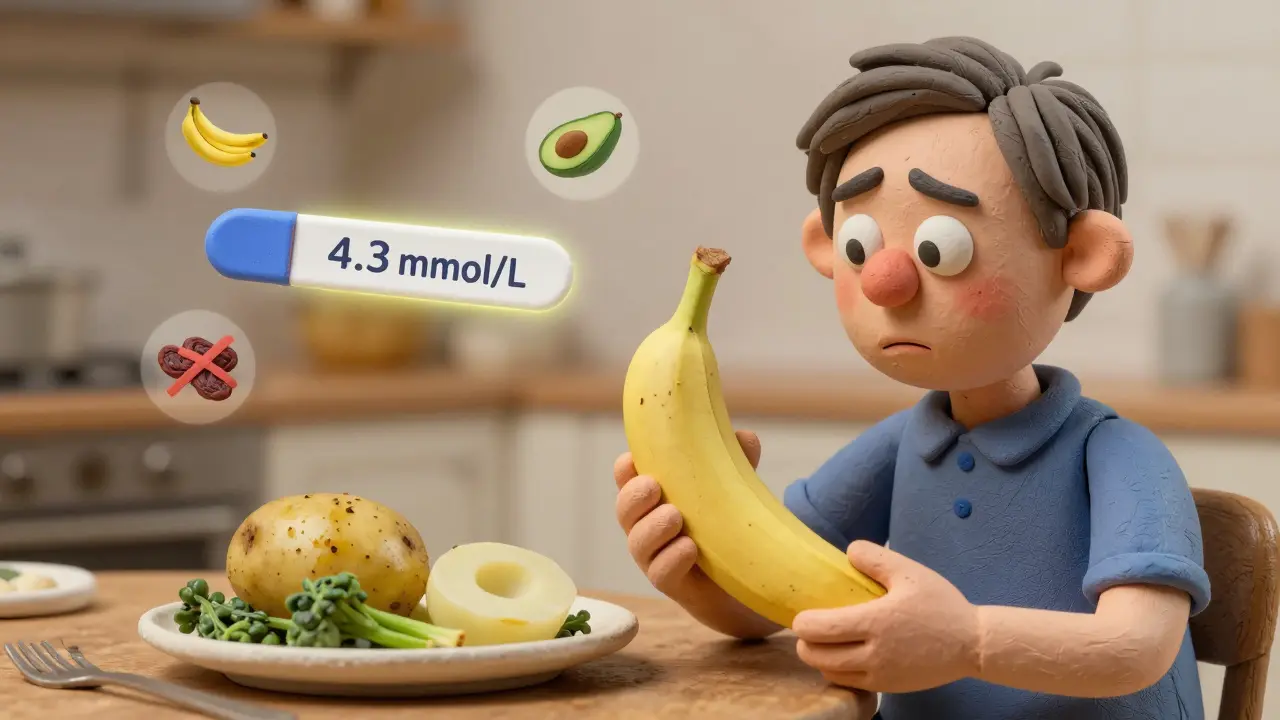
When your kidneys aren’t working well, even small changes in your diet can push your potassium levels into dangerous territory. For people with chronic kidney disease (CKD), hyperkalemia-high blood potassium-isn’t just a lab result. It’s a silent threat that can stop your heart. About 40 to 50% of people with advanced CKD experience it. And the drugs that protect their heart and kidneys often make it worse.
Why Potassium Becomes a Problem in CKD
Your kidneys normally keep potassium in check. When they fail, potassium builds up. Normal levels are 3.5 to 5.0 mmol/L. Anything above 5.0 is considered high. But in CKD, doctors now aim for 4.0 to 4.5 mmol/L. Why? Because even mild elevations raise the risk of irregular heart rhythms and sudden death. The problem is made worse by common medications. RAAS inhibitors-like ACE blockers and ARBs-are standard for slowing kidney damage and protecting the heart. But they reduce potassium excretion. So you’re stuck: take the drug and risk high potassium, or stop it and risk heart failure or faster kidney decline.Dietary Limits: What You Can and Can’t Eat
Diet is the first line of defense. But it’s not one-size-fits-all. - If you’re in early CKD (stages 1-3a), you don’t need to eliminate potassium. Just avoid overdoing it. A normal diet is fine. - If you’re in stages 3b-5 (not on dialysis), you need to limit potassium to 2,000-3,000 mg per day. That’s about 51-77 mmol. Some high-potassium foods to watch:- Bananas: 422 mg per 100g
- Oranges and orange juice: 181 mg per 100g
- Potatoes (especially baked): 421 mg per 100g
- Spinach, avocados, tomatoes, dried fruit, and nuts are also high.

Emergency Treatment: What Happens When Potassium Hits 6.0
If your potassium hits 5.5 mmol/L or higher, especially with symptoms like muscle weakness, fluttering heart, or ECG changes, you need immediate action. The protocol is clear:- Calcium gluconate (10 mL of 10% solution, IV over 2-5 minutes): This doesn’t lower potassium. It protects your heart muscle from the effects of high potassium. It works in 1-3 minutes and lasts about an hour. Used when ECG shows peaked T-waves or widened QRS complexes.
- Insulin and glucose (10 units regular insulin + 50 mL of 50% dextrose): This shifts potassium from your blood into your cells. Starts working in 15 minutes, peaks at 30. Lowers potassium by 0.5-1.5 mmol/L. But it can cause low blood sugar-10-15% of patients need extra glucose.
- Sodium bicarbonate (50-100 mmol IV): Only if you’re also acidotic (bicarbonate <22 mmol/L). Works in 5-10 minutes. Helps shift potassium into cells.
Chronic Management: The New Generations of Potassium Binders
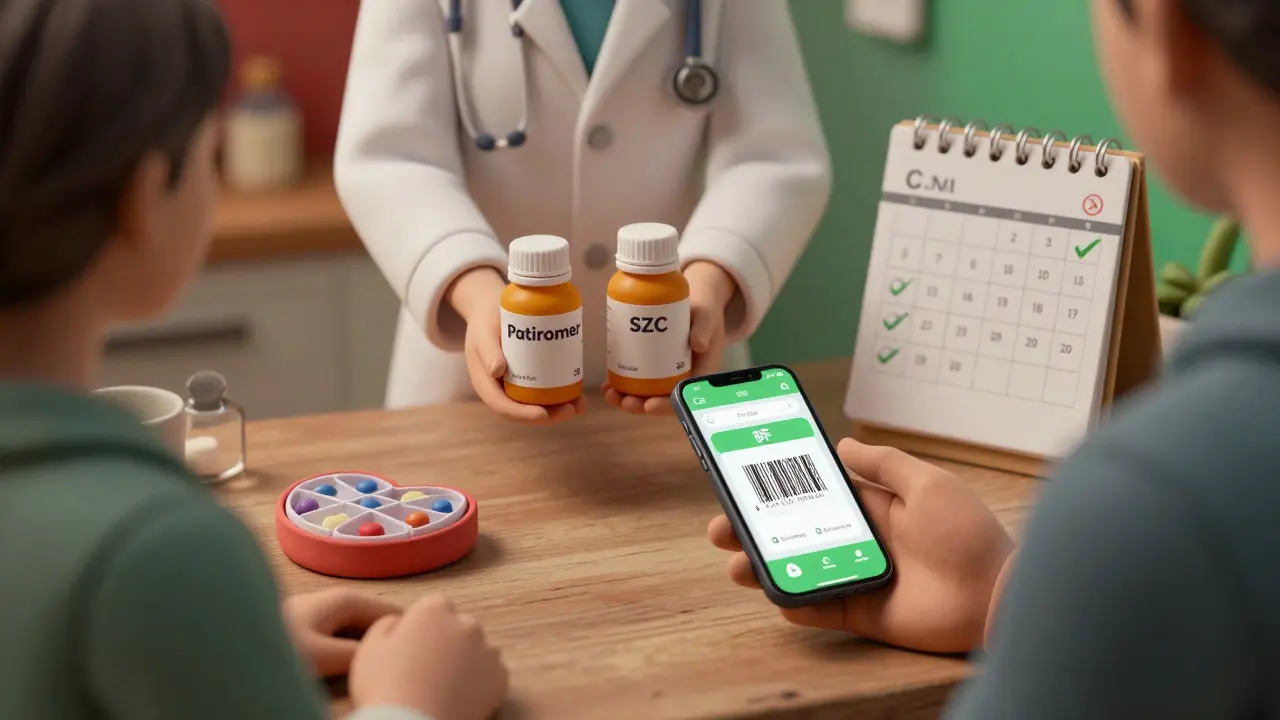
For long-term control, older treatments like sodium polystyrene sulfonate (SPS) are being replaced. SPS was used for decades. But it’s messy. You take 15-30 grams daily, usually as a powder mixed with water or sorbitol. It can cause serious colon damage-colonic necrosis-in 0.5-1% of cases. Plus, it adds a lot of sodium (11 mmol per gram), which worsens swelling and high blood pressure. Now, two newer drugs dominate:- Sodium zirconium cyclosilicate (SZC, brand Lokelma): Works fast. Lowers potassium by 1.0-1.4 mmol/L within just one hour. That’s why it’s the top choice for acute episodes. But it adds sodium-about 1.2 grams per day. That’s a problem for heart failure patients: 12.3% get worse swelling.
- Patiromer (brand Veltassa): Slower. Takes 4-8 hours to lower potassium. But it’s sodium-neutral. Better for people with heart failure or high blood pressure. Side effects? Constipation (14.2%) and low magnesium (18.7%). It also has a chalky texture-22% of patients quit because they hate how it tastes.
Monitoring and Coordination: The Hidden Key to Success
Managing hyperkalemia isn’t just about pills and food. It’s about systems. After starting or increasing a RAAS inhibitor, your potassium must be checked within 1-2 weeks. Then every 3-6 months if stable. If you feel weak, have palpitations, or your ECG looks off-test immediately. Electronic alerts in medical records help. If your potassium hits 5.0 mmol/L, the system should auto-flag it and send a referral to a renal dietitian and pharmacist. Pharmacists play a big role. Many CKD patients take 7 or more medications. Patiromer can interfere with levothyroxine, antibiotics, and other drugs if taken too close together. You need to space them out-take patiromer at least 3 hours before or after other meds. And adherence? That’s the biggest hurdle. Even with the best plan, if you don’t take your binder every day, potassium creeps back up. Pill counts and digital reminders help. Some clinics now use apps that scan food barcodes and calculate potassium content in real time. Early results show a 32% improvement in diet adherence.The Big Picture: Why This Matters
Stopping RAAS inhibitors because of high potassium doesn’t solve the problem-it makes it worse. Studies show that down-titration or stopping these drugs increases the risk of heart attacks by 28% and kidney failure by 34%. The goal isn’t to avoid high potassium by avoiding medicine. The goal is to treat the high potassium so you can keep the medicine. New binders have changed everything. Before them, 60-65% of patients couldn’t stay on full RAASi doses. Now, 85-90% can. That’s a massive win. Cost is still a barrier. In the UK, SPS costs £47.20 a month. Patiromer costs £286.40. SZC is similar. Many clinics can’t afford to prescribe them widely. But when you factor in emergency room visits-each costing over $12,000-the binders pay for themselves in under two years. Future tools are coming. Trials are testing urine potassium tests to personalize diet plans. New drugs like tenapanor are in development. And by 2027, experts predict 75% of CKD patients on RAAS inhibitors will be on a potassium binder. This isn’t just about numbers on a lab report. It’s about living longer, staying off dialysis longer, and not having to choose between protecting your heart and staying alive.What is the normal potassium level for someone with CKD?
For most people with chronic kidney disease, the target potassium range is 4.0-4.5 mmol/L. This is lower than the general population’s normal range (3.5-5.0 mmol/L) because even mild elevations increase heart rhythm risks. Levels above 5.0 mmol/L are considered hyperkalemia and require intervention.
Can I still eat bananas if I have CKD?
If you’re in early CKD (stages 1-3a), you can eat small portions of bananas. If you’re in advanced CKD (stages 3b-5), you should avoid them or limit to half a banana occasionally. One medium banana has about 422 mg of potassium-close to your daily limit if you’re on strict restriction. Boiling or leaching high-potassium foods can reduce their content by up to 50%.
What are the side effects of potassium binders?
Patiromer can cause constipation (14.2%) and low magnesium (18.7%). Sodium zirconium cyclosilicate (SZC) adds sodium, which may worsen swelling in heart failure patients (12.3% risk). Both can interfere with other medications if not timed correctly-take them at least 3 hours apart from other pills. Traditional SPS carries a risk of colonic necrosis and severe sodium overload.
Why do I need to check my potassium after starting a new kidney medication?
Medications like ACE inhibitors, ARBs, and MRAs reduce potassium excretion. Your kidneys may not handle the change, especially if your kidney function is already low. Checking potassium 1-2 weeks after starting or increasing the dose catches high levels early, before they become dangerous. This is a standard recommendation from KDIGO and the Renal Association.
Is it better to stop my heart medication or manage the high potassium?
Stopping your heart or kidney-protecting medication increases your risk of heart attack by 28% and kidney failure by 34%. It’s far safer to manage the high potassium with diet, binders, and monitoring. New potassium binders like patiromer and SZC were designed specifically to let you keep these life-saving drugs. Discontinuing them is no longer the right answer.
How often should I see a kidney dietitian?
You should have an initial 45-60 minute session with a renal dietitian after being diagnosed with hyperkalemia or advanced CKD. Follow-ups at 2 and 6 weeks are critical to adjust your diet and check progress. After that, every 3-6 months if stable. Many patients need ongoing support-only 37% stick with their diet long-term without regular coaching.


