
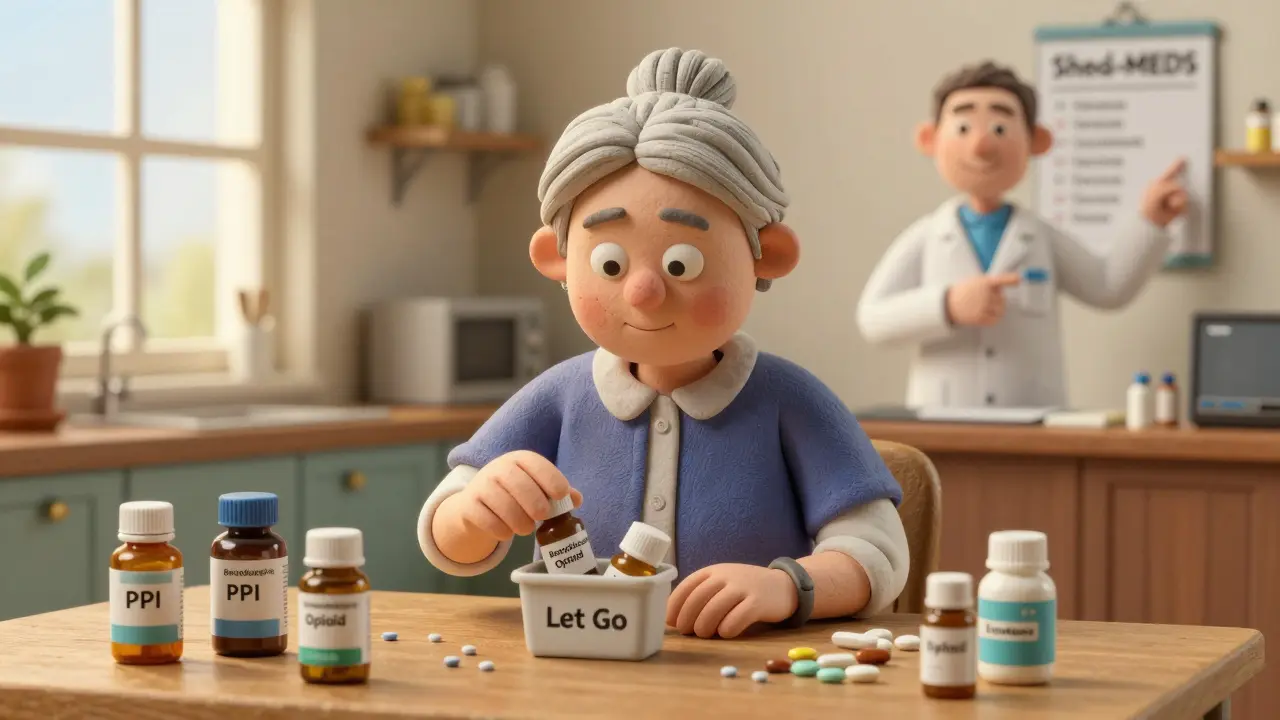
Why Stopping Medications Can Be the Right Thing to Do
Most people assume taking more pills means better health. But for older adults, especially those on five or more medications, that’s often not true. In fact, too many drugs can lead to confusion, falls, dizziness, kidney damage, and even hospital stays. This isn’t about skipping medicine-it’s about smart medicine. Deprescribing is the deliberate, step-by-step process of reducing or stopping drugs that no longer help-or may even hurt. It’s not a one-size-fits-all decision. It’s a conversation, a plan, and sometimes, a relief.
What Exactly Is Deprescribing?
Deprescribing isn’t just quitting pills. It’s a clinical process that asks: Is this drug still doing more good than harm? For many older adults, medications prescribed years ago for conditions like high blood pressure, acid reflux, or mild anxiety are still being taken-even when the original reason no longer applies. Some drugs, like proton-pump inhibitors (PPIs) for heartburn, are often used long after they’re needed. Others, like benzodiazepines for sleep, can cause memory problems and increase fall risk. The goal? Reduce unnecessary drugs without risking health. Studies show that when done right, deprescribing cuts pill counts by 1.5 to 2.5 medications per person, with no rise in hospital visits or deaths.
The Five Medication Classes That Need the Most Attention
Not all drugs are equally risky. Experts have focused on five types that are most commonly overused in older adults:
- Proton-pump inhibitors (PPIs) - Often prescribed for heartburn, but many people take them for years without needing them. Long-term use can lead to nutrient deficiencies and increased infection risk.
- Benzodiazepines and sleep aids - Drugs like diazepam or zolpidem can cause drowsiness, confusion, and falls. They’re rarely needed long-term.
- Antipsychotics - Sometimes used for agitation in dementia, but they carry serious risks like stroke and sudden death. Non-drug approaches are often safer.
- Antihyperglycemics - Blood sugar drugs like sulfonylureas can cause dangerous low blood sugar in older adults, especially if they eat irregularly or have kidney issues.
- Opioids - For chronic pain, opioids rarely improve function and often lead to dependence, constipation, and mental fog.
Each of these has a clear, evidence-based roadmap for safely reducing or stopping them. For example, PPIs are typically tapered over 4 to 8 weeks with close monitoring for return of symptoms. Benzodiazepines are reduced slowly-sometimes by 10% every two weeks-to avoid withdrawal.
How Deprescribing Works: The Shed-MEDS Framework
One of the most proven methods is called Shed-MEDS. It’s a four-step plan used in hospitals and clinics:
- Best Possible Medication History - Get the full list of every pill, supplement, and over-the-counter drug the patient is taking. Many patients forget or don’t know what they’re on.
- Evaluate - Check each drug against guidelines like STOPP/START or the Beers Criteria. Is it still needed? Is there a safer alternative? Is it causing side effects?
- Deprescribing Recommendations - Decide which drugs can be reduced or stopped. Prioritize the riskiest ones first.
- Synthesis - Create a clear plan with the patient and their family. Include how to taper, what symptoms to watch for, and when to follow up.
A 2023 study in JAMA Internal Medicine showed this approach reduced medication counts from 11.3 to 9.5 on average at hospital discharge-and kept that reduction at 90 days. Crucially, patients didn’t get sicker. Their safety wasn’t compromised.
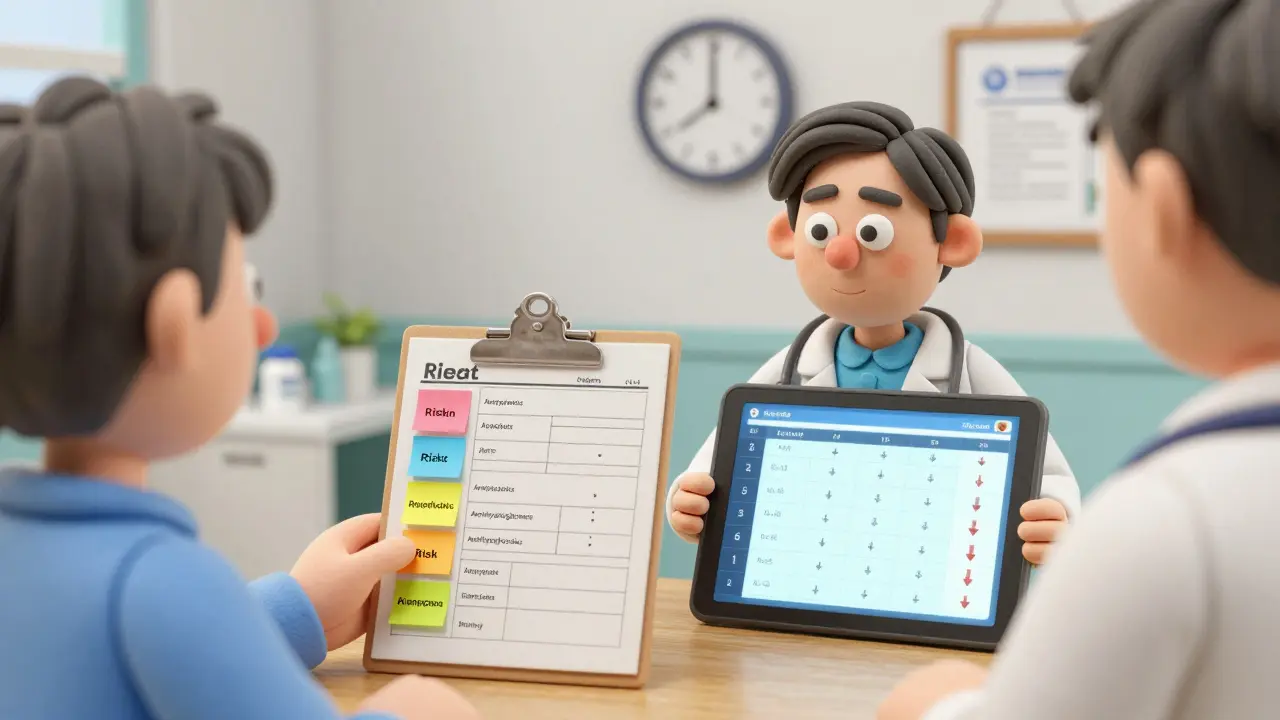
Why Pharmacists Are Key to Success
Doctors are busy. Nurses are stretched thin. But pharmacists? They’re trained to spot medication problems. In settings where pharmacists lead deprescribing, success rates jump by 35-40%. They review every pill, talk to patients about fears, and coordinate with doctors on tapering schedules. A pharmacist with 150+ hours of specialized training can spot interactions and side effects a general practitioner might miss. In Canada, where pharmacists are fully integrated into primary care teams, deprescribing adoption is over 60%. In the U.S., where most practices lack that support, fewer than 15% of primary care doctors use formal deprescribing protocols.
The Real Barrier: Time and Technology
Most doctors say they want to deprescribe. But they don’t have time. The average U.S. primary care visit lasts just 7.2 minutes. That’s not enough to review 10 medications, explain why one might be stopped, and address patient fears. Electronic health records don’t help much either. Only 32% of clinicians feel their EHR systems support deprescribing. Some systems even auto-renew prescriptions without asking. The fix? Tools that flag high-risk drugs, suggest alternatives, and prompt doctors to review meds during visits. The Institute for Healthcare Improvement recommends building these into EHRs so deprescribing becomes automatic-not optional.
What Patients Really Think
Patients often worry: “What if I stop this and get worse?” That fear is real. In one study, 22% of older adults felt anxious about stopping long-term medications. But 65% said they felt better after reducing their pill burden-less nausea, clearer thinking, fewer trips to the bathroom at night. One woman in her 70s, after stopping a sleep aid she’d taken for 12 years, said: “I thought I couldn’t sleep without it. Turns out, I just got used to feeling foggy.” The key? Education. Showing patients data, explaining the plan, and giving them control makes all the difference.
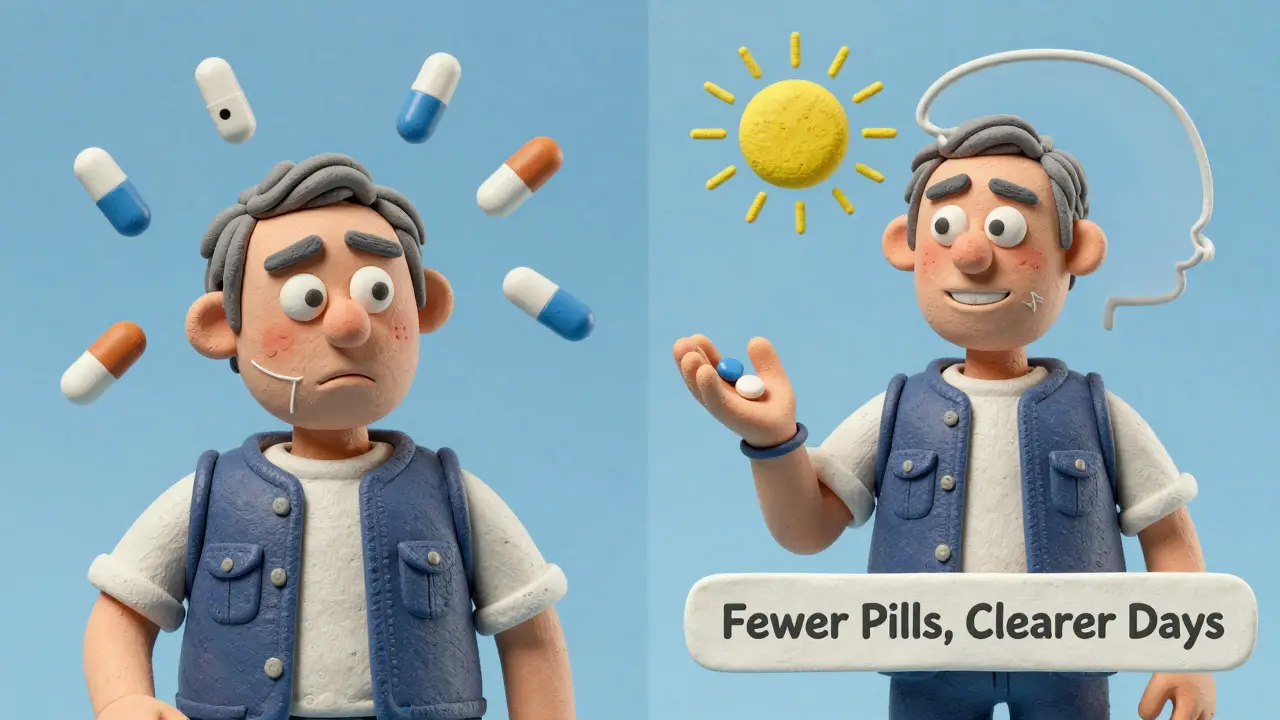
What’s Missing: Guidelines for Complex Cases
Here’s the hard truth: we have clear rules for stopping one drug at a time. But what if someone is on 12 medications-some for heart disease, some for arthritis, some for depression? There’s no roadmap for that. A 2024 analysis of 3,569 clinical guidelines found only 7% even mentioned deprescribing. And less than one-third of those offered practical steps. The American Geriatrics Society’s Beers Criteria lists 34 potentially inappropriate drugs-but only 12 have formal deprescribing guidelines. That leaves doctors guessing. Researchers are now working on guidelines for antidepressants, anticoagulants, and other complex combinations. Until then, the safest approach is to tackle one problem at a time.
The Future: Deprescribing as Routine Care
Change is coming. In June 2024, the American Medical Association officially urged doctors to routinely review all medications. Starting in 2026, Medicare will start measuring how often providers deprescribe as part of their performance ratings. The FDA has funded over $8 million in deprescribing research since 2020. AI tools are being developed to scan patient records and suggest which drugs might be safely stopped. By 2030, experts predict deprescribing checks will be as common as blood pressure checks during annual wellness visits. The goal isn’t to stop all meds-it’s to make sure every pill still has a reason to be there.
Where to Start If You’re a Patient or Caregiver
If you or a loved one is on five or more medications, here’s what to do:
- Write down every pill, supplement, and OTC drug you take-including doses and why you take them.
- Ask your doctor: “Is this still necessary? Are there side effects I should watch for?”
- Request a medication review with a pharmacist. Many pharmacies offer this for free.
- Don’t stop anything on your own. Tapering needs to be slow and supervised.
- Use free tools from deprescribing.org to understand guidelines for common drugs.
Deprescribing isn’t about cutting corners. It’s about cutting clutter. Less medication. More clarity. Fewer side effects. Better days.
Is deprescribing safe?
Yes, when done properly. Multiple studies, including a 2023 JAMA trial with 372 older adults, show no increase in hospitalizations or deaths after deprescribing. In fact, patients often feel better. The key is doing it slowly, with monitoring, and under professional guidance.
Can I stop my medication on my own?
Never. Some medications, like benzodiazepines or certain blood pressure drugs, can cause serious withdrawal symptoms if stopped suddenly. Always work with your doctor or pharmacist to create a safe tapering plan.
What if I’m afraid I’ll get worse after stopping a drug?
That fear is common-and valid. Many people worry their symptoms will return. But often, the symptoms they’re blaming on the condition were actually caused by the medication. A slow, monitored taper helps distinguish between true relapse and medication side effects. Your care team will watch for signs and adjust if needed.
Does deprescribing only apply to older adults?
While it’s most common in older adults due to polypharmacy, deprescribing can help anyone taking medications that are no longer needed. Younger people on long-term PPIs, sleep aids, or opioids can also benefit. The principles are the same: review, assess, taper, monitor.
How long does it take to deprescribe?
It varies. For some drugs, like PPIs, tapering takes 4-8 weeks. For others, like benzodiazepines, it can take months. The pace depends on the drug, the person’s health, and how long they’ve been taking it. Rushing increases risk. Patience is part of the process.
Are there tools to help me track my medications?
Yes. Deprescribing.org offers free, evidence-based algorithms for common drugs. The STOPP/START criteria and the American Geriatrics Society’s Beers Criteria are also publicly available. Many pharmacies offer medication reviews and printable lists to help you keep track.
What if my doctor doesn’t know about deprescribing?
Bring the information. Print out guidelines from deprescribing.org or mention the Beers Criteria. Ask for a referral to a pharmacist who specializes in medication reviews. Many clinicians are learning-your initiative can help push change.


